Forex and currency exchange dealers · Website
Build a site that shows who you are, what to bring and where to go.
A website for a forex dealer is a small set of pages that prove the dealer is genuine, explain each transaction and show the outlets. GullySales works on trust details, document guides and enquiry routes, with every compliance sentence checked by your adviser.
Scope, fee, reporting and term are agreed in writing after we have read your brief and spoken to you.
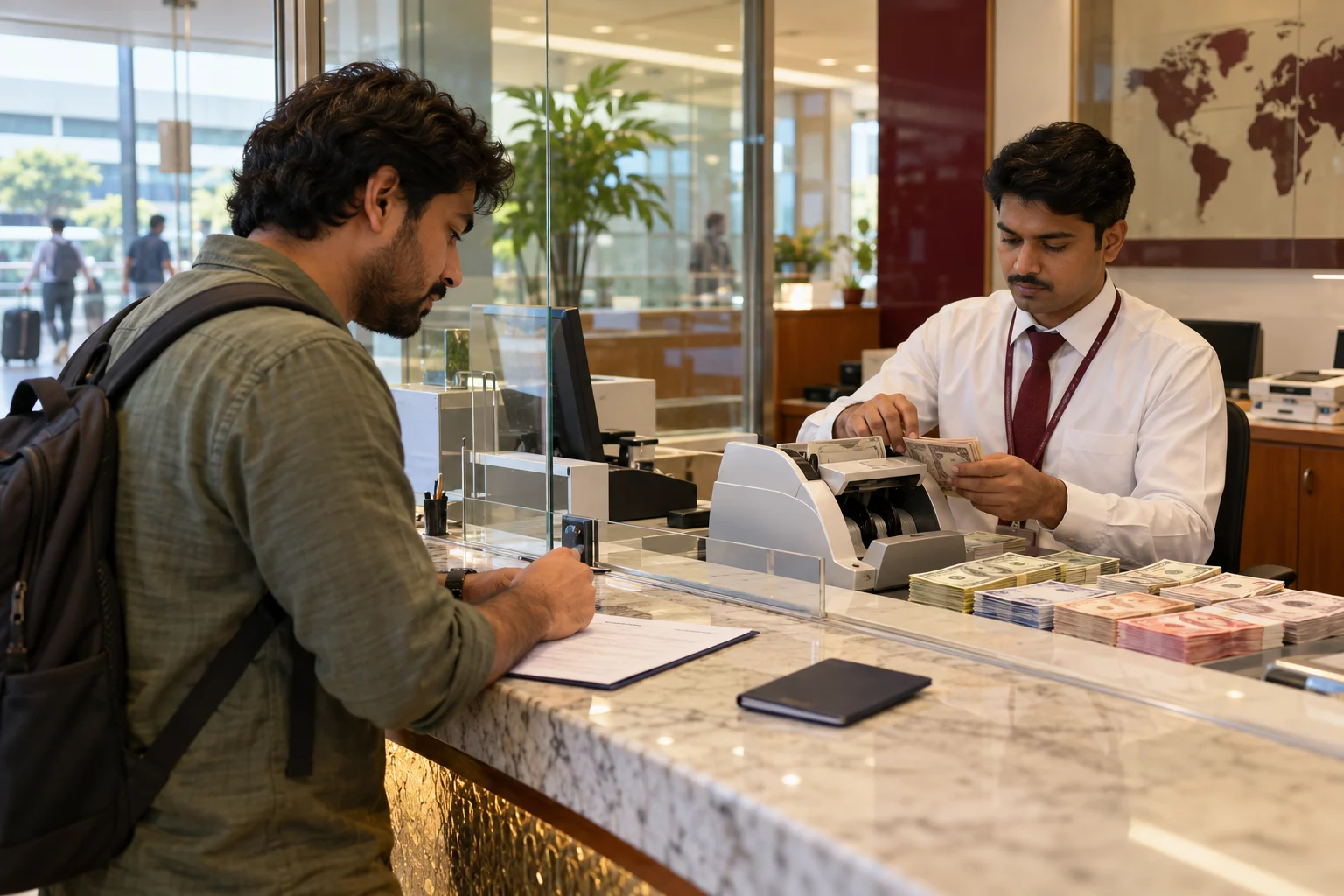
What website means
A website is the page a customer lands on after searching, clicking an advert or scanning a code, and it decides whether they call or leave. GullySales builds and maintains sites that load quickly, explain the offer plainly and make the enquiry form or phone number easy to find.
Also for forex and currency exchange dealers
Sales and marketing for forex and currency exchange dealers, the overview.
Last updated 14 Nov 2026. Rules for this trade differ by state and professional body, and they change. We describe restrictions in general terms, so check the current position with your own council or adviser before you publish anything.
For forex and currency exchange dealers
Where it usually goes wrong, and what we would do.
“The first test is whether the dealer is real”
Visitors look for an address, a named business, outlet photographs and how to verify authorisation. A site without these looks like a risk. Include a photograph of the outlet and the signboard.
“Document pages convert better than rate boards”
A family wants to know what to bring. A page for each purpose with a checklist moves them to a visit. Keep the checklist printable and dated.
“Rates and limits must not be hard-coded”
Printed figures go stale and may breach rules. Describe how a quote is given and invite contact. Describe the quote process rather than the figure.
“Business customers want a different entry”
An importer wants a named contact and a short intake. A separate page prevents them from wading through traveller content. Offer an intake form and a named contact.
What we do
What we deliver for forex and currency exchange dealers.
The work available for this need. We agree the deliverables and responsibilities for your engagement in writing.
A trust page
Business name, outlets, authorisation details and how to verify them, as confirmed by your adviser.
Result: A first-time customer can judge the dealer.
Purpose pages
Tuition remittance, forex card, travel currency, pilgrim travel and business payments, each with steps and documents.
Result: A visitor finds their own need.
Outlet pages
Address, hours, photographs and contact for each counter.
Result: Customers go to the right place.
An enquiry form with purpose first
Fields for need, date and contact, with no sensitive documents requested.
Result: Each enquiry is usable and safe.
A privacy note
A short statement on data use written with your adviser.
Result: Visitors know how their details are handled.
A mobile check
Pages tested on an ordinary phone connection.
Result: The site opens where customers are.
A contact block on every page
Phone, WhatsApp and the nearest outlet in one place.
Result: The next step is always visible.
How the result is measured
- Page load time
- Bounce rate
- Enquiries from the website
Recorded as a baseline before work starts, so every later report has an honest comparison.
Searches your buyers type
Pages a customer wants before visiting the counter.
- authorised forex dealer
- A page that states who the dealer is, the authorisation held and the outlet addresses.
- documents for education remittance
- A document page for parents with the order of steps and a note that the counter confirms the list.
- forex card collection
- A page on where and when to collect a card, and what to bring.
- business forex payments
- A separate entry for importers and exporters, with a contact for the business desk.
- currency exchange hours
- An outlet page with timings that staff can edit when a holiday changes them.
Who it is for
This is written for these forex and currency exchange dealers.
- Full-fledged money changers at airports and city centres
- Authorised dealers handling remittances and forex cards
- Student-focused forex advisers near colleges and consulting offices
- Travel agency forex desks
- Hajj, Umrah and pilgrim travel currency services
- Corporate forex desks for importers and exporters
- Medical travel and tourism currency exchange
- Bank-linked and co-operative forex counters
Before you decide
When this may not be the right fit.
- The site would hard-code rates, which nobody can keep current.
- Online payment is expected, and the dealer's authorisation does not allow it as the site would imply.
- The dealer wants a long blog before the basic pages exist.
Before you decide
Agree the work. Know how to judge it.
Website for forex dealers: use these checks to prepare, choose the scope, and review what changes.
Bring the right evidence
List the pages that support a buying decision and the actions visitors must complete. Keep examples of failed forms, unclear product information, and questions your team answers repeatedly.
Make the scope clear
Agree the page list, content ownership, integrations, and who controls the domain and hosting. Include redirects and existing search traffic in a redesign brief, before changing addresses.
Check the work in use
Complete a real enquiry journey on a phone and a laptop. Check that the confirmation appears, the enquiry reaches the right person, and tracking records the action once.
Know when to change course
If visitors can enquire but the team does not follow up, start with the sales handover. A larger website will not resolve that delay.
These are discussion points, not a fixed package. GullySales confirms the deliverables, responsibilities, fee, and term in writing after reading your brief and speaking with you.
Before we start
What to have ready before the work starts.
The records, access and decisions this work needs from forex and currency exchange dealers. Anything missing is noted in the written scope, with who will supply it.
- Your authorisation papers and registered name
- The exact name and details printed on your licence or authorisation, for the trust page. A small difference in a name makes a careful visitor doubt you. If a renewal is pending, tell us, and the page will omit that line until your adviser approves.
- Photographs of each outlet
- Clear pictures of the signboard, the entrance and the counter, in daylight. Phone pictures are enough. They prove the dealer is real and help customers find the door. Without them we use plain maps, which carry less trust. If you have a professional set already, share it, but do not use a customer in any picture without written consent.
- Access to the domain and hosting
- The registrar and hosting logins, held in the business's name. If a past vendor controls them, we start by recovering access, because a site we cannot publish to is a draft. Tell us honestly who has the keys. Also share the email system tied to the domain, so that moving the site does not break your mail.
- The papers list for each purpose
- A checked list from your adviser for every transaction type you offer. The document pages are built from it. If the list is under review, the page waits, as a wrong list is worse than none. Add the names of the forms you want guided, so each guide shows the form's real title.
- A person who answers the enquiry form
- A named staff member who reads each entry and responds with a call or message. A form with no answer damages trust. If nobody is available, the site carries a phone number and the form waits. Name a back-up person too, because a form entry left unread through a holiday looks careless.
How it works
How the website work runs
The work itself, in order. How an engagement starts, from your brief to a written scope, is set out on our method page.
- 1
List the pages a customer needs before visiting
We sit with your counter staff and write down what a student's parent, a traveller and an importer look for before they step in: authorisation, papers, outlet address, a person to speak to. These become the pages. You remove anything you do not want a stranger to read. We also ask which question the outlet gets wrong again and again on the phone, so the page that fixes it is placed early.
- 2
Gather the facts for the trust page
You supply the authorisation details, the registered name, the outlet addresses, hours and photographs of the counters. We copy them exactly. Your adviser reads the trust page before anything else, since this page answers the first question a careful customer asks. Where two outlets differ in hours or counters, each gets its own block, and the page never merges facts that are not identical.
- 3
Draw the sitemap and agree the entry points
We draw the pages and how a visitor moves between them: purpose pages, outlet pages, document guides, the enquiry form. Business customers get their own entry. You approve the sitemap, and the design is worked out only afterwards. A separate entry for business customers asks for company name and purpose first, and leads to a named person, not a general counter.
- 4
Write the pages from the counter's own words
Each purpose page is written from what the person at the desk says, with the papers as a checklist and the steps in order. Rates and limits are not typed in. A line invites the visitor to ask for the current figure, and your adviser reads every sentence on rules. We add short notes explaining unfamiliar terms like remittance purpose code or beneficiary in plain English, with your adviser confirming each meaning.
- 5
Review the test site on a phone
We put the pages on a test address and ask you and two staff to read them on phones, since customers browse on them. You mark what is unclear or wrong. The form is tested by sending an entry to the person who will answer it, and we correct what fails. We read the privacy note aloud to the staff so they can explain it if a customer asks why the form wants a phone number.
- 6
Go live, then compare the enquiries
After approval the site goes live and the logins are passed to you. We compare the enquiries received through the form and the calls that mention the site with the figures recorded earlier. You decide which page to improve first. The mobile layout, speed and every phone number link are checked again on the live site, because errors appear only after the move.
Where this fits
Three pieces of sales work, in this order.
This work sits inside sales process design, at stage 1, prospecting and lead generation. The audit comes before it, and sales management keeps it running.
Step 1
Sales audit
Find where deals are being lost and what to fix first.
Start here if you cannot say where orders are lost.
Step 2 · you are here
Sales process design
One written way to sell, from first enquiry to repeat order.
Start here if every salesperson sells differently.
Step 3
Sales management
A target, a review routine and someone who owns the number.
Start here if the team has targets and no routine.
FAQ
Questions owners ask before they call.
Not here? More answers, or ask on WhatsApp.
Should the site take payments?
Do we need a blog?
How do we keep the site current?
Can the site take a payment for a forex order?
Should the site take payment for a forex order?
Who changes the site when a rule or an address changes?
How much does it cost?
How long is the contract?
How soon will we see results?
Who will actually do the work?
More for forex and currency exchange dealers
Related work to consider.
Closest to this: search and visibility
Also for forex and currency exchange dealers
Or start from the overview: sales and marketing for forex and currency exchange dealers.
Your next practical step
Tell us what you are trying to grow, and we will read it before we call.
Eight short steps, mostly taps. Skip anything you would rather answer on the call.