Hospitals · Customer lifecycle marketing
Plan what a discharged patient hears next, from the follow-up visit to the annual checkup.
Customer lifecycle marketing for a hospital maps what a patient and family hear after the first admission or consultation: discharge guidance, review visits, vaccination or screening reminders and the next annual checkup. GullySales defines the stages from your patient record, writes the messages for the channels where consent exists, and names who answers each reply.
Scope, fee, reporting and term are agreed in writing after we have read your brief and spoken to you.

What customer lifecycle marketing means
Customer lifecycle marketing is a plan for what each customer hears at each stage after the first enquiry: welcome, first purchase, repeat purchase, service reminder, renewal and win-back. GullySales defines the stages from your customer record, writes the messages for WhatsApp, email and SMS where consent exists, sets the triggers, and names who owns each stage.
Also for hospitals
- Patient retention for hospitals
- Referral marketing for hospitals
- Account whitespace and contract expansion analysis for hospitals
- Complaint and escalation management for hospitals
- Customer success consulting for hospitals
- Customer support process design for hospitals
- Customer experience strategy and journey mapping for hospitals
- Customer onboarding for hospitals
Sales and marketing for hospitals, the overview.
Last updated 14 Nov 2026. Rules for this trade differ by state and professional body, and they change. We describe restrictions in general terms, so check the current position with your own council or adviser before you publish anything.
For hospitals
Where it usually goes wrong, and what we would do.
“The relationship stops at the discharge desk”
Once the bill is settled, the hospital goes quiet. The family has questions about review visits, reports and the next step, and the only prompt they receive is a bill reminder. A planned sequence can show care without selling anything.
“Reminders live on one receptionist's notebook”
The review date, the vaccination due date and the annual checkup are known to a person, not to a system. When that person is on leave, the reminder is skipped and the family books elsewhere.
“Consent is assumed because a number exists”
A phone number given at registration was given for care, not for every message the marketing team would like to send. Each channel needs a recorded permission, and clinical messages need sign-off from your own reviewer.
“Different departments need different stages”
A maternity patient moves through antenatal visits, delivery, newborn vaccination and paediatric follow-up. A dialysis patient has a standing schedule. One generic message sequence suits neither, so each department needs its own stages, its own timing and its own reviewer on the clinical wording.
What we do
What we deliver for hospitals.
The work available for this need. We agree the deliverables and responsibilities for your engagement in writing.
Stage definitions per department
Written rules for each department, each tied to a field in your patient record, such as discharge date or next review date, so a family enters and leaves a stage by rule.
Result: Your staff can check a sample patient against the stage they are placed in.
A lifecycle map
A single page showing every stage, the event that starts a message, the channel and the owner, approved by you before any copy is written.
Result: The administrator can see the whole path on one sheet.
Message sets by channel
Copy for WhatsApp, email and SMS at each stage, in the languages your families use. It stays on service information and reminders, with no outcome claims.
Result: Every message has been read and approved by your own reviewer.
Trigger and stop rules
The dates and replies that send a message and the ones that stop it, such as a booking made, a complaint open or a request to stop.
Result: A family with an open complaint is not sent a checkup offer.
A consent and sender checklist
Where each person's permission is recorded, what each channel needs from the platform, and the opt-out route. Check the platform's current rules and your adviser's view before sending.
Result: You can show how a family came to receive each message.
A reply owner sheet
A named person for each stage and each reply, with what to do when a family answers with a symptom or a complaint.
Result: No reply lands in an inbox nobody reads.
How the result is measured
- Customers by stage, counted from the record
- Repeat orders and second visits against the baseline
- Replies to each stage, separate from messages sent
Recorded as a baseline before work starts, so every later report has an honest comparison.
Who it is for
This is written for these hospitals.
- Multi-speciality hospitals
- Single-speciality hospitals, maternity, orthopaedic or eye
- Nursing homes
- Day-care surgery centres
- Corporate hospital chains with several branches
- Diagnostic-centre-led hospitals
- Hospitals attached to medical colleges
- Government-empanelled private hospitals
Before you decide
Agree the work. Know how to judge it.
Customer lifecycle marketing for hospitals: use these checks to prepare, choose the scope, and review what changes.
Bring the right evidence
Review repeat orders, inactive customers, and reasons for leaving. Separate a normal buying interval from a customer who stopped because of an unresolved problem.
Make the scope clear
Choose the customer group and the reason to contact them. Agree how complaints, renewal decisions, and additional offers are handled, including when a sales message is inappropriate.
Check the work in use
Track the response through to a retained or repeat order, with discounts and service costs visible. Record why the customer returned rather than crediting every repeat purchase to the campaign.
Know when to change course
If customers leave because delivery is unreliable, fix that before offering a loyalty reward. Repeated promotions can hide the cause without improving the experience.
These are discussion points, not a fixed package. GullySales confirms the deliverables, responsibilities, fee, and term in writing after reading your brief and speaking with you.
Before we start
What to have ready before the work starts.
The records, access and decisions this work needs from hospitals. Anything missing is noted in the written scope, with who will supply it.
- The registration form with its consent lines
- Bring the form patients sign at registration, exactly as printed. We read what permission it records. If it says nothing about messages, no existing patient is contacted, and the first task is to add the line. Also bring the format of the printed discharge summary, without a patient's details, so the messages echo its words.
- A list of review and recall visits by department
- Ask each head which visits after discharge are part of care, with the usual gaps between them. The stages are built on these. If a department keeps them in a diary, bring a sample.
- An account or number for sending messages
- Bring the SMS or WhatsApp business account, or the decision to open one. The sender name must be the hospital's. Without an account, we write the messages and hold them until the channel exists. If the account is an ordinary phone number, tell us, since bulk sending from it is likely to be blocked by the platform.
- A reply owner for each department
- Name who answers a family that replies to a reminder, and when they are on duty. A message that invites a reply and receives none turns a family away. Where no one is available, we recommend a one-way reminder with a number to call.
- The medical director's rules on health content
- Bring the rule on what a message may say about health, vaccination or screening. We write to it. Without it, messages state the date and the department only and contain no health advice. Add the name of the person who may change this rule, since a health message that has not been approved should never be sent.
How it works
How the customer lifecycle marketing work runs
The work itself, in order. How an engagement starts, from your brief to a written scope, is set out on our method page.
- 1
Read the patient record for the points of return
We start with the registration and billing records, with names removed, and mark where patients return: a review visit, a vaccination schedule, an annual screening, a second pregnancy. We do this department by department. You tell us which returns are part of treatment and which are the hospital's own offer, since the two need different messages. We also count how many patients have more than one visit recorded under different registration numbers, since a family split across numbers looks like two strangers.
- 2
Draw the stages each department actually has
From the record and a talk with each department head, we write the stages a patient and family go through after the first visit. Paediatrics has vaccination dates, cardiac care has review visits, maternity has the newborn. Stages are named in the hospital's own words. You correct us where a stage is wrong. A stage ends when the next begins or when the family leaves the hospital's care, and the stage sheet says which, so no message arrives after a patient has moved on.
- 3
Check what permission exists for each channel
We read the consent wording on registration forms and ask which channels a patient has agreed to: call, SMS, WhatsApp, email. Your adviser reads the line before it is used. Where permission is missing, we write the line to add to the form, and those patients get no messages until they have said yes. We also check whether the number on file belongs to the patient or to a relative, because a reminder meant for a child lands on a parent's phone.
- 4
Write the messages and name who answers
For each stage we draft the message, the channel and the person who answers a reply. Medical content is read by your medical director, and nothing advises treatment. A reminder that a review is due comes from the department. You approve the wording, and the answerer for each message is told before it is sent. Each message is written to be read in a few seconds by a worried person, with the department's name, the reason for the message and the number to call.
- 5
Set the triggers, the stops and the sender
We agree what starts a message, such as a discharge date, and what stops it, such as a booking or a request to stop. We set the sender name and number so the family recognises the hospital. The rules are tried on a few test records. You watch a test message travel from trigger to reply. We check that a stop request on one channel stops the others too, and that a booked review ends the reminder for that review at once.
- 6
Release to one group and read the response
The first stage goes to one group with consent, such as new mothers due for a vaccination visit. We watch replies, bookings, complaints and stops. Then we set the booked reviews against the figures counted before the work, and you decide whether to extend to the next stage or department. We read the complaints and the stop requests with the same care as the bookings, because they show where a message was unwelcome.
Proof
Published examples of our work.
Real clients and the work recorded for each engagement. These examples may cover related services or industries. They show the method, not a guaranteed result.
Chord Road Hospital
- Situation
- Patients who knew the hospital trusted it. Patients who searched for a department or a treatment in the area did not find it.
- What we did
- Website rebuilt around patient needs
- Search visibility
- Social media on a schedule
- Review management
- Result
- Organic traffic increased 60% within six months
- Online appointment bookings increased 40%
- Social following grew 45%, and engagement on it rose 70%
Nanda Arthritis and Rheumatology Center
- Situation
- There was no website, so a patient looking for a rheumatologist had no way to learn about the centre. Enquiries were few, and the ones that arrived came by word of mouth.
- What we did
- A website for patients
- Search work
- Google Business and reviews
- Lead capture and advertising
- Result
- No numbers were recorded for this engagement. The work is described in full in the case study.
Also worked with
Curtain Label · Difesa Security Services · Felicity Inn · Hands On CSR · Implevista · Kambar Group · Kalessi · Kerur Pain Clinic · LL Trust · Lucky Deals · Natural Gases · NavaShakthi Souhardha · NewCom Logistics · Proton Technical Services · SB Engineering · Shakthi Foundation · Shakthi Group · Urbanest · Insyde Studio · Venkateshwara Laser Tech · Vivara Studios
Where this fits
Three pieces of sales work, in this order.
This work sits inside sales process design, at stage 0, foundation. The audit comes before it, and sales management keeps it running.
Step 1
Sales audit
Find where deals are being lost and what to fix first.
Start here if you cannot say where orders are lost.
Step 2 · you are here
Sales process design
One written way to sell, from first enquiry to repeat order.
Start here if every salesperson sells differently.
Step 3
Sales management
A target, a review routine and someone who owns the number.
Start here if the team has targets and no routine.
FAQ
Questions owners ask before they call.
Not here? More answers, or ask on WhatsApp.
Can the hospital message every patient in the register?
Will messages include health advice?
Who sends the messages?
How do we handle patients who registered before consent was recorded?
Do we need software to send these messages?
How much does it cost?
How long is the contract?
How soon will we see results?
Who will actually do the work?
What do you need from us?
From the blog
Further reading for hospitals.
 6 min read · 6 Oct 2026What healthcare buyers check before they choose youA patient, a referring doctor and a hospital purchase team each check different things before choosing a provider. See what each looks at.
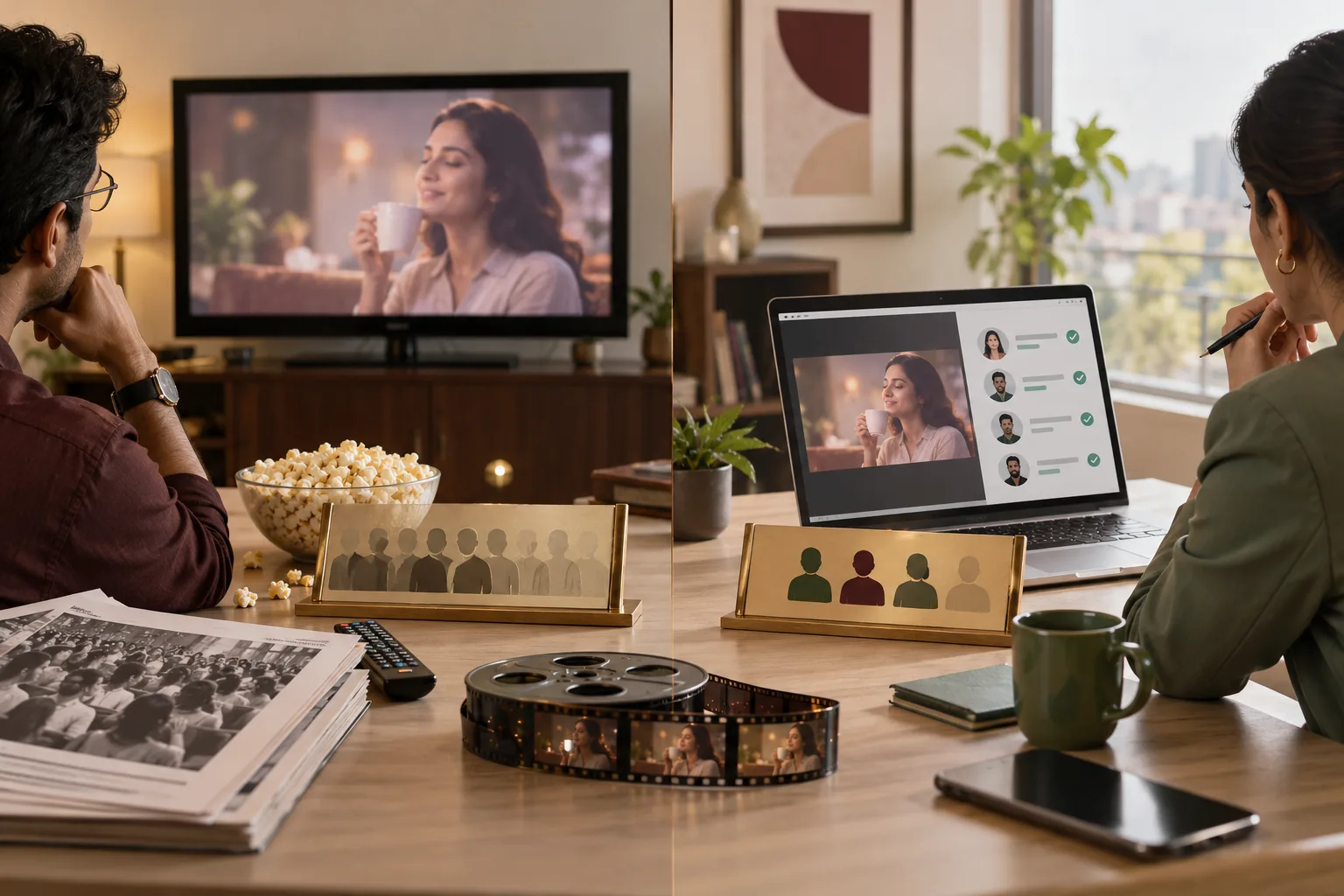 6 min read · 21 Sept 2026TV advertising vs OTT advertising: what are you actually buying?Television sells slots against ratings and prices in the wastage. OTT sells impressions to chosen people and charges for the choosing.
 8 min read · 21 Sept 2026Tamil advertising creative: what actually changesTamil is written one way and spoken another, and its script cannot tell b from p. What that means for your line, voice artist and brand spelling.
More for hospitals
Related work to consider.
Closest to this: customers after the sale
- Patient retention for hospitals
- Referral marketing for hospitals
- Account whitespace and contract expansion analysis for hospitals
- Complaint and escalation management for hospitals
- Customer success consulting for hospitals
- Customer support process design for hospitals
- Customer experience strategy and journey mapping for hospitals
- Customer onboarding for hospitals
Also for hospitals
Or start from the overview: sales and marketing for hospitals.
Your next practical step
Tell us what you are trying to grow, and we will read it before we call.
Eight short steps, mostly taps. Skip anything you would rather answer on the call.