Hospitals · Video marketing
Let a patient see the ward and hear the doctor before they ever visit.
Video marketing for a hospital means short videos of the facility, a doctor explaining a procedure, and a patient's recovery story. These answer the worry a family carries before a first visit. GullySales scripts and shoots these around the priority departments, with consent handled properly.
Scope, fee, reporting and term are agreed in writing after we have read your brief and spoken to you.

What video marketing means
Video marketing is using short videos, such as a product demonstration or a customer walkthrough, to explain your business on social media, your website and Google listings. GullySales scripts, shoots and edits these videos around the questions buyers ask before they visit or call.
Last updated 5 Oct 2026. Rules for this trade differ by state and professional body, and they change. We describe restrictions in general terms, so check the current position with your own council or adviser before you publish anything.
For hospitals
Where it usually goes wrong, and what we would do.
“A ward and ICU walkthrough calms first-visit anxiety”
Seeing the actual room and equipment before admission reduces the fear a family carries into a first consultation.
“A two-minute doctor explainer beats a long brochure”
A surgeon explaining a bypass procedure in plain language is watched fully where a text page is skimmed.
“Recovery stories need explicit, recorded consent”
A patient's story is powerful only when they have agreed clearly to be shown, with no medical detail shared without permission.
What we do
What we deliver for hospitals.
Every deliverable, what it covers for you, and the result it is there to produce. Nothing here is an extra.
Ward and facility walkthrough videos
A short walkthrough of the ward or ICU, filmed to calm the fear a family carries into a first consultation.
Result: A family sees the actual room before they ever need to visit it.
A doctor explainer video series
Short videos of a specialist explaining a procedure in plain language, scripted around the priority departments.
Result: A patient understands what to expect before the first appointment.
A consent-documented recovery story
A patient's recovery story filmed only with explicit, recorded consent and no medical detail shared without permission.
Result: A powerful story is told without ever compromising a patient's privacy.
A video production schedule
One or two new videos a month per priority department, keeping the library current without pulling doctors away from patients too often.
Result: New material keeps appearing without disrupting clinical work.
How the result is measured
- Views
- Watch time
- Enquiries traced to video
Recorded as a baseline before work starts, so every later report has an honest comparison.
Videos worth making
Film the departments, desks and doctors a family wants to see before they arrive.
- The admission and TPA desk
- Show where a family goes for a cashless admission, the documents to bring and who sits at the TPA desk. Put it on the insurance page and send it on WhatsApp once an admission is confirmed.
- The emergency entrance at night
- Film the route from the gate to casualty, the ambulance bay and the triage desk, lit as they are at night. Pin it on the Google profile so a family knows where to drive.
- Consultant introductions by department
- Each consultant gives their name, department and the conditions they see, with no claim about outcomes. Place it on the department page beside the OPD timings.
- Before a planned surgery
- A nurse or surgeon explains fasting, what to bring and visiting rules. Send it when the OPD advises surgery, so the family is ready for admission day and the booking does not drift.
- The maternity floor
- Walk through the labour room, the NICU entrance and a private room with no patients in frame. Share it when an expectant family asks about delivering at the hospital.
- Medical and legal review before release
- Have the medical superintendent and whoever handles compliance check each script and cut. Rules on hospital and doctor advertising differ by state and body and change, so keep cure claims and outcomes out.
Who it is for
This is written for these hospitals.
- Multi-speciality hospitals
- Single-speciality hospitals, maternity, orthopaedic or eye
- Nursing homes
- Day-care surgery centres
- Corporate hospital chains with several branches
- Diagnostic-centre-led hospitals
- Hospitals attached to medical colleges
- Government-empanelled private hospitals
Not for
It is not the right fit if.
- The ward cannot be filmed without disturbing patients, and consent from those in the frame has not been arranged.
- Your doctors cannot appear in a video until their council's rules on publicity have been checked.
- You want a recovery story from a patient and have no written, recorded consent for it.
How it works
How the video marketing work runs
The work itself, in order. How an engagement starts, from your brief to a written scope, is set out on our method page.
- 1
Plan the distribution
We agree where each video will live and what a viewer should do next, before a shoot is booked.
- 2
Script and shot list
A short script and shot list are written. For a hospital or clinic we flag claims that medical advertising rules do not allow.
- 3
Clear permissions
Releases are signed, locations agreed, and music chosen with its licence in hand. This is done before the camera is switched on.
- 4
Film on location
Filming runs to the shot list at your premises, with a short list of extra shots to cover the edits.
- 5
Edit for each place
The footage is cut into the shapes agreed at planning, with captions added and the call to action placed at the end.
- 6
Publish and track
Videos go live where planned. Views and enquiries are tracked by video against the baseline recorded before work began.
Proof
What happened when owners fixed this.
Real clients, the work we did, and the result as it was recorded. Where no number was recorded, none is claimed.
Chord Road Hospital
- Situation
- Patients who knew the hospital trusted it. Patients who searched for a department or a treatment in the area did not find it.
- What we did
- Website rebuilt around patient needs
- Search visibility
- Social media on a schedule
- Review management
- Result
- Organic traffic increased 60% within six months
- Online appointment bookings increased 40%
- Social following grew 45%, and engagement on it rose 70%
Nanda Arthritis and Rheumatology Center
- Situation
- There was no website, so a patient looking for a rheumatologist had no way to learn about the centre. Enquiries were few, and the ones that arrived came by word of mouth.
- What we did
- A website for patients
- Search work
- Google Business and reviews
- Lead capture and advertising
- Result
- No numbers were recorded for this engagement. The work is described in full in the case study.
Also worked with
Curtain Label · Difesa Security Services · Felicity Inn · Hands On CSR · Implevista · Kambar Group · Kalessi · Kerur Pain Clinic · LL Trust · Lucky Deals · Natural Gases · NavaShakthi Souhardha · NewCom Logistics · Proton Technical Services · SB Engineering · Shakthi Foundation · Shakthi Group · Urbanest · Insyde Studio · Venkateshwara Laser Tech · Vivara Studios
Where this fits
Three pieces of sales work, in this order.
This work sits inside sales process design, at stage 0, foundation. The audit comes before it, and sales management keeps it running.
Step 1
Sales audit
Find where deals are being lost and what to fix first.
Start here if you cannot say where orders are lost.
Step 2 · you are here
Sales process design
One written way to sell, from first enquiry to repeat order.
Start here if every salesperson sells differently.
Step 3
Sales management
A target, a review routine and someone who owns the number.
Start here if the team has targets and no routine.
FAQ
Questions owners ask before they call.
Not here? More answers, or ask on WhatsApp.
Do we need expensive equipment?
How often should new videos be made?
Can our doctors appear in videos without breaking their council's rules?
Should doctor explainers be in English or a regional language?
How much does it cost?
How long is the contract?
How soon will we see results?
Who will actually do the work?
What do you need from us?
What if we are not happy with the work?
From the blog
Further reading for hospitals.
 6 min read · 6 Oct 2026What healthcare buyers check before they choose youA patient, a referring doctor and a hospital purchase team each check something different before choosing a provider. This post lists what each one looks at and where a clinic, lab or supplier loses them.
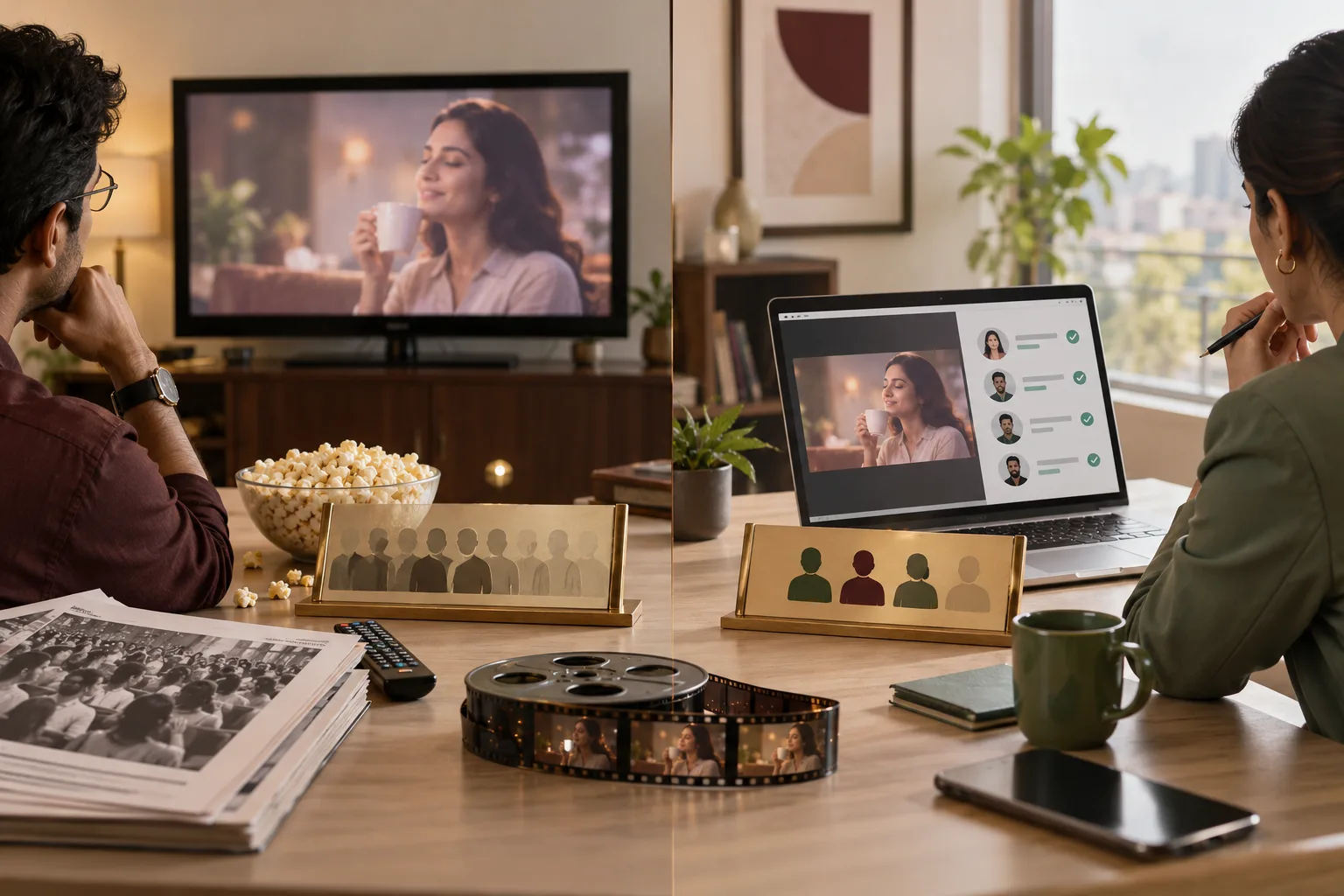 6 min read · 21 Sept 2026TV advertising vs OTT advertising: what are you actually buying?Television sells slots against ratings and prices the wastage in. OTT sells impressions to chosen people and charges for the choosing. Same film, two shops.
 8 min read · 21 Sept 2026Tamil advertising creative: what actually changesTamil is written one way and spoken another, and its script cannot tell b from p. What that means for your line, voice artist and brand spelling.
More for hospitals
Everything else we would do for you.
Closest to this: content and social
Also for hospitals
Or start from the overview: sales and marketing for hospitals.
Your next practical step
Tell us what you are trying to grow, and we will read it before we call.
Eight short steps, mostly taps. Skip anything you would rather answer on the call.