Home and office automation · Referral marketing
Be on the designer's list at concept stage, before the wiring drawing is frozen.
Almost all automation work arrives through an architect, an interior designer or an electrical contractor specifying you. Referral is not one channel among several here, it is the business. GullySales builds the list, writes the material a designer will actually forward, and keeps the introductions arriving on time.
Scope, fee, reporting and term are agreed in writing after we have read your brief and spoken to you.
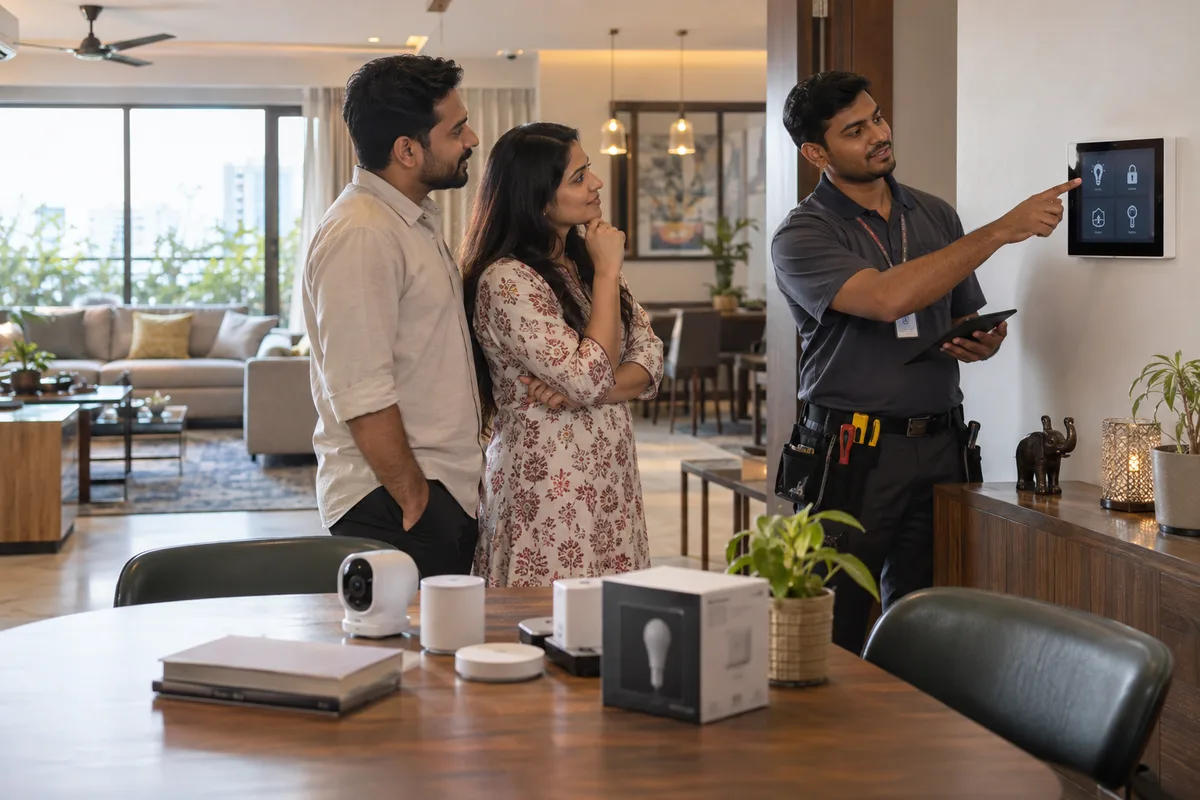
What referral marketing means
Referral marketing is asking an existing customer to recommend you to someone they know, usually with a reward for both sides. It differs from a loyalty scheme because it brings in a new customer rather than a repeat purchase. GullySales builds the ask and the reward into a point where a customer is already satisfied.
Also for home and office automation
- Customer retention for home and office automation
- Branding for home and office automation companies
- Buyer journey for home and office automation companies
- Buyer personas for home and office automation companies
- Content marketing for home and office automation companies
- Digital marketing for home and office automation companies
- Lead generation for home and office automation companies
- PPC for home and office automation companies
Sales and marketing for home and office automation, the overview.
Last updated 5 Oct 2026.
For home and office automation
Where it usually goes wrong, and what we would do.
“The referral has to land before the electrical drawing is frozen”
Once the wiring layout is signed off, automation turns into an argument about breaking walls and rerouting conduit. Being on the designer's list at concept stage is nearly the entire job of this channel.
“Give the designer something she can put her own name on”
A one-page scope note and a drawing she can drop into her client presentation gets forwarded. A brochure with your logo across the top gets left in the car, because she is not there to sell your brand.
“Commission is common in this trade and still needs saying out loud”
Designers are paid by many of the brands they specify. Decide what you do, write it down, and be able to answer a homeowner who asks directly. A client who discovers it later stops trusting the designer and you with her.
What we do
What we deliver for home and office automation.
Every deliverable, what it covers for you, and the result it is there to produce. Nothing here is an extra.
A worked map of the design practices around you
Architects, interior designers, electrical contractors and builders in your city, sorted by the kind of project they do and whether they have ever specified you.
Result: You know who to approach next instead of waiting for the phone.
A specification pack a designer can forward
Point schedules, conduit requirements and a scope note written for her drawing set, in a form she can attach without editing.
Result: Your system gets onto the drawing at concept stage.
A finished-project set organised by budget and style
Short videos and photographs of completed homes and offices grouped so a designer can send a client something close to their own project.
Result: The designer sells the idea without you in the room.
An experience centre visit she can book for a client
A standing invitation and a simple way for a designer to bring a client in, with the scenes set up for the kind of home they are building.
Result: The demo becomes part of her process, not a favour she has to ask for.
Referrals counted by named designer
Enquiries, site visits and orders traced back to the individual who sent them, reviewed with your sales team.
Result: Your attention goes to the designers who actually send work.
A written position on commission
What you do and do not pay, put in writing, so every person in your team answers a homeowner's question the same way.
Result: Nobody is caught out by a question in a client meeting.
How the result is measured
- Referrals received
- Referral conversion rate
- Cost per referred customer
Recorded as a baseline before work starts, so every later report has an honest comparison.
How referrals reach an automation firm
An automation firm is specified by designers and electrical contractors, and the introduction has to arrive before the wiring is fixed.
- Interior designers
- A designer wants to know what the client will see and touch: switches, scenes, curtains. Give her a mood board of scenes by room that she can show beside her own drawings.
- Architects
- An architect needs conduit routes, panel space and a network closet set early. Send a one-page checklist of what the structure must carry for each level of automation.
- Electrical contractors
- The contractor wires the house and blames the system if it fails. Walk him through your wiring standards and name one person who answers his site calls.
- Villa and apartment builders
- A builder with many identical units can fit a basic package in each. Offer a model-flat installation buyers can see, and agree who supports the owner after handover.
- Name on each quote
- Name the designer or contractor on each quote and note when the brief reached you: before or after the wiring drawing. Early introductions are the ones to find more of.
- What never to do
- Never promise a designer's client features the devices cannot do, or a date you cannot control. A failed demo in her client's home loses the partner.
Who it is for
This is written for these home and office automation.
- Residential smart-home integrators
- Office and boardroom automation specialists
- Villa and apartment builder tie-up specialists
- Security and CCTV integration specialists
- Home theatre and AV specialists
- Motorised curtain and gate automation specialists
How it works
From your first message to the first report.
No open-ended retainer. Every step gives you something in writing.
First
Your brief
You tell us what you need in a few short steps: your business, what you want, where enquiries come from and how they are handled.
After the brief
A conversation and a written scope
We read it, then talk with whoever handles your enquiries. If you want our help, the scope, the fee and the reporting come in writing, and nothing starts before you have read them.
Before work starts
Baseline recorded
The numbers this work is meant to move, such as enquiries, quotations, orders, visits or renewals, written down so every later report has an honest comparison.
After the baseline
The first fix goes live
The fix we agreed to start with is put in place and measured against the baseline, whether that is a reply, a follow-up, a page, a listing or the handover between marketing and sales.
As agreed
Report against the baseline
What moved, what did not, and what changes next, in plain words. How often you get it is set in writing before work starts.
At renewal
Renew on the numbers
The term ends and you decide whether to continue from the results. The length is agreed in writing before anything starts.
How the referral marketing work runs
- 1
Understand your margin and customer relationship
We agree what reward is genuinely sustainable and appropriate for your business and customer type.
- 2
Audit existing informal referrals
We check how much word of mouth already happens, to size expectations for the formal programme realistically.
- 3
Design the offer and mechanism
A specific reward and an easy sharing method are built and tested.
- 4
Implement and promote
The programme is surfaced at the right moments in your customer journey.
- 5
Measure and adjust
We track referrals and conversions, adjusting the reward or promotion if uptake is low.
Why us
Why owners pick GullySales over an agency.
Marketing and sales, as one job
Most agencies stop at the enquiry. We also fix what happens after it: the reply, the follow-up, the quote and the CRM.
The person on the first call does the work
No account managers in between. You are never handed to someone you have not met.
A baseline before anything starts
Your numbers are written down on day one, so every later report compares against something honest.
The fee in writing, split three ways
Our time, your media spend and production on separate lines. You always see what goes to us.
No guarantees we cannot keep
The term is agreed in writing and never a default twelve months. We never promise a ranking or a lead count, because nobody controls those.
One office, and we say so
Nagarbhavi, Bengaluru. We work across India by call and WhatsApp and travel when a session needs to be in person.
#257, 3rd floor, Sri Nanjundeshwara Complex, Nagarbhavi 8th Block, Outer Ring Road. How we work.
Your brief
Tell us what you need, and we will read it before we call.
Eight short steps about your business, what you want and who decides. Most questions are a tap, and you can skip any you would rather answer on the call.
FAQ
Questions owners ask before they call.
Not here? More answers, or ask on WhatsApp.
How do we reach architects we do not already know?
Should we pay a commission to interior designers?
A designer wants us to supply only her clients. Should we agree?
Our clients' homes are private. How do we show a designer our work?
How much does it cost?
How long is the contract?
How soon will we see results?
Who will actually do the work?
What do you need from us?
What if we are not happy with the work?
From the blog
Further reading for home and office automation.

More for home and office automation
Everything else we would do for you.
Closest to this: customers after the sale
Also for home and office automation
- Branding for home and office automation companies
- Buyer journey for home and office automation companies
- Buyer personas for home and office automation companies
- Content marketing for home and office automation companies
- Digital marketing for home and office automation companies
- Lead generation for home and office automation companies
Or start from the overview: sales and marketing for home and office automation.
Your next practical step
Tell us what you are trying to grow, and we will read it before we call.
Eight short steps, mostly taps. Skip anything you would rather answer on the call.