Locksmiths · Sales training
Train technicians to quote clearly and offer the upgrade naturally.
Sales training for a locksmith teaches technicians to confirm arrival time, quote clearly on site, and mention a relevant upgrade once, without turning a visit into a pitch.
Scope, fee, reporting and term are agreed in writing after we have read your brief and spoken to you.
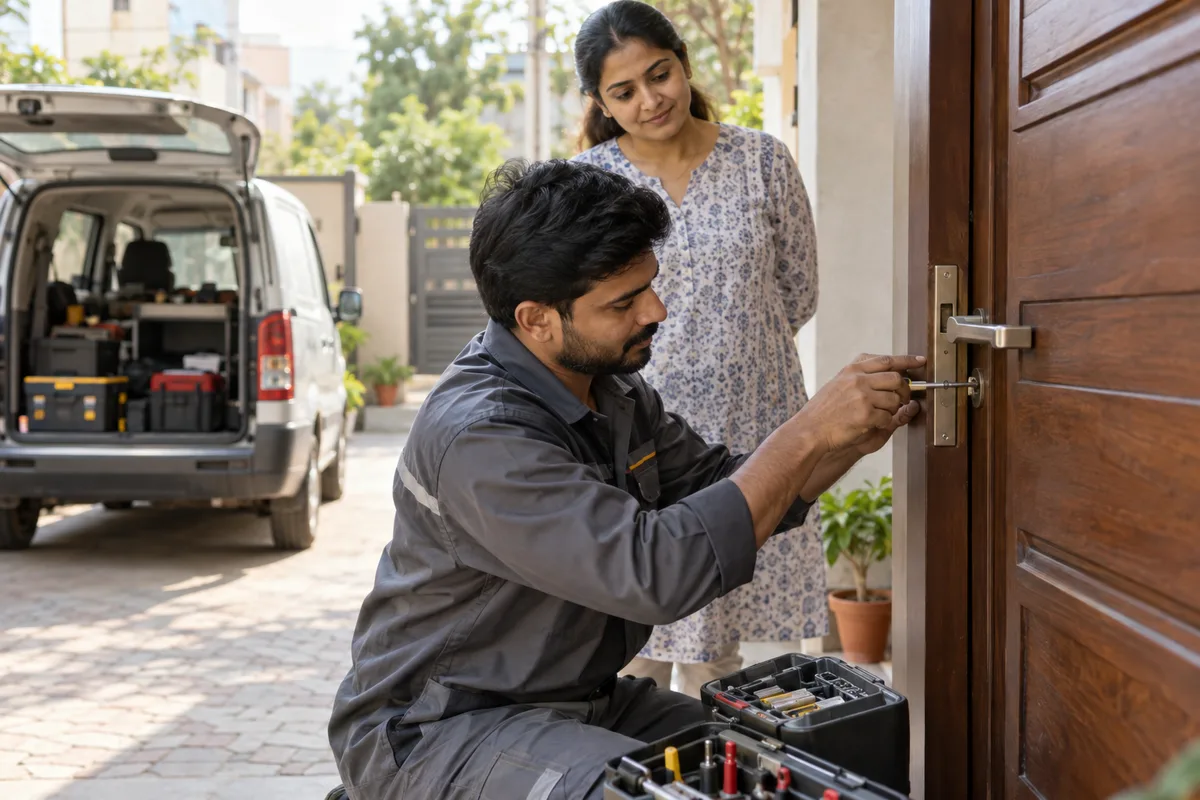
What sales training means
Sales training teaches a sales team a skill it does not yet have, such as handling a specific objection or running a proper site visit, usually through a structured session. GullySales runs these sessions around real objections and calls from your business rather than generic sales theory.
Last updated 5 Oct 2026.
For locksmiths
Where it usually goes wrong, and what we would do.
“Calm communication matters more than a script”
A stressed customer responds better to a confident, simple explanation than a rehearsed sales pitch.
“The upgrade mention is trained to be brief”
One sentence about a digital lock, offered once, reads as helpful rather than pushy.
“On-site quoting is trained as a fixed habit”
Stating cost before starting work, every time, prevents the disputes that damage reviews.
What we do
What we deliver for locksmiths.
Every deliverable, what it covers for you, and the result it is there to produce. Nothing here is an extra.
A calm-communication training session
A short session on speaking clearly and confidently with a stressed customer, without relying on a rehearsed sales script.
Result: A panicked customer feels reassured rather than sold to.
A one-sentence upgrade mention, trained as a habit
Practice delivering a single, brief upgrade mention after every emergency job, so it becomes routine rather than forced.
Result: The upgrade gets offered consistently without sounding like a pitch.
On-site quoting practice with real scenarios
Training that walks technicians through stating cost clearly before starting work, using real job scenarios from past disputes.
Result: Technicians quote the same clear way, every visit.
A feedback review a few weeks after training
A short check-in on real jobs a few weeks after training, to see whether the quoting and upgrade habits are actually being used.
Result: Training turns into a habit instead of fading after the session.
How the result is measured
- Skill assessment scores
- Objection handling improvement
- Conversion rate after training
Recorded as a baseline before work starts, so every later report has an honest comparison.
Situations to practise
Six call-out conversations a locksmith should practise, and what good looks like.
- A lockout call at night
- Ask location, door type (wooden, UPVC or metal gate) and who is locked out. Give a price range and what adds to it before leaving. Practise confirming it on WhatsApp.
- The price on arrival is different from the phone price
- Explain what is different before touching the lock, and get a yes on the new price. Practise this so it is never raised for the first time at the door.
- The customer is nervous about a stranger at the door
- Share your name, ID and vehicle before arriving, and ask for proof of residence before opening. Practise saying why, so it sounds like care and not suspicion.
- The upgrade mention
- After the job, say one sentence, such as the cylinder is worn and a higher-grade lock would last longer, then leave a card. Practise it as one line and stop.
- A car key duplication or transponder enquiry
- Ask make, model, year and key type, and what proof of ownership you will need. Practise saying what you can and cannot programme before travelling.
- A society secretary asks about a yearly contract
- Ask number of flats, doors and common areas. Offer a site visit before the quote. Practise a formal, written reply in place of a phone price.
Who it is for
This is written for these locksmiths.
- Emergency and 24-hour locksmiths
- Automotive locksmiths and key programming specialists
- Residential lock and security installers
- Commercial and office locksmith services
- Safe installation and repair specialists
- Smart lock and digital security installers
- Society and RWA-contracted locksmiths
How it works
From your first message to the first report.
No open-ended retainer. Every step gives you something in writing.
First
Your brief
You tell us what you need in a few short steps: your business, what you want, where enquiries come from and how they are handled.
After the brief
A conversation and a written scope
We read it, then talk with whoever handles your enquiries. If you want our help, the scope, the fee and the reporting come in writing, and nothing starts before you have read them.
Before work starts
Baseline recorded
The numbers this work is meant to move, such as enquiries, quotations, orders, visits or renewals, written down so every later report has an honest comparison.
After the baseline
The first fix goes live
The fix we agreed to start with is put in place and measured against the baseline, whether that is a reply, a follow-up, a page, a listing or the handover between marketing and sales.
As agreed
Report against the baseline
What moved, what did not, and what changes next, in plain words. How often you get it is set in writing before work starts.
At renewal
Renew on the numbers
The term ends and you decide whether to continue from the results. The length is agreed in writing before anything starts.
How the sales training work runs
- 1
Assess current skill levels
We review the team's current strengths and gaps, by observing calls and talking to managers.
- 2
Build the curriculum
Content is developed around your product, customers and sales cycle.
- 3
Schedule and deliver
Sessions run on a set calendar, with practice built into each one.
- 4
Check understanding
Short knowledge checks confirm what has actually stuck.
- 5
Review and refresh
The curriculum is revisited periodically and refresher sessions are run for the wider team.
Why us
Why owners pick GullySales over an agency.
Marketing and sales, as one job
Most agencies stop at the enquiry. We also fix what happens after it: the reply, the follow-up, the quote and the CRM.
The person on the first call does the work
No account managers in between. You are never handed to someone you have not met.
A baseline before anything starts
Your numbers are written down on day one, so every later report compares against something honest.
The fee in writing, split three ways
Our time, your media spend and production on separate lines. You always see what goes to us.
No guarantees we cannot keep
The term is agreed in writing and never a default twelve months. We never promise a ranking or a lead count, because nobody controls those.
One office, and we say so
Nagarbhavi, Bengaluru. We work across India by call and WhatsApp and travel when a session needs to be in person.
#257, 3rd floor, Sri Nanjundeshwara Complex, Nagarbhavi 8th Block, Outer Ring Road. How we work.
Your brief
Tell us what you need, and we will read it before we call.
Eight short steps about your business, what you want and who decides. Most questions are a tap, and you can skip any you would rather answer on the call.
FAQ
Questions owners ask before they call.
Not here? More answers, or ask on WhatsApp.
Who needs this training?
How long does this take to embed?
We are a two-person team. Can we practise without a trainer?
How do technicians give a higher price without sounding like cheats?
How long is the contract?
Who will actually do the work?
What do you need from us?
What if we are not happy with the work?

More for locksmiths
Everything else we would do for you.
Closest to this: sales craft
Also for locksmiths
Or start from the overview: sales and marketing for locksmiths.
Your next practical step
Tell us what you are trying to grow, and we will read it before we call.
Eight short steps, mostly taps. Skip anything you would rather answer on the call.