Home cleaning companies · Content marketing
Write the page for the exact job, not a general services list.
Content marketing for a home cleaning company means a page for each job, such as deep cleaning or sofa cleaning, answering what is included and the price. GullySales writes and photographs each page from your own completed jobs, not stock images.
Scope, fee, reporting and term are agreed in writing after we have read your brief and spoken to you.
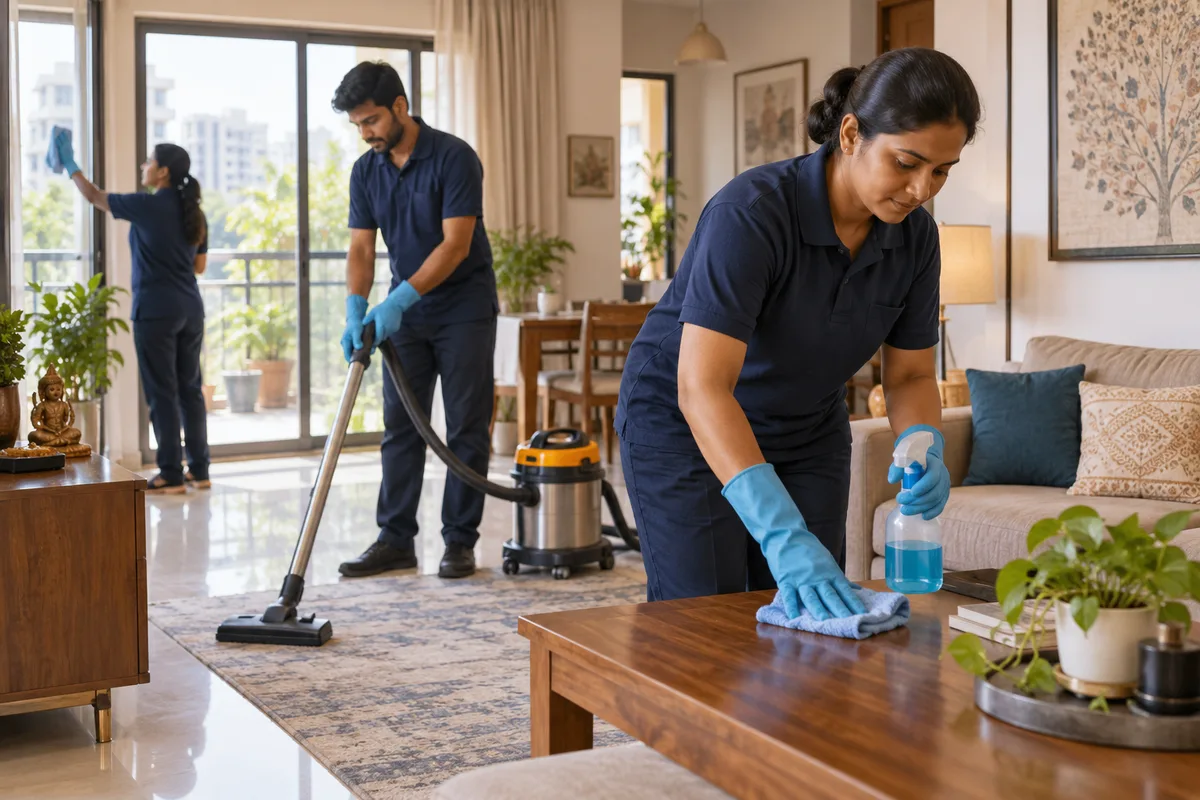
What content marketing means
Content marketing is writing articles, guides and pages that answer the questions buyers search before they are ready to enquire. This makes your business visible and trusted before the first call. GullySales plans this content from the first conversation onward, choosing topics that match real search demand rather than guesses.
Also for home cleaning companies
- Social media marketing for home cleaning companies
- Apartment advertising for home cleaning companies
- Branding for home cleaning companies
- Buyer journey mapping for home cleaning companies
- Buyer personas for home cleaning companies
- Digital marketing for home cleaning companies
- Lead generation for home cleaning companies
- Paid advertising for home cleaning companies
Sales and marketing for home cleaning companies, the overview.
Last updated 8 Nov 2026.
For home cleaning companies
Where it usually goes wrong, and what we would do.
“One page per job, with what is included”
A customer comparing sofa cleaning quotes wants to know what is covered, not just that cleaning services exist.
“Before-and-after photos do the convincing”
A real photo of a cleaned kitchen or sofa convinces faster than a paragraph describing the process.
“FAQ content answers safety upfront”
A page explaining staff verification and supervision answers the trust question before a customer messages to ask.
What we do
What we deliver for home cleaning companies.
Every deliverable, what it covers for you, and the result it is there to produce. Nothing here is an extra.
A dedicated page for each job type
Separate pages for deep cleaning, sofa cleaning and move-out cleaning, each stating what is included and the price range.
Result: Someone pricing a move-out clean can read what is covered and what it costs.
A before-and-after photo library from real jobs
Photographs collected from completed jobs, organised by job type, replacing any generic or stock cleaning images.
Result: A customer sees proof of the actual work before booking.
A staff verification and process FAQ
A short page answering how staff are verified and supervised on a job, addressing the trust question before it is asked.
Result: The safety question is answered before a customer has to message.
A photo update routine for job pages
A simple process for collecting a fresh before-and-after photo from completed jobs, keeping the pages current.
Result: The pages keep showing real, recent work rather than going stale.
Practical guides for common customer questions
Short guides on questions such as how often to deep clean or what a move-out clean covers, written for what customers actually ask.
Result: Customers researching the job find useful answers on your own site.
How the result is measured
- Pages published
- Organic traffic
- Enquiries from content pages
Recorded as a baseline before work starts, so every later report has an honest comparison.
Questions buyers ask first
The questions a customer asks before booking a clean, and the page that answers each.
- What is included in a deep clean?
- A room-by-room task list, what is not included (painting marks, pest control), what you bring, and what the customer provides, such as water and power.
- How is the price set for my flat?
- A price page by BHK size, furnished or empty, and condition, with the extras listed. Use your real rates so staff can quote without calling the owner.
- Who will come into my home, and are they verified?
- A trust page: the checks you actually run, the uniform and ID shown on arrival, and who supervises. Describe only what you do.
- What if something is damaged or goes missing?
- A written damage policy: photographs at the start, how to report, and what is covered. Say what you do, not what a customer hopes to hear.
- Will a move-out clean help me get my deposit back?
- A move-out checklist built on what landlords inspect: kitchen, bathrooms, floors and walls. Make no promise about the deposit.
- How do I prepare before the team arrives?
- A preparation page: valuables put away, counters cleared, access arranged, water and power on. It prevents the half-day that goes into arguing about access.
Who it is for
This is written for these home cleaning companies.
- Deep cleaning and one-time service providers
- Recurring home maintenance cleaning companies
- Sofa, carpet and upholstery cleaning specialists
- Move-in and move-out cleaning services
- Office and commercial cleaning contractors
- Society and apartment complex cleaning contracts
- Franchise-model cleaning companies
Not for
It is not the right fit if.
- You cannot say what a deep clean covers in your own company, so a page about it would describe a job nobody agreed.
- Nobody can check a page about chemicals around children or pets, and a wrong line there costs a household's trust.
- You want bookings this week, but a job page needs to be found and read before it brings anyone.
How it works
How the content marketing work runs
The work itself, in order. How an engagement starts, from your brief to a written scope, is set out on our method page.
- 1
Agree the plan
Topics and formats come from the content strategy and the buyer-question list. The volume goes into the written scope, agreed with you, not into a number quoted on a call.
- 2
Brief and draft
Each piece starts from its one-page brief and a short conversation with your technical person, recorded if they allow it, so the draft uses their words.
- 3
Check the facts
Your person marks the draft for accuracy and we correct it. Regulated subjects also go to your own adviser, because restrictions on claims apply to articles as much as to advertisements.
- 4
Publish and distribute
The piece goes live on your site, then out through the channels where your buyers already are.
- 5
Read the enquiries and adjust
Results are reported against the baseline recorded before work began. Topics that brought readers but no enquiries are changed or dropped. How often you are reported to is agreed in writing.
Where this fits
Three pieces of sales work, in this order.
This work sits inside sales process design, at stage 0, foundation. The audit comes before it, and sales management keeps it running.
Step 1
Sales audit
Find where deals are being lost and what to fix first.
Start here if you cannot say where orders are lost.
Step 2 · you are here
Sales process design
One written way to sell, from first enquiry to repeat order.
Start here if every salesperson sells differently.
Step 3
Sales management
A target, a review routine and someone who owns the number.
Start here if the team has targets and no routine.
FAQ
Questions owners ask before they call.
Not here? More answers, or ask on WhatsApp.
How often does this content need updating?
Do we need a blog?
How do we write about chemicals if there are children or pets?
Can one page serve both homes and offices?
How much does it cost?
How long is the contract?
How soon will we see results?
Who will actually do the work?
What do you need from us?
What if we are not happy with the work?
From the blog
Further reading for home cleaning companies.
 7 min read · 21 Sept 2026How to advertise to startup employeesThere is no tech park to buy. A forty person company sits above a bakery, so the audience is the neighbourhood, the delivery app and the coworking floor.
 7 min read · 21 Sept 2026How to advertise to apartment residentsGetting to apartment residents is a permission problem before it is a media problem. Learn who holds the gate, what the association will agree to, and what gets you banned.
 5 min read · 24 Apr 2026Before-and-after photos as proof: how to take and use themHow a home service firm can shoot matching before-and-after photos on every job, caption them, get the customer's permission and turn each one into proof that a stranger will believe.
More for home cleaning companies
Everything else we would do for you.
Closest to this: content and social
Also for home cleaning companies
Or start from the overview: sales and marketing for home cleaning companies.
Your next practical step
Tell us what you are trying to grow, and we will read it before we call.
Eight short steps, mostly taps. Skip anything you would rather answer on the call.