Home cleaning companies · Buyer persona
Write for the move-in customer and the monthly subscriber differently.
A buyer persona for a home cleaning company describes one type of customer: what starts the search, what worries them and who else decides. A one-time deep-clean customer and a monthly subscriber need separate cards. GullySales builds them from your own booking history, not assumptions.
Scope, fee, reporting and term are agreed in writing after we have read your brief and spoken to you.
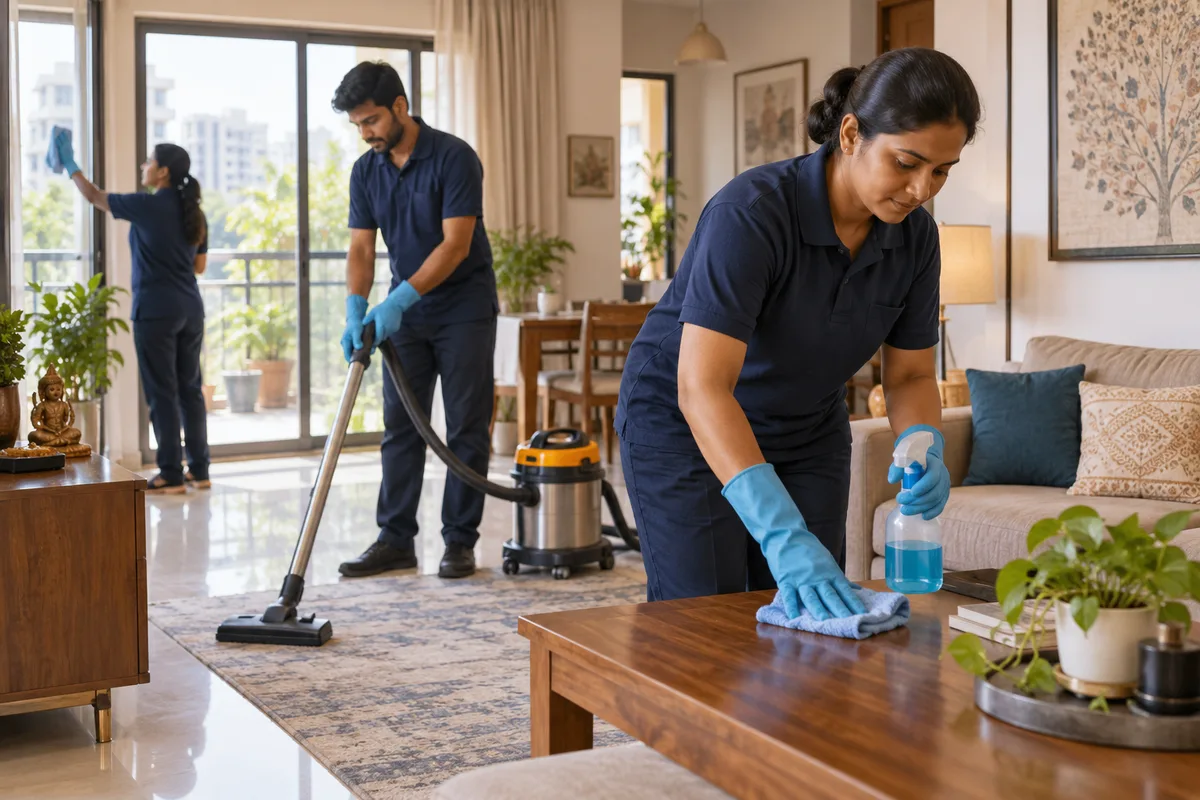
What buyer persona means
A buyer persona is a plain description of the kind of customer who actually buys from you. It includes what they search, what worries them and who else they ask before deciding. GullySales builds this from real enquiries and past sales rather than a generic template, then uses it to write every page and advert.
Also for home cleaning companies
- Buyer journey mapping for home cleaning companies
- Digital marketing for home cleaning companies
- Apartment advertising for home cleaning companies
- Branding for home cleaning companies
- Content marketing for home cleaning companies
- Lead generation for home cleaning companies
- Paid advertising for home cleaning companies
- Public relations for home cleaning companies
Sales and marketing for home cleaning companies, the overview.
Last updated 8 Nov 2026.
For home cleaning companies
Where it usually goes wrong, and what we would do.
“The move-in customer needs speed above all”
This buyer books whoever quotes and confirms fastest, since the date rarely moves.
“The subscriber values consistency over price”
This buyer stays for the same reliable team each visit and rarely switches over a small price gap.
“Corporate clients decide on contracts, not posts”
An office or society buyer wants a proposal and a contract, not a social media impression.
What we do
What we deliver for home cleaning companies.
Every deliverable, what it covers for you, and the result it is there to produce. Nothing here is an extra.
Personas for the move-in, subscriber and corporate buyer
Three short persona documents describing what each type of customer, one-time, recurring and corporate, actually asks and values first.
Result: Quotes and messages answer what that specific customer cares about.
A fast-quote script for the move-in persona
Ready wording for a quick, complete quote aimed at a customer booking against a fixed move-in date.
Result: The customer who needs speed gets it without a slow back-and-forth.
A consistency pitch for the recurring subscriber
Messaging built around the same reliable team each visit, aimed at the customer who values consistency over the lowest price.
Result: A subscriber has a reason to stay beyond a small price difference.
A proposal format for corporate and society clients
A written proposal template covering scope, staffing and contract terms for an office or society buyer who decides on a document, not a post.
Result: A corporate buyer gets the formal proposal their decision requires.
A persona refresh from booking history
A periodic check of your booking history to confirm the personas still match who is actually enquiring and booking.
Result: Messaging keeps speaking to the customers actually coming through.
How the result is measured
- Enquiry match to persona
- Conversion rate by persona
- Content aligned to persona
Recorded as a baseline before work starts, so every later report has an honest comparison.
A persona card for this customer
Here is a typical card for the landlord clearing a flat before the next tenant.
An example, not a fact about your customers. Check each line against your booking records and reviews, and rewrite what does not fit.
- Who they are
- Typical: a landlord or property agent with a flat to hand over before the next tenant arrives. Check against bookings where the contact differs from the person living at the address.
- What starts the search
- Typical: a tenant vacating, a key handover date or a society inspection. Ask for the handover date on the first call.
- What worries them
- Typical: stains left behind, a worker who does not turn up and fittings that go missing. Read your reviews and complaint calls for these.
- What they compare you with
- Typical: a maid who works in the building, an app-based cleaning service and a neighbour's cleaner. Ask which one the owner used last time.
- Who else decides
- Typical: the outgoing family who will be present at the visit, and an owner abroad who approves by message. Send the quote to both.
- What makes them say yes
- Typical: a written scope by room, photographs sent when the job closes and a named supervisor. Ask which landlords rebooked for the next vacancy.
Who it is for
This is written for these home cleaning companies.
- Deep cleaning and one-time service providers
- Recurring home maintenance cleaning companies
- Sofa, carpet and upholstery cleaning specialists
- Move-in and move-out cleaning services
- Office and commercial cleaning contractors
- Society and apartment complex cleaning contracts
- Franchise-model cleaning companies
Not for
It is not the right fit if.
- You serve one kind of customer only and your message already fits them, so a second card would invent a buyer you do not have.
- You have not spoken to the move-in customer or the subscriber about what they checked first, so the card would hold your assumptions.
- Your cleaners and booking staff do not use the card, and it would sit in a folder while quotes are written from habit.
How it works
How the buyer persona work runs
The work itself, in order. How an engagement starts, from your brief to a written scope, is set out on our method page.
- 1
Understand the current view
We start with how your team currently describes the customer, since the gap between belief and reality is the finding itself.
- 2
Audit past enquiries and sales
We look at recent enquiries and closed deals to see who actually bought, not who was assumed to buy.
- 3
Interview customers and staff
Structured conversations with recent buyers, held as talk about the last purchase and not a questionnaire. We ask what happened before they called, who else was involved and what they compared. Customers agree before we contact them, and their answers are reported without names.
- 4
Build the personas
Findings are written into short, usable persona documents rather than a long report.
- 5
Apply to your marketing
We show where each persona should change a page, an ad or a script you already have. The sales team reads the drafts and says which ring true. A persona they do not recognise is rewritten.
Where this fits
Three pieces of sales work, in this order.
This work sits inside sales process design, at stage 0, foundation. The audit comes before it, and sales management keeps it running.
Step 1
Sales audit
Find where deals are being lost and what to fix first.
Start here if you cannot say where orders are lost.
Step 2 · you are here
Sales process design
One written way to sell, from first enquiry to repeat order.
Start here if every salesperson sells differently.
Step 3
Sales management
A target, a review routine and someone who owns the number.
Start here if the team has targets and no routine.
FAQ
Questions owners ask before they call.
Not here? More answers, or ask on WhatsApp.
Do we need personas for one small area?
How does this change our marketing?
How do we check a persona when every customer is new?
Should the cleaners see the card as well as the office?
How much does it cost?
How long is the contract?
How soon will we see results?
Who will actually do the work?
What do you need from us?
What if we are not happy with the work?
From the blog
Further reading for home cleaning companies.
 7 min read · 21 Sept 2026How to advertise to startup employeesThere is no tech park to buy. A forty person company sits above a bakery, so the audience is the neighbourhood, the delivery app and the coworking floor.
 7 min read · 21 Sept 2026How to advertise to apartment residentsGetting to apartment residents is a permission problem before it is a media problem. Learn who holds the gate, what the association will agree to, and what gets you banned.
 5 min read · 24 Apr 2026Before-and-after photos as proof: how to take and use themHow a home service firm can shoot matching before-and-after photos on every job, caption them, get the customer's permission and turn each one into proof that a stranger will believe.
More for home cleaning companies
Everything else we would do for you.
Closest to this: strategy and research
Also for home cleaning companies
Or start from the overview: sales and marketing for home cleaning companies.
Your next practical step
Tell us what you are trying to grow, and we will read it before we call.
Eight short steps, mostly taps. Skip anything you would rather answer on the call.