Home cleaning companies · Buyer journey
Know what a customer checks between finding you and booking a slot.
Buyer journey mapping for a home cleaning company traces the steps from a locality search to a confirmed booking, so the quote lands at the right moment. GullySales maps this from your actual enquiries and fixes the step where a quote arrives too late to matter.
Scope, fee, reporting and term are agreed in writing after we have read your brief and spoken to you.
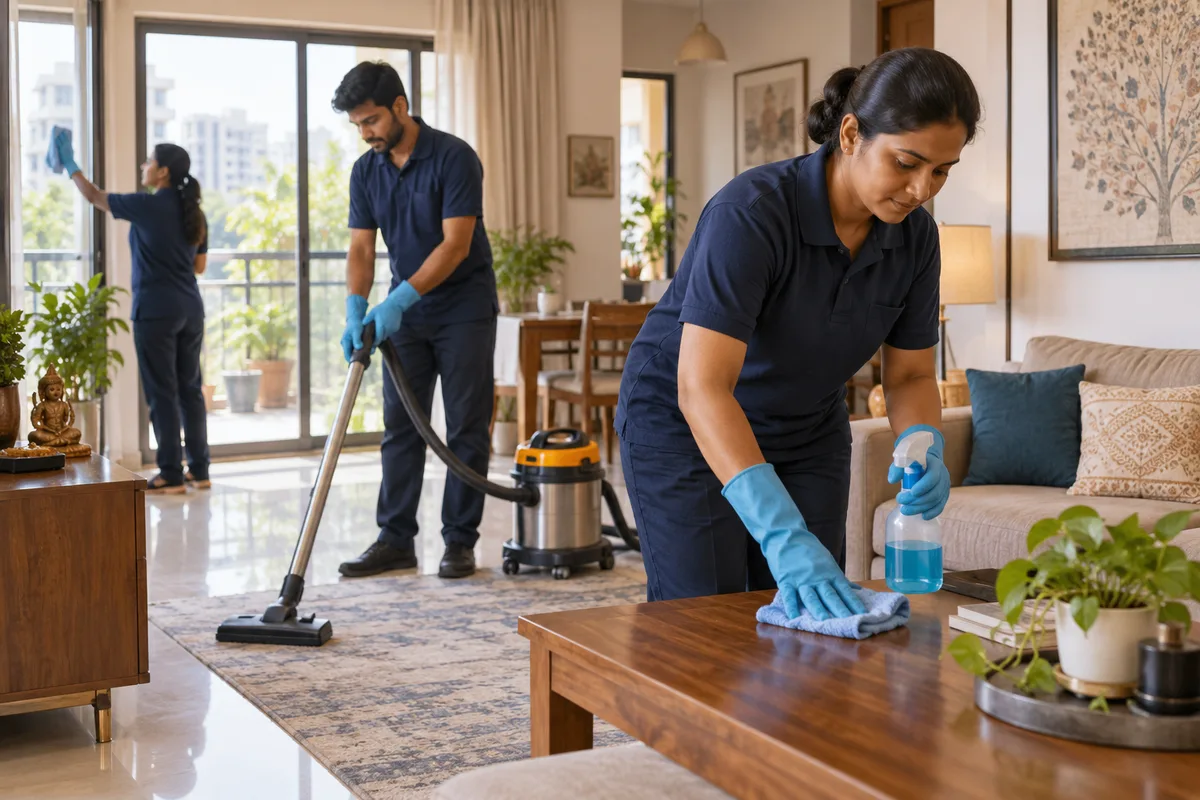
What buyer journey means
The buyer journey is the sequence of steps a customer actually takes, from first hearing about you to deciding to buy, which is rarely a single visit or call. GullySales maps this sequence for your business and checks that something useful happens at each step instead of only at the final call.
Also for home cleaning companies
- Buyer personas for home cleaning companies
- Digital marketing for home cleaning companies
- Apartment advertising for home cleaning companies
- Branding for home cleaning companies
- Content marketing for home cleaning companies
- Lead generation for home cleaning companies
- Paid advertising for home cleaning companies
- Public relations for home cleaning companies
Sales and marketing for home cleaning companies, the overview.
Last updated 8 Nov 2026.
For home cleaning companies
Where it usually goes wrong, and what we would do.
“Trust is checked before price”
Most customers look for verified-staff proof first, so trust signals need to appear early, not at the end.
“The booking decision often happens same-day”
A move-in or festival clean is usually booked within hours of the search, so slow steps anywhere lose the customer.
“Renewal is a separate journey”
A recurring customer decides to continue based on reliability, not the marketing that won the first booking.
What we do
What we deliver for home cleaning companies.
Every deliverable, what it covers for you, and the result it is there to produce. Nothing here is an extra.
An enquiry-to-booking journey map from real quotes
A map of the steps from a locality search to a confirmed booking, built from your actual recent enquiries and quote records.
Result: You see exactly where a customer is lost before booking.
A trust-signal check at the earliest step
A review of whether verified-staff proof appears before or after price in the current enquiry path, moved earlier if needed.
Result: A customer sees the trust proof before they start comparing price.
A same-day quote response plan
A routine for getting a quote back to a same-day or move-in enquiry fast enough to still be the first company to answer.
Result: A time-sensitive booking is not lost to a faster competitor.
A separate renewal journey for recurring customers
A distinct map of what makes a subscriber continue or leave, built from renewal and cancellation patterns rather than the first-booking journey.
Result: You know what actually keeps a recurring customer, not just what won them.
A yearly review of the mapped journey
A check of the mapped journey against fresh enquiry data, updating any step that no longer matches how customers actually search.
Result: The journey map keeps matching how customers really book.
How the result is measured
- Drop-off rate by step
- Time from first contact to sale
- Steps with no content
Recorded as a baseline before work starts, so every later report has an honest comparison.
Stages of the customer's journey
A cleaning customer goes from a trigger to a booked slot, and trust is tested before price.
- A trigger sets the date
- A move-in, a festival or guests arriving start it. Ask the trigger date first, since that decides which slot you can offer.
- Searches the locality
- The search is deep cleaning near me or a named job. List the localities you cover and the jobs by name on the page.
- Checks trust
- They read reviews and wonder who will enter the home. Show how your staff are identified and verified and what the supervisor carries.
- Asks for a quote
- Customers send photographs or a flat type. Ask the flat type, bathrooms and condition, and give an itemised scope with the quote.
- Books the slot
- Confirm the date, time window, water and power access. Check in writing who will be at home to let the team in.
- After the job
- The customer walks through and gives a verdict. Ask for feedback at the end and offer the next regular visit or a sofa clean.
Who it is for
This is written for these home cleaning companies.
- Deep cleaning and one-time service providers
- Recurring home maintenance cleaning companies
- Sofa, carpet and upholstery cleaning specialists
- Move-in and move-out cleaning services
- Office and commercial cleaning contractors
- Society and apartment complex cleaning contracts
- Franchise-model cleaning companies
Not for
It is not the right fit if.
- You have not talked to a single customer about why they booked, so the map would record your guesses and not their steps.
- You take only a few bookings and one person handles each, so the steps already live in that person's head and a map adds paperwork.
- You expect the map to raise bookings by itself, though it only shows where a customer stops and nobody has acted on that yet.
How it works
How the buyer journey work runs
The work itself, in order. How an engagement starts, from your brief to a written scope, is set out on our method page.
- 1
Understand the sales process
We walk through how a sale happens today, from the person who first answers an enquiry to the one who closes it.
- 2
Audit the data
Website analytics, call logs and CRM records are put together to see where people drop out. Where records are thin, we say so and mark the gap rather than guess.
- 3
Interview buyers and staff
Recent customers, and some who did not buy, plus the team who speak to them, explain the reasons behind the numbers.
- 4
Build the map
Stages, touchpoints, decision-makers and drop-off points are set out in one document everyone reads the same way.
- 5
Fix and measure
Each fix is made against the stage it addresses, and the drop-off at that stage is compared with the baseline afterwards.
Where this fits
Three pieces of sales work, in this order.
This work sits inside sales process design, at stage 1, prospecting and lead generation. The audit comes before it, and sales management keeps it running.
Step 1
Sales audit
Find where deals are being lost and what to fix first.
Start here if you cannot say where orders are lost.
Step 2 · you are here
Sales process design
One written way to sell, from first enquiry to repeat order.
Start here if every salesperson sells differently.
Step 3
Sales management
A target, a review routine and someone who owns the number.
Start here if the team has targets and no routine.
FAQ
Questions owners ask before they call.
Not here? More answers, or ask on WhatsApp.
Why does this matter for cleaning specifically?
How often should this be reviewed?
Who else decides on a cleaning booking?
A customer got a quote and booked someone else. Can we find out why?
How much does it cost?
How long is the contract?
How soon will we see results?
Who will actually do the work?
What do you need from us?
What if we are not happy with the work?
From the blog
Further reading for home cleaning companies.
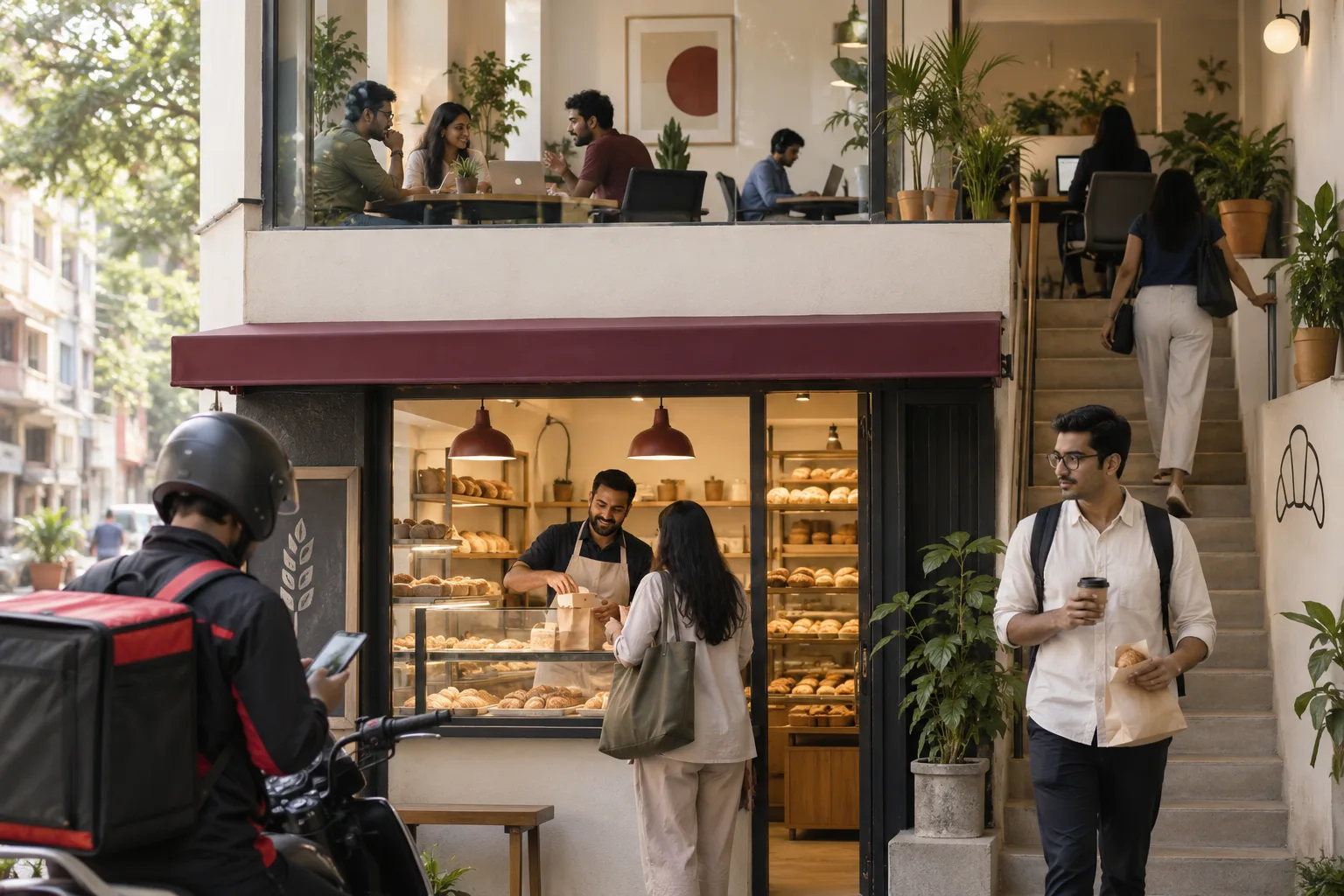 7 min read · 21 Sept 2026How to advertise to startup employeesThere is no tech park to buy. A forty person company sits above a bakery, so the audience is the neighbourhood, the delivery app and the coworking floor.
 7 min read · 21 Sept 2026How to advertise to apartment residentsGetting to apartment residents is a permission problem before it is a media problem. Learn who holds the gate, what the association will agree to, and what gets you banned.
 5 min read · 24 Apr 2026Before-and-after photos as proof: how to take and use themHow a home service firm can shoot matching before-and-after photos on every job, caption them, get the customer's permission and turn each one into proof that a stranger will believe.
More for home cleaning companies
Everything else we would do for you.
Closest to this: strategy and research
Also for home cleaning companies
Or start from the overview: sales and marketing for home cleaning companies.
Your next practical step
Tell us what you are trying to grow, and we will read it before we call.
Eight short steps, mostly taps. Skip anything you would rather answer on the call.