Destination management companies · Social media
Use social platforms to show operators the people and ground work behind the programme.
Social media for a DMC is mostly a trade audience on LinkedIn, plus Instagram as a shop window for planners who judge by what they see. GullySales plans what to post, writes it and keeps the feed useful to buyers instead of travellers.
Scope, fee, reporting and term are agreed in writing after we have read your brief and spoken to you.
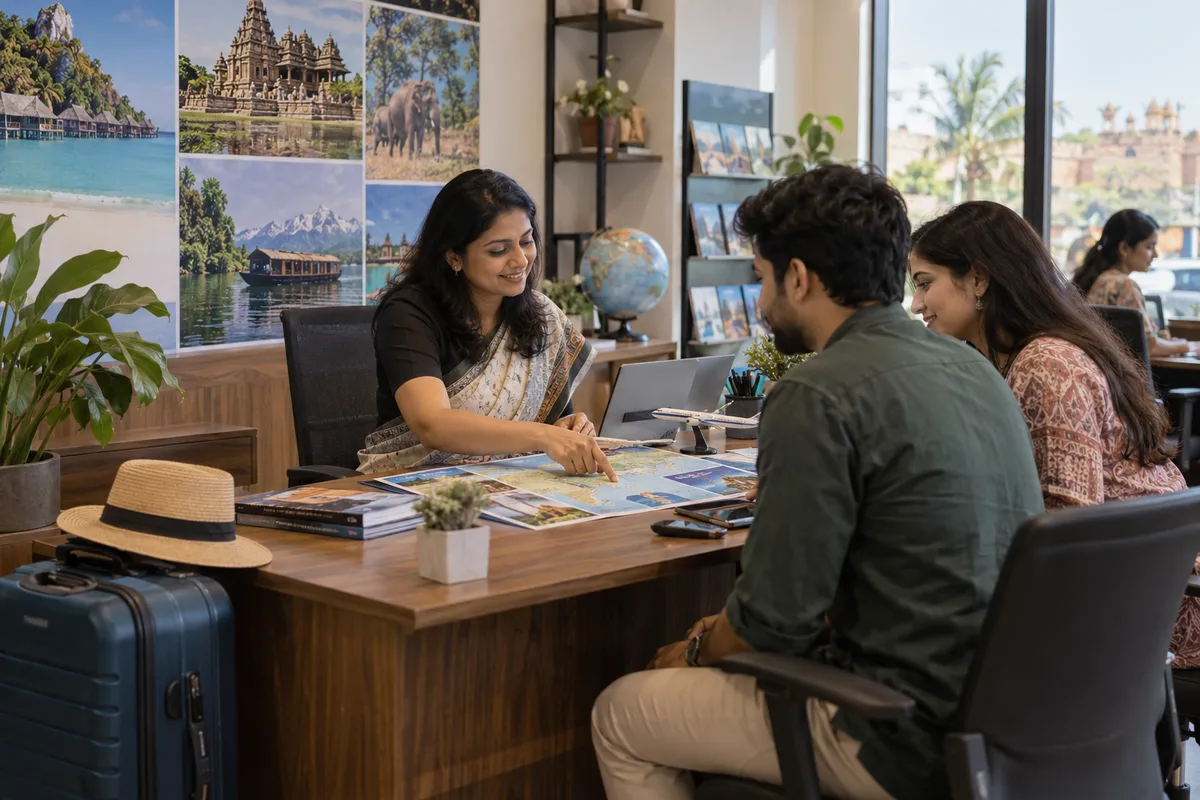
What social media means
Social media is the ongoing posting your business does on platforms such as Instagram, Facebook and LinkedIn to stay visible to customers and prospects between purchases. GullySales plans a posting calendar, writes captions and designs the images so the page looks active and answers what a visitor would ask.
Also for destination management companies
- Content marketing for destination management companies
- Lead generation for destination management companies
- SEO for destination management companies
- Buyer personas for destination management companies
- CRM for destination management companies
- Follow-up systems for destination management companies
- WhatsApp marketing for destination management companies
- Digital marketing for destination management companies
Sales and marketing for destination management companies, the overview.
Last updated 18 Oct 2026.
For destination management companies
Where it usually goes wrong, and what we would do.
“LinkedIn is where the buyer is”
Product heads, operations managers and corporate event buyers keep LinkedIn profiles current. A DMC page and a handful of staff profiles posting real programme notes are found by exactly the people who write briefs.
“Instagram works as proof, not advertising”
A planner checking a DMC before sending a brief scrolls its feed for real guests, real vehicles and real venues. Stock images of monuments tell them nothing about delivery.
“Posting what you may not show”
Guests, minors and confidential operators cannot be photographed or named freely. A DMC needs a rule for permission before a picture goes up, not after a complaint.
What we do
What we deliver for destination management companies.
Every deliverable, what it covers for you, and the result it is there to produce. Nothing here is an extra.
A platform plan for trade
Which accounts to keep, what each is for, and who on your team speaks for the company.
Result: Each account has a stated purpose and an owner.
Staff profile guidance
Short guidance for the sales head and operations lead on how to present their profiles and what to share.
Result: Profiles an operator checking you reads as credible.
A programme-note post format
A repeatable layout for sharing one day of a programme, a new hotel or a venue, written for a planner.
Result: Posts a buyer can use when building their own brochure.
A permissions checklist
A simple record of consent for photographs, names and venues before anything is published.
Result: A written trail behind every picture on the feed.
Reading the results
Which posts led to profile visits, messages or briefs, recorded against the starting point.
Result: You can tell which posts reached the buyers.
How the result is measured
- Posts published
- Engagement rate
- Enquiries from social profiles
Recorded as a baseline before work starts, so every later report has an honest comparison.
Who it is for
This is written for these destination management companies.
- Inbound DMCs handling foreign tour operators in India
- Outbound DMCs sending Indian groups to a destination partner
- Corporate MICE and incentive trip specialists
- Wedding and destination-event DMCs
- Regional DMCs for Kerala, Rajasthan, Himachal or the Northeast
- Spiritual and cultural circuit DMCs
- Luxury and private-programme DMCs
- Cruise and rail-journey ground handlers
How it works
How the social media work runs
The work itself, in order. How an engagement starts, from your brief to a written scope, is set out on our method page.
- 1
Understand your audience and platforms
We identify which platforms your specific buyers actually use and what kind of content they respond to.
- 2
Audit current presence
We review existing pages, past content performance and any gaps in consistency.
- 3
Build the content calendar
A plan is created, balancing genuine value with occasional direct offers.
- 4
Implement and post
Content is created and published consistently on the agreed schedule.
- 5
Measure and optimise
We track enquiries alongside engagement and adjust the content mix based on what actually performs.
Where this fits
Three pieces of sales work, in this order.
This work sits inside sales process design, at stage 0, foundation. The audit comes before it, and sales management keeps it running.
Step 1
Sales audit
Find where deals are being lost and what to fix first.
Start here if you cannot say where orders are lost.
Step 2 · you are here
Sales process design
One written way to sell, from first enquiry to repeat order.
Start here if every salesperson sells differently.
Step 3
Sales management
A target, a review routine and someone who owns the number.
Start here if the team has targets and no routine.
FAQ
Questions owners ask before they call.
Not here? More answers, or ask on WhatsApp.
Should the company or the founder post?
Can we show guests on the feed?
Do we need paid promotion on social platforms?
How long is the contract?
How soon will we see results?
Who will actually do the work?
What do you need from us?
What if we are not happy with the work?
More for destination management companies
Everything else we would do for you.
Closest to this: content and social
Also for destination management companies
Or start from the overview: sales and marketing for destination management companies.
Your next practical step
Tell us what you are trying to grow, and we will read it before we call.
Eight short steps, mostly taps. Skip anything you would rather answer on the call.