Resorts · Buyer persona
Write down who actually books, and stop advertising to everyone who likes the hills.
A buyer persona for a resort is a written description of the guest types who book you, what each wants to know and how each decides. GullySales builds them from your own booking register and WhatsApp chats, not from guesses.
Scope, fee, reporting and term are agreed in writing after we have read your brief and spoken to you.
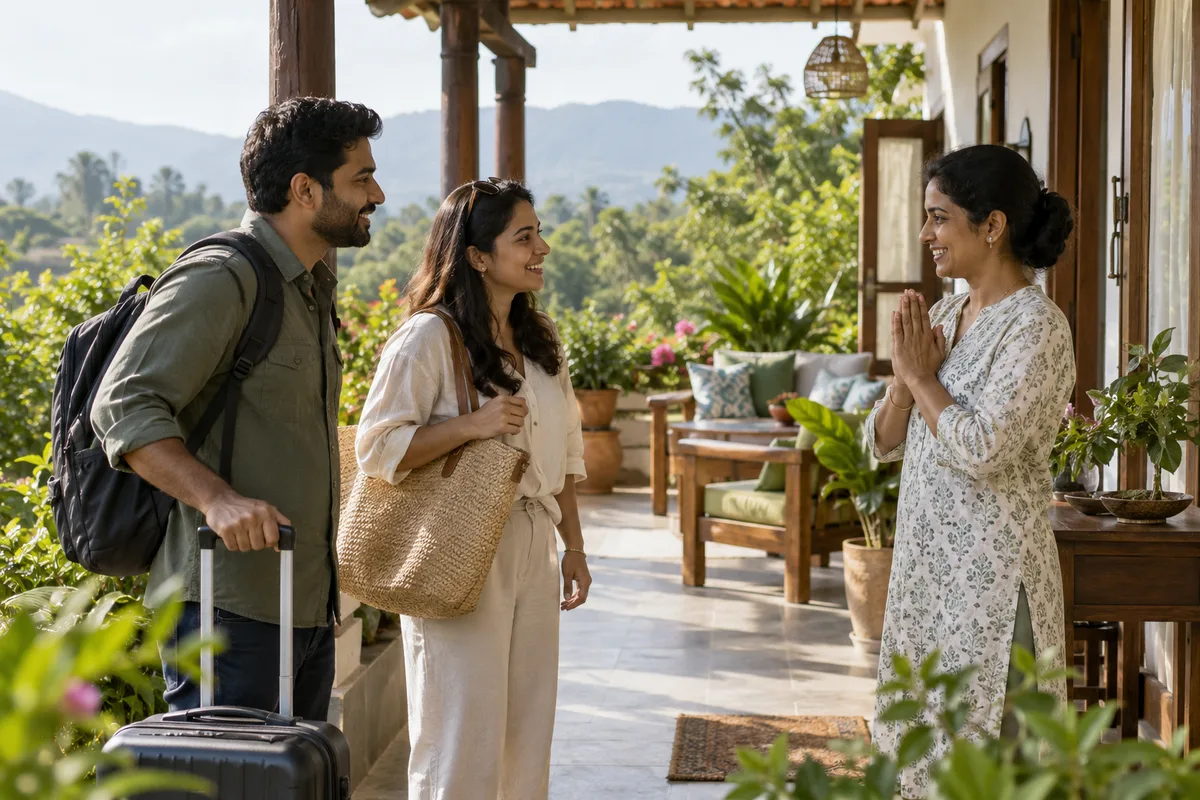
What buyer persona means
A buyer persona is a plain description of the kind of customer who actually buys from you. It includes what they search, what worries them and who else they ask before deciding. GullySales builds this from real enquiries and past sales rather than a generic template, then uses it to write every page and advert.
Last updated 3 Nov 2026.
For resorts
Where it usually goes wrong, and what we would do.
“The person who pays and the person who chooses differ”
A manager books the team outing, a daughter books the family stay for the parents, a friend picks the villa for the wedding group. The choice is made by one and the advance is paid by another, so the property must answer both.
“A solo remote worker and a joint family read different details”
The remote worker looks for network, a desk, quiet and weekday rates. The joint family looks for rooms on one floor, vegetarian food, steps and a safe place for children. Pages that list every feature at once convince neither.
“Past guests are a persona the owner already knows”
The couple who came for an anniversary, the regulars from Hyderabad, the cricket club that booked the whole property. The owner remembers them, yet none of it is written anywhere. Their reasons for coming are the cheapest guide to who else will come.
“Source and persona are not the same thing”
A guest from Airbnb may be a first-timer comparing prices, and another from the same app a returning guest who forgot the number. Treating the app as one audience hides the guests who would book direct if they were reminded.
What we do
What we deliver for resorts.
Every deliverable, what it covers for you, and the result it is there to produce. Nothing here is an extra.
A booking-register review
Your past bookings read for group size, origin city, season, length of stay, source and repeat visits, so patterns show from your own records.
Result: You can name the guest types that actually fill your rooms.
Three to five written personas
Short profiles, each with the trip, the questions asked, the doubts, the person paying and the channel used.
Result: The owner and the staff describe the same guest the same way.
The questions each persona asks, answered
For each persona, a list of what they ask on WhatsApp before booking and a ready reply to each.
Result: A reply answers the question the guest is actually asking.
Offers matched to personas
A weekday team offer, a family long-weekend package and a remote-work stay, each named and described for its reader.
Result: Each offer speaks to one guest instead of all of them.
A persona for the organiser
A profile for the HR or admin person who plans offsites, including what a quote must show and what they compare.
Result: Organisers get quotes in the form they use to compare.
Persona notes for staff
A one-page guide for the person who answers the phone, covering what each guest type needs and which room or meal suits them.
Result: Whoever picks up the phone can recognise the guest type.
How the result is measured
- Enquiry match to persona
- Conversion rate by persona
- Content aligned to persona
Recorded as a baseline before work starts, so every later report has an honest comparison.
Who it is for
This is written for these resorts.
- Coffee and tea estate resorts and plantation bungalows
- Jungle resorts near tiger reserves and national parks, with safaris booked through the forest department
- Hill-station resorts and cottage clusters in Coorg, Munnar, Manali and Mussoorie
- Beach cottages and villas in Goa, Gokarna and the Konkan coast
- Heritage havelis, palace hotels and farm resorts
- Villa clusters rented as a whole property
- Backwater and lakeside stays
- Compact owner-run resorts of ten to twenty rooms
- Resorts with a lawn, hall or banquet space for functions
- City-edge and highway resorts for day outings and short weekend breaks
How it works
How the buyer persona work runs
The work itself, in order. How an engagement starts, from your brief to a written scope, is set out on our method page.
- 1
Understand the current view
We start with how your team currently describes the customer, since the gap between belief and reality is often the finding itself.
- 2
Audit past enquiries and sales
We look at recent enquiries and closed deals to see who actually bought, not who was assumed to buy.
- 3
Interview customers and staff
Short, structured conversations surface the real language, worries and triggers behind a purchase.
- 4
Build the personas
Findings are written into short, usable persona documents rather than a long report.
- 5
Apply to your marketing
We show exactly where each persona should change a page, an ad or a script you already have.
Where this fits
Three pieces of sales work, in this order.
This work sits inside sales process design, at stage 0, foundation. The audit comes before it, and sales management keeps it running.
Step 1
Sales audit
Find where deals are being lost and what to fix first.
Start here if you cannot say where orders are lost.
Step 2 · you are here
Sales process design
One written way to sell, from first enquiry to repeat order.
Start here if every salesperson sells differently.
Step 3
Sales management
A target, a review routine and someone who owns the number.
Start here if the team has targets and no routine.
FAQ
Questions owners ask before they call.
Not here? More answers, or ask on WhatsApp.
Is this too much for a resort with twelve rooms?
Do we need to survey our guests?
What if one guest type pays well but is rare?
How much does it cost?
How long is the contract?
How soon will we see results?
Who will actually do the work?
What do you need from us?
What if we are not happy with the work?
From the blog
Further reading for resorts.
 6 min read · 14 Oct 2026Building an off-season plan for a hotel, resort or venueHow to fill the quiet weeks with local residents, corporate meetings and low-cost packages, using a planning sheet that sets the floor price before the offer goes out.
 5 min read · 6 Oct 2026What buyers check before they book a stay or a catererGuests, tenants and event families judge hotels, homestays, PGs, serviced apartments and caterers on the same four checks. Here is what each check looks like and how to pass it.
- 6 min read · 6 Sept 2026Quoting a wedding or event: what to include so the customer can compareA wedding or event quotation should list what is included, what costs extra and a valid-until date, so the family can compare three venues line by line instead of haggling on the total.
More for resorts
Everything else we would do for you.
Closest to this: strategy and research
Also for resorts
Or start from the overview: sales and marketing for resorts.
Your next practical step
Tell us what you are trying to grow, and we will read it before we call.
Eight short steps, mostly taps. Skip anything you would rather answer on the call.