Resorts · Website
Your own website is where a guest books without the app's fee, so make it bookable.
A website for a resort is the property's own site, where a guest sees every room, the food, the route and the rules, and books or enquires direct. GullySales builds it to open on a phone with a weak signal, gives it a booking or quick enquiry path, and keeps its facts in line with your listings.
Scope, fee, reporting and term are agreed in writing after we have read your brief and spoken to you.
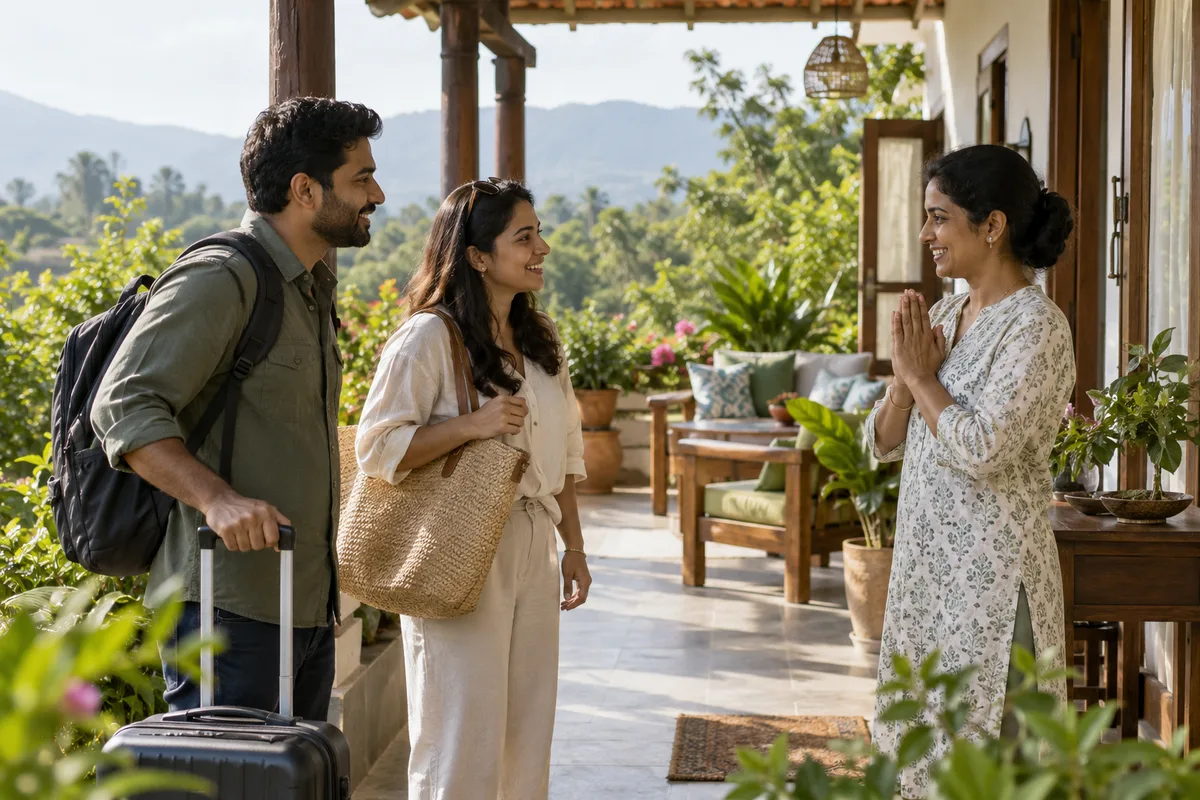
What website means
A website is the page a customer lands on after searching, clicking an advert or scanning a code, and it decides whether they call or leave. GullySales builds and maintains sites that load quickly, explain the offer plainly and make the enquiry form or phone number easy to find.
Last updated 3 Nov 2026.
For resorts
Where it usually goes wrong, and what we would do.
“A gallery with no way to book”
Lovely photographs, then a contact page with an email address. The guest goes back to the app to book, and you pay the commission anyway.
“Rates that differ from the apps with no reason given”
A guest sees one rate on your site and another on MakeMyTrip, and trusts neither. Decide what booking direct gives the guest and say it on the page.
“Built on a laptop, opened on a phone in a car”
Guests plan on phones, sometimes from the highway. A video header and full-size photographs fail on that signal before the first room appears.
What we do
What we deliver for resorts.
Every deliverable, what it covers for you, and the result it is there to produce. Nothing here is an extra.
A page per room or cottage
Bed type, how many sleep there, the bathroom, the view, the steps to reach it, and photographs taken at the property.
Result: A family with grandparents can see which cottage has no stairs.
Booking engine or dated enquiry form
A booking engine linked to your channel manager where you have one, or a short form for dates and guests that opens WhatsApp.
Result: A direct booking is possible from any page.
Food and meal-plan page
What the plan includes, veg and non-veg, the cook's own dishes, and whether guests may bring their own food or drink.
Result: Food questions are settled before the guest asks.
House rules and policies in plain words
Check-in times, pets, music after dark, alcohol, the ID needed at check-in, the advance and the cancellation terms.
Result: Guests who book know what they agreed to.
Speed for a hill-station signal
Compressed images, no autoplay video at the top, and pages that work on a slow mobile connection.
Result: The page opens for a guest planning from the road.
Domain and hosting in the owner's name
The domain and hosting registered to the property owner, with the logins held by you, not by the developer.
Result: The site stays yours if you change agencies.
How the result is measured
- Page load time
- Bounce rate
- Enquiries from the website
Recorded as a baseline before work starts, so every later report has an honest comparison.
What the page must show
What a guest checks on a resort website before paying an advance.
- The room they will sleep in
- Show each room or cottage on its own, with bed size, bathroom photographs and whether there are steps. Guests travelling with grandparents or toddlers decide on this.
- How to get there, honestly
- Give the drive time from the main city, the road in the rains, whether a sedan reaches the gate, and the map pin of the gate itself.
- What the stay includes
- State the meal plan, the activities that are free, the ones that cost extra, and whether the bonfire, plantation walk or pickup need booking ahead.
- Proof that it is a real place
- Show the state tourism registration where you hold one, links to recent guest reviews, and the owner's name and photograph.
- The advance and the cancellation terms
- Say what advance is taken, by which payment method, and what happens if the guest cancels or a landslide closes the road. Vague terms stop a booking.
- A way to ask at night
- Put a WhatsApp button on every page with a message ready for dates and guests, and say when someone will reply.
Who it is for
This is written for these resorts.
- Coffee and tea estate resorts and plantation bungalows
- Jungle resorts near tiger reserves and national parks, with safaris booked through the forest department
- Hill-station resorts and cottage clusters in Coorg, Munnar, Manali and Mussoorie
- Beach cottages and villas in Goa, Gokarna and the Konkan coast
- Heritage havelis, palace hotels and farm resorts
- Villa clusters rented as a whole property
- Backwater and lakeside stays
- Compact owner-run resorts of ten to twenty rooms
- Resorts with a lawn, hall or banquet space for functions
- City-edge and highway resorts for day outings and short weekend breaks
How it works
How the website work runs
The work itself, in order. How an engagement starts, from your brief to a written scope, is set out on our method page.
- 1
Confirm structure and content
We agree the site's pages and content needs before design begins, drawing on website strategy where it exists.
- 2
Design the site
Every page is designed against your brand identity and checked for how it should convert a visitor.
- 3
Build and test
The site is developed and tested across devices and browsers before anything goes live.
- 4
Load real content
Actual copy, images and information about your business replace placeholder content before launch.
- 5
Launch and hand over access
The site goes live with domain, hosting and content management access clearly handed to you.
Where this fits
Three pieces of sales work, in this order.
This work sits inside sales process design, at stage 1, prospecting and lead generation. The audit comes before it, and sales management keeps it running.
Step 1
Sales audit
Find where deals are being lost and what to fix first.
Start here if you cannot say where orders are lost.
Step 2 · you are here
Sales process design
One written way to sell, from first enquiry to repeat order.
Start here if every salesperson sells differently.
Step 3
Sales management
A target, a review routine and someone who owns the number.
Start here if the team has targets and no routine.
FAQ
Questions owners ask before they call.
Not here? More answers, or ask on WhatsApp.
Do we need a website if Airbnb and Booking.com already list us?
Can guests pay the advance on our own site?
Should the site also be in Hindi or the local language?
Our developer registered the domain. Does that matter?
How much does it cost?
How long is the contract?
How soon will we see results?
Who will actually do the work?
What do you need from us?
What if we are not happy with the work?
From the blog
Further reading for resorts.
 6 min read · 14 Oct 2026Building an off-season plan for a hotel, resort or venueHow to fill the quiet weeks with local residents, corporate meetings and low-cost packages, using a planning sheet that sets the floor price before the offer goes out.
 5 min read · 6 Oct 2026What buyers check before they book a stay or a catererGuests, tenants and event families judge hotels, homestays, PGs, serviced apartments and caterers on the same four checks. Here is what each check looks like and how to pass it.
- 6 min read · 6 Sept 2026Quoting a wedding or event: what to include so the customer can compareA wedding or event quotation should list what is included, what costs extra and a valid-until date, so the family can compare three venues line by line instead of haggling on the total.
More for resorts
Everything else we would do for you.
Closest to this: search and visibility
Also for resorts
Or start from the overview: sales and marketing for resorts.
Your next practical step
Tell us what you are trying to grow, and we will read it before we call.
Eight short steps, mostly taps. Skip anything you would rather answer on the call.