Bars, pubs and microbreweries · Lead generation
Bring in the group organisers who decide where ten people sit on Friday.
Lead generation for a bar, pub or microbrewery means finding the people who book the venue: office coordinators, friend-group organisers and party hosts. GullySales works on the room, the food, the events and the booking route, and leaves drinks and offers out of the copy because advertising rules on alcohol differ by state.
Scope, fee, reporting and term are agreed in writing after we have read your brief and spoken to you.
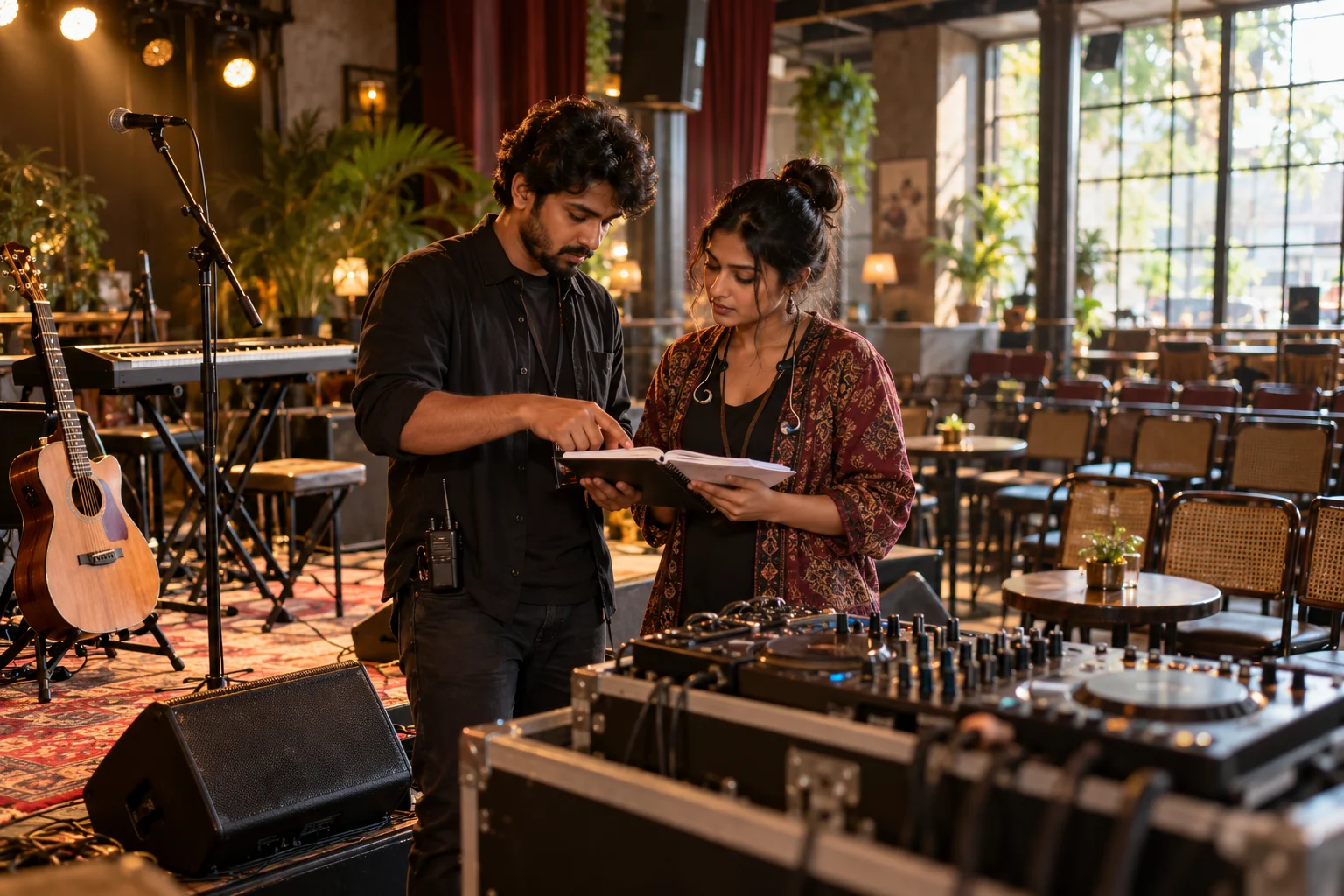
What lead generation means
Lead generation is the combined work of every channel that brings in a new enquiry, whether from search, adverts, referrals or a stall at an exhibition. GullySales runs these channels together and reports the number of enquiries each one produced, not the activity behind it.
Also for bars, pubs and microbreweries
- CRM for bars, pubs and microbreweries
- Follow-up systems for bars, pubs and microbreweries
- SEO for bars, pubs and microbreweries
- Local SEO for bars, pubs and microbreweries
- Social media marketing for bars, pubs and microbreweries
- Content marketing for bars, pubs and microbreweries
- Buyer personas for bars, pubs and microbreweries
- WhatsApp marketing for bars, pubs and microbreweries
Sales and marketing for bars, pubs and microbreweries, the overview.
Plan the next part of the work
Last updated 21 Nov 2026.
For bars, pubs and microbreweries
Where it usually goes wrong, and what we would do.
“One organiser brings the whole table”
The person who messages for a table of ten has already decided for nine others. A lead from that person is worth more than a walk-in, so the reply has to be prompt and specific.
“Offices plan around a birthday or a farewell”
A coordinator wants a seating plan, a food option for the vegetarians and a time the kitchen is open. Venues that publish these details are the ones that get the call.
“Event nights create their own enquiries”
A match screening or a live set draws people who have never visited. Announce it with a booking link, so interest becomes a reserved table and not a vague plan.
“Walk-ins do not leave a number”
A guest who enjoys the evening and leaves has told you nothing. A booking or event sign-up with consent is the only way to invite that guest back.
What we do
What we deliver for bars, pubs and microbreweries.
The work available for this need. We agree the deliverables and responsibilities for your engagement in writing.
Group booking enquiry form
A short form asking date, group size, occasion, food needs and a phone number.
Result: Every group enquiry reaches the team with the detail needed to reply.
Corporate and party enquiry page
A page for offices and hosts covering seating, food, music policy, timings and how to reserve.
Result: Coordinators get what they need without a call.
Event night pages
A page for each recurring event with the time, the entry rule and a booking button.
Result: An event can be shared and booked from one link.
Source labels on every enquiry
Google, Instagram, WhatsApp and referral enquiries tagged when they arrive.
Result: You see which channel produces tables.
Weekday group outreach
A list of nearby offices, clubs and societies with the person who arranges meetings, contacted with an invitation to book.
Result: Weekday seats are offered to named coordinators.
How the result is measured
- Relevant enquiries by source
- Duplicate and unsuitable enquiries
- Time to the first response
- Accepted enquiries reaching an agreed next step
Recorded as a baseline before work starts, so every later report has an honest comparison.
What to capture or send
Capture these details from every table or event enquiry.
- Date, time and headcount
- Record all three at the first message. A table for eight on a match night is a different booking from a pair on a weekday evening.
- Occasion
- Birthday, farewell, office party or a match. It decides the seating, the food package and whether the enquirer wants a reserved section.
- Food and drink package wanted
- Ask for a fixed menu or ordering on the night. Leave out drink quantities, since local rules differ.
- Age of guests, where it matters
- The legal drinking age differs by state, so confirm that the group meets it. Staff should know before the table is held.
- Who confirms and pays
- Group bookings are made by one colleague for the whole table. Note the person who pays the deposit, so the table is held for a named person.
Who it is for
This is written for these bars, pubs and microbreweries.
- Microbreweries and brewpubs with their own brewing floor
- Sports bars with screens for cricket and football
- Rooftop lounges and terrace bars
- Gastropubs where food carries the evening
- Live music venues and open-mic pubs
- Hotel bars and restaurants with a licensed bar
- Standalone neighbourhood pubs
- Club and lounge venues for private parties
Before you decide
When this may not be the right fit.
- Nobody answers booking messages when the venue is busy, which is when most requests arrive, so more enquiries would be lost.
- You have no rule for holding a table without a deposit, and a lead who books and does not come would take a seat from a paying group.
Before you decide
Agree the work. Know how to judge it.
Lead generation for bars, pubs and microbreweries: use these checks to prepare, choose the scope, and review what changes.
Bring the right evidence
Define the organisations or buyers you can serve and the reasons they would consider a conversation. Bring examples of accepted and rejected prospects so the selection rule is visible.
Make the scope clear
Agree the research sources, contact approach, qualification rules, and handover. Clarify which meetings count as accepted and what happens to replies that are not ready to buy.
Check the work in use
Review why a prospect was selected and what was learned from the response. Count held, relevant conversations separately from contacts found, messages sent, or meetings booked.
Know when to change course
If the same objection appears repeatedly, adjust the offer or buyer group before increasing outreach. Respect a request to stop contact and keep the exclusion in the record.
These are discussion points, not a fixed package. GullySales confirms the deliverables, responsibilities, fee, and term in writing after reading your brief and speaking with you.
Before we start
What to have ready before the work starts.
The records, access and decisions this work needs from bars, pubs and microbreweries. Anything missing is noted in the written scope, with who will supply it.
- The reservation book for recent seasons
- We need to see real group bookings, paper or digital, to learn which occasions and nights fill. A messy notebook is fine if dates and party sizes are readable. Without it we plan from guesses, and the weekday outreach could target the wrong group. It may be a ruled notebook or phone chats, and gaps are fine, though the party size and the night are the two fields that count.
- A named person for every enquiry
- Someone on your team must be told that a group request is theirs to answer, including when the manager is busy on the floor. Without a named owner the form fills an inbox nobody opens, and the plan reverts to walk-ins. Pick the person for weekdays and a second for weekends, so a request sent on a match night is answered by someone who is awake and knows the room.
- Seating plan with table capacities
- We need the room as it is, with how many sit at each table, which can be joined and where the quiet corner is. A hand drawing is enough. Without it the form may promise a table for twelve that the room cannot seat. Tell us which tables can be pushed together and which corner is noisy, since a promise of a quiet table must be one the floor can keep.
- Your adviser's view on written wording
- Rules on alcohol advertising differ by state, so your own adviser should say what the form, the page and the replies may mention. Bring that view in writing or by call. Without it we keep every line to the room, the food and the event. If the answer is still pending, we write the form with only room, food and event fields until it arrives.
- A phone number the host can answer
- Choose one number or chat account that is staffed through the evening and checked in the afternoon, when group planning happens. If the only number is unattended, enquiries sit unanswered and groups book elsewhere before anyone calls them back. Test it by phoning on a Tuesday afternoon, when the planning for weekend tables happens and when a missed call costs the booking.
How it works
How the lead generation work runs
The work itself, in order. How an engagement starts, from your brief to a written scope, is set out on our method page.
- 1
Read last season's reservation book
We start with the reservation book, the booking notebook or the WhatsApp chats where group requests land, and mark which came from offices, birthdays and friend groups. You tell us which nights run short of tables and which run empty. From this we write down the group types worth chasing and the nights they should fill. We keep the old book as it is.
- 2
Sit at the host stand for a night
One of us watches the host stand on a busy night and listens to how a group request is taken, what the host asks and what gets forgotten. We note where a number is lost because the caller walked in and nobody wrote it down. You decide who will own every enquiry from then on. We write down the nights, so the plan has a starting point.
- 3
Agree what the form must ask
We draft the group enquiry form with you: party size, occasion, preferred night, whether food is wanted and a contact for confirming. You remove anything your floor cannot honour. We keep drinks and offers out of every field, and your own adviser reads the wording before it is used. The form stays short, because a long form loses a busy organiser halfway and sends them to a rival venue.
- 4
Label where each enquiry came from
Each place that can send a group to you, such as the map listing, the website, an Instagram link and a printed table card, gets its own source label. We test every label by sending a dummy request and checking that it lands in your book with the right tag, so no enquiry arrives unnamed. This also shows you which route is worth printing again.
- 5
Write to office coordinators on slow nights
For weekday evenings that run quiet, we draft a short note to office coordinators and event organisers near the venue, describing the room, seating and food for a team outing. You choose which nights to offer and who sends the message, and we hold back anything about drinks. We keep each note short and factual, with the room, the food and how to reach the host, so a coordinator can forward it to colleagues.
- 6
Compare enquiries with the book
Before the work began we recorded how many group requests reached the host stand and how many became confirmed tables. We now set the labelled enquiries beside the reservation book, night by night, and look at which source brought groups that actually sat down. You decide which routes to keep. We do not count a source as working until a table has sat; a form filled in and never answered proves nothing.
Where this fits
Three pieces of sales work, in this order.
This work sits inside sales process design, at stage 1, prospecting and lead generation. The audit comes before it, and sales management keeps it running.
Step 1
Sales audit
Find where deals are being lost and what to fix first.
Start here if you cannot say where orders are lost.
Step 2 · you are here
Sales process design
One written way to sell, from first enquiry to repeat order.
Start here if every salesperson sells differently.
Step 3
Sales management
A target, a review routine and someone who owns the number.
Start here if the team has targets and no routine.
FAQ
Questions owners ask before they call.
Not here? More answers, or ask on WhatsApp.
Can we advertise offers on drinks to get leads?
How do we handle a booking for a group that includes people under the legal age?
Do you promise a number of bookings?
Should we ask for a deposit on a big group booking?
Who answers the enquiries the new form brings in?
What happens to our existing booking notebook?
How much does it cost?
How long is the contract?
How soon will we see results?
Who will actually do the work?
More for bars, pubs and microbreweries
Related work to consider.
Closest to this: leads and follow-up
Also for bars, pubs and microbreweries
Or start from the overview: sales and marketing for bars, pubs and microbreweries.
Your next practical step
Tell us what you are trying to grow, and we will read it before we call.
Eight short steps, mostly taps. Skip anything you would rather answer on the call.