Bars, pubs and microbreweries · Social media
Show the room, the music and the crowd without selling a single drink.
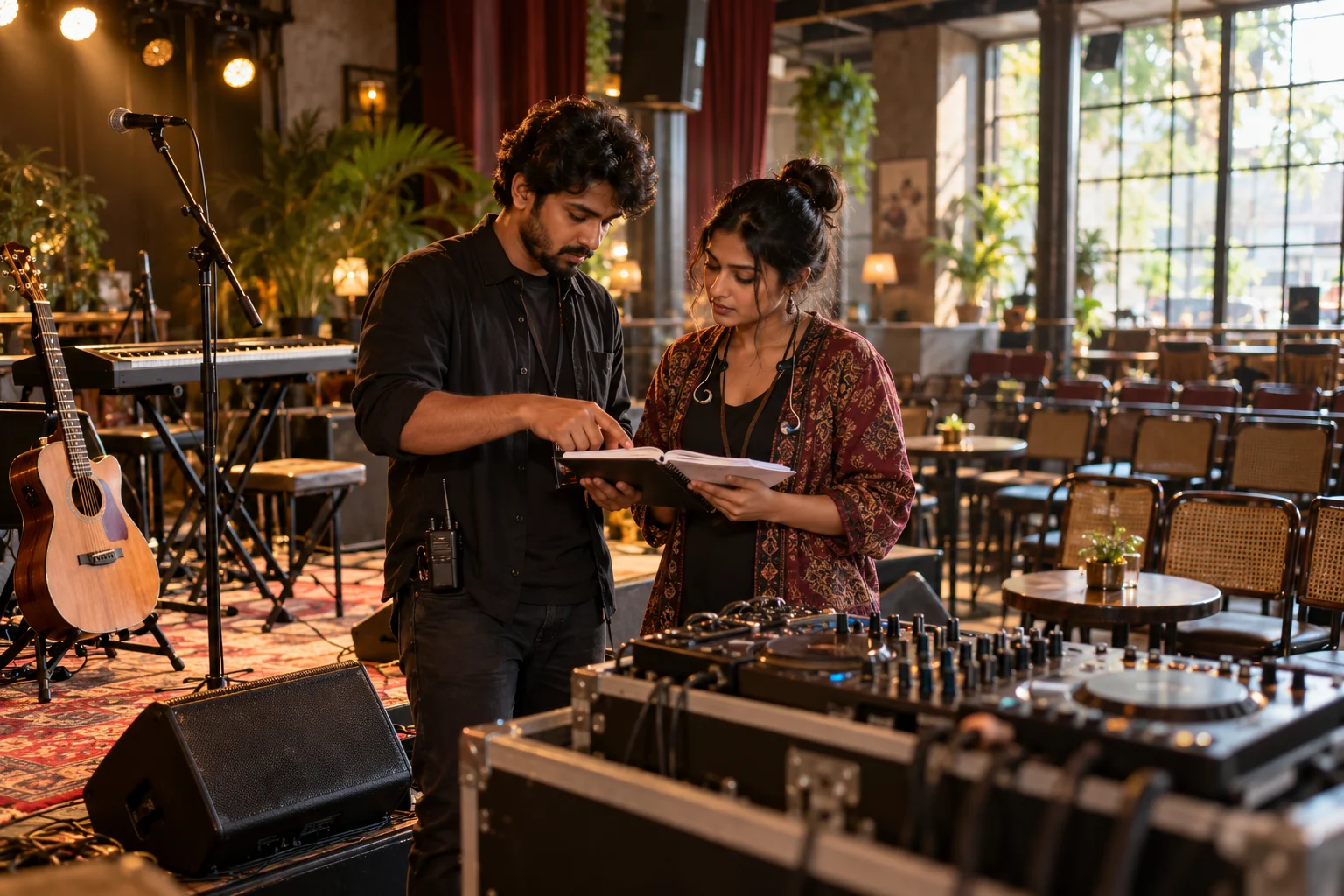
Social media marketing for a bar, pub or microbrewery uses Instagram and Facebook to show the venue, the events and the food. GullySales plans the posts around the room and the programme, and keeps alcohol brands, prices and drinking offers out of every caption.
Scope, fee, reporting and term are agreed in writing after we have read your brief and spoken to you.
What social media means
Social media is the ongoing posting your business does on platforms such as Instagram, Facebook and LinkedIn to stay visible to customers and prospects between purchases. GullySales plans a posting calendar, writes captions and designs the images so the page looks active and answers what a visitor would ask.
Also for bars, pubs and microbreweries
- Content marketing for bars, pubs and microbreweries
- Lead generation for bars, pubs and microbreweries
- SEO for bars, pubs and microbreweries
- Local SEO for bars, pubs and microbreweries
- Buyer personas for bars, pubs and microbreweries
- CRM for bars, pubs and microbreweries
- Follow-up systems for bars, pubs and microbreweries
- WhatsApp marketing for bars, pubs and microbreweries
Sales and marketing for bars, pubs and microbreweries, the overview.
Last updated 14 Nov 2026.
For bars, pubs and microbreweries
Where it usually goes wrong, and what we would do.
“The post should sell the evening”
A reel of the live set, the terrace at dusk or the kitchen plating a dish tells a guest what the night is like. A caption listing drinks does the opposite and invites trouble.
“Rules for alcohol posts differ by state”
What may be said online about alcohol is regulated and varies. The safe route is to ask your own adviser and keep posts to venue, food, music and events.
“Staff and guests appear in photographs”
A guest filmed without agreement can complain, and an employee has a say in being shown. Ask first, and take down a post when someone asks.
What we do
What we deliver for bars, pubs and microbreweries.
The work available for this need. We agree the deliverables and responsibilities for your engagement in writing.
Content plan around the programme
A calendar of posts built on the venue's event nights, match days and kitchen specials.
Result: Posts reflect what the venue actually does.
Caption guide
Do and do-not lines for captions, agreed with the owner and the adviser.
Result: Every caption stays within the limits you set.
Event announcement format
A repeatable post with the date, time, entry rule and booking link.
Result: Each event is announced in the same clear way.
Guest consent routine
A simple way of asking before a guest or staff member appears in a video.
Result: Posts avoid complaints about privacy.
Comment and message replies
Replies drafted for booking questions, lost property and complaints.
Result: Guests who write get an answer in the venue's voice.
How the result is measured
- Posts published
- Engagement rate
- Enquiries from social profiles
Recorded as a baseline before work starts, so every later report has an honest comparison.
Posts and pieces to plan
Plan these posts for a bar, pub or microbrewery account.
- The kitchen on a busy night
- A short video of a dish plated for the night. Food posts bring in groups that would not choose on drinks alone.
- Event night announcement
- A poster for the quiz, match or live act with the date, start time and booking route. Posted early enough for groups to plan.
- Meet the brewer
- A post on the beers made on site and the person who makes them. Follow local advertising rules on how alcohol is shown.
- Weekday plan
- A post for an after-work offer or a quiet-evening table, aimed at the empty weekdays, with a stated booking route.
- A private section for groups
- Photos of the space for office parties and birthdays, with its capacity and how to enquire.
Who it is for
This is written for these bars, pubs and microbreweries.
- Microbreweries and brewpubs with their own brewing floor
- Sports bars with screens for cricket and football
- Rooftop lounges and terrace bars
- Gastropubs where food carries the evening
- Live music venues and open-mic pubs
- Hotel bars and restaurants with a licensed bar
- Standalone neighbourhood pubs
- Club and lounge venues for private parties
Before you decide
When this may not be the right fit.
- You have no one who knows the advertising rules for your state, so posts about drinks could break them.
- Nobody manages the account on event nights, so questions in the comments would go unanswered at the busiest time.
Before you decide
Agree the work. Know how to judge it.
Social media marketing for bars, pubs and microbreweries: use these checks to prepare, choose the scope, and review what changes.
Bring the right evidence
Review the posts that produced useful conversations, not only the ones with the most views. Gather buyer questions and decide which team member can contribute credible material.
Make the scope clear
Choose the audience and channel before setting a posting volume. Agree who supplies material, approves posts, and handles messages, including complaints or questions the agency cannot answer.
Check the work in use
Follow a post through to the profile, website, and response. A useful report explains the quality of conversations and enquiries, alongside reach and engagement.
Know when to change course
If publishing takes time away from unanswered buyer messages, fix the response routine first. Do not expand to another channel without a clear reason for being there.
These are discussion points, not a fixed package. GullySales confirms the deliverables, responsibilities, fee, and term in writing after reading your brief and speaking with you.
Before we start
What to have ready before the work starts.
The records, access and decisions this work needs from bars, pubs and microbreweries. Anything missing is noted in the written scope, with who will supply it.
- Admin access to both social accounts
- We need to be added as an editor, never to use your personal password. If an old agency or a former staff member holds the account, that has to be resolved first. Without access nothing can be scheduled or measured. If a previous agency set up the pages, ask them to add us as editors and transfer the ownership roles to your own account. It also lets you remove us later without losing your pages.
- A folder of real photographs
- Collect whatever the team has taken: the room, the stage, the terrace, the food. Quality can vary, but originals are needed. If the folder is thin, we ask for a short photo walk, and posts stay fewer until it is done. Even short clips from a phone are useful, particularly of the room filling up, since a stranger judges the crowd before anything else. Group them by night, so the team knows which picture belongs to which event.
- The diary of nights and acts
- Share the next stretch of match nights, bands, quiz evenings and private bookings, with the names the performer is happy to see used. Without dates, posts become general and weak. Late changes should also be shared as they happen. Late changes, such as a band cancelling or a match moved, should reach us the same day so no post advertises a night that is not happening. A rough schedule is also fine, as long as the changes are passed on.
- A reply voice for messages
- Decide who answers comments and direct messages, and what they may promise about a table. A quick note of tone is enough. Missing this, replies come late or promise seats the host cannot give. For example, the host may reply on weekdays and the manager at weekends, and neither promises a table without checking the book. The tone should sound like the host speaking at the door, polite, plain and brief.
- A line on what the venue never posts
- Tell us what is not allowed: drink names, strengths, prices, drunk guests, anything your licence conditions or adviser rule out. Writing it down protects the team. Without it, we keep every post strictly to the room and the programme. Your own adviser should see the list, and we revise it whenever a rule or a licence condition is changed by the state. A page of three or four lines, covering how formal the replies are and who may say yes to a table, is sufficient.
How it works
How the social media work runs
The work itself, in order. How an engagement starts, from your brief to a written scope, is set out on our method page.
- 1
Scroll your page as a stranger would
We open your Instagram and Facebook pages with no login and look at the first nine posts the way a group organiser would. We note what the room looks like, whether the events are visible and whether any caption touches drinks. You tell us which posts you like and which you dislike. We also count how many messages and reservation taps arrive through the pages today, since that count is what we compare against later.
- 2
Ask the owner for access and a gallery
We ask for admin access to both accounts and a folder of the photographs and videos your team already holds. We note the ones taken at night, with guests in frame. Before any new post, we record current followers, saves, messages and bookings arriving through the page. We note any photograph where guests are recognisable, and ask you whether they gave consent, because an old picture can be taken down at once.
- 3
Plan posts around the next events
Sitting with your event diary, we place posts around match nights, live acts and private-party openings, not around drinks. You tell us which nights need the crowd and which need food. Your adviser checks anything near alcohol, and every post names the occasion. Posts about the same event are spread so that the feed does not shout one night five times, and quiet nights get a post of their own.
- 4
Set the consent routine for guests
We write a short routine for the door staff or host: how to ask a table if they may appear in a photograph, how to note a refusal and how to take a post down when a guest asks. You decide who carries it out on busy nights. The host carries it as a habit, a polite ask at the table and a note in the book, not a form to fill.
- 5
Draft captions and wait for approval
We write captions in your venue's voice, and nothing is posted until you or the manager approves it. Each caption carries a way to reserve and the date of the event. We remove any word about drinks, strength, offers or brands before you see it. If an image shows a drink brand or a guest who looks unwell, we drop it from the schedule and tell you why, so the rule is clear to your team.
- 6
Read saves and messages against the baseline
After the posts have run we compare reservation messages, saves, replies and bookings with the figures recorded earlier. We ask the host which tables mention seeing a post. You choose which kinds of post to repeat and which to drop. We keep the posts that brought reservation messages and retire the ones that earned only likes, and your team judges by the book. The comparison also shows whether the venue's own team kept the routine, because posting only helps when the host also answers messages promptly.
Where this fits
Three pieces of sales work, in this order.
This work sits inside sales process design, at stage 0, foundation. The audit comes before it, and sales management keeps it running.
Step 1
Sales audit
Find where deals are being lost and what to fix first.
Start here if you cannot say where orders are lost.
Step 2 · you are here
Sales process design
One written way to sell, from first enquiry to repeat order.
Start here if every salesperson sells differently.
Step 3
Sales management
A target, a review routine and someone who owns the number.
Start here if the team has targets and no routine.
FAQ
Questions owners ask before they call.
Not here? More answers, or ask on WhatsApp.
Can we run paid promotion for the pub?
Should the bartenders feature in videos?
What do we do about a guest's drunk-behaviour video that goes online?
What can a bar post about drinks on social media?
Who takes the photographs for the posts?
Do you post on our behalf without asking us?
How much does it cost?
How long is the contract?
How soon will we see results?
Who will actually do the work?
More for bars, pubs and microbreweries
Related work to consider.
Closest to this: content and social
Also for bars, pubs and microbreweries
Or start from the overview: sales and marketing for bars, pubs and microbreweries.
Your next practical step
Tell us what you are trying to grow, and we will read it before we call.
Eight short steps, mostly taps. Skip anything you would rather answer on the call.