Bars, pubs and microbreweries · WhatsApp marketing
Take table bookings in the app where the group is already planning.
WhatsApp marketing for a bar, pub or microbrewery means a business account that takes booking requests and announces events to guests who agreed to hear from you. GullySales sets up the profile, the saved replies and the consent list, and keeps drinks and offers out of every message.
Scope, fee, reporting and term are agreed in writing after we have read your brief and spoken to you.
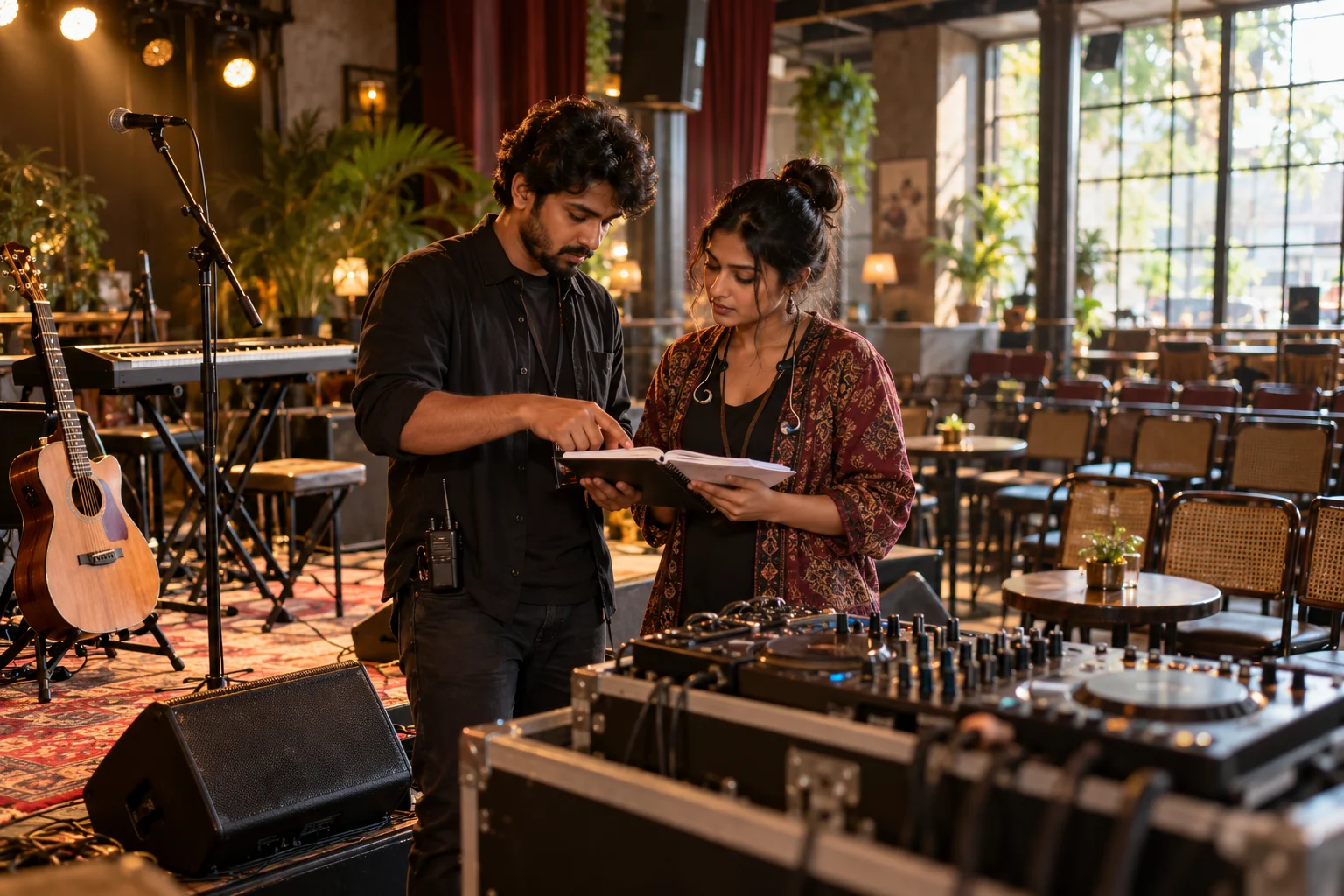
What WhatsApp marketing means
WhatsApp marketing is sending updates, offers and reminders to customers on the app most Indian buyers already check daily. GullySales sets up business WhatsApp, writes the message templates and keeps the list consented and current.
Also for bars, pubs and microbreweries
- Lead generation for bars, pubs and microbreweries
- SEO for bars, pubs and microbreweries
- Local SEO for bars, pubs and microbreweries
- Social media marketing for bars, pubs and microbreweries
- Content marketing for bars, pubs and microbreweries
- Buyer personas for bars, pubs and microbreweries
- CRM for bars, pubs and microbreweries
- Follow-up systems for bars, pubs and microbreweries
Sales and marketing for bars, pubs and microbreweries, the overview.
Last updated 14 Nov 2026.
For bars, pubs and microbreweries
Where it usually goes wrong, and what we would do.
“Groups plan inside a chat”
The organiser pastes your number into the group and asks if anyone objects. A business profile with hours, location and a menu link makes that paste look professional.
“Broadcasts need agreement”
A message about an event night, sent to someone who never agreed, is reported as spam. Ask at booking and offer a simple way to stop.
“Event messages should carry no drink content”
Rules on alcohol advertising differ by state. Announce the band, the match and the kitchen, with the booking link, and nothing about drinks or prices.
“Cancellations and no-shows need a rule”
A table held for ten and a group that never arrives costs a Friday night. A confirmation message that states the hold time and asks for a reply the day before gives the host a reason to release the table.
What we do
What we deliver for bars, pubs and microbreweries.
The work available for this need. We agree the deliverables and responsibilities for your engagement in writing.
Business account profile
Name, address, hours, description and website filled in, with the booking form linked.
Result: A group sees a real venue.
Saved replies
Ready answers for availability, seating, food, entry policy and cancellations.
Result: The host answers in a few taps.
Event broadcast list
A list of guests who agreed to hear about events, grouped by interest such as music or match nights.
Result: Announcements reach those who want them.
Booking confirmation message
A message with date, time, group size, hold period and the entrance.
Result: The booker has everything in one place.
Opt-out routine
A line in each broadcast and a process for removing a number at once.
Result: Guests can stop messages without friction.
Reply for a late or changed booking
A saved message for the group that is running late or has grown, stating how long the table is held and who to message at the door.
Result: The host handles a change without a call from the floor.
Match-night and music-night announcements
Templates for the band, the screening or the quiz night that give the date, entry rule and booking link and leave out drinks, brands and prices.
Result: Event notes stay within the venue's own rules.
How the result is measured
- Messages delivered
- Reply rate
- Enquiries from WhatsApp
Recorded as a baseline before work starts, so every later report has an honest comparison.
What to capture or send
Plan the WhatsApp messages a bar or pub sends.
- Table booking reply
- A saved message asking date, time, headcount and occasion, and quoting the deposit rule. Sent when a request arrives.
- Event night poster to opted-in guests
- The poster for a quiz, match or live act with the booking route. Sent only to people who asked to hear about events.
- Group package reply
- A message for a corporate booker with the package options, capacity and invoice details.
- Day-of reminder
- The time, the entrance and the hold limit for the table. Sent the morning of the booking.
- Closing-day notice
- A message to booked guests about a dry day or closure, sent as soon as the date is known.
Who it is for
This is written for these bars, pubs and microbreweries.
- Microbreweries and brewpubs with their own brewing floor
- Sports bars with screens for cricket and football
- Rooftop lounges and terrace bars
- Gastropubs where food carries the evening
- Live music venues and open-mic pubs
- Hotel bars and restaurants with a licensed bar
- Standalone neighbourhood pubs
- Club and lounge venues for private parties
Before you decide
When this may not be the right fit.
- You have no list of guests who agreed to receive messages, so a broadcast would reach people who never asked.
- You plan to send drink offers, and rules on alcohol promotion in your state forbid that.
Before you decide
Agree the work. Know how to judge it.
WhatsApp marketing for bars, pubs and microbreweries: use these checks to prepare, choose the scope, and review what changes.
Bring the right evidence
Describe how the contact list was collected, what people asked to receive, and which messages are currently sent. Include opt-outs and replies when reviewing campaign performance.
Make the scope clear
Agree the audience, message purpose, sending system, and response owner. Separate promotional communication from order or service updates, and check current platform requirements before launch.
Check the work in use
Test the message with a small appropriate audience before wider use. Check links, reply handling, opt-outs, and whether the response leads to a relevant conversation or order.
Know when to change course
Do not use an unexplained contact list as a shortcut to demand. If recipients do not expect the message, resolve the permission and relevance questions before sending.
These are discussion points, not a fixed package. GullySales confirms the deliverables, responsibilities, fee, and term in writing after reading your brief and speaking with you.
Before we start
What to have ready before the work starts.
The records, access and decisions this work needs from bars, pubs and microbreweries. Anything missing is noted in the written scope, with who will supply it.
- The venue phone and its number
- The business account should sit on a number the venue owns, not a staff member's personal line. If the number is personal, we plan a switch. Without a venue-owned number, a departing host takes the chats with them. Remove anything private before sharing, and tell us if some chats are with staff rather than guests, so we can leave them out.
- Export of recent booking chats
- Share a few weeks of chat history with guest numbers hidden. We read what groups ask and how replies went. Without it, saved replies are guesses and the profile misses the questions that actually matter. Say who gets to use the login, since a group chat that several people read must still have one person who is accountable for it.
- A written route for joining event messages
- Decide how a guest agrees to hear about events, such as a table card, a form tick or a reply to a booking. Without a clear route, the list stays empty or is filled without consent. Even a table card with a short line and a number works, and we write the wording so a guest knows what they will receive and what to do to leave.
- Who watches the phone during service
- Name the person who looks at the chat in the evening, and the person who covers the afternoon. A saved reply does not help if no one sees the request. If both are the same person, we plan around the busiest hour. If the same person covers both, we set the saved replies so that the busiest hour is handled with as few taps as possible.
- Your adviser's view on event messages
- Rules on alcohol messages differ by state, so ask your adviser what an announcement of a match night or a band may say. We use only what they allow. Until we have it, announcements carry the date, the act and the booking route alone. Do this before the first announcement, and tell us if a rule on the date, the act or the entry fee needs a particular phrase.
How it works
How the whatsapp marketing work runs
The work itself, in order. How an engagement starts, from your brief to a written scope, is set out on our method page.
- 1
Read the chats your host already has
We go through the existing booking chats on the venue phone and note the questions that repeat, the replies that win a table and the ones that lose it. You tell us whether the number belongs to the venue or to a person. We record how many requests arrive in the app today. We also count how many chats ended without a booking, because the saved replies are meant to reduce those lost enquiries.
- 2
Settle on the app or the API
For one venue the business app is normally enough; larger groups of venues may need the platform's API. We explain the difference and you choose. Check the platform's current rules before committing. We never move your guests onto a new number without telling them. Moving a number later is possible but disruptive, so the choice is made once and written down, along with who holds the login for it.
- 3
Write the profile and saved replies
We fill the business profile with the address, hours and booking route, and write saved replies for seating, kitchen timings, group sizes and late arrivals. Your manager approves each. Anything about drinks, strength and offers stays out of every reply. The profile also carries a short line about the licence and entry rule, worded with your adviser, so a guest sees it before asking.
- 4
Build the consent list for event messages
We set up a list of guests who have agreed to hear about match nights and music nights, with a plain way to leave it. You decide how people join: a table card, a form or a direct reply. Nobody is added without agreeing. Joining is by a plain yes, and leaving is by a plain word, which the account records, so you can show who agreed and who asked to stop.
- 5
Test a booking and a broadcast end to end
We send a dummy booking and a dummy event message to a staff phone, and follow them through the saved replies, the record and the opt-out. The host tries it live. We fix whatever reads awkwardly before a real guest sees it. We also try a message with a long group name and a late change of time, because those are the cases where the replies break.
- 6
Look at replies and bookings against the baseline
We compare the share of requests answered, confirmed tables and opt-outs with the figures noted before the account was set up. You decide which event messages are worth sending again, and which should be dropped because guests asked to leave. If a broadcast brought guests, we send that kind again, and if it only brought opt-outs we change the content before sending another.
Where this fits
Three pieces of sales work, in this order.
This work sits inside sales process design, at stage 0, foundation. The audit comes before it, and sales management keeps it running.
Step 1
Sales audit
Find where deals are being lost and what to fix first.
Start here if you cannot say where orders are lost.
Step 2 · you are here
Sales process design
One written way to sell, from first enquiry to repeat order.
Start here if every salesperson sells differently.
Step 3
Sales management
A target, a review routine and someone who owns the number.
Start here if the team has targets and no routine.
FAQ
Questions owners ask before they call.
Not here? More answers, or ask on WhatsApp.
Can we add regulars to a group?
What should an event message say?
Do we need the business app?
Can we send drink offers on WhatsApp?
Can we add our regulars to a broadcast list ourselves?
What happens if staff leave with the phone?
How much does it cost?
How long is the contract?
How soon will we see results?
Who will actually do the work?
More for bars, pubs and microbreweries
Related work to consider.
Or start from the overview: sales and marketing for bars, pubs and microbreweries.
Your next practical step
Tell us what you are trying to grow, and we will read it before we call.
Eight short steps, mostly taps. Skip anything you would rather answer on the call.