Cafes and coffee shops · Brand naming
Choose a cafe name a passer-by can say, spell and search for.
Brand naming for a cafe is the work of choosing and checking the name that will sit on the signboard, the cup and the map listing before any of them is printed. GullySales builds the brief, screens the shortlist against what a neighbour can see and what a customer says aloud, and hands your adviser the final candidates.
Scope, fee, reporting and term are agreed in writing after we have read your brief and spoken to you.
What brand naming means
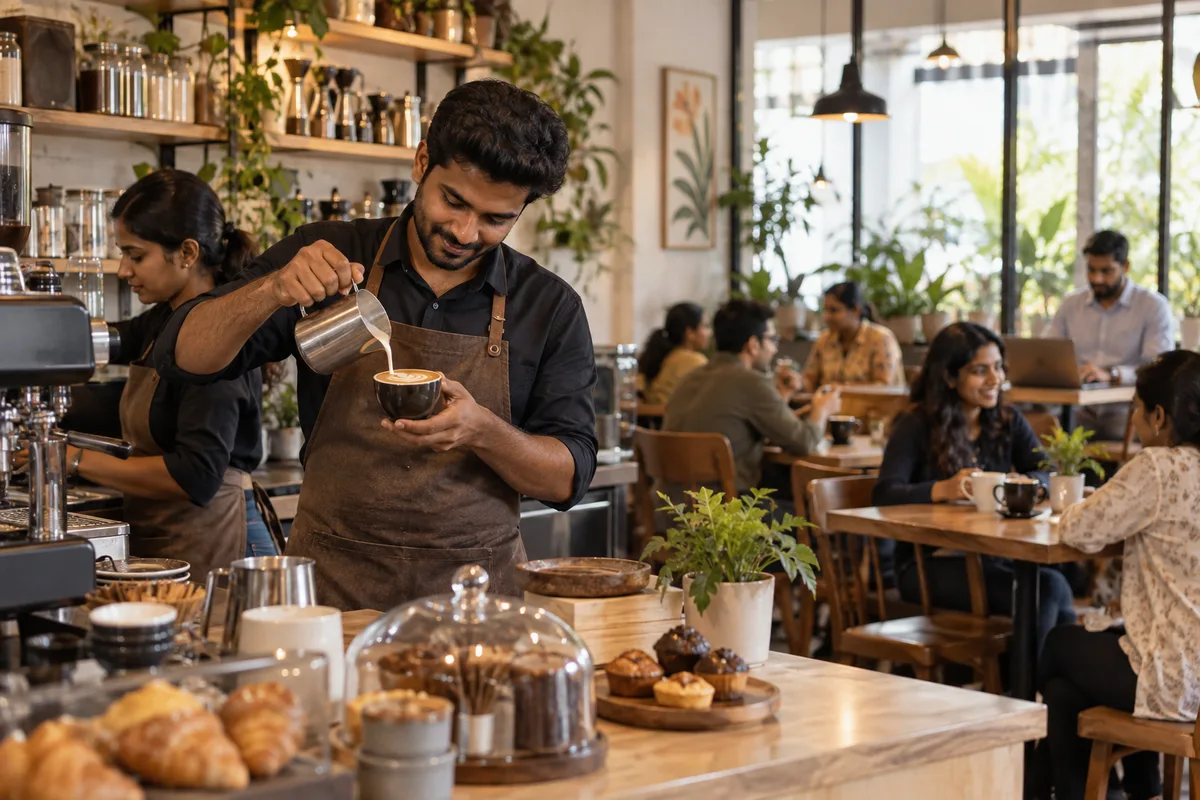
Brand naming is the work of choosing and checking a name for a business, product, or product line before it appears in the market. GullySales develops candidates against an agreed brief, screens for visible conflicts, and tests how buyers say and spell them, then hands over a ranked shortlist for your decision and legal review.
Also for cafes and coffee shops
- Branding for cafes and coffee shops
- Creative and graphic design for cafes and coffee shops
- Logo and visual identity design for cafes and coffee shops
- Buyer journey for cafes and coffee shops
- Buyer personas for cafes and coffee shops
- Content marketing for cafes and coffee shops
- Digital marketing for cafes and coffee shops
- Email marketing for cafes and coffee shops
Sales and marketing for cafes and coffee shops, the overview.
Last updated 14 Nov 2026. Rules for this trade differ by state and professional body, and they change. We describe restrictions in general terms, so check the current position with your own council or adviser before you publish anything.
For cafes and coffee shops
Where it usually goes wrong, and what we would do.
“The name is spoken over a counter”
A cafe name is said to a friend, called across a queue and typed into a phone with one thumb. A name that needs spelling out fails the first two and mangles the third. Customers who cannot type your name type the locality and the word coffee instead, and land on whoever the map shows first. Naming for this trade starts by listening to the name on a busy Saturday morning, not by admiring it on a mood board or a draft menu.
“The signboard is the first thing printed”
A cafe commits to its name early, because the lease, the fascia, the cups, the sleeves and the loyalty cards all carry it. A change after opening means replacing signage and stationery together, and the neighbourhood has already learned the old one. That is why the decision deserves evidence before the sign painter is booked. We treat the name as something the whole shopfront depends on, and we ask what has to be reprinted if it moves.
“Another cafe may already own the sound”
Coffee shops borrow the same words: beans, roast, brew, corner, cup, the name of a street or a bird. A search can show a cafe two lanes away, or a roaster in another town, using almost the same word. Customers do not tell the difference, and reviews meant for one land on the other. Screening for visible conflicts, and recording what remains unclear for your trademark adviser, protects a small outlet from an expensive argument after the cups are ordered.
“One name must work in several places”
The same name appears on the map listing, the delivery apps, the social handle, the takeaway bag and a chalkboard. Each place has its own limits on length and spelling, and a clever name can break on one of them. A name that fits the signboard may be too long for an app tile, or lose its accent in a handle. We check the candidates in the places a customer meets them, so the choice is made with the awkward cases already in view.
What we do
What we deliver for cafes and coffee shops.
The work available for this need. We agree the deliverables and responsibilities for your engagement in writing.
Naming brief for the cafe
A written brief records what the cafe serves, who sits there, the neighbourhood, any languages on the menu and words you want to avoid. The owner reads it against how the counter team actually describes the place. Disagreements surface here, before candidates exist, rather than after a favourite has been picked.
Result: You can read one page and recognise your own cafe in it.
Candidate name list
A list of names grouped by approach: descriptive, suggestive, invented, place-based and founder-based. Each group shows what it says about the cafe and where it could go wrong. The grouping lets you reject a whole style at once instead of arguing name by name.
Result: Each candidate sits under an approach you have accepted or rejected.
Visible-conflict screening record
For each shortlisted name, a record of public company-name and trademark searches, domain and handle availability, and nearby food and drink businesses using the same or a similar word. Unresolved items are marked for your adviser. The record states what was checked on the day and does not claim clearance.
Result: Every shortlisted name has a dated list of what was found and what was not checked.
Say-it and spell-it findings
We read the names aloud to people outside your team and ask them to write down what they heard. Listeners also say how they would search for it on a phone. You see the mishearings and the alternative spellings for each candidate, so a name that only your own staff pronounce correctly is caught early.
Result: You hold written findings on how strangers say and spell each name.
Shopfront and app fit check
Each surviving name is set against the signboard width, the cup and sleeve space, the delivery app tile and the social handle. Where a name has to be shortened or split across two lines, you see how it looks and decide whether the compromise is acceptable. Visual identity design is separate work and starts after the decision.
Result: You can see each name as it will appear on the sign, the cup and the app.
Ranked shortlist and adviser handover
A ranked recommendation explains each remaining name against the agreed criteria, with its reservations. The handover note records your preferred name, a fallback, the approved spelling and the questions that belong to your trademark adviser. Reservation and registration stay with you and that adviser.
Result: You hold one preferred name, one fallback and a list of questions for your adviser.
How the result is measured
- Candidates meeting the approved naming criteria
- Visible conflicts and unresolved screening questions by candidate
- Correct spelling and repeat-back results from naming tests
Recorded as a baseline before work starts, so every later report has an honest comparison.
Who it is for
This is written for these cafes and coffee shops.
- Independent single-outlet cafes
- Specialty coffee roasters with a cafe
- Cafes inside co-working spaces
- Bakery cafes
- Cafe chains opening new outlets
- Cloud kitchen and delivery-only cafes
- Cafes attached to bookstores or art spaces
- Late-night and student-area cafes
Before you decide
Agree the work. Know how to judge it.
Brand naming for cafes and coffee shops: use these checks to prepare, choose the scope, and review what changes.
Bring the right evidence
Collect the sales presentation, website, quotations, and other material buyers actually see. Mark where the description of the business changes or where a claim has no supporting evidence.
Make the scope clear
Agree whether the work concerns the offer, the words, the visual identity, or all of them. List the formats that need updating and who owns the final approval.
Check the work in use
Test the proposed direction on a real sales page or proposal. A buyer should be able to tell who the offer is for, what is different, and what evidence supports it.
Know when to change course
A new identity will not fix an unresolved service problem. Put the delivery issue right before making a stronger public promise about it.
These are discussion points, not a fixed package. GullySales confirms the deliverables, responsibilities, fee, and term in writing after reading your brief and speaking with you.
Before we start
What to have ready before the work starts.
The records, access and decisions this work needs from cafes and coffee shops. Anything missing is noted in the written scope, with who will supply it.
- A decision-maker who can say yes
- Naming stalls when five people hold a veto. Name one person, or agree one rule for settling a split, before candidates appear. When this is missing, the same favourites return in every round and the shortlist never closes, which costs more than the naming itself.
- Notes on the room and the menu
- Tell us what the cafe serves, what the room feels like and who fills it on a Tuesday afternoon. Photographs of the site or a plan help. Without them, candidates describe a generic coffee shop, and the names you receive could belong to any of the cafes nearby.
- Names already tried or ruled out
- List any names you or your family have already considered, including ones rejected by a landlord or a partner. Knowing the reasons saves the shortlist from repeating them. If this is missing, we may bring back a name that someone close to the decision has already refused.
- Planned signage and print dates
- Share when the fascia, cups and menu boards are due to be ordered, and who is booked for them. The date sets how much testing is sensible before the name is committed. When it is missing, a name may be approved only after printing has started, and the cost of a change rises.
- Your trademark adviser's contact
- Name the adviser who will review the final candidates, or tell us you have none yet. Registration, classes and legal clearance belong to them. Without one, a name may be adopted on the strength of a public search alone, which cannot establish that the name is free to use.
How it works
How the brand naming work runs
The work itself, in order. How an engagement starts, from your brief to a written scope, is set out on our method page.
- 1
Agree what the cafe is called for
We start with your description of the cafe: the menu, the room, the neighbours and the customer you want on a slow weekday. We also ask for any names already tried and any family or landlord opinions that carry weight. From this we write the brief and agree who approves the final choice. Where several partners hold a vote, we settle how disagreements are resolved before names are shown to anyone.
- 2
Choose the naming directions to explore
We present the approaches that suit a coffee shop, such as a plain description of the place, a word that suggests warmth or craft, an invented word, a street or building, or the founder's own name. You decide which directions deserve work. A direction you dislike is dropped here, so the shortlist does not drift toward a style the owner will not sign off.
- 3
Screen what the neighbourhood can see
Shortlisted names go through public company-name and trademark searches, domain and handle checks, and a look at the food and drink businesses near your outlet and in the wider market. Findings are recorded name by name. Names with a visible conflict are removed with a reason, or kept with the conflict stated, so you can see what a removal cost.
- 4
Test the name across the counter
We read the names to people who match your customers, ask them to write down what they heard, and ask how they would search for it. Where the menu or customers use more than one language, the agreed languages are checked for pronunciation and unwanted meanings. Staff on the counter also say each name as they would answer a phone, because they will say it all day.
- 5
Fit the name to sign, cup and app
Surviving names are set against the places a customer meets them: the signboard, the cup sleeve, the delivery app tile, the map listing and the handle. We record where a name has to be shortened or split. You see the compromises side by side and approve the one the shopfront can live with.
- 6
Decide, record and hand over
You choose a preferred name and a fallback. We write the decision record with the approved spelling, the difference between the trading name and any registered company name, and the open questions for your trademark adviser. Before the work began we recorded the number of times your team had to spell the name or correct an enquiry, so those same counts can be read against the result later.
Where this fits
Three pieces of sales work, in this order.
This work sits inside sales process design, at stage 1, prospecting and lead generation. The audit comes before it, and sales management keeps it running.
Step 1
Sales audit
Find where deals are being lost and what to fix first.
Start here if you cannot say where orders are lost.
Step 2 · you are here
Sales process design
One written way to sell, from first enquiry to repeat order.
Start here if every salesperson sells differently.
Step 3
Sales management
A target, a review routine and someone who owns the number.
Start here if the team has targets and no routine.
FAQ
Questions owners ask before they call.
Not here? More answers, or ask on WhatsApp.
Can you tell us the name is free to use?
We already have a company name on paper. Is that enough?
Should the name say coffee or cafe in it?
Do you design the logo and signboard as well?
What if the exact social handle or domain is taken?
How do we begin and what does it cost?
How long is the contract?
How soon will we see results?
Who will actually do the work?
What do you need from us?
From the blog
Further reading for cafes and coffee shops.
 7 min read · 21 Sept 2026How to design metro and transit advertisingA commuter stands still in front of a platform panel for four minutes and passes the same one twice a day for a month. Design for the sixth viewing.
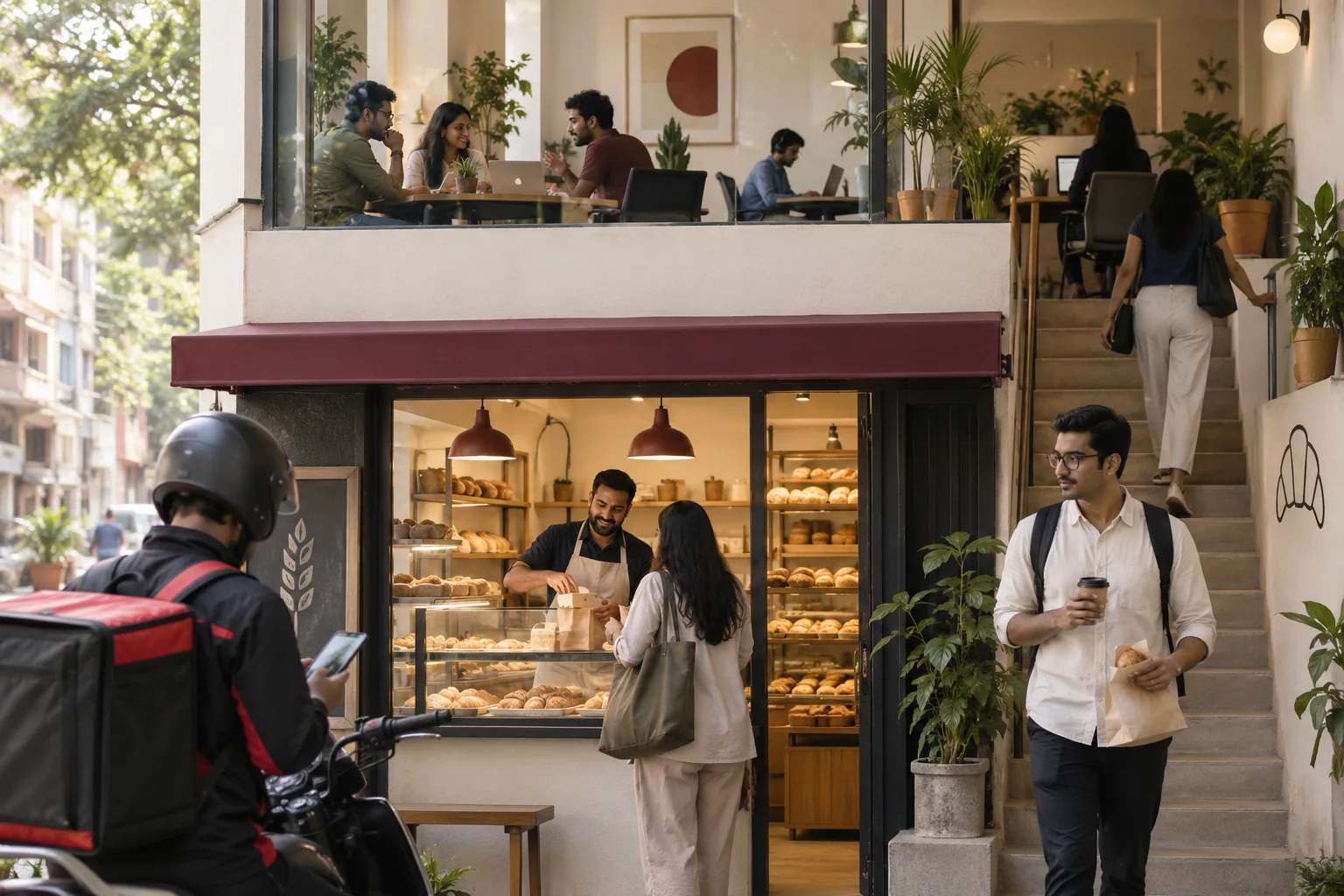 7 min read · 21 Sept 2026How to advertise to startup employeesThere is no tech park to buy. A forty person company sits above a bakery, so the audience is the neighbourhood, the delivery app and the coworking floor.
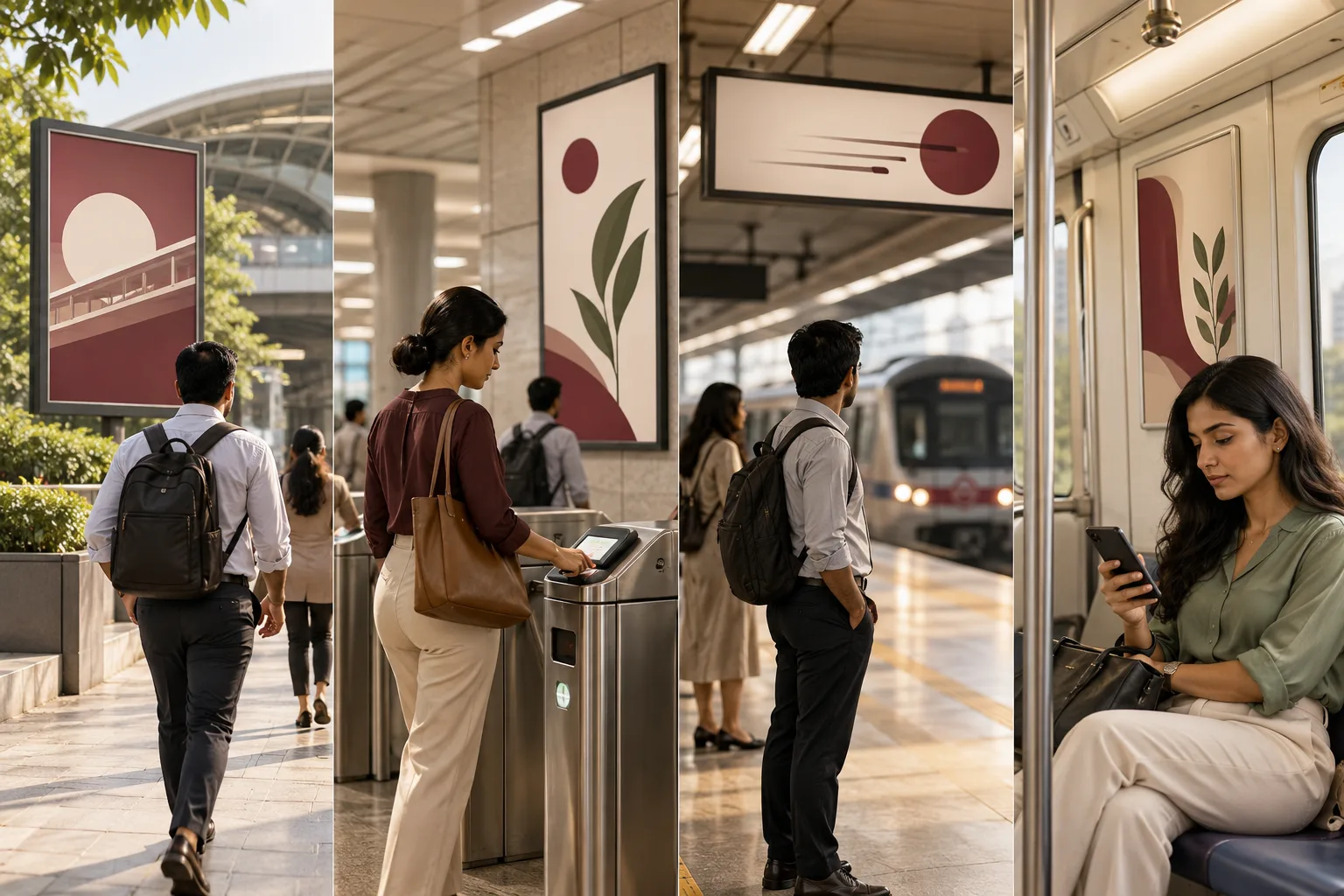 7 min read · 21 Sept 2026How to advertise to metro commutersA commuter is a mode, not a person. The journey has four still moments, each needing different creative, so one design across a station fails.
More for cafes and coffee shops
Related work to consider.
Closest to this: brand and design
Also for cafes and coffee shops
Or start from the overview: sales and marketing for cafes and coffee shops.
Your next practical step
Tell us what you are trying to grow, and we will read it before we call.
Eight short steps, mostly taps. Skip anything you would rather answer on the call.