Cafes and coffee shops · Referral marketing
Get the regular to bring the colleague sitting next to them.
Referral for a cafe is a customer arriving with somebody else: a colleague, a study group, the office that starts ordering for meetings. It travels by conversation rather than by a code in an email. GullySales builds the ask into the counter and into the businesses within walking distance.
Scope, fee, reporting and term are agreed in writing after we have read your brief and spoken to you.
What referral marketing means
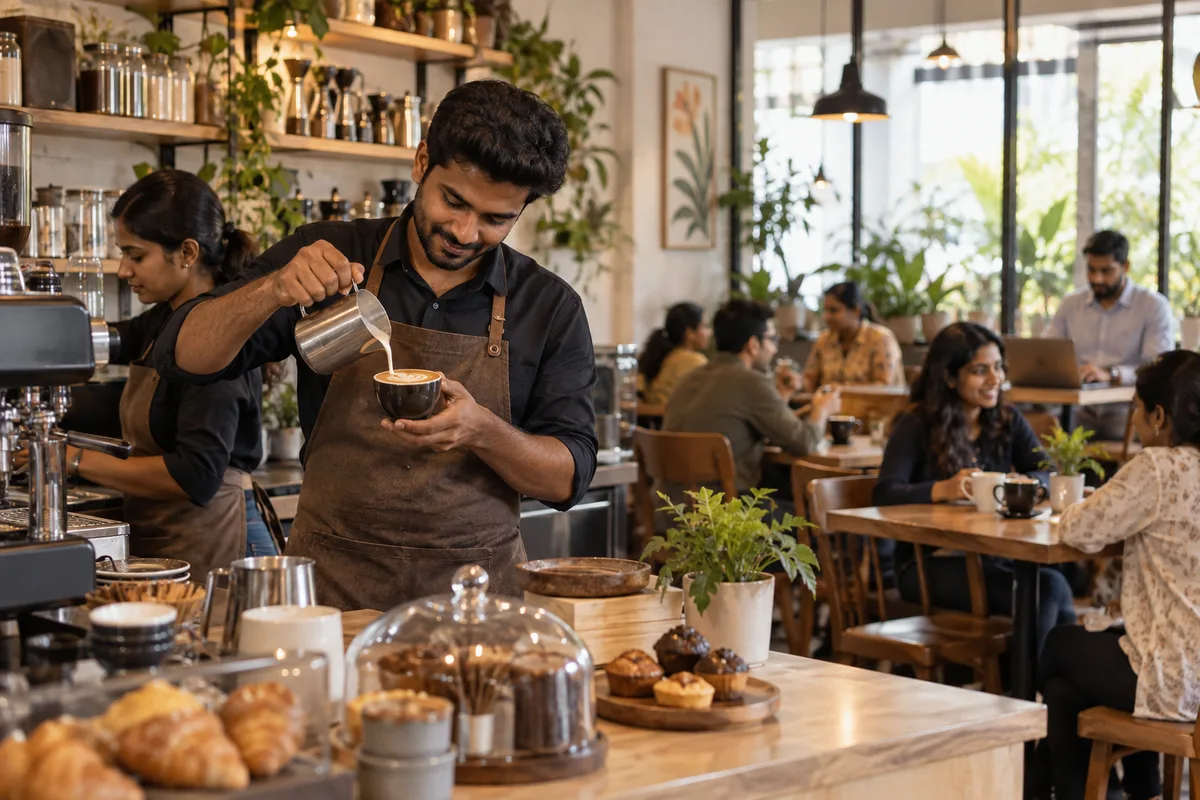
Referral marketing is asking an existing customer to recommend you to someone they know, usually with a reward for both sides. It differs from a loyalty scheme because it brings in a new customer rather than a repeat purchase. GullySales builds the ask and the reward into a point where a customer is already satisfied.
Also for cafes and coffee shops
- Loyalty programmes for cafes and coffee shops
- Customer retention for cafes and coffee shops
- Branding for cafes and coffee shops
- Buyer journey for cafes and coffee shops
- Buyer personas for cafes and coffee shops
- Content marketing for cafes and coffee shops
- Digital marketing for cafes and coffee shops
- Email marketing for cafes and coffee shops
Sales and marketing for cafes and coffee shops, the overview.
Last updated 8 Nov 2026. Rules for this trade differ by state and professional body, and they change. We describe restrictions in general terms, so check the current position with your own council or adviser before you publish anything.
For cafes and coffee shops
Where it usually goes wrong, and what we would do.
“The referral walks in with them, so the reward has to sit on one table”
A code emailed to a friend suits an online purchase. Here somebody says let us go to my place, and whatever you offer has to work for two people paying one bill.
“The businesses on your street send more people than your customers do”
The salon, the co-working desk and the gym next door point people across all day. A standing arrangement with their reception beats a poster in your own window.
“The office order starts with one employee”
The colleague who comes down for coffee is the one who names your cafe when a client meeting needs catering. Knowing the customer by name is most of the referral programme.
What we do
What we deliver for cafes and coffee shops.
Every deliverable, what it covers for you, and the result it is there to produce. Nothing here is an extra.
A bring-a-friend offer that works for both of them
An offer redeemable at the counter by the regular and the person they brought, on the same bill, decided before staff have to improvise.
Result: A regular has something worth offering the person they bring.
Standing arrangements with the neighbouring businesses
A short agreement with the co-working space, salon or gym nearby, and a card their staff can hand over without explaining anything.
Result: The businesses on your street send people in, not just past.
Who sent them, recorded against the booking
A line in the booking record naming the regular who brought a new customer or an office order, so the thanks goes to the right person.
Result: You know which regular is actually sending people.
A one-page pitch for the office upstairs
Meeting coffee and catering priced on a single page, handed to the office administrator by a regular who already works there.
Result: A corporate order starts with somebody who already likes the place.
The thank-you that keeps it happening
What the regular gets when somebody they sent turns up, agreed in advance and redeemable the same day.
Result: A referral gets rewarded while the person is still at the counter.
How the result is measured
- Referrals received
- Referral conversion rate
- Cost per referred customer
Recorded as a baseline before work starts, so every later report has an honest comparison.
How referrals reach a cafe
A cafe grows when a regular brings the next regular, and when the offices nearby bring their meetings.
- The regular who comes alone
- Train the counter to say bring a colleague on Thursday and their first filter coffee is on us. Offer the treat to the guest, so two people feel welcome rather than one.
- Co-working space managers
- A manager is asked where members can meet clients. Offer a quiet-hour table and a menu card that suits a meeting, and agree who tells members about it.
- The office admin upstairs
- The person who orders snacks for meetings decides the cafe for a floor. Drop in a tray of samples at a quiet hour and leave one printed page with how to order on WhatsApp.
- Study groups and student clubs
- A club lead books the corner table for a society event. Keep a short list of what a group can do in the space, and a table you can hold once they name the day.
- Card by the till
- Keep a card by the till for referred walk-ins: who brought them and what they ordered. Looking through the cards shows which tables bring new faces.
- What never to do
- Never offer the free coffee in return for a review. Thank the person who brought a friend, not the person who wrote a rating.
Who it is for
This is written for these cafes and coffee shops.
- Independent single-outlet cafes
- Specialty coffee roasters with a cafe
- Cafes inside co-working spaces
- Bakery cafes
- Cafe chains opening new outlets
- Cloud kitchen and delivery-only cafes
- Cafes attached to bookstores or art spaces
- Late-night and student-area cafes
Not for
It is not the right fit if.
- The cafe has few happy regulars yet, and a referral offer needs someone with something good to say.
- You plan to pay a reward to every friend brought, though the margin on a coffee cannot carry it.
- The counter cannot tell who sent whom, and the offer could not be honoured fairly.
How it works
How the referral marketing work runs
The work itself, in order. How an engagement starts, from your brief to a written scope, is set out on our method page.
- 1
Read the margin and the relationship
We work out what a new customer is worth and what you can pay to get one, then check whether customers know others like themselves.
- 2
Find the referrals you already get
Your invoices, call notes and WhatsApp threads show who already sends people to you, and who they are. That sets the starting point and the first people to ask.
- 3
Write the offer and the rules
The reward, the definition of a valid referral and the payout steps are agreed in writing before anything is shown to customers.
- 4
Build the share path and the record
The message, the link or code and the referral sheet are built. Your team tests a referral end to end, from forward to reward.
- 5
Start with your best customers, then widen
The first asks go to people who have already praised you. What they say about the offer decides what changes before it reaches the wider base.
Where this fits
Three pieces of sales work, in this order.
This work sits inside sales process design, at stage 7, after the sale. The audit comes before it, and sales management keeps it running.
Step 1
Sales audit
Find where deals are being lost and what to fix first.
Start here if you cannot say where orders are lost.
Step 2 · you are here
Sales process design
One written way to sell, from first enquiry to repeat order.
Start here if every salesperson sells differently.
Step 3
Sales management
A target, a review routine and someone who owns the number.
Start here if the team has targets and no routine.
FAQ
Questions owners ask before they call.
Not here? More answers, or ask on WhatsApp.
Should we pay people for referrals?
What do we offer the co-working space next door?
Should the bring-a-friend offer go to everyone or only to regulars?
How do we stop an offer from drawing people who only come for the freebie?
How much does it cost?
How long is the contract?
How soon will we see results?
Who will actually do the work?
What do you need from us?
From the blog
Further reading for cafes and coffee shops.
 7 min read · 21 Sept 2026How to design metro and transit advertisingA commuter stands still in front of a platform panel for four minutes and passes the same one twice a day for a month. Design for the sixth viewing.
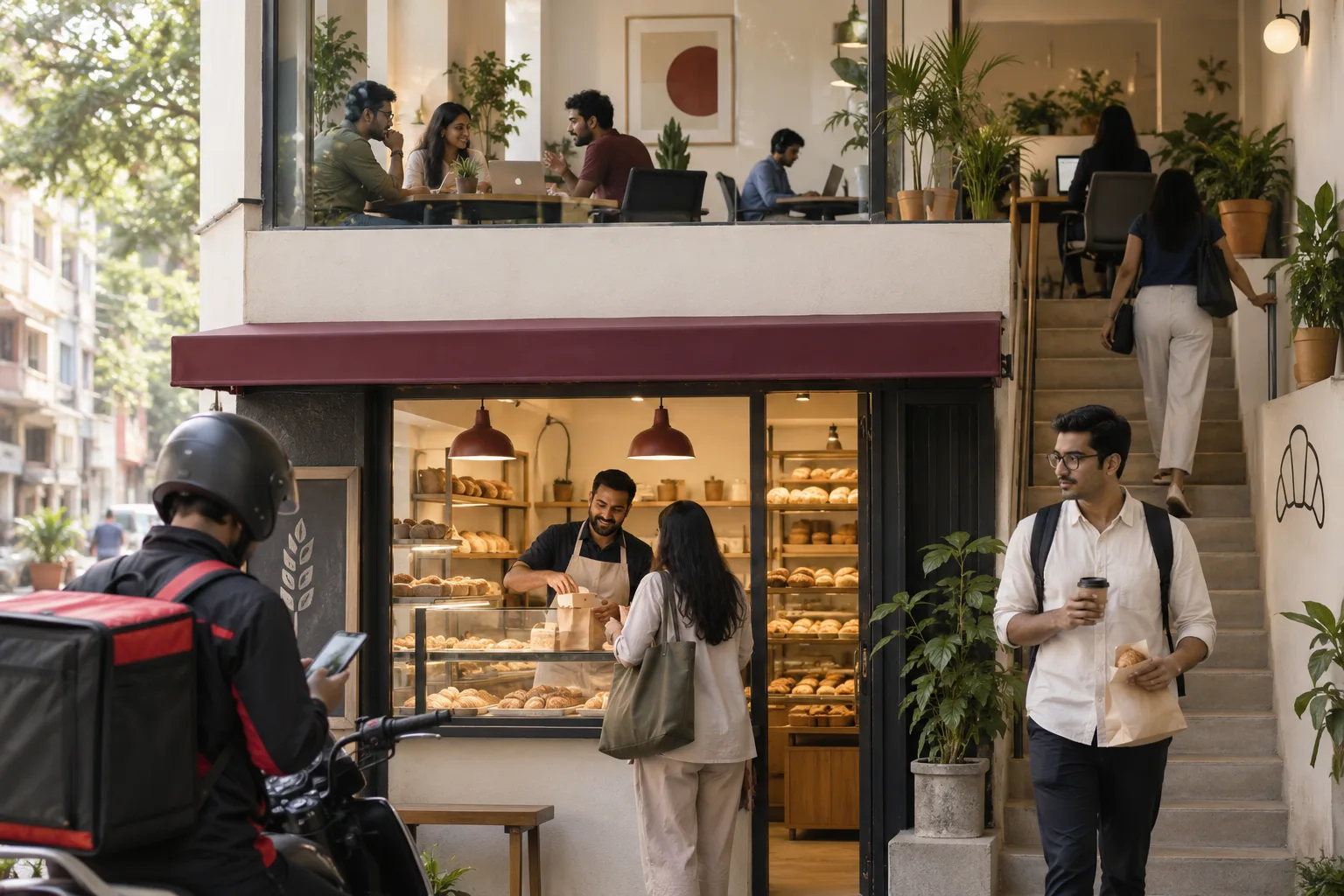 7 min read · 21 Sept 2026How to advertise to startup employeesThere is no tech park to buy. A forty person company sits above a bakery, so the audience is the neighbourhood, the delivery app and the coworking floor.
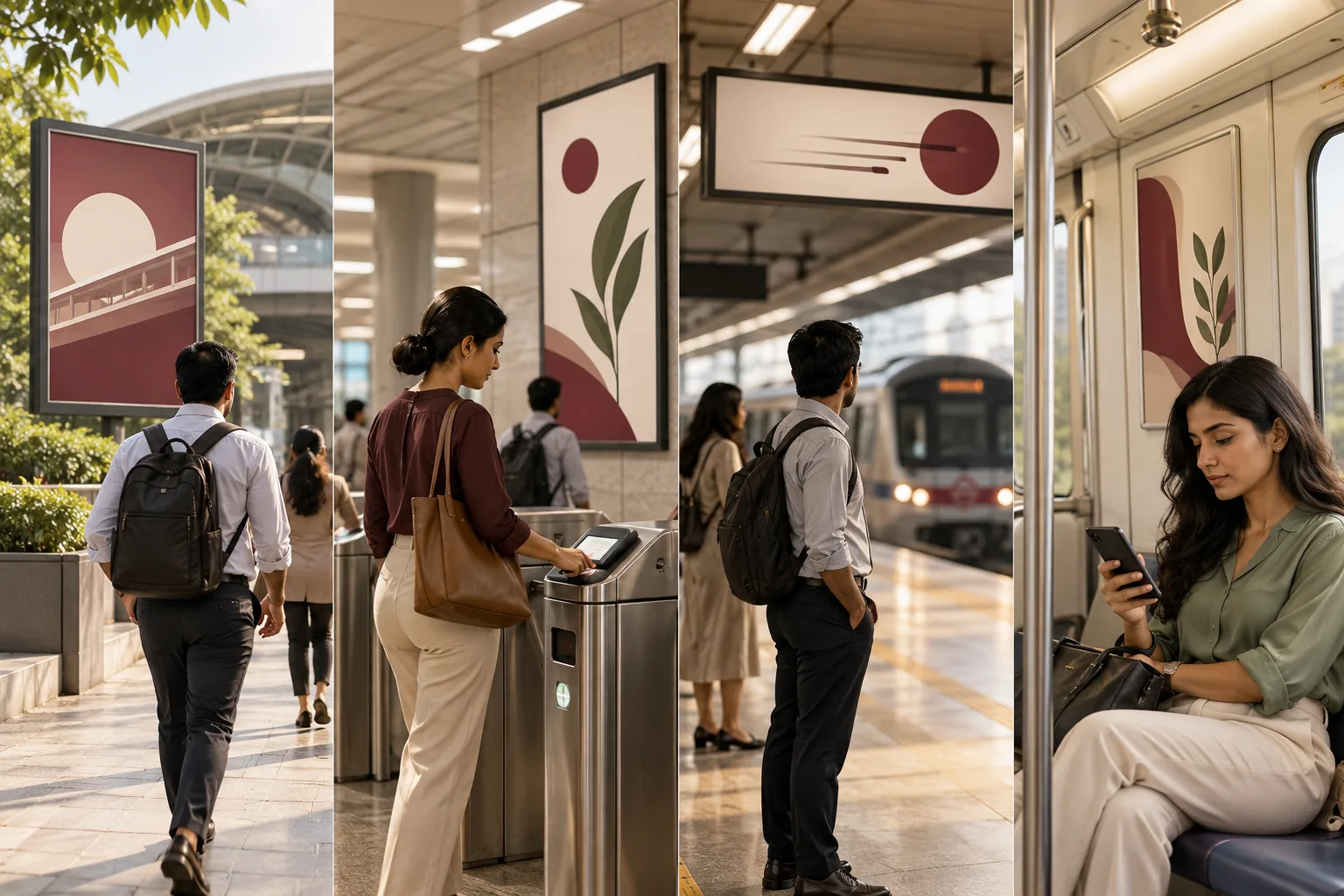 7 min read · 21 Sept 2026How to advertise to metro commutersA commuter is a mode, not a person. The journey has four still moments and each one takes different creative, which is why one design across a station never performs.
More for cafes and coffee shops
Everything else we would do for you.
Closest to this: customers after the sale
Also for cafes and coffee shops
Or start from the overview: sales and marketing for cafes and coffee shops.
Your next practical step
Tell us what you are trying to grow, and we will read it before we call.
Eight short steps, mostly taps. Skip anything you would rather answer on the call.