Cafes and coffee shops · Review generation
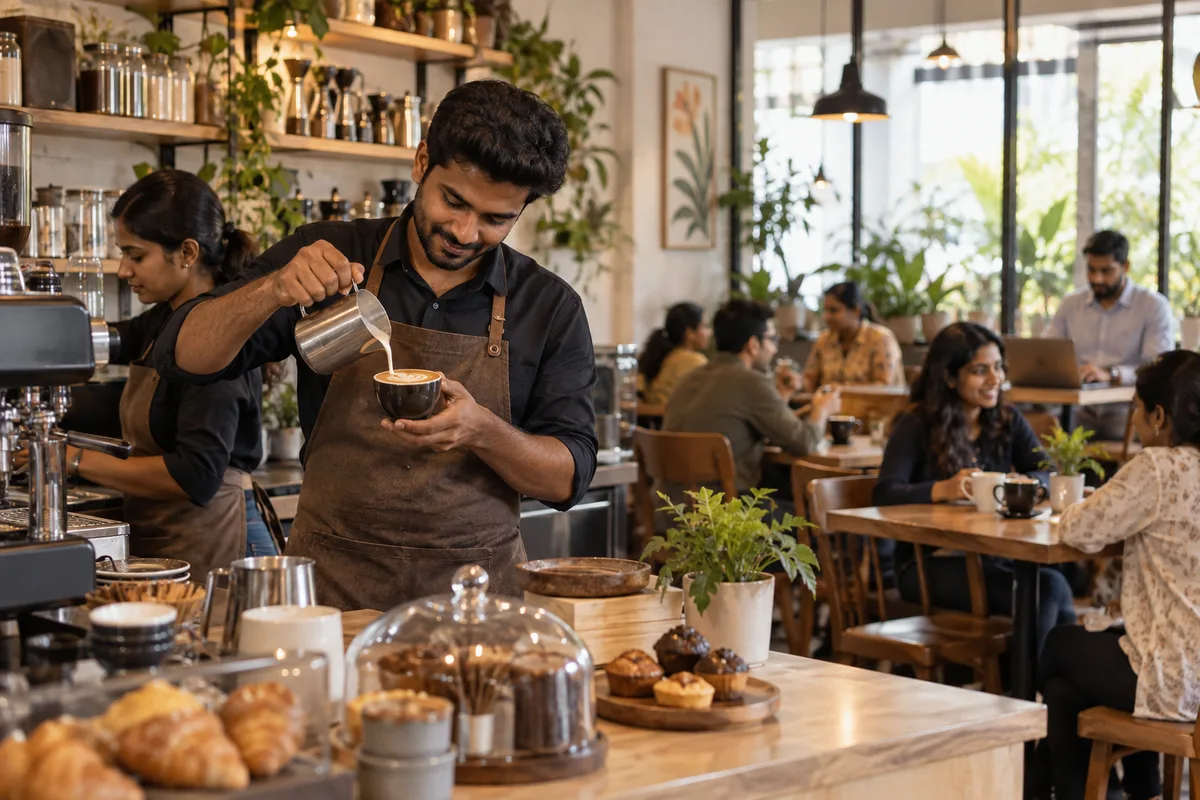
Ask for the review while the customer is still holding the cup.
Review generation for a cafe is getting a happy customer to write something in public before they walk out of the door. Reviews are read by the person deciding where to go, not by the regulars who already come. GullySales fixes the moment of the ask, the words staff use and what happens when a bad one lands.
Scope, fee, reporting and term are agreed in writing after we have read your brief and spoken to you.
What review generation means
Review generation is the routine of asking satisfied customers to leave a Google or platform review at the moment they are happiest, rather than hoping they remember later. GullySales builds the request into your existing follow-up steps and tracks how many turn into a review.
Also for cafes and coffee shops
- Public relations for cafes and coffee shops
- Reputation management for cafes and coffee shops
- Branding for cafes and coffee shops
- Buyer journey for cafes and coffee shops
- Buyer personas for cafes and coffee shops
- Content marketing for cafes and coffee shops
- Digital marketing for cafes and coffee shops
- Email marketing for cafes and coffee shops
Sales and marketing for cafes and coffee shops, the overview.
Last updated 8 Nov 2026. Rules for this trade differ by state and professional body, and they change. We describe restrictions in general terms, so check the current position with your own council or adviser before you publish anything.
For cafes and coffee shops
Where it usually goes wrong, and what we would do.
“Reviews are read before a first visit and almost never after”
Your regulars have stopped reading them. Somebody choosing between three cafes on Maps at nine in the morning reads the newest three, which is why a quiet spell hurts more than the average rating does.
“The barista who served them should ask, not the owner”
Somebody who just remembered a customer's order can ask at the counter and get a yes. The same request sent as an email two days later gets nothing back.
“Do not buy a review, not even with a coffee”
Offering a free drink in exchange for a rating goes against the review platforms' own policies, and those reviews can be taken down. Ask for the review, and give the free drink for something else.
What we do
What we deliver for cafes and coffee shops.
Every deliverable, what it covers for you, and the result it is there to produce. Nothing here is an extra.
A code on the bill folder and at the till
A short link and printed code that opens the review box directly, placed where the customer is already sitting or paying.
Result: A customer writes the review at the table instead of promising to later.
The line staff say when they ask
A sentence written for the counter, short enough to say while handing over change, that names what the customer might mention.
Result: Staff ask without it sounding like a script.
A separate ask for the delivery apps
A card in the delivery bag asking for a rating on the app the order came through, since a Swiggy or Zomato rating does nothing for your Maps listing.
Result: Ratings improve on the platform the order actually came from.
Replies drafted for the complaints that repeat
Worked answers for the ones you get again and again: the wrong order, the twenty-minute wait, the music, the single plug point.
Result: The next reader sees a cafe that answers rather than one that ignores.
A recovery step for a one-star
Who calls, what may be offered, and the point at which you leave the reply standing and stop.
Result: A bad review gets one honest answer, not an argument in public.
How the result is measured
- Reviews received
- Average rating
- Response rate to requests
Recorded as a baseline before work starts, so every later report has an honest comparison.
Asking for reviews the right way
Ask when the bill folder reaches the table, in one friendly line from the person who served the coffee.
- The bill folder moment
- Slip a small QR card into the bill folder and say one line as it is placed down. A guest waiting for the card machine is relaxed and has a phone in hand.
- The second round of coffee or dessert
- A table that orders a second round is enjoying itself. Floor staff can mention the review at that point, in plain words, while keying the order in.
- Regulars asked once, in person
- Ask a regular a single time and leave it. A first-time visitor on a laptop afternoon rarely comes back to the page, so ask that guest before they leave.
- Drink, seat and wifi named
- Suggest the guest mention the drink, the seating and whether the wifi suited work. The next reader wants to know if a flat white and a laptop at ten in the morning will work.
- Dine-in guests for Google, apps for delivery
- Zomato, Swiggy and Google ratings are separate pages. Ask dine-in guests for Google and let the app prompt its own buyers, so one customer is not asked twice.
- No free cup for five stars
- Never hand over a coffee for a rating. Check the platform's current rules, because a run of reviews with matching wording in a short time stops a reader trusting any of them.
Who it is for
This is written for these cafes and coffee shops.
- Independent single-outlet cafes
- Specialty coffee roasters with a cafe
- Cafes inside co-working spaces
- Bakery cafes
- Cafe chains opening new outlets
- Cloud kitchen and delivery-only cafes
- Cafes attached to bookstores or art spaces
- Late-night and student-area cafes
Not for
It is not the right fit if.
- The service problems that cause one-star reviews are still unresolved, and more reviews would show them to more people.
- You plan to offer a free drink for a five-star review, which the platforms do not allow.
- Staff are uncomfortable asking, and a card at the till without a spoken line is ignored.
How it works
How the review generation work runs
The work itself, in order. How an engagement starts, from your brief to a written scope, is set out on our method page.
- 1
Find the moment to ask
We walk through one customer's visit with you and pick the point where the job is done and the customer is still in front of you or holding the phone.
- 2
Read your current reviews
We read every review you have, count how many were answered, and note what customers praise in their own words. We also check that your name, address and phone on Google match your signboard.
- 3
Set up the ask
Link, QR code, message wording and a short briefing for the team. We write down what staff must never do: offer a discount, choose who to ask, or post a review themselves.
- 4
Answer every review
Each incoming review is answered by the routine set down in writing. A complaint is answered by the person who can fix it, with your approval where you want it.
- 5
Count and adjust
We count how many customers were asked and how many reviewed. If few reply, we move the moment or the person asking before touching the wording.
Where this fits
Three pieces of sales work, in this order.
This work sits inside sales process design, at stage 7, after the sale. The audit comes before it, and sales management keeps it running.
Step 1
Sales audit
Find where deals are being lost and what to fix first.
Start here if you cannot say where orders are lost.
Step 2 · you are here
Sales process design
One written way to sell, from first enquiry to repeat order.
Start here if every salesperson sells differently.
Step 3
Sales management
A target, a review routine and someone who owns the number.
Start here if the team has targets and no routine.
FAQ
Questions owners ask before they call.
Not here? More answers, or ask on WhatsApp.
Should we ask every customer?
What do we do about a review we think is unfair?
Should we ask in the customer's own language?
A customer said no thanks when we asked. Do we ask again on the next visit?
How much does it cost?
How long is the contract?
How soon will we see results?
Who will actually do the work?
What do you need from us?
What if we are not happy with the work?
From the blog
Further reading for cafes and coffee shops.
 7 min read · 21 Sept 2026How to advertise to Gen ZThey are not a taste or a personality. What they share is a way of finding things: search inside the app, check the comments, screenshot it to a friend, and never make a phone call.
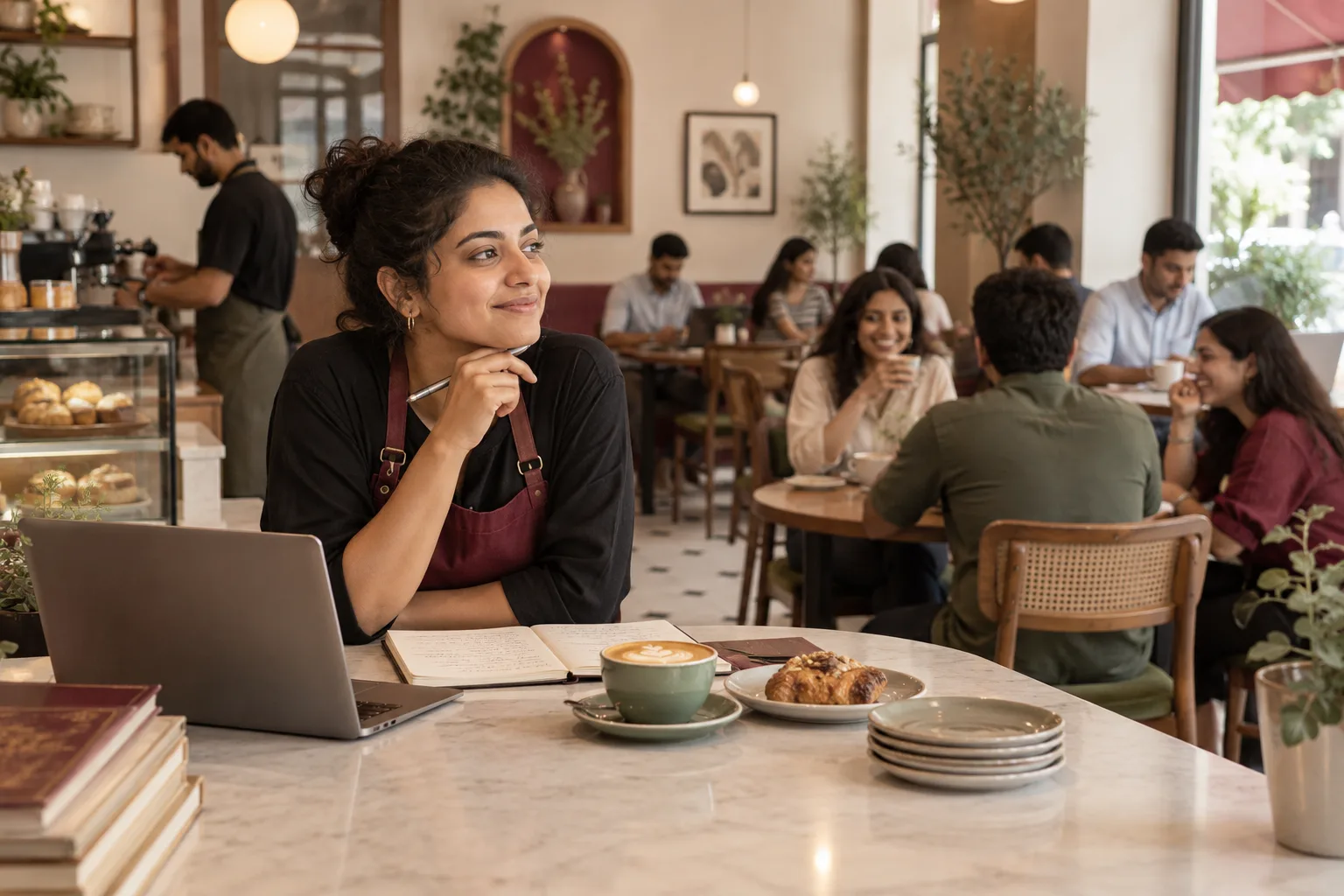 6 min read · 25 Jun 2026How to increase cafe sales: fill the quiet hours and raise the billCafe sales grow in four ways: more visits from regulars, a higher bill per table, busier quiet hours, and new customers from Maps. Work on them in that order.
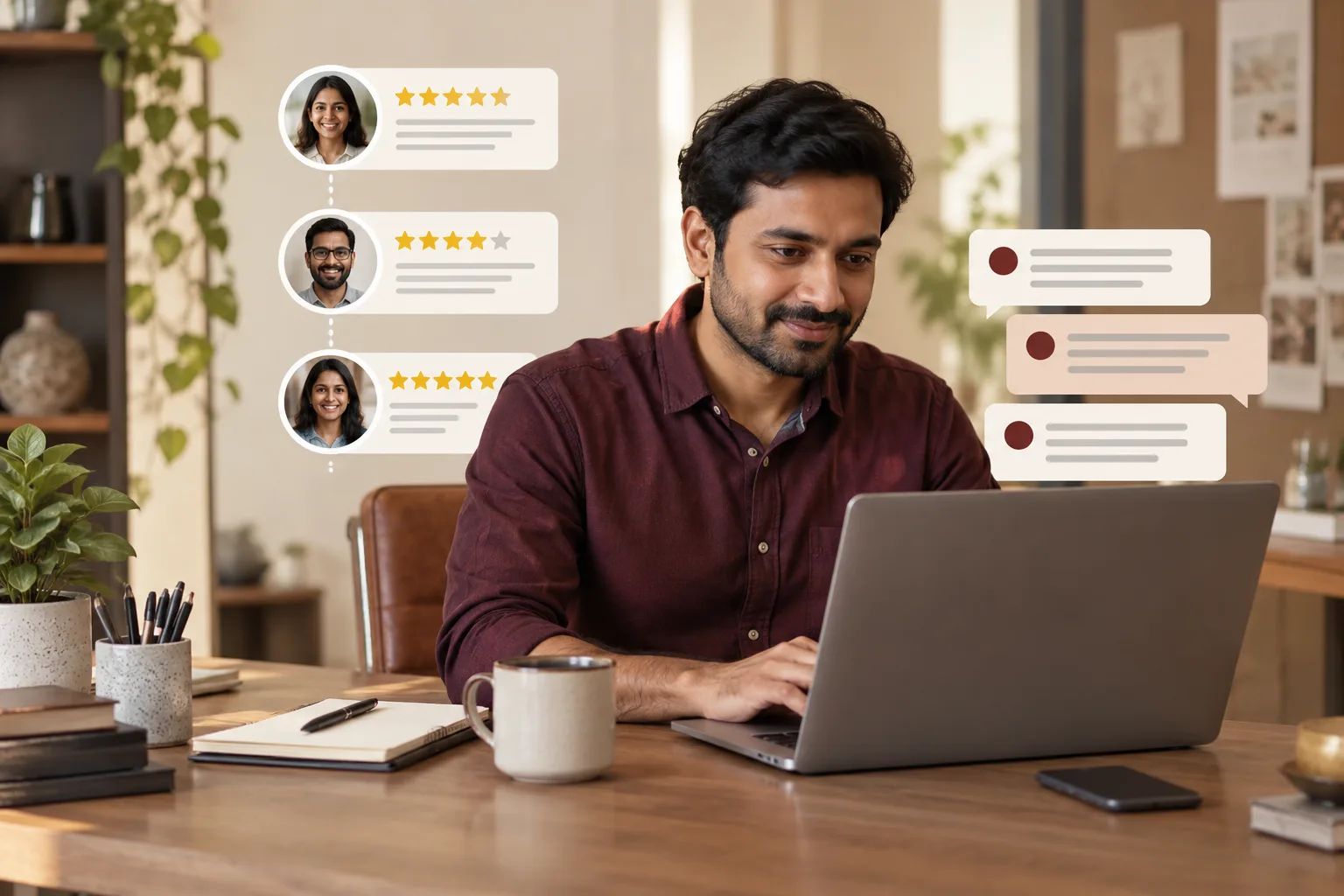 6 min read · 20 Dec 2025How to respond to a hospitality review, good or badShort, specific public replies to hotel, restaurant and venue reviews, with wording for praise, a fair complaint and a disputed one, and a rule for what never goes in public.
More for cafes and coffee shops
Everything else we would do for you.
Closest to this: reputation
Also for cafes and coffee shops
Or start from the overview: sales and marketing for cafes and coffee shops.
Your next practical step
Tell us what you are trying to grow, and we will read it before we call.
Eight short steps, mostly taps. Skip anything you would rather answer on the call.