Hotels · Airport advertising
Put the hotel's name in front of the traveller before the booking site does.
Airport advertising for a hotel buys space inside a terminal, from backlit panels to digital screen slots, so a traveller meets your name before choosing where to sleep. GullySales matches terminal sites to the guests you want, checks the booking and artwork approval, and reads the result against your own direct-booking and enquiry records.
Scope, fee, reporting and term are agreed in writing after we have read your brief and spoken to you.

What airport advertising means
Airport advertising buys space inside a terminal for an agreed display period, from backlit panels to slots on digital screens or security trays. GullySales matches available sites to your buyers’ travel routes and waiting areas, compares formats, coordinates booking and artwork approval, and checks delivery against the booking rather than treating passenger numbers as sales leads.
Also for hotels
- Newspaper advertising for hotels
- Outdoor advertising for hotels
- PPC for hotels
- Google search ad copywriting for hotels
- Display and Performance Max ad copywriting for hotels
- Print advertisement copywriting for hotels
- Ad headline and copy variations for testing for hotels
- Google display and Performance Max creative design for hotels
Sales and marketing for hotels, the overview.
Last updated 14 Nov 2026.
For hotels
Where it usually goes wrong, and what we would do.
“The traveller is choosing a room on a phone”
A guest standing at a baggage belt is already holding a phone, and the booking site will show the same shortlist it showed yesterday. An advertisement that only displays a lobby photograph asks the traveller to remember a name later. The panel has to give one reason to look for your property by name, such as a stated distance from the terminal or a named shuttle, and the booking page has to be ready when they search.
“A transit hotel and a resort buy different space”
A property near the runway sells to the crew member, the delayed passenger and the corporate traveller on an early departure. A resort sells to a family planning a holiday weeks ahead, who see the panel on departure. The two need different sites, different wording and different judgement of success. Copying a competitor's terminal choice without asking which guest that competitor wants is how a hotel pays for exposure that reaches the wrong person.
“The direct booking is the only thing you can count”
Footfall figures from the operator describe the terminal, not your rooms. A hotel that treats those figures as bookings will feel the campaign worked or failed on a mood. The honest record is smaller: searches for the hotel by name, calls to the front desk that mention the airport, and direct bookings that carry a source note. Without a source field in the reservation system, even a good campaign cannot be read.
“Approval rules belong to the operator, not to you”
Every terminal has its own specification for size, material, content and the approval route for artwork. A hotel that prints before the operator confirms the specification, or before the corporate office signs off the offer, pays twice. Rate claims need particular care, because a panel cannot be corrected once it is up, while a rate on a booking site changes the same afternoon. We confirm the rules before any artwork is made.
What we do
What we deliver for hotels.
The work available for this need. We agree the deliverables and responsibilities for your engagement in writing.
Guest and terminal brief
A written note naming which guest the hotel wants to reach, which journeys they take and which terminal and zone they pass through. The owner checks it against the booking records for who actually stays, so the airport is chosen from evidence about guests and not from a salesperson's preference.
Result: You can point to the guest segment each chosen terminal zone is meant to reach.
Site shortlist with photographs
Named positions with photographs, the viewing direction and the waiting area each one faces. Arrivals and departures are separated, because a hotel selling to a person who has just landed wants a different spot from one selling a holiday to a person leaving.
Result: Each shortlisted site has a photograph and a note on who stands in front of it.
Format comparison
A side by side look at panels, digital loop slots, baggage belt branding and trolley or tray placements that suit a hotel message. Slot length, loop size and shared screens are written down, so two quotations can be compared on the same terms.
Result: Two quotations can be read on the same page, with slot length and sharing stated.
Artwork brief and approval trail
A brief for the designer covering one message, the property name, the distance or transfer wording and the booking address to use. We keep the operator's specification and approval correspondence together, so nothing is printed before every sign-off exists.
Result: Every piece of artwork has a recorded operator approval and an owner approval.
Booking and delivery check
A record of what was ordered, the display dates agreed and a photograph of the finished placement. We compare the photograph and the proof of display against the order, and raise any difference with the media seller before the period is paid for.
Result: The order, the display dates and the photograph of the finished site agree.
Direct-booking read-out
A comparison of the front desk's source notes, searches for the hotel name and direct reservations before and during the display period. Wedding and corporate enquiries are kept apart from room bookings, so one season does not hide another.
Result: The read-out shows source notes and direct bookings before and during display, side by side.
How the result is measured
- Installed sites and display dates against the booking
- Digital plays against the booked slot and loop terms
- Branded searches against the pre-campaign baseline, without assuming causation
Recorded as a baseline before work starts, so every later report has an honest comparison.
Who it is for
This is written for these hotels.
- Business and transit hotels
- Boutique and heritage properties
- Resort and destination hotels
- Budget and mid-market chains
- Banquet and wedding-focused properties
- Serviced apartments and long-stay properties
Before you decide
Agree the work. Know how to judge it.
Airport advertising for hotels: use these checks to prepare, choose the scope, and review what changes.
Bring the right evidence
State the buyer group, catchment, and dates that matter to the offer. Ask for the proposed inventory and available evidence about its audience, with the source and date shown.
Make the scope clear
Agree the exact placements, formats, booking period, and proof of delivery. Separate media charges from design, production, permissions, and installation where these apply.
Check the work in use
Compare delivery evidence with the agreed booking and record enquiries through a distinct response route where practical. Treat audience estimates separately from measured responses.
Know when to change course
Do not buy a placement only because it is discounted. If the location or audience does not fit the buyer, revisit the plan before committing production costs.
These are discussion points, not a fixed package. GullySales confirms the deliverables, responsibilities, fee, and term in writing after reading your brief and speaking with you.
Before we start
What to have ready before the work starts.
The records, access and decisions this work needs from hotels. Anything missing is noted in the written scope, with who will supply it.
- Reservation export with sources
- We need the booking history showing channel, stay dates, party type and where the guest came from. Without it we cannot tell who the airport should reach, and the read-out afterwards has nothing to be compared against.
- Corporate rate agreements
- A list of the companies on negotiated rates and the travel desks that book them. Airport space supports these accounts, so we need to know which are active and which have lapsed before choosing a message.
- Distance and transfer facts
- The real travel time from the terminal, the shuttle arrangement and any arrival or late check-in policy. A panel that states a distance the guest later finds untrue does damage that no booking page can repair.
- Photographs and approved brand files
- Current photographs of the rooms and public areas, plus the approved logo and fonts. The artwork is only as honest as the photograph, and a panel using an old lobby will disappoint the guest on arrival.
- One named approver
- A single person who signs off wording, rate claims and artwork. A panel that waits for three owners to agree misses the display dates that were already paid for, and the delay is yours to bear.
How it works
How the airport advertising work runs
The work itself, in order. How an engagement starts, from your brief to a written scope, is set out on our method page.
- 1
Reading your guest records
We start with what you already hold: the reservation export, the corporate rate agreements and the source of the last direct bookings. From them we describe who stays, how they travel and which terminal they probably used. If the hotel has never recorded a source, we say so and agree the field to add first.
- 2
Choosing the terminal and zone
We list the terminals your guests use and the zones they pass through, from arrivals hall to the corridor before departure gates. Each zone is matched to a guest type. A transit hotel and a conference property will end up with different shortlists, and we explain why in plain words.
- 3
Visiting or reviewing the sites
Where we can, the sites are photographed from the traveller's eye level and their sight lines noted. We ask the media seller for what a photograph cannot show, such as the loop size on a digital screen. A position that looks good on a rate card but faces a blank wall is removed here.
- 4
Writing the one message
A hotel panel carries one reason to remember the name, such as a short transfer or a stay for crew and delayed flights. We write the line and the booking address, then test whether a stranger understands it at a glance. Rates are left off unless the owner confirms they can be honoured.
- 5
Artwork, approval and booking
The designer works to the operator's specification, the owner approves the wording, and the operator approves the finished file. We place the booking only when every approval is on record. Production, display dates and the payment terms stay in writing between you and the media seller.
- 6
Reading the result against your records
When the display ends we set the source notes, name searches and direct bookings beside the figures recorded before the work began. We state what moved, what did not and what cannot be separated from the season. The result decides whether the airport stays in the plan or the money moves elsewhere.
Proof
Published examples of our work.
Real clients and the work recorded for each engagement. These examples may cover related services or industries. They show the method, not a guaranteed result.
Hotel Felicity Inn
- Situation
- A traveller compares three hotels on a phone and books one. The website was not built for that.
- What we did
- The site rebuilt around booking
- Photography and one look
- Search work for destination searches
- Content a traveller reads
- Result
- Online bookings increased 35%
- Organic traffic increased 50% within six months
- Positive reviews on Google and TripAdvisor increased 30%
Also worked with
Chord Road Hospital · Curtain Label · Difesa Security Services · Hands On CSR · Implevista · Kambar Group · Kalessi · Kerur Pain Clinic · LL Trust · Lucky Deals · Natural Gases · NavaShakthi Souhardha · NewCom Logistics · Proton Technical Services · SB Engineering · Shakthi Foundation · Shakthi Group · Urbanest · Insyde Studio · Venkateshwara Laser Tech · Vivara Studios
Where this fits
Three pieces of sales work, in this order.
This work sits inside sales process design, at stage 1, prospecting and lead generation. The audit comes before it, and sales management keeps it running.
Step 1
Sales audit
Find where deals are being lost and what to fix first.
Start here if you cannot say where orders are lost.
Step 2 · you are here
Sales process design
One written way to sell, from first enquiry to repeat order.
Start here if every salesperson sells differently.
Step 3
Sales management
A target, a review routine and someone who owns the number.
Start here if the team has targets and no routine.
FAQ
Questions owners ask before they call.
Not here? More answers, or ask on WhatsApp.
Is airport advertising worth it for a hotel?
Will an airport panel bring bookings straight away?
Which hotels suit a terminal campaign best?
Can we put our room rate on the panel?
What does GullySales do and what does the media seller do?
How do we know whether the campaign worked?
How much does it cost?
How long is the contract?
How soon will we see results?
Who will actually do the work?
From the blog
Further reading for hotels.
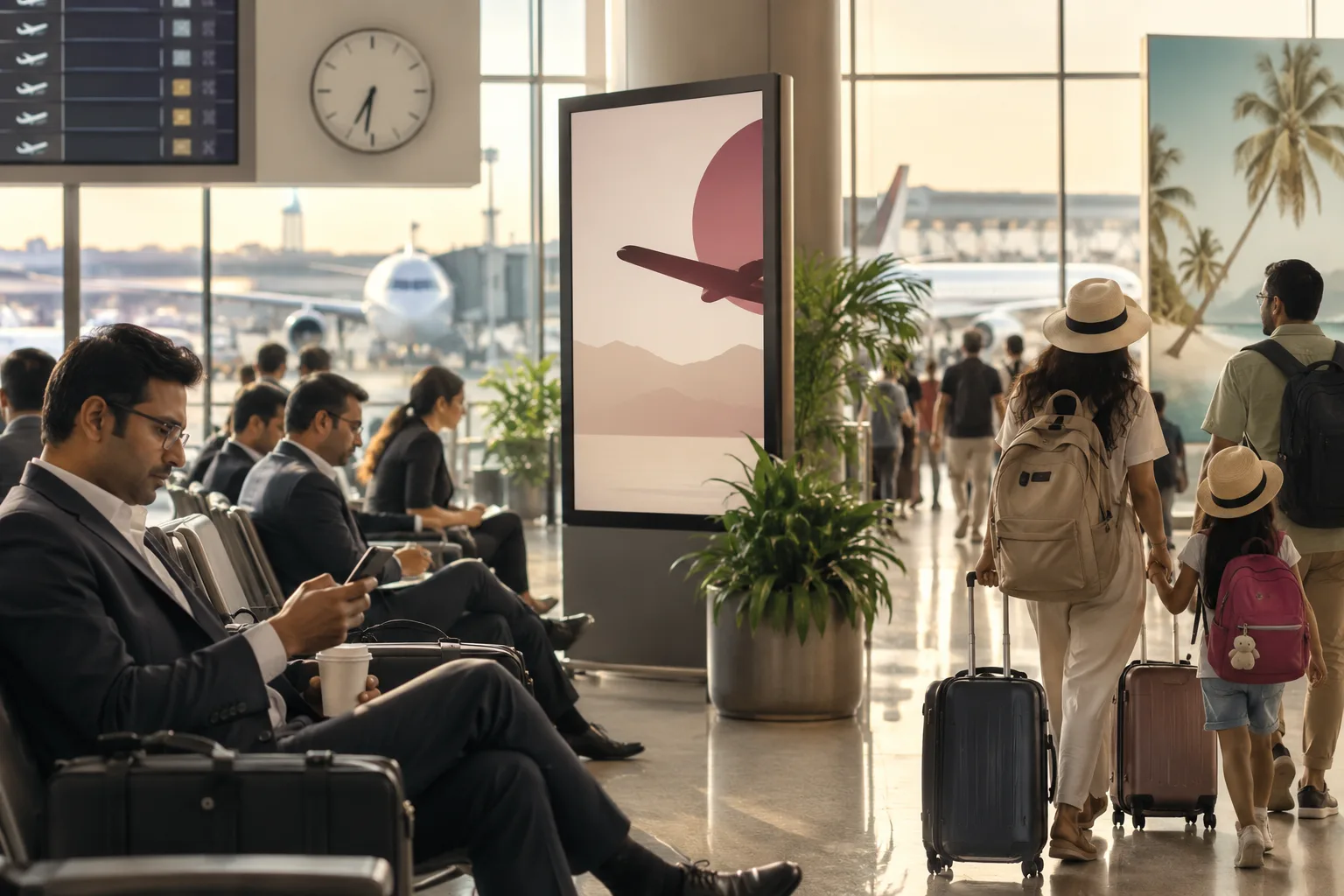 7 min read · 21 Sept 2026How to advertise to airport travellersA terminal is a small number of regular flyers counted many times, and the crowd changes completely between the six o'clock bank and the summer holidays.
 6 min read · 14 Oct 2026Building an off-season plan for a hotel, resort or venueHow to fill the quiet weeks with local residents, corporate meetings and low-cost packages, using a sheet that sets the floor price first.
 5 min read · 6 Oct 2026What buyers check before they book a stay or a catererGuests, tenants and event families judge hotels, homestays, PGs, serviced apartments and caterers on the same checks. What each looks like.
More for hotels
Related work to consider.
Closest to this: paid and media
- Newspaper advertising for hotels
- Outdoor advertising for hotels
- PPC for hotels
- Google search ad copywriting for hotels
- Display and Performance Max ad copywriting for hotels
- Print advertisement copywriting for hotels
- Ad headline and copy variations for testing for hotels
- Google display and Performance Max creative design for hotels
Also for hotels
Or start from the overview: sales and marketing for hotels.
Your next practical step
Tell us what you are trying to grow, and we will read it before we call.
Eight short steps, mostly taps. Skip anything you would rather answer on the call.