Hotels · Buyer journey
Win the moment between the shortlist and the booking, when they type your name.
The buyer journey for a hotel runs from a trip being decided to a room being paid for, passing through a listing, a search for your property name and your own website. A banquet enquiry follows a different path entirely. GullySales maps both and fixes the step where the booking slips away to commission.
Scope, fee, reporting and term are agreed in writing after we have read your brief and spoken to you.
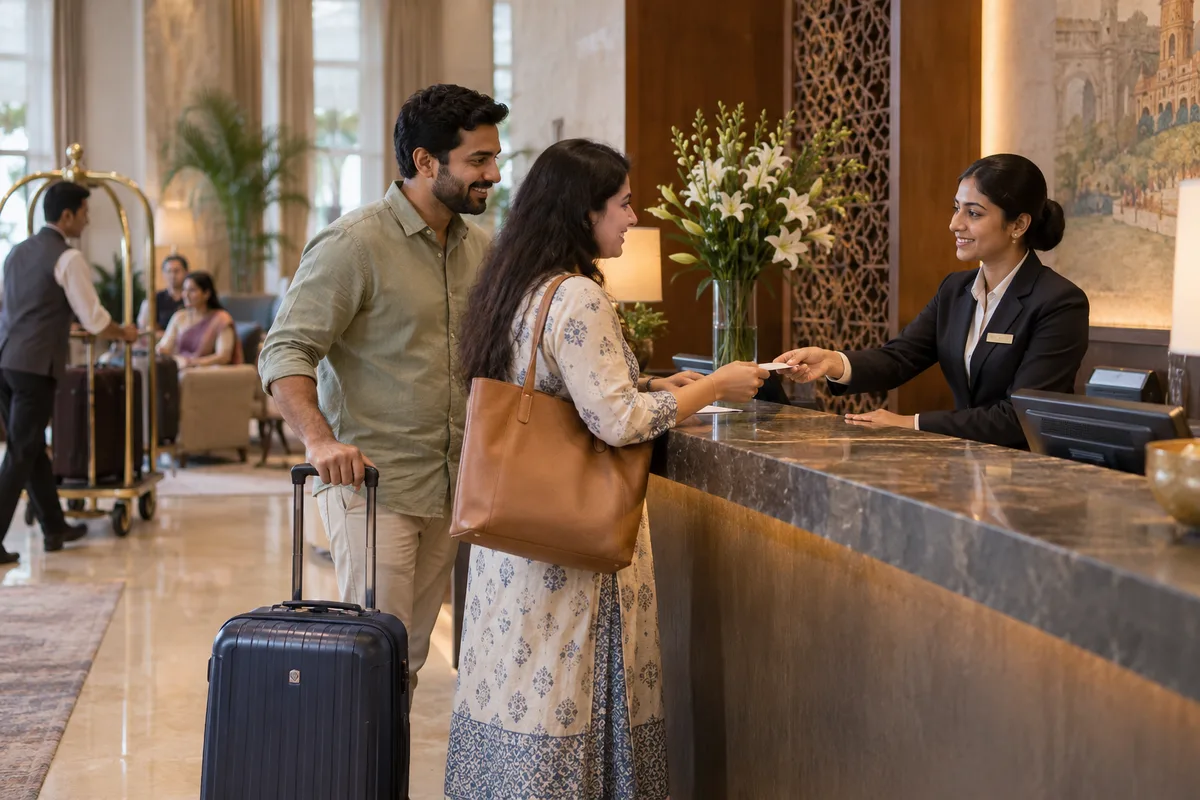
What buyer journey means
The buyer journey is the sequence of steps a customer actually takes, from first hearing about you to deciding to buy, which is rarely a single visit or call. GullySales maps this sequence for your business and checks that something useful happens at each step instead of only at the final call.
Last updated 5 Oct 2026.
For hotels
Where it usually goes wrong, and what we would do.
“There is a gap between the shortlist and the booking”
A traveller who has shortlisted three properties types each name into Google before paying. That search is your one chance to take the booking onto your own site, and it is usually wasted on a slow page with no rates on it.
“The banquet journey starts with a date and a headcount”
A family with four hundred guests in November is filtering on capacity, parking and the kitchen before it looks at a single photograph. The hall is chosen after two or three physical visits.
“Corporate is a third journey with no search in it”
A travel desk builds a rate agreement from a site inspection and a reference stay. Nobody in that process opens a booking site, so nothing you do for leisure travellers ever reaches them.
What we do
What we deliver for hotels.
Every deliverable, what it covers for you, and the result it is there to produce. Nothing here is an extra.
A journey map each for rooms, banquets and corporate
Three written maps with the stages, who decides at each one and what they are looking at, because these are three buyers arriving by three routes.
Result: Your team stops handling a wedding enquiry like a room booking.
The name-search step fixed
Your own site ranking and loading fast for the property name, with rates visible and a booking step that asks for no more than a listing does.
Result: A traveller who came to compare ends up booking direct.
An enquiry-to-visit routine for banquets
What to send when a date and a guest number arrive, how to get the family onto the property, and what they should see when they walk in.
Result: More enquiries turn into the visit where halls are actually chosen.
Rate agreement approach for corporate travel desks
A direct approach to the companies whose people already stay with you, built around a site inspection and a reference stay rather than an emailed rate card.
Result: Weekday rooms come from a contract instead of a commission.
Drop points named and counted
Where the journey breaks: the shortlist that never searched you, the visit that never happened, the quote nobody answered, measured against the baseline taken before work started.
Result: You know which stage is costing you rooms.
Pre-arrival and post-stay written into the map
The message before arrival and the ask after checkout treated as stages of the journey rather than as afterthoughts.
Result: The stay ends with a review and a reason to come back.
How the result is measured
- Drop-off rate by step
- Time from first contact to sale
- Steps with no content
Recorded as a baseline before work starts, so every later report has an honest comparison.
Stages of the guest's journey
A hotel guest is decided by a trip, a listing and a name search, while a banquet or corporate buyer follows other routes.
- The trip is decided
- The guest starts on an OTA or a search. Keep the Maps listing and the OTA photographs consistent with what is actually in the rooms.
- Compares and reads reviews
- They read recent reviews on MakeMyTrip and Google. Reply to each review with the room and the incident, and fix recurring problems at the property.
- Searches your name
- They look for your own site to see if direct is cheaper. Show the room, the rate and a reason to book direct, such as breakfast, on that page.
- Banquet enquiry
- It starts with a date and a headcount. Quote with menu options and the hall layout, and offer a site visit.
- Corporate travel desk
- No search is involved. Send a rate proposal and the property's registration and tax papers to the travel desk and keep the contact named.
- After the stay
- Pre-arrival and post-stay messages complete the journey. Ask the guest for arrival time and requests, and give a direct booking card at check-out.
Who it is for
This is written for these hotels.
- Business and transit hotels
- Boutique and heritage properties
- Resort and destination hotels
- Budget and mid-market chains
- Banquet and wedding-focused properties
- Serviced apartments and long-stay properties
Not for
It is not the right fit if.
- You have no booking record to show whether guests search your name before booking, so the journey would rest on assumption
- Your front desk cannot log where a banquet enquiry came from, and the stages could not be measured
- The banquet and room teams do not talk to each other, and a joined journey needs one person to own the handover
How it works
How the buyer journey work runs
The work itself, in order. How an engagement starts, from your brief to a written scope, is set out on our method page.
- 1
Understand the sales process
We walk through how a sale happens today, from the person who first answers an enquiry to the one who closes it.
- 2
Audit the data
Website analytics, call logs and CRM records are put together to see where people drop out. Where records are thin, we say so and mark the gap rather than guess.
- 3
Interview buyers and staff
Recent customers, and some who did not buy, plus the team who speak to them, explain the reasons behind the numbers.
- 4
Build the map
Stages, touchpoints, decision-makers and drop-off points are set out in one document everyone reads the same way.
- 5
Fix and measure
Each fix is made against the stage it addresses, and the drop-off at that stage is compared with the baseline afterwards.
Proof
What happened when owners fixed this.
Real clients, the work we did, and the result as it was recorded. Where no number was recorded, none is claimed.
Hotel Felicity Inn
- Situation
- A traveller compares three hotels on a phone and books one. The website was not built for that.
- What we did
- The site rebuilt around booking
- Photography and one look
- Search work for destination searches
- Content a traveller reads
- Result
- Online bookings increased 35%
- Organic traffic increased 50% within six months
- Positive reviews on Google and TripAdvisor increased 30%
Also worked with
Chord Road Hospital · Curtain Label · Difesa Security Services · Hands On CSR · Implevista · Kambar Group · Kalessi · Kerur Pain Clinic · LL Trust · Lucky Deals · Natural Gases · NavaShakthi Souhardha · NewCom Logistics · Proton Technical Services · SB Engineering · Shakthi Foundation · Shakthi Group · Urbanest · Insyde Studio · Venkateshwara Laser Tech · Vivara Studios
Where this fits
Three pieces of sales work, in this order.
This work sits inside sales process design, at stage 1, prospecting and lead generation. The audit comes before it, and sales management keeps it running.
Step 1
Sales audit
Find where deals are being lost and what to fix first.
Start here if you cannot say where orders are lost.
Step 2 · you are here
Sales process design
One written way to sell, from first enquiry to repeat order.
Start here if every salesperson sells differently.
Step 3
Sales management
A target, a review routine and someone who owns the number.
Start here if the team has targets and no routine.
FAQ
Questions owners ask before they call.
Not here? More answers, or ask on WhatsApp.
Does a guest really search our name before booking?
Our banquet and room teams are the same people. Is that a problem?
Who else is involved in a wedding booking at our banquet?
A guest booked on an OTA. How do we bring them back direct next time?
How much does it cost?
How long is the contract?
How soon will we see results?
Who will actually do the work?
What do you need from us?
What if we are not happy with the work?
From the blog
Further reading for hotels.
 6 min read · 14 Oct 2026Building an off-season plan for a hotel, resort or venueHow to fill the quiet weeks with local residents, corporate meetings and low-cost packages, using a planning sheet that sets the floor price before the offer goes out.
 5 min read · 6 Oct 2026What buyers check before they book a stay or a catererGuests, tenants and event families judge hotels, homestays, PGs, serviced apartments and caterers on the same four checks. Here is what each check looks like and how to pass it.
 8 min read · 21 Sept 2026Premium audience advertising strategyNo platform in India sells you verified income. Everything offered as affluence targeting is inference, and the cheapest filter you own is putting the price in the first frame.
More for hotels
Everything else we would do for you.
Closest to this: strategy and research
Also for hotels
Or start from the overview: sales and marketing for hotels.
Your next practical step
Tell us what you are trying to grow, and we will read it before we call.
Eight short steps, mostly taps. Skip anything you would rather answer on the call.