Hotels · Lead routing and assignment
Send the wedding enquiry to the banquet manager, not whoever saw it first.
For a hotel, lead routing and assignment decides which desk or person receives each enquiry, such as rooms, banquets, corporate accounts or a restaurant, and who covers when that person is away. GullySales writes those rules with your sales head, configures assignment where your tools support it, and agrees a manual handoff where they do not.
Scope, fee, reporting and term are agreed in writing after we have read your brief and spoken to you.
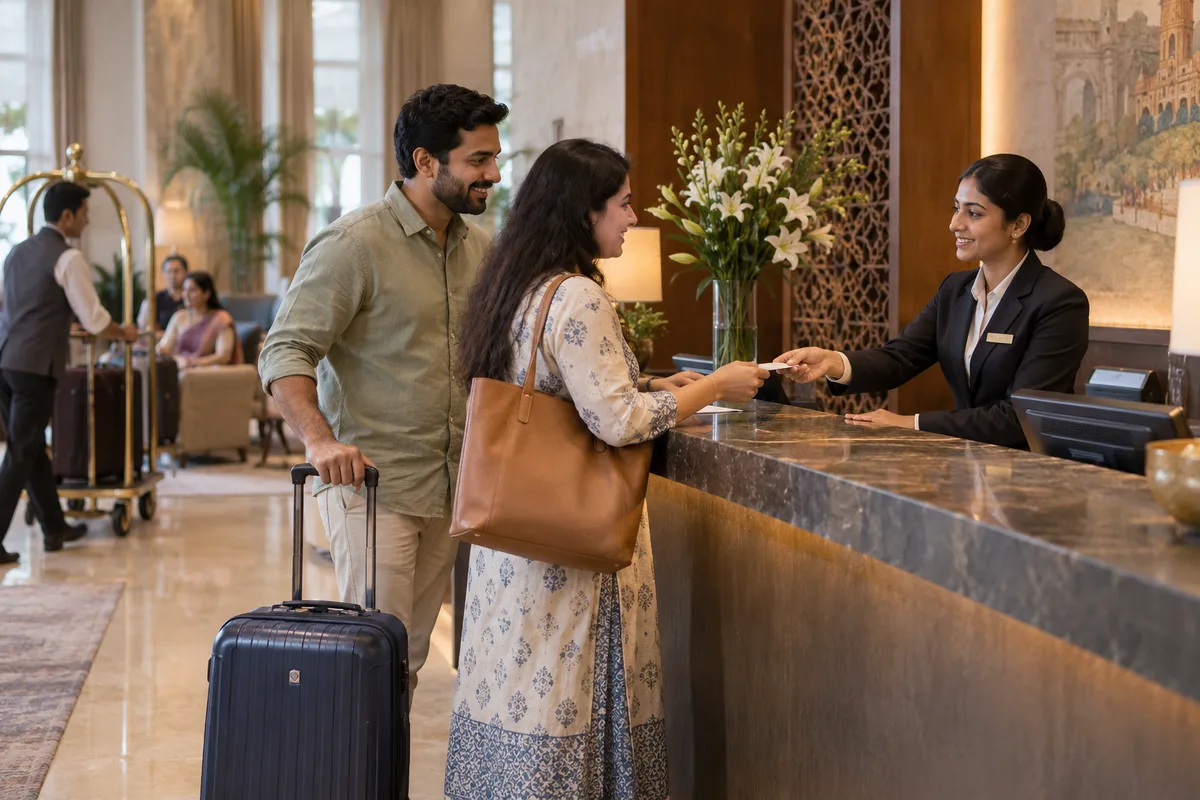
What lead routing and assignment means
Lead routing and assignment sets the rules for which salesperson, branch or specialist receives each new enquiry, including what happens when information is missing or someone is away. GullySales documents those decisions, configures assignment where your systems support it, and sets up a manual handoff where automation is not available.
Also for hotels
- CRM for hotels
- Follow-up systems for hotels
- Lead generation for hotels
- Demand generation and marketing campaigns for hotels
- Conversation intelligence for hotels
- Lead capture and lifecycle management for hotels
- Pipeline hygiene and governance for hotels
- Sales call auditing and conversation quality assessment for hotels
Sales and marketing for hotels, the overview.
Last updated 14 Nov 2026.
For hotels
Where it usually goes wrong, and what we would do.
“Several desks, one shared inbox”
Rooms, banquets, corporate sales and the restaurants all publish an address or a number, and the website form feeds one inbox. Whoever opens it first replies, or forwards, or assumes someone else did. A wedding enquiry then sits beside a room request, and the banquet manager sees it after the family has heard from another venue. Routing gives each type of enquiry a named first owner.
“The sales team is out on site visits”
The banquet manager spends the afternoon walking families through the hall, and the phone rings unanswered. If routing sends every wedding enquiry to one person without a cover rule, the busiest time of the day is the time enquiries wait longest. A fallback owner with authority to reply and to hold a date is part of the rule, not an afterthought.
“Group blocks and corporate accounts belong to someone already”
A company that already has a negotiated rate should reach the corporate sales manager who holds that relationship, not a general reservations queue that offers the public rate. Routing has to check existing account ownership before it applies any rule based on date or size. Otherwise two people quote the same company different figures on the same afternoon.
“Enquiries arrive at night and during peak season”
A wedding family sends a message late in the evening with a date and a headcount. In the wedding season the volume of such messages outruns what one person can answer. Routing sets who sees an out-of-hours message, how the first acknowledgement is sent and what moves an untouched enquiry to a second person, so waiting is visible and owned.
What we do
What we deliver for hotels.
The work available for this need. We agree the deliverables and responsibilities for your engagement in writing.
Routing rules for the hotel
A written table of who receives what: room enquiries, banquet and wedding, conference and group blocks, corporate accounts, restaurant bookings and press or vendor messages. You check sample enquiries against it and approve which rule wins when two apply.
Result: Any sample enquiry has exactly one first owner on the table.
Intake field specification
The information each source must collect so routing can work, such as enquiry type, event date, expected guests and whether the sender is an existing company. You check live samples for blanks before those fields decide where an enquiry goes.
Result: Sample enquiries carry the fields the rules depend on.
Assignment set-up
Rules configured in your CRM or receiving tool where it supports them, with a written manual alternative where it does not. Test enquiries show the assigned owner and reveal any rule the tool cannot apply, so you hear that before launch.
Result: A test enquiry of each type reaches its first owner.
Cover and escalation rules
Named backups for each desk, a catch-all owner for unmatched messages, and the conditions that move an untouched enquiry on, such as a wedding request with no reply. The duty manager's authority to hold a date is written down.
Result: A blank field or an absent owner still leaves the enquiry with a named person.
Peak-season rotation
Where several people sell banquets, an agreed rotation among those eligible, with limits for people on leave or in a site visit. Your sales head checks that eligibility, such as who may quote a large event, comes before an equal share.
Result: Enquiries are shared only among people allowed to answer them.
Manager view and handover notes
A view or sheet showing who owns each open enquiry, which are unassigned and which have waited past the limit you set, plus notes on updating availability and changing the rules. Your nominated manager walks through each action before taking over.
Result: The manager can see every unassigned enquiry on one screen.
How the result is measured
- Correct assignments checked against approved rules
- Time from enquiry arrival to assignment, measured separately from first reply
- Unassigned or untouched enquiries beyond the agreed limit
Recorded as a baseline before work starts, so every later report has an honest comparison.
Who it is for
This is written for these hotels.
- Business and transit hotels
- Boutique and heritage properties
- Resort and destination hotels
- Budget and mid-market chains
- Banquet and wedding-focused properties
- Serviced apartments and long-stay properties
Before you decide
Agree the work. Know how to judge it.
Lead routing and assignment for hotels: use these checks to prepare, choose the scope, and review what changes.
Bring the right evidence
Trace recent enquiries from arrival to the last recorded action. Include a won enquiry, an unsuitable one, and one that went quiet, with personal details removed for the initial discussion.
Make the scope clear
Agree who accepts each enquiry, what makes it qualified, and how ownership changes. Include a rule for missed replies and a clear reason for closing an enquiry.
Check the work in use
Pick an enquiry at random and ask the team to find its owner, latest conversation, and next action. Check that the record agrees with what actually happened.
Know when to change course
If no one has capacity to respond, assign that responsibility before buying more leads. Automation can support the owner, but it cannot replace an unresolved handover.
These are discussion points, not a fixed package. GullySales confirms the deliverables, responsibilities, fee, and term in writing after reading your brief and speaking with you.
Before we start
What to have ready before the work starts.
The records, access and decisions this work needs from hotels. Anything missing is noted in the written scope, with who will supply it.
- A list of who sells what
- Names, desks and the enquiry types each person may quote, including who may agree a discount or a held date. Without it the rules guess at authority, and a message reaches someone who cannot answer it.
- Corporate accounts and their owners
- Which company belongs to which sales person, and which agreements are active. Routing must send a known account to its owner, and a missing list means the same company is treated as new by whoever happens to reply.
- Leave and site-visit patterns
- When the banquet team is out of the office on tours, festival closures and leave. Cover rules built without this list look sound on paper and fail on the first busy afternoon.
- Access to forms and the receiving tool
- Permission to change the website form, the booking engine enquiry settings and the CRM or inbox rules. If a tool cannot apply a rule, we need to know early so the manual route can be written instead of promised.
- A manager with authority over the rules
- One person who approves changes, such as adding a sales person or moving the wedding desk. Without that owner, each team adds its own exception and the table drifts away from what the system does.
How it works
How the lead routing and assignment work runs
The work itself, in order. How an engagement starts, from your brief to a written scope, is set out on our method page.
- 1
Tracing handoffs from the past season
We follow recent enquiries from arrival to the first reply, noting who saw each, who forwarded it and where it waited. Your sales head confirms the breaks in ownership. The count of enquiries and the first-reply gaps recorded here become the baseline for the final comparison.
- 2
Deciding who owns each enquiry type
The general manager and sales head settle the table: which desk takes weddings, which takes corporate groups, who covers the restaurants. Existing account ownership is resolved first. We write the priority order in words before touching any tool, because a rule nobody agrees on cannot be configured.
- 3
Fixing what the form and phone collect
We list the fields routing needs and check which sources supply them. The website form may need a function type and a date; the reservations line may need a script question. Your nominated owner approves each change, including manual steps where a source cannot be altered.
- 4
Test enquiries and the awkward cases
We send sample enquiries through every rule: a wedding with a blank date, a company on a rate agreement, a message while the banquet manager is away. The sales head compares each result against the written table and approves corrections before any live enquiry is routed.
- 5
Going live with the managers watching
We watch the first live assignments with the sales head, checking owners, cover and the unassigned view. Teething problems are fixed against the written rules, not by ad hoc exceptions that the next person cannot see or explain.
- 6
Reading the first-reply record afterwards
We compare who received each enquiry and how long a reply waited with the figures from the start of the work. The sales head decides whether to alter the rules for the next season, and any continuing support is stated in the written scope.
Proof
Published examples of our work.
Real clients and the work recorded for each engagement. These examples may cover related services or industries. They show the method, not a guaranteed result.
Hotel Felicity Inn
- Situation
- A traveller compares three hotels on a phone and books one. The website was not built for that.
- What we did
- The site rebuilt around booking
- Photography and one look
- Search work for destination searches
- Content a traveller reads
- Result
- Online bookings increased 35%
- Organic traffic increased 50% within six months
- Positive reviews on Google and TripAdvisor increased 30%
Also worked with
Chord Road Hospital · Curtain Label · Difesa Security Services · Hands On CSR · Implevista · Kambar Group · Kalessi · Kerur Pain Clinic · LL Trust · Lucky Deals · Natural Gases · NavaShakthi Souhardha · NewCom Logistics · Proton Technical Services · SB Engineering · Shakthi Foundation · Shakthi Group · Urbanest · Insyde Studio · Venkateshwara Laser Tech · Vivara Studios
Where this fits
Three pieces of sales work, in this order.
This work sits inside sales process design, at stage 1, prospecting and lead generation. The audit comes before it, and sales management keeps it running.
Step 1
Sales audit
Find where deals are being lost and what to fix first.
Start here if you cannot say where orders are lost.
Step 2 · you are here
Sales process design
One written way to sell, from first enquiry to repeat order.
Start here if every salesperson sells differently.
Step 3
Sales management
A target, a review routine and someone who owns the number.
Start here if the team has targets and no routine.
FAQ
Questions owners ask before they call.
Not here? More answers, or ask on WhatsApp.
Is routing worth it for a single-property hotel?
Can a wedding enquiry go to the banquet manager automatically?
What if two salespeople claim the same company?
How is cover handled when the manager is away?
Will routing make our replies faster?
Do guests see any of this?
How much does it cost?
How long is the contract?
How soon will we see results?
Who will actually do the work?
From the blog
Further reading for hotels.
 6 min read · 14 Oct 2026Building an off-season plan for a hotel, resort or venueHow to fill the quiet weeks with local residents, corporate meetings and low-cost packages, using a sheet that sets the floor price first.
 5 min read · 6 Oct 2026What buyers check before they book a stay or a catererGuests, tenants and event families judge hotels, homestays, PGs, serviced apartments and caterers on the same checks. What each looks like.
 8 min read · 21 Sept 2026Premium audience advertising strategyNo platform in India sells verified income. Affluence targeting is inference, and the cheapest filter you own is putting the price in the first frame.
More for hotels
Related work to consider.
Closest to this: leads and follow-up
- CRM for hotels
- Follow-up systems for hotels
- Lead generation for hotels
- Demand generation and marketing campaigns for hotels
- Conversation intelligence for hotels
- Lead capture and lifecycle management for hotels
- Pipeline hygiene and governance for hotels
- Sales call auditing and conversation quality assessment for hotels
Also for hotels
Or start from the overview: sales and marketing for hotels.
Your next practical step
Tell us what you are trying to grow, and we will read it before we call.
Eight short steps, mostly taps. Skip anything you would rather answer on the call.