Hotels · Review generation
You have two review pages and they are not doing the same job.
Review generation at a hotel is the ask at checkout and the public answer to the complaint about the air conditioning. A listing score comes only from guests who booked there and feeds that site's ranking, while your Google page is what a traveller reads after typing your name. GullySales runs both.
Scope, fee, reporting and term are agreed in writing after we have read your brief and spoken to you.
What review generation means
Review generation is the routine of asking satisfied customers to leave a Google or platform review at the moment they are happiest, rather than hoping they remember later. GullySales builds the request into your existing follow-up steps and tracks how many turn into a review.
Last updated 5 Oct 2026.
For hotels
Where it usually goes wrong, and what we would do.
“The two pages need different guests”
Only a guest who booked through a listing can score you there, and that score feeds the ranking on the same site. A guest who booked direct can write on your Google page, which is where the traveller comparing you lands.
“Ask at checkout, while the bill is being settled”
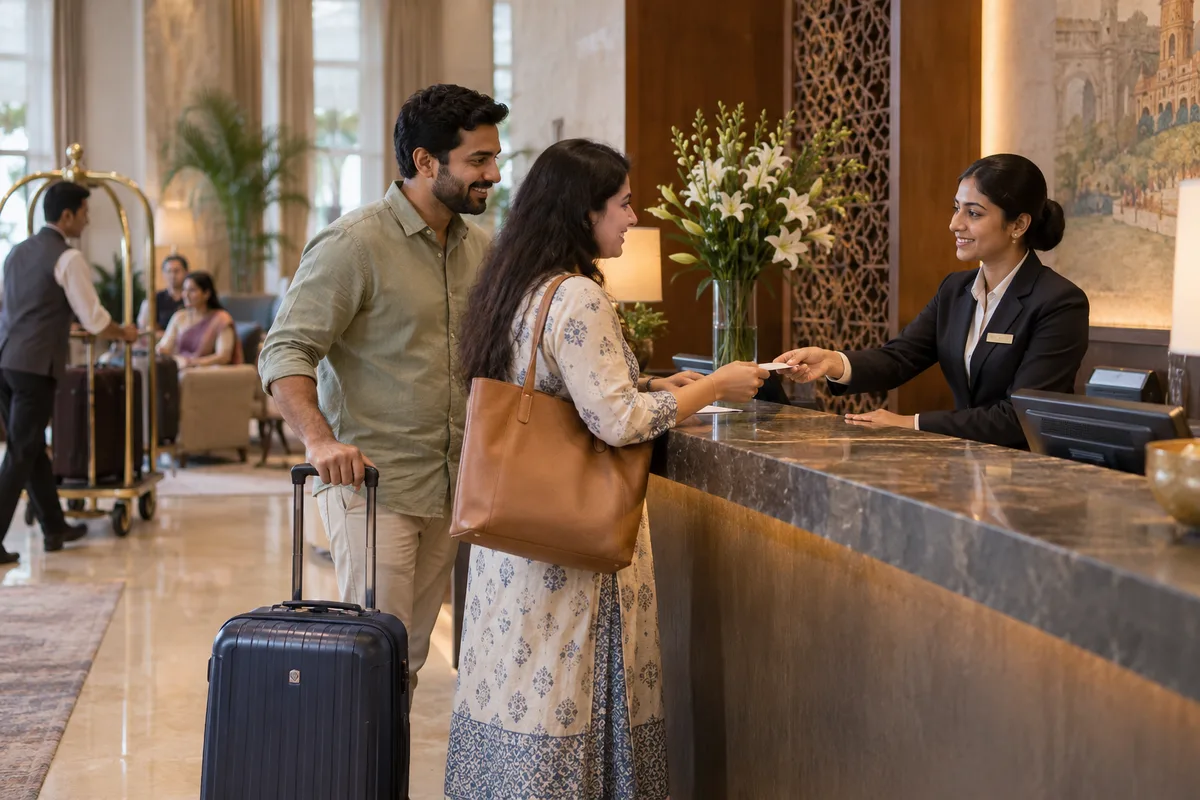
The guest is at the desk with the stay fresh and your front office manager in front of them. A message sent after they get home competes with a week of work email.
“Nearly every bad review names the AC, the wifi or the noise”
Answer with what has changed, in two lines. That reply is read by hundreds of people comparing properties, and an argumentative one costs more bookings than the original complaint.
What we do
What we deliver for hotels.
Every deliverable, what it covers for you, and the result it is there to produce. Nothing here is an extra.
A checkout ask routed to the right page
A short spoken request at the desk, pointed at the listing or at your Google page depending on how the guest booked.
Result: Each review lands where it does you the most good.
Wording that gets your staff named
A prompt that nudges the guest to mention who looked after them, which makes the review more useful and tells you who is doing the work.
Result: Reviews name your front office and housekeeping people.
A rule for which stays not to ask about
The ones to skip: an open complaint, a room change, a function that overran, a booking where the rate was disputed at checkout.
Result: You stop soliciting your own one-star reviews.
Replies to AC, wifi and noise complaints
Short factual answers saying what has been done, cleared with your general manager, ending with a line that moves the rest to a phone call.
Result: A reader sees a hotel that fixed it rather than one that argues.
Banquet reviews collected after the function
A request to the family once the photographs are back and the stress has passed, rather than on the night the hall is being cleared.
Result: Your hall has reviews from the people who booked it, not only from room guests.
Review volume and score read against the baseline
New reviews by source, the movement in the score and the reply rate, measured from the baseline recorded before work began.
Result: You can see whether the desk is actually asking.
How the result is measured
- Reviews received
- Average rating
- Response rate to requests
Recorded as a baseline before work starts, so every later report has an honest comparison.
Asking guests for reviews
Ask at checkout and send each guest to the page that fits how they booked.
- At the desk while the bill prints
- Ask as the bill prints and the key card is returned. The front office staff member who just sorted a late checkout request is the right voice.
- OTA bookers wait for the OTA
- Guests who booked through MakeMyTrip, Booking.com or Agoda are asked for a review by that site after checkout. Tell them to look out for it, and send the Google link to direct bookers.
- Direct and corporate guests get the Google link
- Send the Google link to guests who booked on your website, by phone or through a company travel desk. Their feedback also protects your direct bookings.
- Room, staff and breakfast named
- Suggest writing the room type, the staff member who helped and the breakfast. A traveller checking a business hotel wants to know about wifi, AC and quiet at night.
- Open complaints left alone
- Do not ask a guest who raised an AC, noise or billing issue and was not satisfied by checkout. Let the duty manager close it, and reply on the platform if it appears.
- No staff contest for positive reviews
- Avoid a staff contest that pays for the most positive reviews. Check the platform's current rules, because pressured or bought reviews can be removed and may hurt your ranking.
Who it is for
This is written for these hotels.
- Business and transit hotels
- Boutique and heritage properties
- Resort and destination hotels
- Budget and mid-market chains
- Banquet and wedding-focused properties
- Serviced apartments and long-stay properties
Not for
It is not the right fit if.
- You plan to pay or discount guests for reviews, which the review sites do not allow and which breaks guest trust
- The AC, wifi and noise problems that bad reviews name are not yet fixed, so more reviews would repeat them
- No one replies to reviews, and asking for more would only add complaints that sit unanswered
How it works
How the review generation work runs
The work itself, in order. How an engagement starts, from your brief to a written scope, is set out on our method page.
- 1
Find the moment to ask
We walk through one customer's visit with you and pick the point where the job is done and the customer is still in front of you or holding the phone.
- 2
Read your current reviews
We read every review you have, count how many were answered, and note what customers praise in their own words. We also check that your name, address and phone on Google match your signboard.
- 3
Set up the ask
Link, QR code, message wording and a short briefing for the team. We write down what staff must never do: offer a discount, choose who to ask, or post a review themselves.
- 4
Answer every review
Each incoming review is answered by the routine set down in writing. A complaint is answered by the person who can fix it, with your approval where you want it.
- 5
Count and adjust
We count how many customers were asked and how many reviewed. If few reply, we move the moment or the person asking before touching the wording.
Proof
What happened when owners fixed this.
Real clients, the work we did, and the result as it was recorded. Where no number was recorded, none is claimed.
Hotel Felicity Inn
- Situation
- A traveller compares three hotels on a phone and books one. The website was not built for that.
- What we did
- The site rebuilt around booking
- Photography and one look
- Search work for destination searches
- Content a traveller reads
- Result
- Online bookings increased 35%
- Organic traffic increased 50% within six months
- Positive reviews on Google and TripAdvisor increased 30%
Also worked with
Chord Road Hospital · Curtain Label · Difesa Security Services · Hands On CSR · Implevista · Kambar Group · Kalessi · Kerur Pain Clinic · LL Trust · Lucky Deals · Natural Gases · NavaShakthi Souhardha · NewCom Logistics · Proton Technical Services · SB Engineering · Shakthi Foundation · Shakthi Group · Urbanest · Insyde Studio · Venkateshwara Laser Tech · Vivara Studios
Where this fits
Three pieces of sales work, in this order.
This work sits inside sales process design, at stage 7, after the sale. The audit comes before it, and sales management keeps it running.
Step 1
Sales audit
Find where deals are being lost and what to fix first.
Start here if you cannot say where orders are lost.
Step 2 · you are here
Sales process design
One written way to sell, from first enquiry to repeat order.
Start here if every salesperson sells differently.
Step 3
Sales management
A target, a review routine and someone who owns the number.
Start here if the team has targets and no routine.
FAQ
Questions owners ask before they call.
Not here? More answers, or ask on WhatsApp.
Can we give a discount in exchange for a good review?
A guest is threatening a bad review over the bill. What now?
Should we ask at checkout or send a message after the guest leaves?
Many guests are from abroad. Do we ask them in English only?
How much does it cost?
How long is the contract?
How soon will we see results?
Who will actually do the work?
What do you need from us?
What if we are not happy with the work?
From the blog
Further reading for hotels.
 5 min read · 6 Oct 2026What buyers check before they book a stay or a catererGuests, tenants and event families judge hotels, homestays, PGs, serviced apartments and caterers on the same four checks. Here is what each check looks like and how to pass it.
 6 min read · 20 Dec 2025How to respond to a hospitality review, good or badShort, specific public replies to hotel, restaurant and venue reviews, with wording for praise, a fair complaint and a disputed one, and a rule for what never goes in public.
 7 min read · 29 Apr 2025How to measure customer satisfactionMeasure satisfaction by asking two questions on WhatsApp, watching the behaviour that does not lie, and acting on every low score within a week.
More for hotels
Everything else we would do for you.
Or start from the overview: sales and marketing for hotels.
Your next practical step
Tell us what you are trying to grow, and we will read it before we call.
Eight short steps, mostly taps. Skip anything you would rather answer on the call.