Hotels · Website
Give a guest a reason to book on your own site instead of paying an OTA on your behalf.
Website design for a hotel means a fast, booking-ready site with clear rates, banquet details and photographs. It is built to convert a visitor directly rather than send them back to an OTA. GullySales builds this so a returning or referred guest has an easy, trustworthy way to book you without a commission attached.
Scope, fee, reporting and term are agreed in writing after we have read your brief and spoken to you.
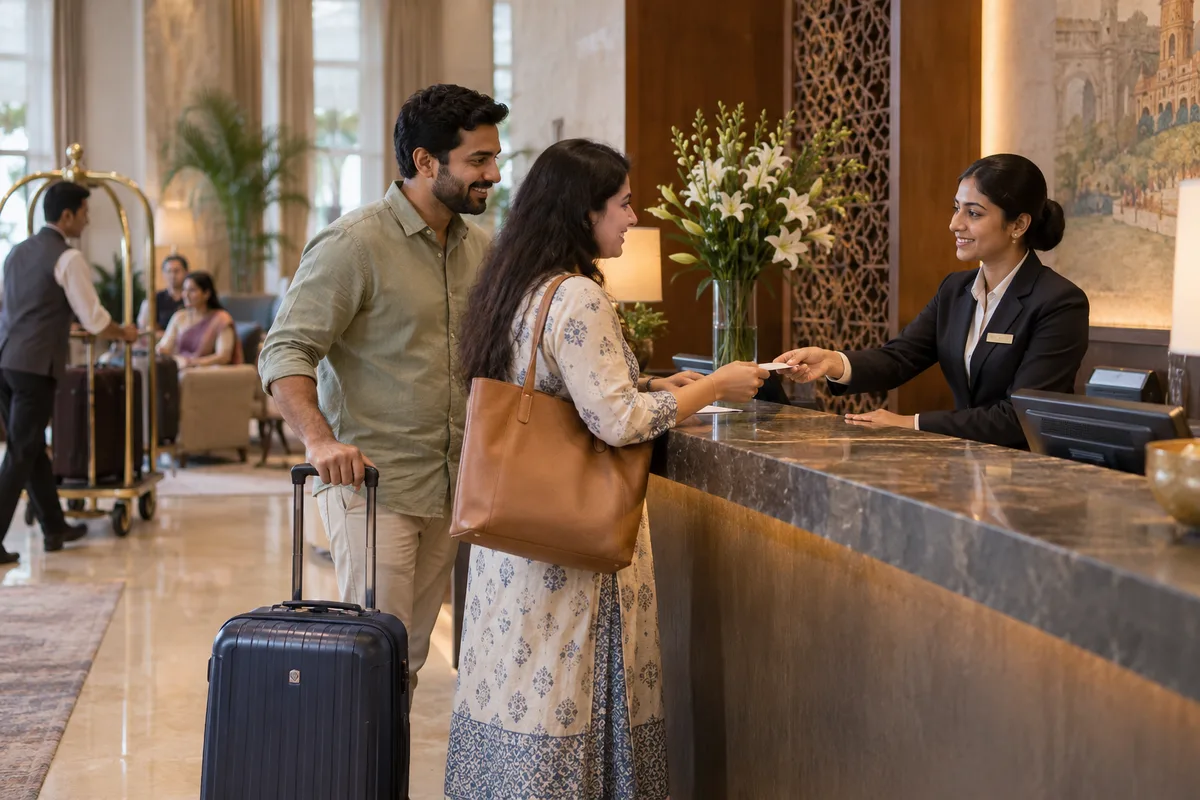
What website means
A website is the page a customer lands on after searching, clicking an advert or scanning a code, and it decides whether they call or leave. GullySales builds and maintains sites that load quickly, explain the offer plainly and make the enquiry form or phone number easy to find.
Last updated 5 Oct 2026.
For hotels
Where it usually goes wrong, and what we would do.
“A banquet enquiry form beats a generic contact page”
A form asking for guest count, date and budget lets your sales team send a proper quote fast, instead of a back-and-forth started by a vague message.
“With the same rate everywhere, the website has to win on trust, not price”
Since OTA rules usually require matching prices, your website's job is to look current and trustworthy enough that a guest chooses it anyway.
“Mobile speed decides whether the booking happens at all”
A traveller checking rates on a phone from a train station will not wait for a slow page to load, and will book on the OTA instead.
What we do
What we deliver for hotels.
Every deliverable, what it covers for you, and the result it is there to produce. Nothing here is an extra.
Banquet enquiry form for date and budget
A form built to collect guest count, date and budget upfront, so your sales team can send a proper quote fast.
Result: A wedding enquiry arrives with everything needed to respond properly.
Room rate pages built for direct booking
Pages stating rates, room types and what is included, built to convert a visitor without sending them to an OTA.
Result: A guest can book on your own site instead of paying a commission on your behalf.
Mobile speed fix for the booking path
A technical check and fix of load time on phones, where most rate comparisons and bookings now happen.
Result: A traveller checking rates from a phone does not give up and leave.
Rate and availability update access for your team
A simple way for your front desk or sales team to update rates and room availability without calling a developer.
Result: Rates on the website match what is actually available today.
Trust content placed where a guest compares
Recent photographs, review scores and a clear cancellation policy shown on the same page as the rate, not buried elsewhere.
Result: A guest comparing your site against an OTA has a reason to stay and book.
How the result is measured
- Page load time
- Bounce rate
- Enquiries from the website
Recorded as a baseline before work starts, so every later report has an honest comparison.
What the page must show
What a hotel's website must show before a guest books direct.
- Each room type, with size, bed and view
- Show the size, bed type, view and floor range for every room type, with photographs of the bathroom as well. A guest choosing between two hotels compares these.
- What the rate includes
- Say if breakfast is included, how GST is added, the extra-bed charge and the check-in and check-out times. A guest who finds a surprise at the desk writes it in a review.
- A banquet chart by hall
- List each hall with capacity by seating style, parking, the DJ and decoration rules, vendor policy, and whether liquor is served. A wedding family needs this before a site visit.
- Where the hotel is, in terms a traveller uses
- Give the distance and the usual road time from the railway station, the airport and the main hospitals or offices, and the landmark to look for. Many guests book by what is near.
- A reason to book direct that you can honour
- Offer something you can deliver, such as breakfast, late check-out or a room upgrade subject to availability. Read your OTA contract first, since many require price parity.
- Documents guests must carry
- State the ID needed at check-in, any rule for local ID or for foreign guests and your policy for couples. A guest turned away at midnight does not give a second chance.
Who it is for
This is written for these hotels.
- Business and transit hotels
- Boutique and heritage properties
- Resort and destination hotels
- Budget and mid-market chains
- Banquet and wedding-focused properties
- Serviced apartments and long-stay properties
Not for
It is not the right fit if.
- Your direct rate is higher than the OTA rate, so a better site would not change why a guest books elsewhere
- No one is named to update rooms, rates and banquet charts, and a stale site would mislead the guest who reads it
- The booking engine on your site cannot be changed, and a new design would sit on top of a form that loses bookings
How it works
How the website work runs
The work itself, in order. How an engagement starts, from your brief to a written scope, is set out on our method page.
- 1
Confirm structure and content
We agree the page list, what each page must answer, and who supplies the text and photographs, before any design starts.
- 2
Design the templates
The home page, a service page, a location page and the enquiry page are designed first, on phone and desktop, and shown to you.
- 3
Build and test
The site is built and checked on real phones and the common browsers. Every form, call button and WhatsApp link is tested end to end.
- 4
Load real content
Actual copy, images and information replace placeholders. Pages are read through once by you, since you spot wrong details we cannot.
- 5
Check before launch
Tracking, page titles, the sitemap and the privacy page are checked on the staging site. If an old site exists, its addresses are mapped so old links still land somewhere.
- 6
Launch and hand over access
The site goes live and we record the domain, hosting, content login and analytics in your name. The first live enquiry is traced to confirm tracking works.
Proof
What happened when owners fixed this.
Real clients, the work we did, and the result as it was recorded. Where no number was recorded, none is claimed.
Hotel Felicity Inn
- Situation
- A traveller compares three hotels on a phone and books one. The website was not built for that.
- What we did
- The site rebuilt around booking
- Photography and one look
- Search work for destination searches
- Content a traveller reads
- Result
- Online bookings increased 35%
- Organic traffic increased 50% within six months
- Positive reviews on Google and TripAdvisor increased 30%
Also worked with
Chord Road Hospital · Curtain Label · Difesa Security Services · Hands On CSR · Implevista · Kambar Group · Kalessi · Kerur Pain Clinic · LL Trust · Lucky Deals · Natural Gases · NavaShakthi Souhardha · NewCom Logistics · Proton Technical Services · SB Engineering · Shakthi Foundation · Shakthi Group · Urbanest · Insyde Studio · Venkateshwara Laser Tech · Vivara Studios
Where this fits
Three pieces of sales work, in this order.
This work sits inside sales process design, at stage 1, prospecting and lead generation. The audit comes before it, and sales management keeps it running.
Step 1
Sales audit
Find where deals are being lost and what to fix first.
Start here if you cannot say where orders are lost.
Step 2 · you are here
Sales process design
One written way to sell, from first enquiry to repeat order.
Start here if every salesperson sells differently.
Step 3
Sales management
A target, a review routine and someone who owns the number.
Start here if the team has targets and no routine.
FAQ
Questions owners ask before they call.
Not here? More answers, or ask on WhatsApp.
Will this replace our OTA listings?
Can we manage room rates ourselves after launch?
Should the direct booking price be lower than the OTA price?
Do we need a separate page for the banquet hall?
How long is the contract?
How soon will we see results?
Who will actually do the work?
What do you need from us?
What if we are not happy with the work?
From the blog
Further reading for hotels.
 6 min read · 6 May 2026How to increase hotel direct bookings without fighting the OTAsMake your own website as quick to book as an OTA, answer calls and WhatsApp in minutes, and give guests a reason to book direct. Then sell to corporate and group buyers yourself.
 6 min read · 14 Oct 2026Building an off-season plan for a hotel, resort or venueHow to fill the quiet weeks with local residents, corporate meetings and low-cost packages, using a planning sheet that sets the floor price before the offer goes out.
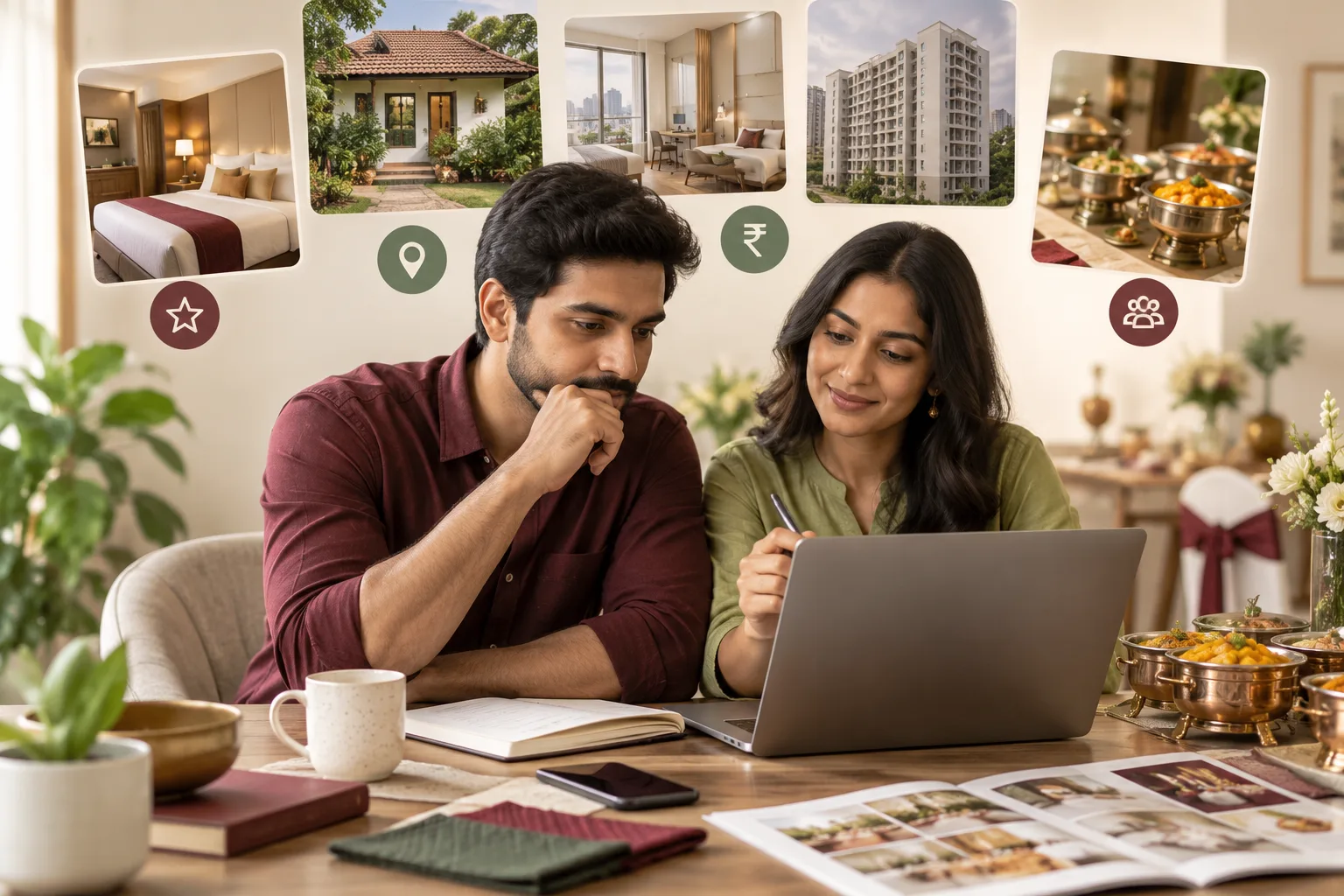 5 min read · 6 Oct 2026What buyers check before they book a stay or a catererGuests, tenants and event families judge hotels, homestays, PGs, serviced apartments and caterers on the same four checks. Here is what each check looks like and how to pass it.
More for hotels
Everything else we would do for you.
Closest to this: search and visibility
Also for hotels
Or start from the overview: sales and marketing for hotels.
Your next practical step
Tell us what you are trying to grow, and we will read it before we call.
Eight short steps, mostly taps. Skip anything you would rather answer on the call.