Paying guest accommodations · Buyer persona
Know who sleeps in the room, who pays for it and who asks about safety.
A buyer persona for a PG describes the people involved in one booking: the student or new joiner who stays, the parent or employer who pays, and the questions each asks first. GullySales works on writing those personas from your own tenant records and enquiry notes, and on making pages and replies speak to each.
Scope, fee, reporting and term are agreed in writing after we have read your brief and spoken to you.

What buyer persona means
A buyer persona is a plain description of the kind of customer who actually buys from you. It includes what they search, what worries them and who else they ask before deciding. GullySales builds this from real enquiries and past sales rather than a generic template, then uses it to write every page and advert.
Also for paying guest accommodations
- Digital marketing for paying guest accommodations
- Marketing strategy for paying guest accommodations
- Content marketing for paying guest accommodations
- Email marketing for paying guest accommodations
- Influencer marketing for paying guest accommodations
- PPC advertising for paying guest accommodations
- Sales coaching for paying guest accommodations
- SEO for paying guest accommodations
Sales and marketing for paying guest accommodations, the overview.
Last updated 8 Nov 2026.
For paying guest accommodations
Where it usually goes wrong, and what we would do.
“The occupant and the payer are different people”
A first-year picks between two rooms by distance and friends, while a parent in another city decides whether the advance goes through. A persona describing only the student leaves the payer's questions unanswered on the call.
“A new joiner moving for a job asks other things”
A working professional wants a quiet room, steady power and internet, flexible timings and a notice period that suits a job change. Treating them as a senior student sends them a mess menu when they asked about the lock-in.
“The short-stay guest is a separate buyer”
An exam candidate, an intern or a patient's attendant needs a bed for a stretch and ignores the semester plan. With no persona for them, a short stay is quoted in the same breath as a yearly one, and the quote confuses both.
“Personas written from imagination mislead”
An invented persona flatters the owner's assumptions. The real one comes from why current tenants chose you, why enquirers declined, and what the parent asked in the first minute of the call.
What we do
What we deliver for paying guest accommodations.
Every deliverable, what it covers for you, and the result it is there to produce. Nothing here is an extra.
Conversations with current and past tenants
Short talks with tenants who stayed and some who left, asking how they found the PG, what they compared and what nearly stopped them.
Result: You hold the words tenants really used about choosing.
A persona sheet for each kind of buyer
One page each for the student, the parent, the working professional and the short-stay guest, with their questions, worries and who decides.
Result: Staff can say which buyer is on the line.
A read of past enquiries
A pass through earlier calls and chats, grouped by who asked and what stopped the booking.
Result: The reasons enquiries were lost are written down.
Reply notes for each persona
Answers to the rent, food and safety questions each persona raises first, written from what is really in place.
Result: Whoever answers gives the same answer.
Page and listing wording by buyer
Headings and listing text rewritten so a parent finds safety and a professional finds timings and quiet.
Result: Each buyer finds their question answered on the page.
A persona field on every enquiry
A field in your enquiry record noting which buyer each enquiry belongs to.
Result: Bookings can be counted by buyer type.
How the result is measured
- Enquiry match to persona
- Conversion rate by persona
- Content aligned to persona
Recorded as a baseline before work starts, so every later report has an honest comparison.
Who is asking
Four buyers appear on a PG enquiry, and each asks a different thing before the advance.
- A first-year student
- Wants to know how far the college gate is, who else lives there and whether friends can stay in the same block.
- A parent in another city
- Wants to know about the warden, the gate rules, the cameras and a person they can phone any hour of the night.
- A new joiner at a tech park
- Wants quiet, steady power and Wi-Fi, flexible timings, and a notice period that does not trap them if the job changes.
- An exam candidate or intern
- Wants a bed for a few weeks, with food and no long agreement, and a clear refund rule if the plan changes.
- A patient's attendant
- Wants a bed near the hospital at short notice, with a kitchen or meals and a rent counted by the day or week.
- An employer arranging for a group
- Wants a single invoice, a fixed number of beds and a contact who answers when a joiner arrives late.
Who it is for
This is written for these paying guest accommodations.
- Boys' and girls' PG accommodations near colleges
- Co-living spaces for working professionals
- PGs near tech parks and business hubs
- PGs near hospitals for patients and attendants
- Furnished single and shared-room PGs
- Multi-property PG chains
Not for
It is not the right fit if.
- You have fewer than a handful of residents, and speaking with each directly will teach more than a persona sheet.
- The PG takes only one kind of resident, such as a single college's students, and the buyer is already known.
- No one will change a reply or a page for each persona, so the sheets would be filed and forgotten.
How it works
How the buyer persona work runs
The work itself, in order. How an engagement starts, from your brief to a written scope, is set out on our method page.
- 1
Understand the current view
We start with how your team currently describes the customer, since the gap between belief and reality is the finding itself.
- 2
Audit past enquiries and sales
We look at recent enquiries and closed deals to see who actually bought, not who was assumed to buy.
- 3
Interview customers and staff
Structured conversations with recent buyers, held as talk about the last purchase and not a questionnaire. We ask what happened before they called, who else was involved and what they compared. Customers agree before we contact them, and their answers are reported without names.
- 4
Build the personas
Findings are written into short, usable persona documents rather than a long report.
- 5
Apply to your marketing
We show where each persona should change a page, an ad or a script you already have. The sales team reads the drafts and says which ring true. A persona they do not recognise is rewritten.
Where this fits
Three pieces of sales work, in this order.
This work sits inside sales process design, at stage 0, foundation. The audit comes before it, and sales management keeps it running.
Step 1
Sales audit
Find where deals are being lost and what to fix first.
Start here if you cannot say where orders are lost.
Step 2 · you are here
Sales process design
One written way to sell, from first enquiry to repeat order.
Start here if every salesperson sells differently.
Step 3
Sales management
A target, a review routine and someone who owns the number.
Start here if the team has targets and no routine.
FAQ
Questions owners ask before they call.
Not here? More answers, or ask on WhatsApp.
How many personas does a small PG need?
Is it fine to ask tenants why they chose us?
Should the parent persona appear on the website?
How do we find out what parents worry about?
How much does it cost?
How long is the contract?
How soon will we see results?
Who will actually do the work?
What do you need from us?
What if we are not happy with the work?
From the blog
Further reading for paying guest accommodations.
 5 min read · 6 Oct 2026What buyers check before they book a stay or a catererGuests, tenants and event families judge hotels, homestays, PGs, serviced apartments and caterers on the same four checks. Here is what each check looks like and how to pass it.
 7 min read · 21 Sept 2026How to advertise to young professionals in their first earning yearsIncome with no history behind it, a rented room on an eleven-month agreement, and six friends who decide together. The money is real and the credit check is the barrier.
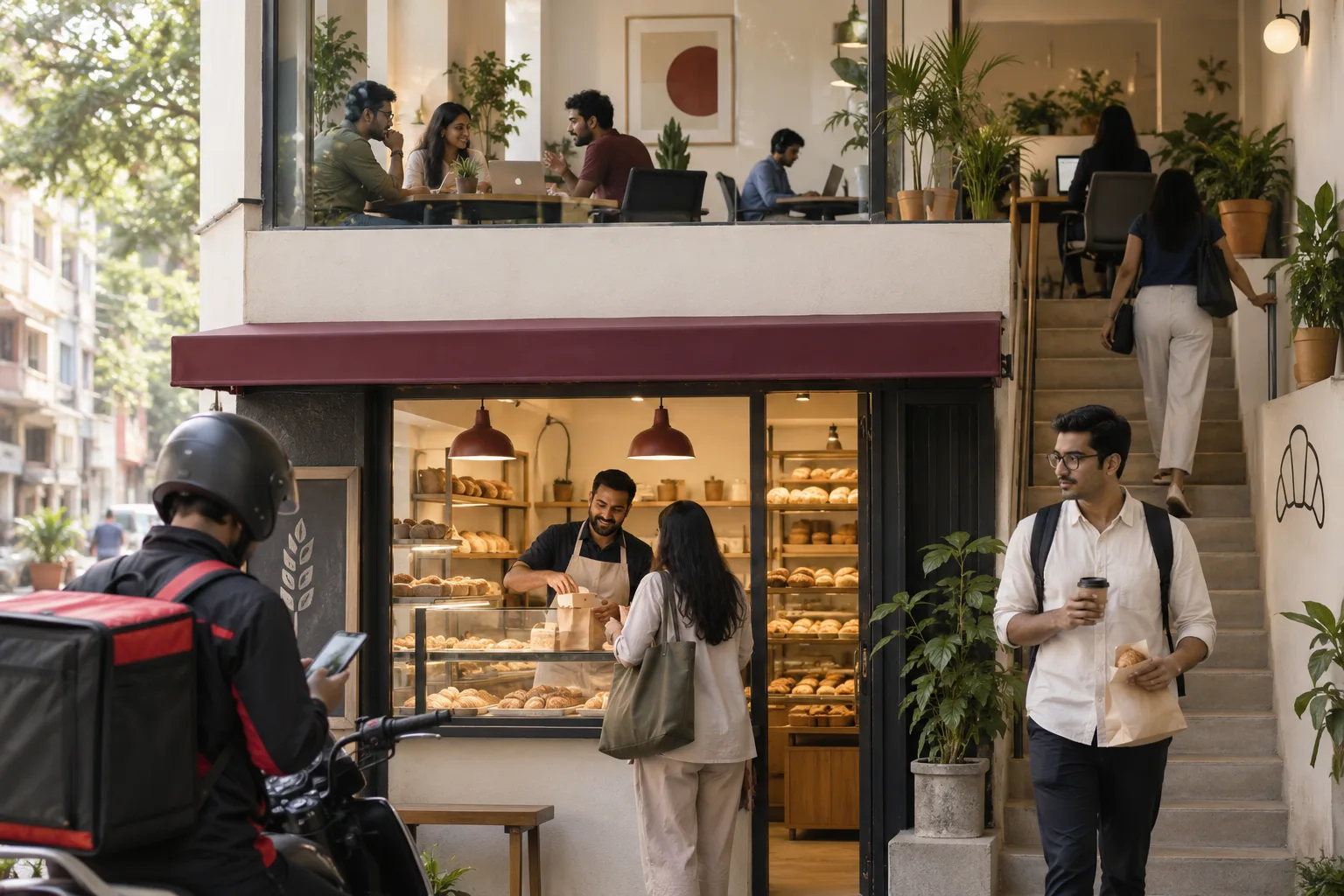 7 min read · 21 Sept 2026How to advertise to startup employeesThere is no tech park to buy. A forty person company sits above a bakery, so the audience is the neighbourhood, the delivery app and the coworking floor.
More for paying guest accommodations
Everything else we would do for you.
Closest to this: strategy and research
Also for paying guest accommodations
Or start from the overview: sales and marketing for paying guest accommodations.
Your next practical step
Tell us what you are trying to grow, and we will read it before we call.
Eight short steps, mostly taps. Skip anything you would rather answer on the call.