Restaurants · Buyer persona
Know the five kinds of table you serve before you pay to attract a sixth.
A buyer persona for a restaurant is a written picture of who sits at your tables, who chose the place, who pays and what they were deciding between. GullySales builds yours from your own bills, bookings and reviews, and uses it to decide what to post, offer and answer.
Scope, fee, reporting and term are agreed in writing after we have read your brief and spoken to you.
What buyer persona means
A buyer persona is a plain description of the kind of customer who actually buys from you. It includes what they search, what worries them and who else they ask before deciding. GullySales builds this from real enquiries and past sales rather than a generic template, then uses it to write every page and advert.
Last updated 5 Oct 2026. Rules for this trade differ by state and professional body, and they change. We describe restrictions in general terms, so check the current position with your own council or adviser before you publish anything.
For restaurants
Where it usually goes wrong, and what we would do.
“The person who chooses is not always the person who eats”
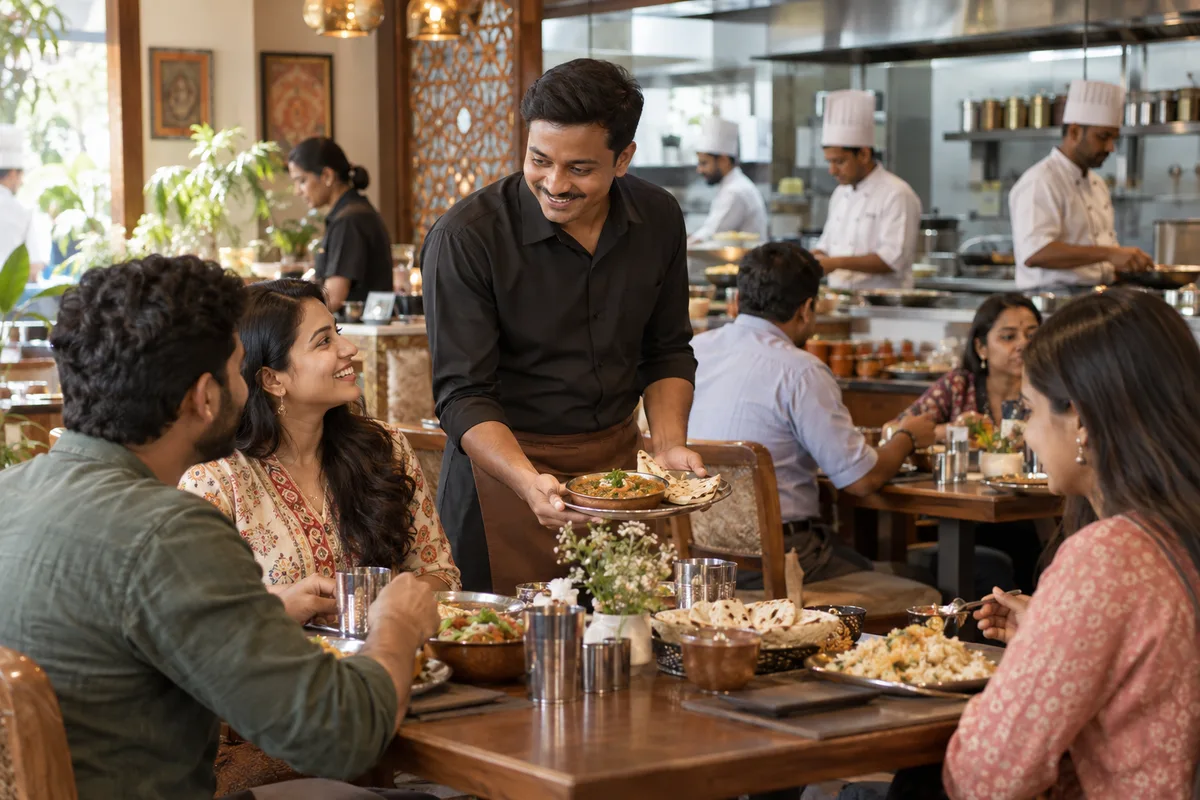
For a family lunch the choosing is done by one adult on a phone, for a group with a child, a grandparent and a vegetarian. That one reader decides on parking, seating and the veg menu, so those are the details the page has to answer.
“An office lunch crowd and a Saturday dinner crowd are different people”
The weekday regular wants a quick table, a set price and no waiting. The weekend family wants space and a long evening. One offer written for both fits neither, and the weekday seats stay empty.
“The organiser of a party books for people who never speak to you”
A birthday dinner is arranged by one person who calls a few places on behalf of the guests. Their worry is not the food alone but whether the evening embarrasses them in front of the group.
“Delivery customers and dine-in customers overlap less than expected”
Someone ordering biryani at home on a rainy night may never have visited. Treating both as one audience wastes the dine-in offer on a person who will not travel and the delivery offer on a person already at your door.
What we do
What we deliver for restaurants.
Every deliverable, what it covers for you, and the result it is there to produce. Nothing here is an extra.
A one-page sketch of each kind of table
Four or five short profiles, such as the office regular, the Sunday family, the party organiser and the delivery customer, each with the question they ask before choosing.
Result: You can say who a given post or offer is meant for.
A read of your own billing records
Day, time, group size and average order drawn from the bills you already print, grouped into the table types above.
Result: The personas rest on what guests did, not on a guess.
Review language sorted by guest type
The words guests use for service, waiting, portions and ambience, sorted by who wrote them, so each persona carries its real complaints and praise.
Result: You see what each kind of guest actually values.
The decision path written out per persona
Where each guest first heard of you, what they checked on the phone, who else weighed in and what made them book.
Result: Each persona has a route you can place an offer on.
A short brief for whoever writes your posts and menus
One page of do and do not for each persona, covering tone, dishes to feature and questions to answer.
Result: A new staff member or freelancer writes in the same direction.
How the result is measured
- Enquiry match to persona
- Conversion rate by persona
- Content aligned to persona
Recorded as a baseline before work starts, so every later report has an honest comparison.
Who is asking
The kinds of table a restaurant serves, and what each asks before choosing.
- Office admin ordering a team lunch
- Wants a set menu, a GST invoice, a delivery time at the tower and one number to call when the order is late.
- Family planning a Sunday dinner
- Wants a table for a mixed group, a children's option, a vegetarian dish and a place to park.
- Organiser of a birthday party
- Wants a private corner, a set menu, whether a cake may be brought in and who decides the final headcount.
- Couple choosing a quiet dinner
- Wants noise level, seating and the lighting in photographs on the listing before choosing.
- Delivery guest on a weekday night
- Wants the dish, the portion and whether the packaging is the same as on the app.
Who it is for
This is written for these restaurants.
- Family restaurants and multi-cuisine dining
- South Indian vegetarian restaurants and darshinis
- Biryani, kebab and non-vegetarian specialists
- Regional cuisine restaurants
- Casual dining and bar restaurants
- Quick service restaurants and food courts
- Cloud kitchens and delivery-only brands
- Office canteens and food service operators
- Multi-outlet restaurant groups
Not for
It is not the right fit if.
- You have no billing records or reviews to read, so a persona would be built from guesses about other restaurants' guests.
- You serve one type of guest only, such as an office canteen, so splitting them into personas changes nothing you do.
How it works
How the buyer persona work runs
The work itself, in order. How an engagement starts, from your brief to a written scope, is set out on our method page.
- 1
Understand the current view
We start with how your team currently describes the customer, since the gap between belief and reality is the finding itself.
- 2
Audit past enquiries and sales
We look at recent enquiries and closed deals to see who actually bought, not who was assumed to buy.
- 3
Interview customers and staff
Structured conversations with recent buyers, held as talk about the last purchase and not a questionnaire. We ask what happened before they called, who else was involved and what they compared. Customers agree before we contact them, and their answers are reported without names.
- 4
Build the personas
Findings are written into short, usable persona documents rather than a long report.
- 5
Apply to your marketing
We show where each persona should change a page, an ad or a script you already have. The sales team reads the drafts and says which ring true. A persona they do not recognise is rewritten.
Where this fits
Three pieces of sales work, in this order.
This work sits inside sales process design, at stage 0, foundation. The audit comes before it, and sales management keeps it running.
Step 1
Sales audit
Find where deals are being lost and what to fix first.
Start here if you cannot say where orders are lost.
Step 2 · you are here
Sales process design
One written way to sell, from first enquiry to repeat order.
Start here if every salesperson sells differently.
Step 3
Sales management
A target, a review routine and someone who owns the number.
Start here if the team has targets and no routine.
FAQ
Questions owners ask before they call.
Not here? More answers, or ask on WhatsApp.
We already know our customers. Why write this down?
Do we need a survey for this?
How do we write a persona for a bar restaurant?
Should a persona use customer names from our records?
How much does it cost?
How long is the contract?
How soon will we see results?
Who will actually do the work?
What do you need from us?
What if we are not happy with the work?
From the blog
Further reading for restaurants.
 6 min read · 21 Sept 2026Radio advertising vs social media advertising: where should your money go?Radio reaches a driver who cannot click. Social reaches a thumb that can. One buys a name people remember, the other buys the enquiry itself.
 7 min read · 21 Sept 2026Local audience targeting strategyThree different people are local to you: the one who lives near you, the one who works near you, and the one searching near you. The settings that reach each are different.
 6 min read · 21 Sept 2026Influencer marketing vs social media advertising: which one should you pay for?An ad is a message you control, shown to people you choose. A creator post is a recommendation you do not control, shown to people who chose the creator.
More for restaurants
Everything else we would do for you.
Or start from the overview: sales and marketing for restaurants.
Your next practical step
Tell us what you are trying to grow, and we will read it before we call.
Eight short steps, mostly taps. Skip anything you would rather answer on the call.