Restaurants · Sponsorship marketing
Sponsor the cricket tournament, then work out whether its crowd ever came to dinner.
Sponsorship marketing for a restaurant is paying a local match, school day, festival or residents' event for the right to feed or name yourself in front of its people. GullySales checks whether those people eat where you are, reads the rights in writing and records which tables the sponsorship actually filled.
Scope, fee, reporting and term are agreed in writing after we have read your brief and spoken to you.
What sponsorship marketing means
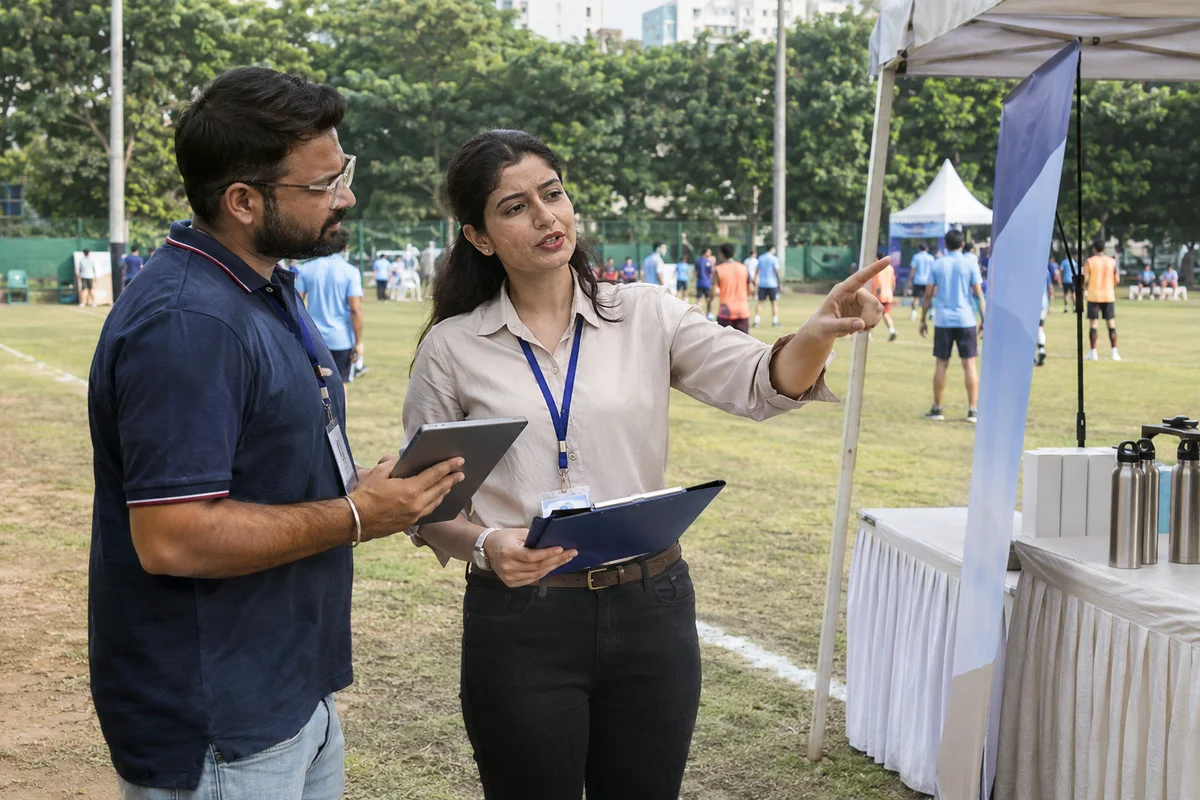
Sponsorship marketing is paying a local event, team, school, festival or community programme for the right to put your name in front of its people. GullySales checks the fit with your buyers, reads the rights in writing, plans how you show up beyond a logo, and records the enquiries the sponsorship actually brought.
Also for restaurants
- Branding for restaurants
- Crisis communications for restaurants
- Brand perception research for restaurants
- Tagline and slogan writing for restaurants
- Founder and leadership profile writing for restaurants
- Brand colour palette and typography system design for restaurants
- Business card, letterhead and stationery design for restaurants
- Email signature design for restaurants
Sales and marketing for restaurants, the overview.
Last updated 14 Nov 2026. Rules for this trade differ by state and professional body, and they change. We describe restrictions in general terms, so check the current position with your own council or adviser before you publish anything.
For restaurants
Where it usually goes wrong, and what we would do.
“A banner beside the pitch is not a reservation”
The spectators see the logo, and a few remember it by the time they are hungry. The banner is a reminder only if the person has a reason to act, such as a stall, a coupon for the next week or a booking line on the shirt.
“The best sponsorship is food in hand”
A tasting counter or a snack box at the interval puts the dish in the mouth of someone who lives within reach. A name on a flex board does not. For a restaurant, the product is the best advertisement, if the kitchen can carry the volume.
“The organiser's audience may not be your market”
A college fest crowds the street but spends little on dinner, while a residents' welfare association day carries families who order every weekend. We read who attends before you pay, and say so when the crowd is pleasant company and a poor market.
“Catering rights and exclusivity need to be written down”
Who else sells food at the venue, whether your name is the only restaurant mentioned, and who holds the licence for the stall are all questions an organiser answers in conversation and forgets later. They belong in the schedule.
What we do
What we deliver for restaurants.
The work available for this need. We agree the deliverables and responsibilities for your engagement in writing.
Audience fit note
For each event offered, who attends, where they live and whether they eat out in your price range. It states plainly when the audience is poor value for a restaurant.
Result: You can say why you accepted or declined each offer.
Rights schedule in writing
What the organiser gives: signage, announcements, a stall, a menu insert, exclusivity against other restaurants, use of the event name. Verbal promises are written down and agreed before payment.
Result: Every promised placement is on one page you can check.
Presence plan for the day
What your team does beyond the logo: a tasting counter, a set-menu card, a staff member who takes names for the next booking, and who clears the leftovers and the stall afterwards.
Result: A named person owns each task on the day.
Stall and licence checklist
A list of what the venue and organiser expect for food service, with your own papers collected by you and checked with your adviser. Check current local rules for serving food at events.
Result: Nothing is cooked for an event until the papers are in order.
Follow-up card
A small card for the tasting counter with the booking number and a line for the date they plan to visit. Names are taken only with the person's agreement.
Result: You can count the cards that turn into tables.
Enquiry source question
A short question at booking and at the counter asking how the guest heard of you, logged against the event.
Result: The event is judged on the tables it filled.
How the result is measured
- Rights delivered against the rights schedule
- Enquiries that name the sponsorship as the source
- Reply time to those enquiries
Recorded as a baseline before work starts, so every later report has an honest comparison.
Who it is for
This is written for these restaurants.
- Family restaurants and multi-cuisine dining
- South Indian vegetarian restaurants and darshinis
- Biryani, kebab and non-vegetarian specialists
- Regional cuisine restaurants
- Casual dining and bar restaurants
- Quick service restaurants and food courts
- Cloud kitchens and delivery-only brands
- Office canteens and food service operators
- Multi-outlet restaurant groups
Before you decide
Agree the work. Know how to judge it.
Sponsorship marketing for restaurants: use these checks to prepare, choose the scope, and review what changes.
Bring the right evidence
Collect the sales presentation, website, quotations, and other material buyers actually see. Mark where the description of the business changes or where a claim has no supporting evidence.
Make the scope clear
Agree whether the work concerns the offer, the words, the visual identity, or all of them. List the formats that need updating and who owns the final approval.
Check the work in use
Test the proposed direction on a real sales page or proposal. A buyer should be able to tell who the offer is for, what is different, and what evidence supports it.
Know when to change course
A new identity will not fix an unresolved service problem. Put the delivery issue right before making a stronger public promise about it.
These are discussion points, not a fixed package. GullySales confirms the deliverables, responsibilities, fee, and term in writing after reading your brief and speaking with you.
Before we start
What to have ready before the work starts.
The records, access and decisions this work needs from restaurants. Anything missing is noted in the written scope, with who will supply it.
- Your food licence and the venue's requirements
- A stall at an event needs the licence on display and sometimes more. Bring your certificate and ask the organiser what the venue requires. If anything is missing, we do not agree to the day. If the certificate shows a different address from the outlet serving the food, your adviser should say whether it applies.
- A budget that includes the food
- The sponsorship fee is not the only spend: food, staff and transport are part of it. Tell us the total you are prepared to commit. Without it, we cannot tell whether an event is worth it. Include the cost of staff time taken from the main restaurant for the day.
- A record of who your guests are
- To judge an audience we need to know yours. Bring what you hold: bills, reviews, booking notes. If there is no record, we use the captain's description and treat the match as uncertain. If you have no record, a short chat with the cashier about who comes in on weekdays and weekends is a starting point.
- Staff to run the stall on the day
- A stall needs people who can serve, take money and speak to visitors. Name them and release them from service. Without staff, we advise against any plan that relies on food in hand. Keep their usual shifts in mind so the restaurant still runs well that day.
- A decision on exclusivity
- Some events let one caterer sell and others do not. Decide whether exclusivity matters to you and what you would pay for it. If you cannot decide, we ask the organiser for the terms and bring them back. Also say whether you would take a smaller role, such as a tasting table, if full catering is not on offer.
How it works
How the sponsorship marketing work runs
The work itself, in order. How an engagement starts, from your brief to a written scope, is set out on our method page.
- 1
List the local events near your outlet
We collect the matches, school days, festivals and residents' events within your delivery and dining reach, with the organiser and the crowd each draws. You mark the ones you know. This list is checked against where your guests live before any conversation starts. We also note the dates of each event against your own busy and quiet evenings, because an event on a full night adds little.
- 2
Test the audience against your own guests
We compare each event's crowd with the guests in your records: families, office staff, students. You tell us who you want more of. An event whose audience does not match is struck off, however visible it looks. We ask the organiser for last year's attendance figures only as a rough guide and treat them with care.
- 3
Meet the organiser and write down the rights
We sit with the organiser to agree exactly what you are paying for: food service rights, a stall, a name on a banner, exclusivity. You decide on the terms. Every right goes in a written schedule, including who else may sell food. We also ask who else is sponsoring, so your name is not placed beside a competing restaurant by accident.
- 4
Plan the day around food in hand
We plan the stall or the catering: what you serve, how it travels, who stands where and how it is paid for. You decide the menu. The best sponsorship is guests tasting the food, so a banner alone is not accepted. We list what must travel hot, what can be served cold and what the venue's kitchen allows, so no dish is planned that cannot be served.
- 5
Check the licence and stall list
We prepare a checklist covering your food licence, permissions for the venue, power, water and waste. You confirm each item with your own adviser where needed. The kitchen has what it needs before the day. We write the checklist as one page for your manager to tick on the morning of the event.
- 6
Hand out a card and read the source question
We design a follow-up card with an offer to visit and a code, and brief your staff to ask new guests about the event. Afterwards we read the codes and the answers against the figures before the event. You decide whether to sponsor again.
Where this fits
Three pieces of sales work, in this order.
This work sits inside sales process design, at stage 0, foundation. The audit comes before it, and sales management keeps it running.
Step 1
Sales audit
Find where deals are being lost and what to fix first.
Start here if you cannot say where orders are lost.
Step 2 · you are here
Sales process design
One written way to sell, from first enquiry to repeat order.
Start here if every salesperson sells differently.
Step 3
Sales management
A target, a review routine and someone who owns the number.
Start here if the team has targets and no routine.
FAQ
Questions owners ask before they call.
Not here? More answers, or ask on WhatsApp.
Should a restaurant ever sponsor a tournament?
What about sponsoring a bar or alcohol-linked event?
Is this a donation or a marketing spend?
Is sponsorship money a donation or a marketing spend?
What if the event is cancelled or changed?
How much does it cost?
How long is the contract?
How soon will we see results?
Who will actually do the work?
What do you need from us?
From the blog
Further reading for restaurants.
 6 min read · 21 Sept 2026Radio advertising vs social media advertising: where should your money go?Radio reaches a driver who cannot click. Social reaches a thumb that can. One buys a name people remember, the other buys the enquiry itself.
 7 min read · 21 Sept 2026Local audience targeting strategyThree people are local to you: the one who lives near, the one who works near and the one searching near. The settings that reach each differ.
 6 min read · 21 Sept 2026Influencer marketing vs social media advertising: which one should you pay for?An ad is a message you control, shown to people you choose. A creator post is a recommendation you do not control, shown to people who chose the creator.
More for restaurants
Related work to consider.
Closest to this: brand and design
- Branding for restaurants
- Crisis communications for restaurants
- Brand perception research for restaurants
- Tagline and slogan writing for restaurants
- Founder and leadership profile writing for restaurants
- Brand colour palette and typography system design for restaurants
- Business card, letterhead and stationery design for restaurants
- Email signature design for restaurants
Also for restaurants
Or start from the overview: sales and marketing for restaurants.
Your next practical step
Tell us what you are trying to grow, and we will read it before we call.
Eight short steps, mostly taps. Skip anything you would rather answer on the call.