Metal casting foundries · Search engine optimisation
Rank for the alloy and the part, because a buyer searches for a casting, not a foundry.
SEO for a metal casting foundry is the work of appearing when a purchase engineer searches for an alloy, a part or a process, such as SG iron valve bodies or resin sand castings. GullySales builds the alloy pages, the testing page and the technical detail that let search engines and buyers see what you cast.
Scope, fee, reporting and term are agreed in writing after we have read your brief and spoken to you.
What search engine optimisation means
Search engine optimisation (SEO) is the work of getting your website to appear when a buyer searches Google for what you sell. GullySales builds pages around real search terms, fixes technical issues that block ranking, and tracks which searches actually bring enquiries.
Last updated 18 Oct 2026.
For metal casting foundries
Where it usually goes wrong, and what we would do.
“Buyers type the part and the metal”
A design engineer searches for grey iron castings for machine beds or stainless steel pump casings. A site that says only iron and steel castings matches none of those phrases, so the page that should answer the search does not exist.
“Weight and section limits decide the click”
A buyer with a heavy casting scans for the maximum weight you pour. A page without it sends the buyer back to the results to try the next foundry. The limit, stated plainly, is both a ranking aid and a filter that saves you unsuitable calls.
“Photographs of molten metal rank nothing”
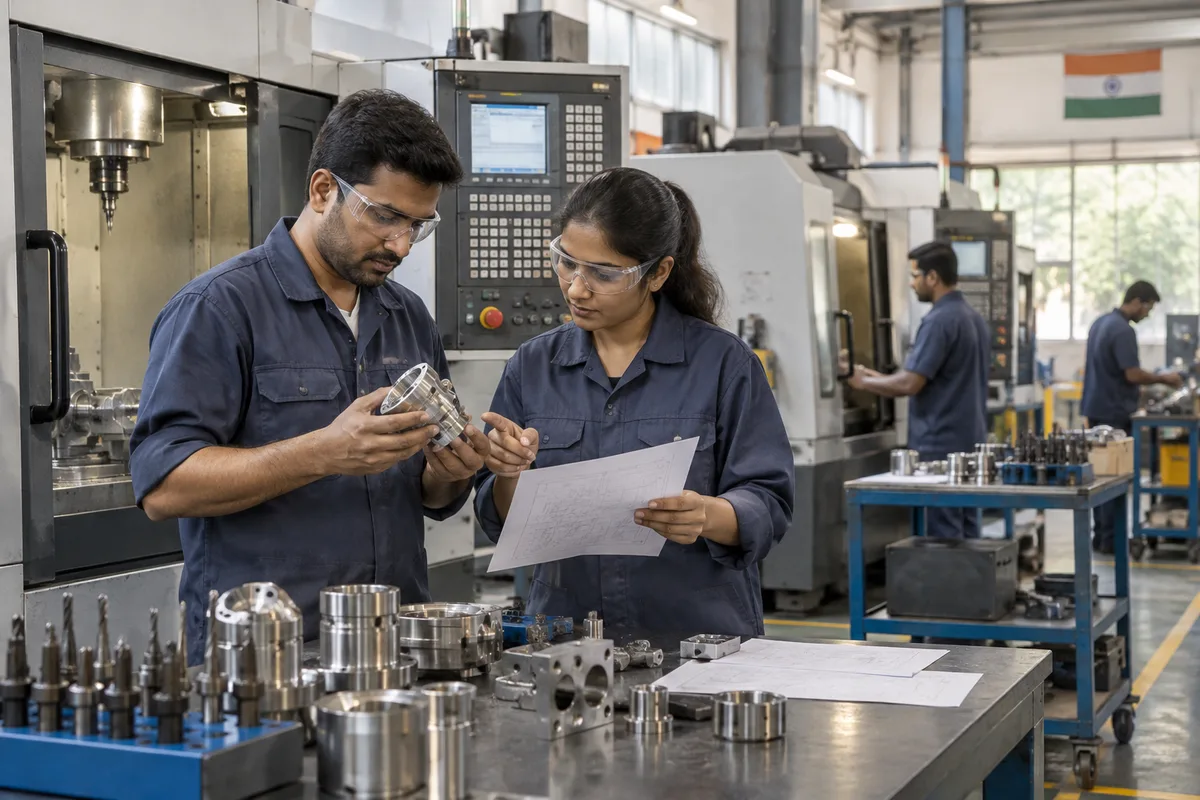
Fire and ladle images carry no words a search engine can read, and a buyer learns nothing from them. A machined casting beside its drawing, with a caption naming alloy and process, gives both the engine and the engineer something to work with.
“Cities in the name are not the whole picture”
Foundry clusters such as Coimbatore, Rajkot and Kolhapur draw searches by place, yet national buyers also search without one. Pages need to serve both: a regional page for nearby plants and alloy pages for the buyer who does not care where you are.
What we do
What we deliver for metal casting foundries.
Every deliverable, what it covers for you, and the result it is there to produce. Nothing here is an extra.
Alloy and casting family pages
Separate pages for grey iron, SG iron, steel, stainless and non-ferrous work, each with weight range, moulding method and suitable parts.
Result: Each alloy you sell has a page that can be found by its own name.
A testing and quality page
The spectrometer analysis, mechanical tests, inspection methods and reports issued, with a blanked sample report.
Result: A buyer searching for tested castings lands on a page that shows the tests.
Machined casting pages
Pages for castings supplied finished, with before and after photographs and the machining allowance stated.
Result: Machine builders find a page for the finished part.
Image captions and file names
Photographs of patterns, moulds and finished parts named and captioned with alloy and part.
Result: Your image folder reads as a list of what you cast.
A technical fix list for the site
Speed, mobile layout, page titles, headings and links checked, with the fixes listed in the order they matter.
Result: You hold a written list of what was found and what was changed.
Search tracking by page
Search impressions, clicks and enquiries read page by page against a baseline noted at the start.
Result: You can say which alloy page brings drawings.
How the result is measured
- Ranking positions
- Organic traffic
- Enquiries from organic search
Recorded as a baseline before work starts, so every later report has an honest comparison.
Who it is for
This is written for these metal casting foundries.
- Grey iron foundries for machine tools, pump casings and brake parts
- SG iron and ductile iron foundries for valves, pipe fittings and auto parts
- Steel casting foundries for heavy engineering and railways
- Non-ferrous foundries for brass, bronze and aluminium gravity castings
- Stainless steel foundries for pumps and process equipment
- Shell moulding and resin sand foundries making precision castings
- Foundries with in-house pattern shop and machining
- Small jobbing foundries serving local engineering units
How it works
From your first message to the first report.
No open-ended retainer. Every step gives you something in writing.
First
Your brief
You tell us what you need in a few short steps: your business, what you want, where enquiries come from and how they are handled.
After the brief
A conversation and a written scope
We read it, then talk with whoever handles your enquiries. If you want our help, the scope, the fee and the reporting come in writing, and nothing starts before you have read them.
Before work starts
Baseline recorded
The numbers this work is meant to move, such as enquiries, quotations, orders, visits or renewals, written down so every later report has an honest comparison.
After the baseline
The first fix goes live
The fix we agreed to start with is put in place and measured against the baseline, whether that is a reply, a follow-up, a page, a listing or the handover between marketing and sales.
As agreed
Report against the baseline
What moved, what did not, and what changes next, in plain words. How often you get it is set in writing before work starts.
At renewal
Renew on the numbers
The term ends and you decide whether to continue from the results. The length is agreed in writing before anything starts.
How the search engine optimisation work runs
- 1
Audit and baseline
We record where the site stands today: positions, traffic, technical faults and the enquiries search currently produces. Nothing starts until this number is written down.
- 2
Decide what to rank for
We map the searches your buyers use, in your words and theirs, and pick the ones worth the effort for your margin and your capacity.
- 3
Fix the foundations
Technical faults first, because the cheapest gains are usually there. Then the Business Profile and directory consistency.
- 4
Build the pages
A page for each thing you do, written to answer the question it is searched for, with a clear next step at the end.
- 5
Publish and earn mentions
Content goes out on the calendar. Links and mentions are earned from real relationships, not bought.
- 6
Measure, report, adjust
At the interval agreed at the start we report what moved and what did not, and change the plan when the numbers say so.
Why us
Why owners pick GullySales over an agency.
Marketing and sales, as one job
Most agencies stop at the enquiry. We also fix what happens after it: the reply, the follow-up, the quote and the CRM.
The person on the first call does the work
No account managers in between. You are never handed to someone you have not met.
A baseline before anything starts
Your numbers are written down on day one, so every later report compares against something honest.
The fee in writing, split three ways
Our time, your media spend and production on separate lines. You always see what goes to us.
No guarantees we cannot keep
The term is agreed in writing and never a default twelve months. We never promise a ranking or a lead count, because nobody controls those.
One office, and we say so
Nagarbhavi, Bengaluru. We work across India by call and WhatsApp and travel when a session needs to be in person.
#257, 3rd floor, Sri Nanjundeshwara Complex, Nagarbhavi 8th Block, Outer Ring Road. How we work.
Your brief
Tell us what you need, and we will read it before we call.
Eight short steps about your business, what you want and who decides. Most questions are a tap, and you can skip any you would rather answer on the call.
FAQ
Questions owners ask before they call.
Not here? More answers, or ask on WhatsApp.
How do we know SEO is working for a foundry?
Do we need a page for every part we have cast?
How much does it cost?
How long is the contract?
How soon will we see results?
Who will actually do the work?
What do you need from us?
What if we are not happy with the work?
More for metal casting foundries
Everything else we would do for you.
Closest to this: search and visibility
Also for metal casting foundries
Or start from the overview: sales and marketing for metal casting foundries.
Your next practical step
Tell us what you are trying to grow, and we will read it before we call.
Eight short steps, mostly taps. Skip anything you would rather answer on the call.