Auto parts manufacturers · Channel opportunity generation and follow-up
Help distributors and counters turn workshop enquiries into recorded orders.
For an auto parts maker, this work gives distributors and stockists a routine for finding local workshops, fleets and past buyers, and for answering the enquiries your office passes down. GullySales writes the partner playbook, agrees who follows up each enquiry and sets up one shared record from enquiry to order.
Scope, fee, reporting and term are agreed in writing after we have read your brief and spoken to you.
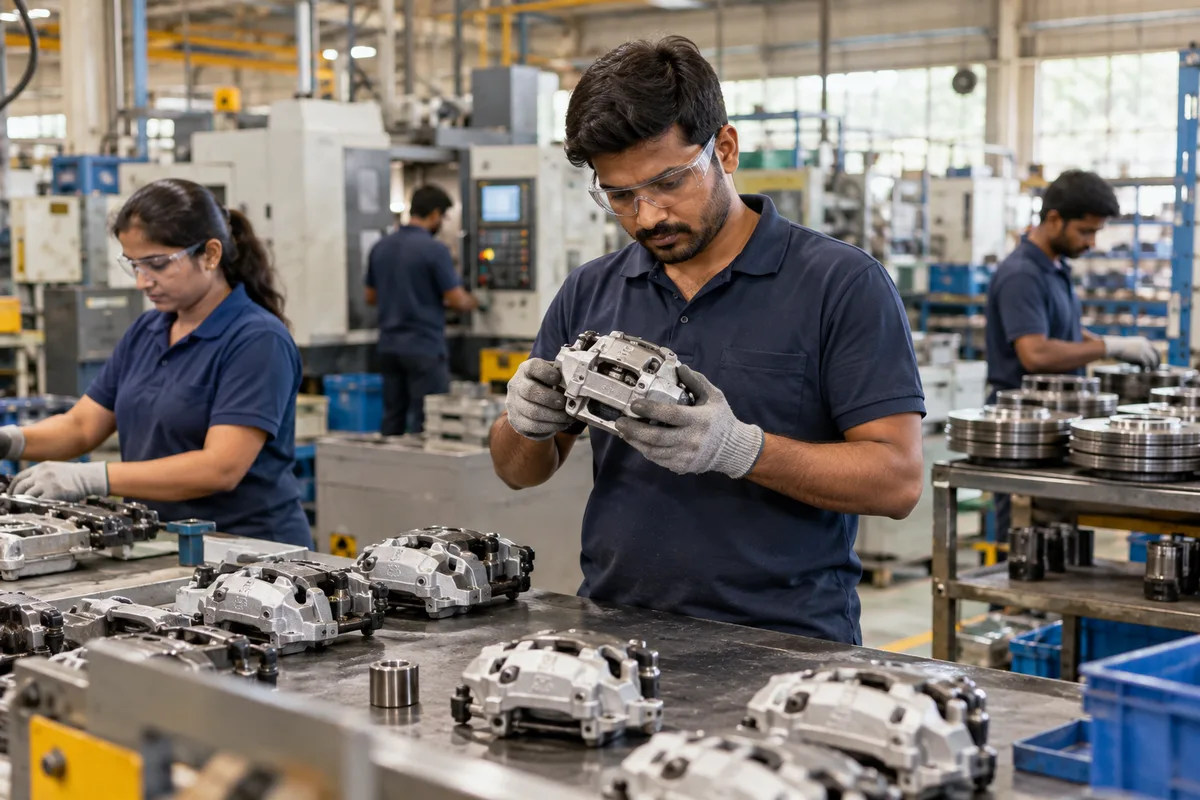
What channel opportunity generation and follow-up means
Channel opportunity generation and follow-up gives dealers, distributors, and resellers a practical routine for finding local buyers and handling enquiries passed on by your team. GullySales writes the partner playbook, agrees who follows up each enquiry, and sets up a shared record that connects local activity with sales outcomes.
Also for auto parts manufacturers
- Dealer network brand visibility for auto parts manufacturers
- Channel partner engagement campaigns for auto parts manufacturers
- Channel governance and conflict management for auto parts manufacturers
- Channel partner recruitment for auto parts manufacturers
- Channel sales strategy and route to market execution for auto parts manufacturers
- Channel territory planning for auto parts manufacturers
- Co-operative partner marketing for auto parts manufacturers
- Dealer and distributor audits for auto parts manufacturers
Sales and marketing for auto parts manufacturers, the overview.
Last updated 14 Nov 2026.
For auto parts manufacturers
Where it usually goes wrong, and what we would do.
“A forwarded enquiry is not an answered enquiry”
A garage owner asks for a clutch kit through your marketplace listing. Your office forwards the number to the distributor in that district and considers the matter closed. The distributor's counter staff are serving walk-in mechanics and never call. Nobody records whether the garage was reached, quoted or lost. From the factory the enquiry looks handled, which is why the same district keeps producing forwarded numbers and no orders.
“The distributor waits for the workshop to come in”
A stockist holds a long run of billing records for garages, fleets and bodyshops, yet only reacts when a mechanic walks to the counter. Parts for a model that left the market, or a service interval due on a fleet, are visible in those records and nobody reads them. A counter that contacts past buyers about a repeat requirement needs a simple routine, a short script and a record of who was called.
“Quotations live on personal phones”
A salesperson quotes a brake-disc price over WhatsApp from a personal phone. When the salesperson is on leave, the owner cannot see what was promised or when the next call was due. The part number, the quantity and the delivery date sit in a chat thread, and the buyer who asked for a revised price receives silence from a counter that has lost the thread.
“Activity counts are mistaken for progress”
A distributor reports messages sent, mechanic meets held and visiting cards collected. None of those numbers says which workshop asked for which part, or whether a trial order followed. Judging the support you fund from activity alone leaves you paying for meets that never reach a purchase, while quiet partners who follow up well receive nothing.
What we do
What we deliver for auto parts manufacturers.
The work available for this need. We agree the deliverables and responsibilities for your engagement in writing.
Partner enquiry review
A look at where each partner's enquiries come from today: counter walk-ins, phone calls, your forwarded marketplace enquiries and workshop visits. We check the findings against real enquiry records, including enquiries your office passed on without learning the outcome.
Result: You can see, partner by partner, how many forwarded enquiries have a recorded outcome and how many have none.
Local opportunity playbook
Written activities matched to each partner's buyers and capacity: calling past garages about a repeat requirement, a mechanic meet with a named part line, a fleet visit, a correction to the partner's Google Business Profile. Each activity names an owner and the record to update afterwards.
Result: Every activity in the playbook has a named person and a record line, which you can check on a partner visit.
Past-buyer messaging guide
A guide to contacting garages and fleets from billing records: who may be contacted, the message for each part line and what to do when a buyer asks to stop. Your team checks permission and the platform's current rules before sending; a billing number alone is not treated as consent.
Result: A partner can show who was contacted, with what message, and who asked not to be contacted again.
Enquiry handoff agreement
An agreed format for passing a buyer to a partner: buyer name, part number, quantity, source and the receiving counter. It also sets the acknowledgement rule, the number of contact attempts you expect and how an untouched enquiry is raised with the partner's owner.
Result: Every forwarded enquiry shows a receiving person and an acknowledgement, or is visibly untouched.
Shared enquiry log
A shared sheet or CRM view carrying each enquiry's owner, contact history, next action and outcome. We test it with real records from two or three partners before it is rolled out to the rest, so the fields match how a counter actually works.
Result: Any enquiry can be opened and its last contact and next promised action read without calling the counter.
Partner outcome report
A partner-level view separating enquiries the partner created from those your office supplied, with outcomes where recorded. Missing outcomes are shown as missing, not counted as lost orders, and the starting position is shown beside the later one.
Result: You can read each partner's own enquiries and supplied enquiries separately, against the starting record.
How the result is measured
- Partner-created enquiries by source, separate from clicks or messages sent
- Qualified opportunities meeting your agreed buyer and requirement criteria
- Time to first reply and recorded follow-up attempts
Recorded as a baseline before work starts, so every later report has an honest comparison.
Who it is for
This is written for these auto parts manufacturers.
- Component manufacturers supplying OEMs
- Aftermarket spare parts manufacturers
- Export-focused parts manufacturers
- Tier 2 and Tier 3 component suppliers
- Two-wheeler parts manufacturers
- Commercial vehicle parts manufacturers
- Casting and forging units supplying parts
- Manufacturers with an in-house aftermarket brand
Before you decide
Agree the work. Know how to judge it.
Channel opportunity generation and follow-up for auto parts manufacturers: use these checks to prepare, choose the scope, and review what changes.
Bring the right evidence
Trace recent enquiries from arrival to the last recorded action. Include a won enquiry, an unsuitable one, and one that went quiet, with personal details removed for the initial discussion.
Make the scope clear
Agree who accepts each enquiry, what makes it qualified, and how ownership changes. Include a rule for missed replies and a clear reason for closing an enquiry.
Check the work in use
Pick an enquiry at random and ask the team to find its owner, latest conversation, and next action. Check that the record agrees with what actually happened.
Know when to change course
If no one has capacity to respond, assign that responsibility before buying more leads. Automation can support the owner, but it cannot replace an unresolved handover.
These are discussion points, not a fixed package. GullySales confirms the deliverables, responsibilities, fee, and term in writing after reading your brief and speaking with you.
Before we start
What to have ready before the work starts.
The records, access and decisions this work needs from auto parts manufacturers. Anything missing is noted in the written scope, with who will supply it.
- Names of partners taking part
- Choose the distributors or stockists who will join first. Starting with partners who answer calls gives a fair test. A partner who never replies to your office will not suddenly follow a routine, and that is a separate conversation for your sales head.
- Forwarded enquiries and their outcomes
- Give us the enquiries your office has passed on, with the date and the partner, and whatever you know of the result. Without this list we cannot show how many enquiries ended in silence, and the baseline would be a guess.
- A partner's billing or customer summary
- We need a summary of garages, fleets and bodyshops the partner has billed, with part lines bought. Names and part lines are enough. Without them the past-buyer routine becomes a general call to everyone, which is how a counter loses the trust of a good customer.
- Permission position for contacting buyers
- Tell us how each partner records permission to message a garage or fleet, and whether anyone has asked to stop. Messaging rules differ by platform and change, so your own adviser or the platform's current terms decide what may be sent.
- One person on each side to own follow-up
- Name one person at your office and one at each partner who will keep the log. If follow-up belongs to everyone, nobody opens the log, and the enquiry returns to a personal phone.
How it works
How the channel opportunity generation and follow-up work runs
The work itself, in order. How an engagement starts, from your brief to a written scope, is set out on our method page.
- 1
Choosing partners and opening their records
You select the distributors or stockists who will take part and give us access to what they keep: billing summaries, enquiry notes, call logs and the enquiries your office has forwarded. We record the starting position for each, including how many forwarded enquiries have a known outcome. It is the figure we read the result against.
- 2
Reading enquiries and past buyers
We read the forwarded enquiries and the partner's list of past garages, fleets and bodyshops. For each partner we mark which buyers could place a repeat requirement and which enquiries stalled. The partner owner confirms or corrects the reading, because they know which buyers have moved or closed.
- 3
Writing the local playbook with the partner
Together with the partner owner we pick the activities that fit their staff and stock: a call routine for past buyers, a workshop visit for one part line, a mechanic meet, a counter display. Each activity is written with its owner, its script and the line of the record it fills.
- 4
Agreeing the enquiry handoff
We settle the handoff format with your sales head and the partners: what your office sends, how the partner acknowledges, how many attempts are expected and who is told if an enquiry sits untouched. Partners sign off the rule in the form they will use, rather than receiving it as an instruction.
- 5
Setting up and testing the enquiry log
The shared log is loaded with real enquiries from the starting record and tested with the staff who will use it. Fields that nobody fills are removed. A counter that must stop serving to update ten fields will stop updating, so the log stays short enough to be used during a busy counter hour.
- 6
Reading outcomes against the starting record
After partners have worked the playbook, we read the log against the starting position: how many forwarded enquiries now show an outcome, which self-created enquiries became quotations and orders, and where follow-up still stops. The report names gaps plainly, and you decide what to continue, change or stop.
Where this fits
Three pieces of sales work, in this order.
This work sits inside sales process design, at stage 2, qualification. The audit comes before it, and sales management keeps it running.
Step 1
Sales audit
Find where deals are being lost and what to fix first.
Start here if you cannot say where orders are lost.
Step 2 · you are here
Sales process design
One written way to sell, from first enquiry to repeat order.
Start here if every salesperson sells differently.
Step 3
Sales management
A target, a review routine and someone who owns the number.
Start here if the team has targets and no routine.
FAQ
Questions owners ask before they call.
Not here? More answers, or ask on WhatsApp.
Do you generate enquiries for our distributors with advertising?
Our distributor says forwarded enquiries are rubbish. How do you judge that?
Can we message a distributor's past garage customers on WhatsApp?
What does a partner do when an enquiry arrives from your office?
Do you count a partner's enquiries as our sales?
How much of the partner's time does this take?
How long is the contract?
How soon will we see results?
Who will actually do the work?
What do you need from us?
From the blog
Further reading for auto parts manufacturers.
 6 min read · 10 Oct 2026How manufacturers can generate enquiries from relevant business buyersRelevant RFQs come from buyers who can verify you: real specifications on product pages, matching listings and a quick way to screen requests.
 6 min read · 6 Oct 2026How buyers choose a showroom, workshop or parts counterCar, bike, repair and parts buyers send one enquiry to several sellers and pick the first clear answer. See what each buyer checks and where you lose them.
 5 min read · 26 Sept 2026Certifications buyers ask for: ISO, test reports and what to show on the websiteShow each certificate with its number, scope, issuing body and validity date, and link the PDF, so a buyer's quality team can check you before they ring.
More for auto parts manufacturers
Related work to consider.
Closest to this: channels and partners
- Dealer network brand visibility for auto parts manufacturers
- Channel partner engagement campaigns for auto parts manufacturers
- Channel governance and conflict management for auto parts manufacturers
- Channel partner recruitment for auto parts manufacturers
- Channel sales strategy and route to market execution for auto parts manufacturers
- Channel territory planning for auto parts manufacturers
- Co-operative partner marketing for auto parts manufacturers
- Dealer and distributor audits for auto parts manufacturers
Also for auto parts manufacturers
Or start from the overview: sales and marketing for auto parts manufacturers.
Your next practical step
Tell us what you are trying to grow, and we will read it before we call.
Eight short steps, mostly taps. Skip anything you would rather answer on the call.