Auto parts manufacturers · Co-operative partner marketing
Share the cost of a workshop campaign with a distributor and keep the claim proof.
For an auto parts manufacturer, co-operative partner marketing is a campaign paid for jointly with a distributor or another brand, such as a mechanics' meet, counter branding or a catalogue broadcast. GullySales reads the scheme terms first, plans the evidence alongside the campaign and prepares the claim pack for your claim owner.
Scope, fee, reporting and term are agreed in writing after we have read your brief and spoken to you.
What co-operative partner marketing means
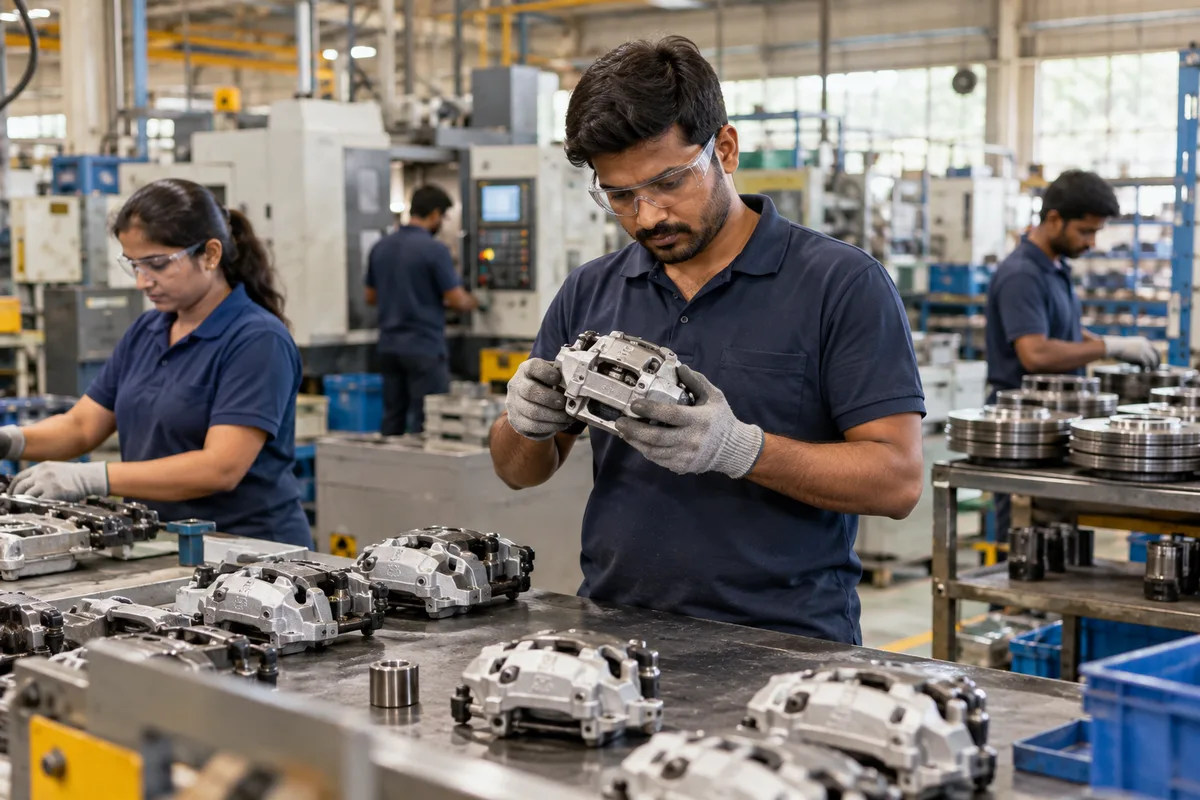
Co-operative partner marketing is an arrangement where a supplier or manufacturer shares the cost of a dealer's local campaign in return for brand exposure. GullySales records the funding terms, builds the agreed campaign, and prepares the evidence needed for a claim, with results linked to enquiries and orders where records allow.
Also for auto parts manufacturers
- Dealer network brand visibility for auto parts manufacturers
- Channel partner engagement campaigns for auto parts manufacturers
- Channel governance and conflict management for auto parts manufacturers
- Channel opportunity generation and follow-up for auto parts manufacturers
- Channel partner recruitment for auto parts manufacturers
- Channel sales strategy and route to market execution for auto parts manufacturers
- Channel territory planning for auto parts manufacturers
- Dealer and distributor audits for auto parts manufacturers
Sales and marketing for auto parts manufacturers, the overview.
Last updated 14 Nov 2026.
For auto parts manufacturers
Where it usually goes wrong, and what we would do.
“The scheme letter says less than the counter assumes”
A distributor reads that the manufacturer will support local promotion and books a board on the highway, a banner at the trade street and a stack of printed price cards. The manufacturer's finance desk later asks which items were approved. The disagreement is not about goodwill. Nobody recorded which media, which artwork and which cost split the scheme actually covered. A one-page record of covered items, signed by both sides before booking, removes that argument.
“A fitment claim in an advertisement is a warranty promise”
A poster that says a part fits a range of models creates an expectation at the counter, and a mismatch returns as a warranty argument. Both brands have to check part numbers, vehicle fitment and any performance wording before print. Sign-off by one party alone leaves the other carrying a promise it never read. The distributor is also the one who answers the mechanic who comes back with a part that did not fit.
“Mechanics are the audience, and they ignore generic material”
The person fitting the part at the workshop decides what the customer receives. A mechanics' meet, a demonstration at the counter or a short catalogue sent by message is read because it answers a fitting problem. Material built for a general public wastes the shared budget, and nobody can show the claim reviewer what it achieved. Material that shows a fitting tip, a part number lookup or a counter offer on a named part family gives the shared budget a reason to be read.
“Evidence is gathered after the fact, or not at all”
A board goes up and nobody photographs it with the date and the location. The printer's invoice is in the distributor's name while the claim is filed by the manufacturer. Photographs, invoices and proof of payment have to be planned with the campaign, because a claim cannot be rebuilt from memory once the campaign has finished.
What we do
What we deliver for auto parts manufacturers.
The work available for this need. We agree the deliverables and responsibilities for your engagement in writing.
Scheme and eligibility record
A plain record of which activities, media and costs the scheme letter or distributor agreement covers, the approval contacts and the claim conditions. Points that the document does not settle are listed for the manufacturer to confirm before any money is committed.
Result: Each planned cost shows a clause that supports it or a question still open.
Cost split and payment sheet
An agreed division of campaign costs, naming who pays each supplier first and how reimbursement is requested. Both sides check their contribution and the approval needed for any change to the plan.
Result: Every line in the budget shows who pays, who reimburses and who approved it.
Workshop campaign plan
A plan naming the part families, the workshop clusters, the channel and where each enquiry is sent. The offer is checked against stock the distributor holds, so that a mechanic who asks for the advertised part is not told it is unavailable. Workshops that already buy from the distributor are listed apart from those the campaign hopes to reach.
Result: The advertised part numbers match what the distributor can supply on the day.
Approved artwork and messages
Boards, counter material, catalogue pages and short messages using current assets from both brands. Named people on each side check part numbers, fitment lines and logos against the brand rules before anything is printed or sent.
Result: Every item carries two named approvals and the date they were given.
Neighbouring partner overlap check
A review, from information the partners supply, of nearby distributors' activity and territory lines before launch. Overlaps are shown to the channel manager, and boundary disputes are passed to whoever owns territory decisions.
Result: No campaign location sits in a neighbour's area without the overlap being recorded.
Claim evidence pack
The approved plan, dated photographs of what was displayed, copies of published material, invoices and proof of payment, arranged against the scheme conditions. Your claim owner checks it for completeness before it goes to the party who pays. Where a cost has no invoice yet, the pack says which party must supply it.
Result: Each claimed cost has an invoice, proof of payment and a photograph, or a note saying which is missing.
How the result is measured
- Approved contribution compared with funds actually received or credited
- Media delivery and clicks, reported separately from enquiries
- Campaign enquiries by source against the pre-work baseline
Recorded as a baseline before work starts, so every later report has an honest comparison.
Who it is for
This is written for these auto parts manufacturers.
- Component manufacturers supplying OEMs
- Aftermarket spare parts manufacturers
- Export-focused parts manufacturers
- Tier 2 and Tier 3 component suppliers
- Two-wheeler parts manufacturers
- Commercial vehicle parts manufacturers
- Casting and forging units supplying parts
- Manufacturers with an in-house aftermarket brand
Before you decide
Agree the work. Know how to judge it.
Co-operative partner marketing for auto parts manufacturers: use these checks to prepare, choose the scope, and review what changes.
Bring the right evidence
Map existing partners, their territories, and the customers they serve. Review active selling and repeat orders separately from the number of partners signed up.
Make the scope clear
Agree partner fit, territory rules, onboarding, and support responsibilities. Clarify how direct enquiries and partner enquiries are assigned before starting recruitment.
Check the work in use
Follow a partner enquiry through to an order and the next purchase. Check whether the partner has the product knowledge and material needed to sell without repeated intervention.
Know when to change course
If current partners cannot sell because supply or support is weak, resolve that before recruiting more. A bigger network can spread the same problem further.
These are discussion points, not a fixed package. GullySales confirms the deliverables, responsibilities, fee, and term in writing after reading your brief and speaking with you.
Before we start
What to have ready before the work starts.
The records, access and decisions this work needs from auto parts manufacturers. Anything missing is noted in the written scope, with who will supply it.
- The scheme letter or agreement
- Funding rules, eligible media and claim conditions are written there. The current signed version is enough. Without it the plan is built on what the distributor remembers, and a claim may be refused for a cost nobody had checked.
- A named approver on each side
- Artwork, fitment lines and budgets need someone who can say yes. A regional manager and the distributor's owner are enough. Without named approvers, drafts circulate unanswered and the campaign misses the moment it was planned for.
- Current brand assets and fitment data
- Logo files, brand rules and correct part number to vehicle fitment lists keep artwork accurate. Send the files your own team uses. Without them, artwork is drawn from guesswork and may be refused after printing, or may promise a fit that does not exist. A correct fitment list also lets the distributor answer a mechanic who asks whether a part suits a particular vehicle.
- A decision on who pays first
- Local campaigns need money before reimbursement arrives. Decide whether the distributor funds the work or the manufacturer advances part of it. Without that decision, bookings stall and the planned weeks pass.
- A simple enquiry register
- Results link to orders only if the counter notes where each enquiry came from. A notebook or a spreadsheet is enough. Without it, the review reports activity and nothing about orders, and the claim has less to stand on.
How it works
How the co-operative partner marketing work runs
The work itself, in order. How an engagement starts, from your brief to a written scope, is set out on our method page.
- 1
Reading the scheme with both parties
You send the scheme letter or distributor agreement. We list covered costs, the approval contacts and any condition that is unclear, and the manufacturer confirms the unclear points before a campaign is planned around them.
- 2
Agreeing who pays and who approves
Both sides approve the cost split and name their decision-makers. The record states who pays each supplier first, who can authorise a change and how reimbursement is requested, so that nobody finds out at claim time.
- 3
Choosing the workshops and the offer
With the distributor's counter staff we pick the workshop clusters, the part families and the offer that matches what is on the shelf. A named sales contact accepts the enquiries the campaign produces and records where each came from. Where the offer depends on a part that is not yet in stock, the plan waits for the stock, and not the other way round.
- 4
Artwork and fitment sign-off
Drafts are built from the current brand assets and checked by both parties for part numbers, fitment wording, logos and any price. Nothing is printed, posted or sent until the named approvers on both sides have signed off the final versions.
- 5
Launch with evidence collected on the spot
The campaign goes out as agreed. Dated photographs are taken where boards and counter material stand, published pieces are saved, and each paying party supplies its invoice and proof of payment while the details are fresh. Messages sent to mechanics by phone are saved with the date and the list they went to.
- 6
Claim and results review
We assemble the claim pack for your claim owner and read the campaign against the enquiry register and sales records kept before it began. The supplier or manufacturer decides whether the claim is accepted, and missing records stay visible in the review.
Where this fits
Three pieces of sales work, in this order.
This work sits inside sales process design, at stage 0, foundation. The audit comes before it, and sales management keeps it running.
Step 1
Sales audit
Find where deals are being lost and what to fix first.
Start here if you cannot say where orders are lost.
Step 2 · you are here
Sales process design
One written way to sell, from first enquiry to repeat order.
Start here if every salesperson sells differently.
Step 3
Sales management
A target, a review routine and someone who owns the number.
Start here if the team has targets and no routine.
FAQ
Questions owners ask before they call.
Not here? More answers, or ask on WhatsApp.
What counts as co-operative marketing for an auto parts maker?
Do you run the paid media and print the boards?
Can we advertise that a part fits a list of vehicles?
What if the manufacturer refuses part of the claim?
Does this replace our wider dealer marketing?
How do we measure what the campaign achieved?
How much does it cost?
How long is the contract?
How soon will we see results?
Who will actually do the work?
From the blog
Further reading for auto parts manufacturers.
 6 min read · 10 Oct 2026How manufacturers can generate enquiries from relevant business buyersRelevant RFQs come from buyers who can verify you: real specifications on product pages, matching listings and a quick way to screen requests.
 6 min read · 6 Oct 2026How buyers choose a showroom, workshop or parts counterCar, bike, repair and parts buyers send one enquiry to several sellers and pick the first clear answer. See what each buyer checks and where you lose them.
 5 min read · 26 Sept 2026Certifications buyers ask for: ISO, test reports and what to show on the websiteShow each certificate with its number, scope, issuing body and validity date, and link the PDF, so a buyer's quality team can check you before they ring.
More for auto parts manufacturers
Related work to consider.
Closest to this: channels and partners
- Dealer network brand visibility for auto parts manufacturers
- Channel partner engagement campaigns for auto parts manufacturers
- Channel governance and conflict management for auto parts manufacturers
- Channel opportunity generation and follow-up for auto parts manufacturers
- Channel partner recruitment for auto parts manufacturers
- Channel sales strategy and route to market execution for auto parts manufacturers
- Channel territory planning for auto parts manufacturers
- Dealer and distributor audits for auto parts manufacturers
Also for auto parts manufacturers
Or start from the overview: sales and marketing for auto parts manufacturers.
Your next practical step
Tell us what you are trying to grow, and we will read it before we call.
Eight short steps, mostly taps. Skip anything you would rather answer on the call.