Manufacturing · Food, chemicals, pharma and medical
Your food is on the shelf of a shop you have never visited, and the buyer cannot find you.
A food maker sells to two kinds of buyer at once. One is the distributor, wholesaler or institution who buys by the bag and the carton and wants a price, a sample and a certificate. The other is the shopper who may never meet you and decides on a pack, a label and a name.
Scope, fee, reporting and term are agreed in writing after we have read your brief and spoken to you.
In one paragraph
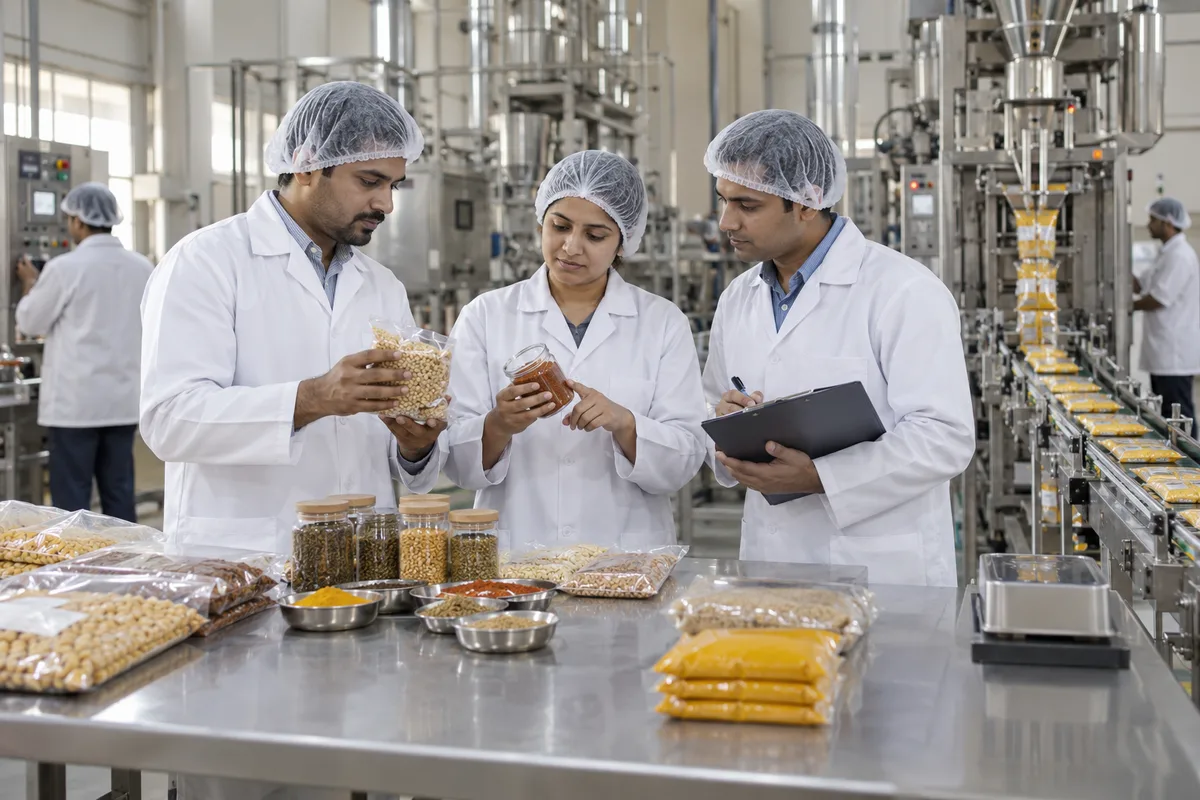
Food processing is the work of turning grain, spice, milk, fruit, vegetables and other raw produce into packed, saleable food, for households, shops and other businesses. GullySales builds the pages, enquiry handling and follow-up that let a food maker be found by distributors, institutional buyers and retail chains, and keep them ordering.
Both judge you before they speak to you. The distributor looks at your licences, your plant and your packing. The shopper looks at the pack and the page. If neither is easy to find and easy to trust, the sample you send goes unopened.
The work is to put the proof where the buyer looks, answer their first message properly, and follow up until the sample has become an order.
Last updated 16 Oct 2026. Licence, certification, labelling and advertising rules for food processing differ by product and change. We describe them in general terms, so check the current position with your own adviser or the regulator before you publish a claim.
8 types of work
Each kind of food processing is bought differently, so each has its own page.
Open the one that matches what you make. It covers who buys it, where the order is lost and what we would do.
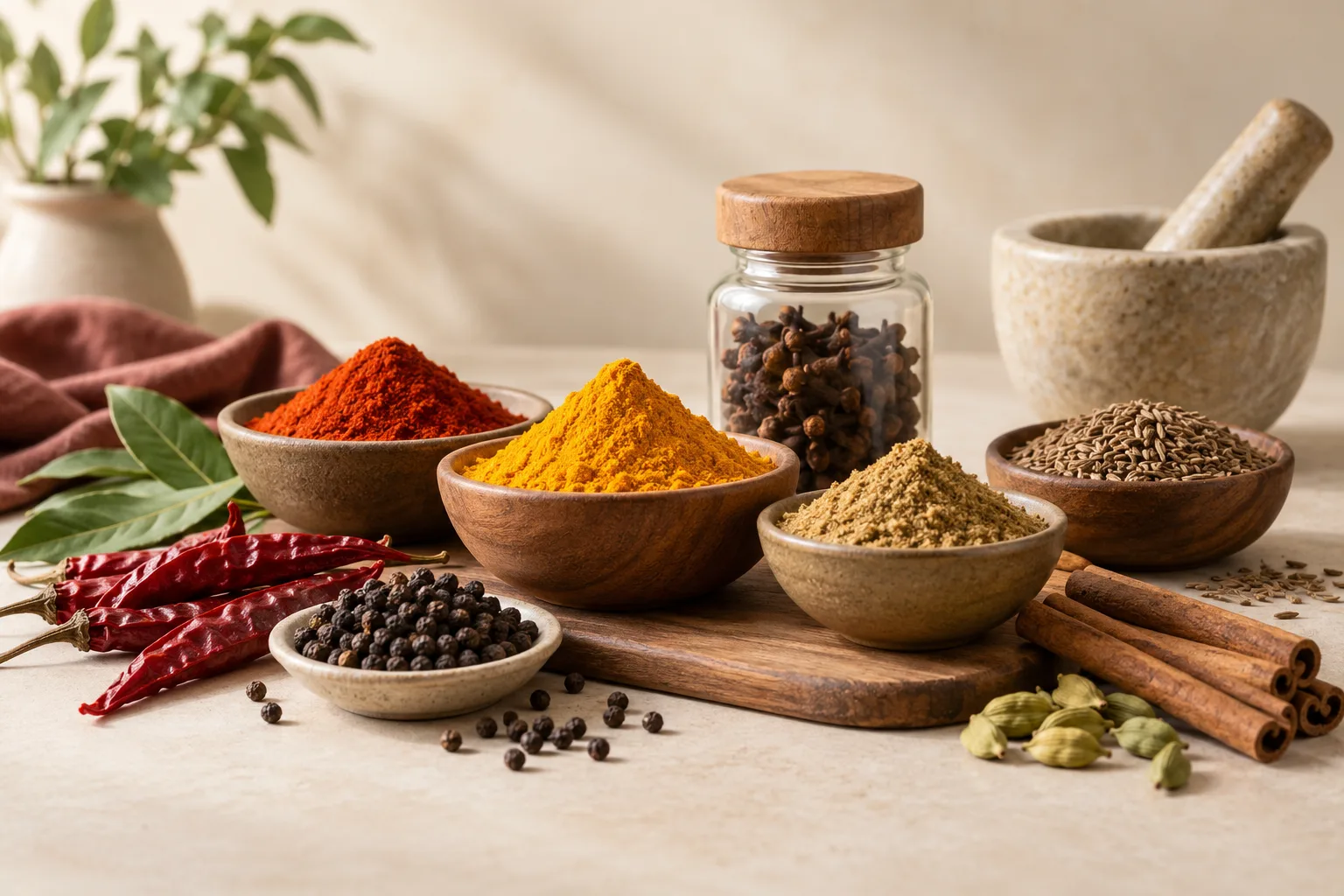 Spice ManufacturingEveryone's chilli powder looks the same until the buyer smells yours.
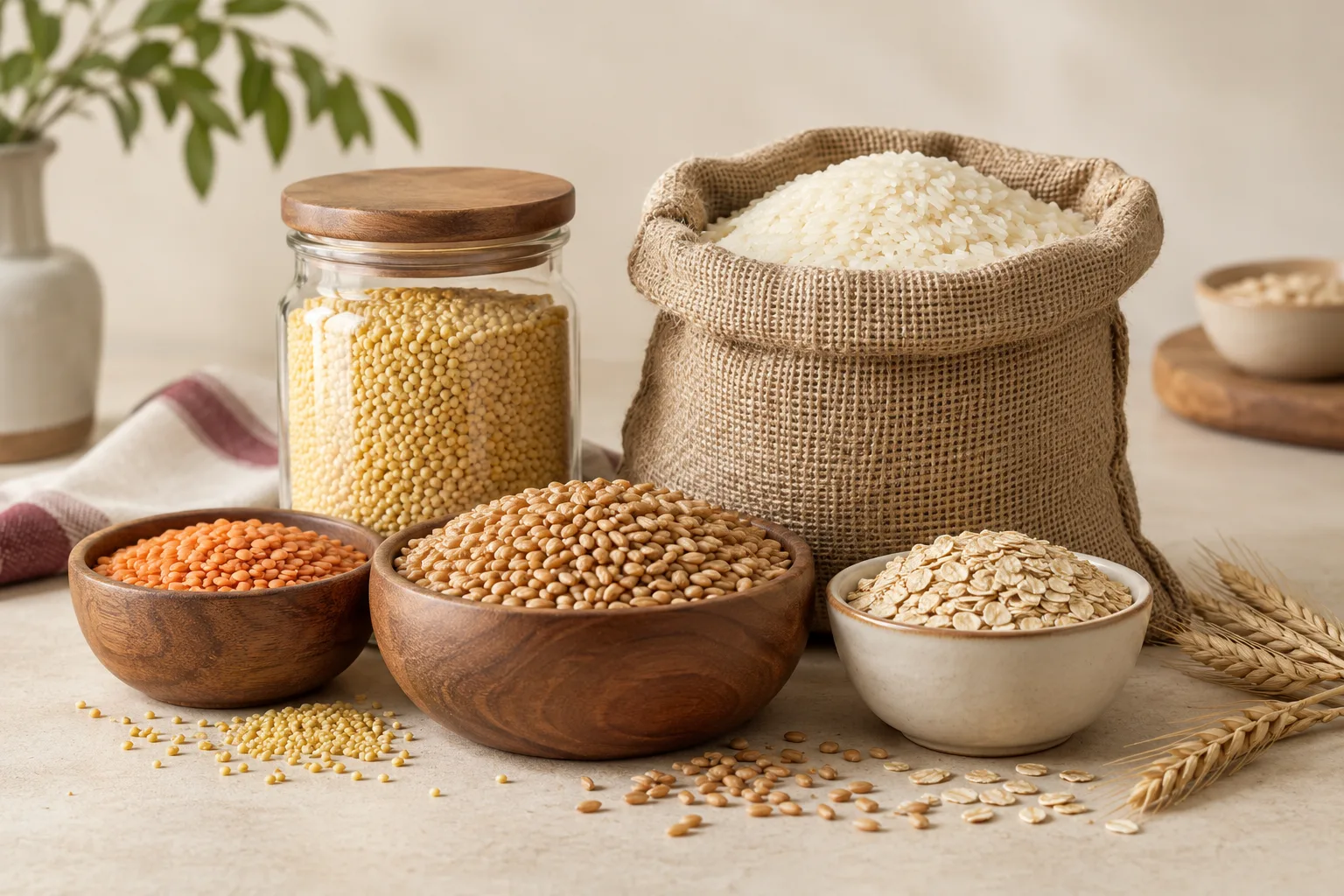 Rice MillsA rice mill sells by the quintal, and the buyer who matters is the one who comes back.
- Flour MillsBakers and hotels buy the flour that behaves the same way every time.
- Packaged FoodsThe shop will stock your pack only if somebody walks in and asks for it.
- Snack ManufacturingA snack is an impulse buy, so you sell the pack to the shop before you sell the taste to the shopper.
- Bakery ProductsA loaf has a shelf life of days, so the sale is lost the moment a delivery is late.
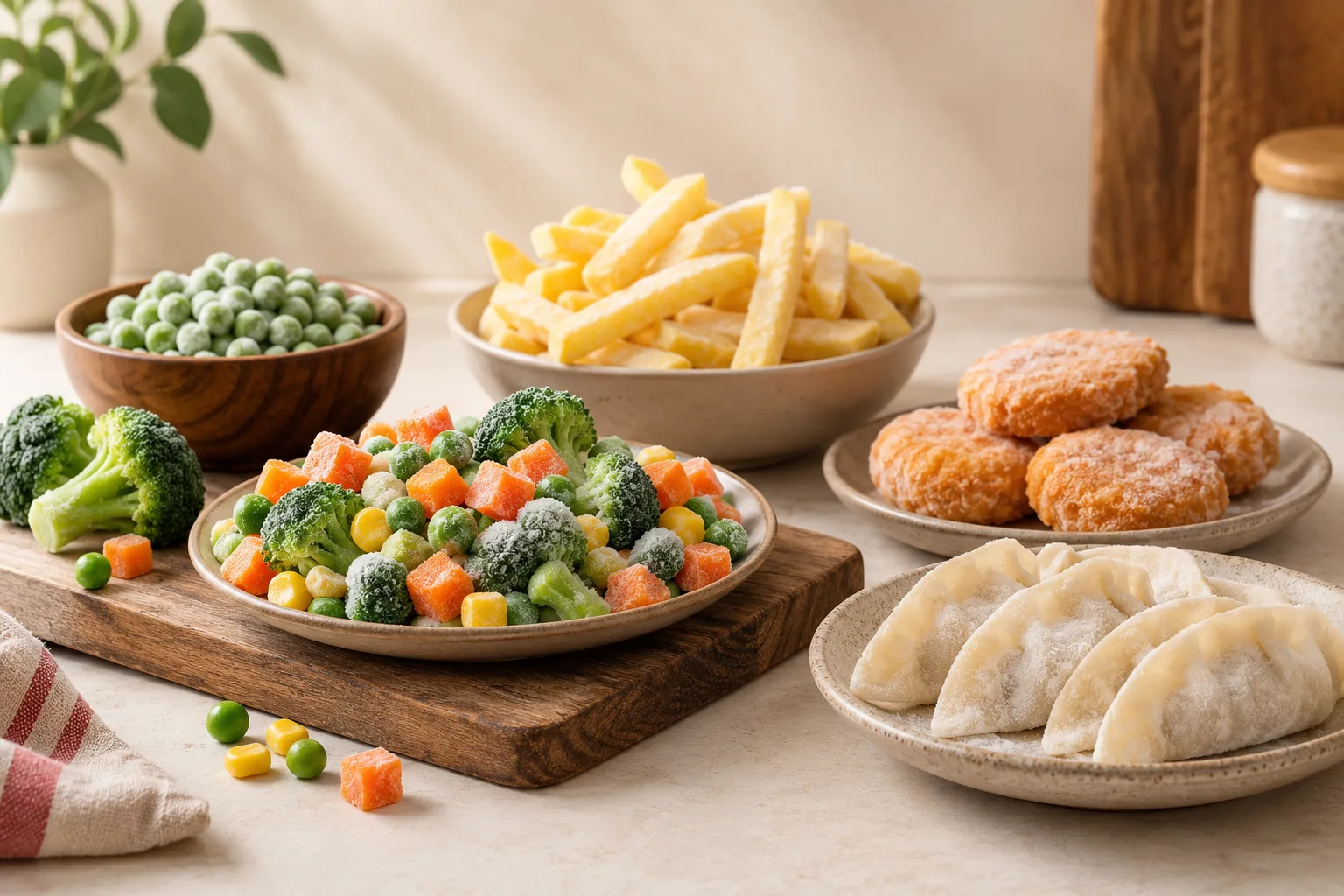 Frozen FoodsA buyer who loses a freezer's worth of stock does not give a second chance.
- Food IngredientsAnother food company is your customer, and they want a specification before a price.
Who it is for
This is written for you if food processing is what you make or sell.
- Spice, flour and rice processors selling by the bag to wholesalers and retailers
- Packaged food and snack brands trying to get into modern trade and kirana shops
- Bakeries and frozen food makers supplying shops, caterers and hotels
- Ingredient makers selling to other food manufacturers
- Regional brands that want to sell beyond their home state
Before you decide
When this may not be the right fit.
- A maker who cannot show food licences and packing details when a buyer asks. Settle that first.
- A brand that needs a retail chain listing to be certain. Chains decide for themselves.
- A unit selling only to one buyer who takes all of its output.
How buyers choose
What decides who wins in food processing.
Sample first, then a trial order
A distributor or institutional buyer tastes or checks a sample, then places a small order to see how it sells or cooks. Both steps need a reply and a follow-up.
Licences and certificates
Buyers ask for the licence and registration numbers, and for any certification you hold. Your page should say what you hold and be checked with your adviser.
Packing, shelf life and label
Pack size, material, storage condition and the date on the pack. A wrong or unclear label can end the conversation before the sample.
Plant visit and rate comparison
Institutional and export buyers visit the plant, then compare three rates. Photographs of a clean, orderly plant matter before the visit.
Where orders are lost
What usually goes wrong when you sell food processing.
In the words owners use on the first call.
“We send samples and never hear back”
A sample with no follow-up date is a free gift. Each sample needs an owner and a call that asks what the buyer found.
“Distributors want a margin and we cannot afford a big one”
A distributor who sees your brand will not move gives it a low priority. A pull from shoppers, and a clear margin sheet, gives them a reason.
“Our product is good but the pack looks ordinary”
Shoppers and chains decide on the pack. The page, the pack and the story need to agree.
“Bulk enquiries come through IndiaMART mixed with small ones”
Without sorting by quantity and buyer type, the large enquiry waits behind ten small ones.
The scope
The work we would propose for food processing.
Measured on qualified enquiries, quotation requests, follow-up on each quotation, orders won and, where you sell through dealers or shelves, repeat orders by channel. Anything here that needs a platform, directory or tool we have not used with you is confirmed with you before it goes in the scope.
- Trade enquiry and sample request formSeparates a bulk or distributor enquiry from a shopper question, and records the sample sent and the follow-up due.
- Distributor and dealer developmentA list of target distributors by city, a margin and terms sheet, and a first-contact script.
- Marketplace and directory handlingListings kept current and every enquiry answered in order of size.
- Brand and pack contentA trade catalogue and price sheet, and product photographs a buyer can use.
- Direct-to-shopper content for brandsFor packaged brands that sell to consumers, social posts and search content in the shopper's words.
A product page per range
Each product with pack sizes, ingredients, storage and shelf life, written for a buyer who will ask about them.
What we do
What you get for food processing.
Each deliverable and what it is there to change.
A trade catalogue and price list
Pack sizes, case counts and trade terms in one document a distributor can forward.
A sample-request and tracking sheet
Who received which sample, when, and the follow-up call due.
A certificates and licences page
States what you hold, in plain words, so a buyer finds it before asking.
A distributor target list
Distributors and wholesalers by city, with the product categories they carry.
A plant photograph set
Clean, labelled images of processing, packing and storage for buyers who cannot visit.
How the result is measured
- Qualified trade enquiries
- Samples sent and sample follow-up completed
- Trial orders won
- Distributor enquiries and active distributors
- Repeat orders by buyer
- Retail chain and institutional enquiries
Recorded as a baseline before work starts, so every later report has an honest comparison.
How it works
What the work involves for food processing
The work itself, in order. How an engagement starts, from your brief to a written scope, is set out on our method page.
- 1
Read the brief and the buyers
We start with your requirements brief, your product list and the buyers you sell to now, to see who orders and who stalls.
- 2
Record the baseline
Enquiries by source, samples sent and orders won are recorded before anything changes.
- 3
Put the proof online
Product pages, certificates, plant photographs and a trade catalogue, so a buyer can check you.
- 4
Set up the sample routine
Every sample gets an owner and a follow-up call.
- 5
Open the channels
Distributor outreach, marketplace handling, search and social, in the order the baseline supports.
- 6
Report and adjust
Results are reported against the baseline, on a schedule agreed in writing.
What we need from you
What to have ready before we talk.
None of it has to be tidy. We read what you have.
- Your product list with pack sizes and shelf life
- Licences and certificates you hold
- A list of current distributors and shops
- Photographs of the plant, the products and the packs
- Samples of buyers' questions, from IndiaMART, calls or WhatsApp
Export and new regions
Selling food processing beyond your home market.
Where you sell decides standards, documents, payment terms and freight. We work from Bengaluru and have no overseas office, so for a new region we start from your own enquiries, your existing buyers and the directories you already use.
Importers and food distributors
Overseas buyers are importers, ethnic-food distributors and wholesalers. Begin from the export enquiries and buyers you already have, and choose a region from there.
Documents and labelling
Importers ask for product specifications, certificates and labels in their market's format. Check what each destination requires with your adviser before you quote.
Samples, shelf life and freight
Sample freight, shelf life on arrival and payment terms decide whether a first enquiry moves. Settle your answers before you reply.
Proof
Where we have worked on something close.
These are published case studies of real clients. Each shows only the results that were recorded, and none of them is a promise about your store.
Bon Millette
- Situation
- A new food brand has to look trustworthy before anyone will try it, and Bon Millette had nothing online for a first-time buyer to weigh up.
- What we did
- A site that matches the food
- The story in a trust-building order
- Product sections with full disclosure
- A short path from reading to buying
- Result
- No numbers were recorded for this engagement. The work is described in full in the case study.
Divya Agros
- Situation
- Certification is the proof in organic produce. Divya Agros had the certificates and no place to put them, which is a hard position to build trust from.
- What we did
- Site structure planned first
- A responsive website
- Pages written for the reader
- A visual identity
- Result
- No numbers were recorded for this engagement. The work is described in full in the case study.
Also worked with
Chord Road Hospital · Curtain Label · Difesa Security Services · Felicity Inn · Hands On CSR · Implevista · Kambar Group · Kalessi · Kerur Pain Clinic · LL Trust · Lucky Deals · Natural Gases · NavaShakthi Souhardha · NewCom Logistics · Proton Technical Services · SB Engineering · Shakthi Foundation · Shakthi Group · Urbanest · Insyde Studio · Venkateshwara Laser Tech · Vivara Studios
A practical starting point · Food Processing
Start with one buying journey.
Use a real enquiry to find the first useful change. You do not need to buy every service listed on this page.
- The record to review
- Start with a recent RFQ and the quotation it produced. Remove buyer identifiers, then retain the specification, quantity, delivery requirement, and reason the order moved forward or stopped.
- The buyer's question
- Check whether the buyer can establish technical fit before asking for a price. Purchasing, engineering, and the end user may need different evidence from the same product page.
- The handover to agree
- Give the technical question to someone who can answer it, and keep the commercial follow-up with a named owner. A vague request for a catalogue should not be treated as a qualified RFQ.
FAQ
Questions about selling food processing.
Not here? More answers, or ask on WhatsApp.
How do I get distributors to stock my product?
Do I need a website to sell food to shops?
Can I make health claims for my product?
Is IndiaMART good for food makers?
How much does it cost?
How long is the contract?
How soon will we see results?
Who will actually do the work?
What do you need from us?
What if we are not happy with the work?
Makers of food processing also need
Looking for the wider industry page? See food product manufacturers.
This page is part of the manufacturing section. The hub also lists every manufacturing industry we write for.
Why us
Why owners pick GullySales over an agency.
Marketing and sales, as one job
Most agencies stop at the enquiry. We also fix what happens after it: the reply, the follow-up, the quote and the CRM.
The person on the first call does the work
No account managers in between. You are never handed to someone you have not met.
A baseline before anything starts
Your numbers are written down on day one, so every later report compares against something honest.
The fee in writing, split three ways
Our time, your media spend and production on separate lines. You always see what goes to us.
No guarantees we cannot keep
The term is agreed in writing and never a default twelve months. We never promise a ranking or a lead count, because nobody controls those.
One office, and we say so
Nagarbhavi, Bengaluru. We work across India by call and WhatsApp and travel when a session needs to be in person.
#257, 3rd floor, Sri Nanjundeshwara Complex, Nagarbhavi 8th Block, Outer Ring Road. How we work.
Engagement options
Ways to work with us.
Pick the size of commitment that fits. Every option starts with your brief and a conversation.
Option 1
The conversation on its own
A call after you send your brief. It says honestly whether you need outside help, and many fixes are ones your own team can make.
Option 2
One fix, scoped
Start with the fix that matters most, such as reply time or follow-up. The fee is in writing before anything starts.
Option 3
An ongoing programme
We run the work, report against the baseline, and you renew on the numbers. The term and the reporting are agreed in writing first.
Option 4
Guidance for your own team or agency
We plan, brief and check the work of your in-house team or current agency, instead of replacing them.
All services
All services for food processing manufacturers.
Marketing, sales and channel work in one list. Open a group or search, then read what the service covers.
1,579 services in 17 groups.
Marketing strategy and research (53)
Branding and creative (37)
Websites and conversion (30)
Search, local and AI visibility (28)
Content, video and thought leadership (798)
Advertising and performance marketing (107)
Social media, PR and reputation (232)
Email, WhatsApp and automation (27)
Lead generation and outbound (20)
Sales strategy and process (29)
Sales training and enablement (38)
CRM, sales operations and RevOps (48)
Dealers, distributors and partners (42)
Customer success and retention (42)
Fractional leadership and audits (27)
AI for sales and marketing (8)
Growth and go-to-market strategy (13)
Your brief
Tell us what you need, and we will read it before we call.
Eight short steps about your business, what you want and who decides. Most questions are a tap, and you can skip any you would rather answer on the call.
Your next practical step
Tell us what you are trying to grow, and we will read it before we call.
Eight short steps, mostly taps. Skip anything you would rather answer on the call.