Industrial equipment manufacturers · Inside sales
Qualify the RFQ by phone and video before an engineer drives to site.
For an industrial equipment maker, inside sales means taking a specification enquiry through clarification, technical discussion, remote demonstration and quotation by phone, video and WhatsApp, and sending a person to the plant only when the visit earns its cost. GullySales designs the call stages, the remote demonstration around your machine and the handoff to your field engineers.
Scope, fee, reporting and term are agreed in writing after we have read your brief and spoken to you.

What inside sales means
Inside sales is selling by phone, video call and message rather than visiting the customer in person, common where the deal size does not justify travel. GullySales sets up the scripts, call cadence and tools an inside sales team needs to close deals without a site visit.
Also for industrial equipment manufacturers
- Sales management for industrial equipment manufacturers
- Sales metrics for industrial equipment manufacturers
- Sales strategy for industrial equipment manufacturers
- Sales training for industrial equipment manufacturers
- Consultative selling implementation for industrial equipment manufacturers
- Sales discovery process design for industrial equipment manufacturers
- Sales manager training for industrial equipment manufacturers
- Sales margin improvement for industrial equipment manufacturers
Sales and marketing for industrial equipment manufacturers, the overview.
Last updated 14 Nov 2026.
For industrial equipment manufacturers
Where it usually goes wrong, and what we would do.
“Field visits are spent on enquiries that were never ready”
A sales engineer drives to a plant to discuss a machine, and learns at the gate that the buyer wanted a price to put in a budget, or that the load the machine must handle is outside your range. The day is gone and the visit shows up on the cost sheet. A structured first call asks about the duty, the site and the decision before anyone travels, and it separates the enquiries that need a visit from those that need a quotation or a polite no.
“A machine is hard to show over a call, so the call is skipped”
Owners assume a machine sale cannot move without a visit, so the enquiry waits for the field team's next trip. In fact the first discussions are about the duty, the space and the power available, and these can be handled by phone with drawings shared on screen. A short video of the machine running with the operator speaking, followed by a screen-shared datasheet, answers the first round without anyone leaving the works.
“Two people decide, and the call reaches only one”
The plant engineer checks technical fit and the purchase head negotiates terms. An inside salesperson who speaks only to the engineer sends a quotation that the purchase head has never been briefed on. The call stages therefore include a planned second conversation with the buyer who controls terms, using a different guide, so that commercial questions are raised before the quotation is on the table.
“RFQ calls leave no record, so the next person starts again”
A promised callback after a technical question sits in one person's phone, and when that person is on leave the buyer waits. For a plant comparing several makers, the slowest reply loses. A shared record of every call, with the duty noted, the question asked and the next action dated, lets any colleague pick up a conversation and answer from the same facts.
What we do
What we deliver for industrial equipment manufacturers.
The work available for this need. We agree the deliverables and responsibilities for your engagement in writing.
Remote sales stage map for a machine enquiry
A map of the stages an RFQ passes through by phone and video: first clarification, technical discussion, remote demonstration, quotation walk-through and follow-up. Each stage states what must be known before moving on and who in your team owns it. It uses your own enquiry history, so the stages reflect how your plant buyers actually behave.
Result: Any RFQ in your CRM sits at a named stage with an owner.
First-call guide with duty and site questions
A one-page guide for the first conversation. It asks for the duty, the capacity needed, the material handled, the power and space at the plant and who else decides. Questions are written in the words a plant engineer uses, not in sales language, and the guide marks the answers that mean an enquiry is outside your range.
Result: A call ends with the duty recorded in the same fields every time.
Remote demonstration plan around your machine
A plan for showing a machine without a visit: the video of the unit running, the points the camera must catch, the drawings shared on screen and the questions the viewer is invited to ask. We build it with your service or works head so every claim made on the call can be shown to be true, then rehearse it with your team.
Result: Your team can run the demonstration from the plan without the owner present.
Quotation discussion guide for the purchase head
A guide for the second call, held with the person who negotiates terms. It sets out how to present the quotation, what to say about delivery slot, payment terms and warranty only as your owner has agreed them, and how to record an objection. It keeps the commercial conversation separate from the technical one.
Result: Each quotation has a recorded discussion with the purchase contact.
Telephony and CRM setup agreed with you
The call and WhatsApp tools your team already uses, connected to your CRM so calls, notes and next actions are saved against the RFQ. We configure what you approve and test it with your team. Call recording and consent follow your own adviser's guidance and the platform's current rules, and we list what each tool records.
Result: A call made by any team member appears on the RFQ record.
Handoff note from inside sales to the field engineer
A short template that travels with the enquiry when a visit is justified. It carries the duty, the site constraints, the decision makers, the objections raised and the promises already made on the phone. The field engineer reads it before the journey and does not repeat questions the buyer has already answered.
Result: A field visit starts from a written summary, not a fresh conversation.
How the result is measured
- Calls per day
- Conversion rate
- Deal size closed remotely
Recorded as a baseline before work starts, so every later report has an honest comparison.
Who it is for
This is written for these industrial equipment manufacturers.
- CNC machine and precision equipment manufacturers
- Industrial pump and compressor manufacturers
- Packaging machinery manufacturers
- Conveyor and material handling equipment makers
- Motor and drive manufacturers
- Custom fabrication and job-work manufacturers
- Export-oriented industrial equipment makers
- Spare parts and after-sales service providers
Before you decide
Agree the work. Know how to judge it.
Inside sales for industrial equipment manufacturers: use these checks to prepare, choose the scope, and review what changes.
Bring the right evidence
Bring examples of deals that moved forward and deals that stalled. Record what the buyer had actually agreed at each stage rather than relying on the salesperson's confidence.
Make the scope clear
Define the entry and exit rule for each stage, the owner, and the document or decision that moves the deal. Agree how exceptions will be handled before rolling the process out.
Check the work in use
Take a live enquiry through the proposed stages with the team. Two people reviewing the same evidence should place it at the same stage and agree the next action.
Know when to change course
If a stage produces no useful decision or handover, remove it. The process should help someone do the next piece of work, not create administration for its own sake.
These are discussion points, not a fixed package. GullySales confirms the deliverables, responsibilities, fee, and term in writing after reading your brief and speaking with you.
Before we start
What to have ready before the work starts.
The records, access and decisions this work needs from industrial equipment manufacturers. Anything missing is noted in the written scope, with who will supply it.
- The last set of RFQs and their outcomes
- We need the enquiries from receipt to outcome, won, lost and open, with dates. They show which RFQs could have been handled remotely and what delayed the reply. Without them the stage map becomes a guess, so export them from your sheet, inbox or CRM and note any enquiry that came through a marketplace.
- A machine that can be filmed running
- The remote demonstration needs a unit that can be shown working, with its operator, in good light and with noise controlled. Arrange access to the test bay or an installed machine you have clearance to film. If no machine can run for the camera, the demonstration plan relies on drawings and recorded footage.
- The people who take the first call
- Name who answers an RFQ call, who backs them up and who leaves for site visits. The stages work only when responsibility is clear. If everyone answers and nobody owns the follow-up, the CRM record fills unevenly and the buyer is contacted twice or not at all.
- Tools your team already uses
- List the phone system, WhatsApp number and CRM in use, and who holds each login. We configure only what you approve and what the platforms permit. If a personal phone is used for buyer calls, tell us now, because shared records and consent need a company-owned arrangement.
- Quotation terms the owner has agreed
- The second-call guide can only repeat what your owner has already decided on payment terms, warranty and dispatch slot. Bring the standard terms and the list of what needs the owner's approval. If a caller invents terms on a call, the works inherits a promise it did not make.
How it works
How the inside sales work runs
The work itself, in order. How an engagement starts, from your brief to a written scope, is set out on our method page.
- 1
Agree which enquiries go inside
We begin by sorting your recent RFQs into those that could have been progressed remotely and those that truly needed a visit. The owner and the sales head agree the rule: which machines, which values and which buyers move by phone and video, and which go straight to the field. The agreement is written down so the team applies one rule.
- 2
Read the RFQ file and set the baseline
We read the last set of RFQs from receipt to outcome: how long each waited for a reply, how many calls it took, which ones the field team visited and which converted. These are your own figures, taken from the enquiry log, and they are recorded before any change so that later results can be compared with them.
- 3
Write the call guides and demonstration plan
We draft the first-call guide, the quotation discussion guide and the remote demonstration plan, using your engineers' language and the objections your team already hears. Your sales head reads each one and strikes out anything a plant buyer would find strange. Revisions continue until the team says they could use the guide on a live call.
- 4
Test the tools and the record with the team
The telephony, WhatsApp and CRM setup is tested with your own team on sample RFQs. We check that a call is saved against the right record, that a missed call creates a task and that a colleague can see the history. The team is briefed on what the tools record and on the consent rules your adviser has confirmed.
- 5
Sit in on live RFQ calls and coach
We listen to real calls, with permission, and note where a question was missed or a promise was made that the works cannot keep. Coaching notes go to each caller and to the sales head, never to the buyer. The guides are revised from what the calls show, so the stage map matches the conversations your team actually has.
- 6
Read results against the baseline
After the new stages have run on live RFQs, we read the same figures again: reply time, calls per quotation, visits made and quotations sent. We report what moved and what stayed the same, and which RFQs the stages did not suit. No result is promised beforehand, and the owner decides which stages to keep.
Proof
Published examples of our work.
Real clients and the work recorded for each engagement. These examples may cover related services or industries. They show the method, not a guaranteed result.
Burhani Hydroline
- Situation
- The website was dated. Menus were hard to follow, pages were slow, and it did not work properly on a phone, which is where a buyer looks first.
- What we did
- Research before design
- Wireframes and prototypes
- The full product catalogue
- An online checkout
- Result
- No numbers were recorded for this engagement. The work is described in full in the case study.
Also worked with
Chord Road Hospital · Curtain Label · Difesa Security Services · Felicity Inn · Hands On CSR · Implevista · Kambar Group · Kalessi · Kerur Pain Clinic · LL Trust · Lucky Deals · Natural Gases · NavaShakthi Souhardha · NewCom Logistics · Proton Technical Services · SB Engineering · Shakthi Foundation · Shakthi Group · Urbanest · Insyde Studio · Venkateshwara Laser Tech · Vivara Studios
Where this fits
Three pieces of sales work, in this order.
This work sits inside sales process design, at stage 1, prospecting and lead generation. The audit comes before it, and sales management keeps it running.
Step 1
Sales audit
Find where deals are being lost and what to fix first.
Start here if you cannot say where orders are lost.
Step 2 · you are here
Sales process design
One written way to sell, from first enquiry to repeat order.
Start here if every salesperson sells differently.
Step 3
Sales management
A target, a review routine and someone who owns the number.
Start here if the team has targets and no routine.
FAQ
Questions owners ask before they call.
Not here? More answers, or ask on WhatsApp.
Can a machine really be sold without visiting the plant?
Who decides which RFQs go to a field engineer?
Do you make the calls for us?
How do we record calls without breaking consent rules?
What if our buyers prefer a visit?
How will we know it has worked?
How much does it cost?
How long is the contract?
How soon will we see results?
Who will actually do the work?
From the blog
Further reading for industrial equipment manufacturers.
 6 min read · 10 Oct 2026How manufacturers can generate enquiries from relevant business buyersRelevant RFQs come from buyers who can verify you: real specifications on product pages, matching listings and a quick way to screen requests.
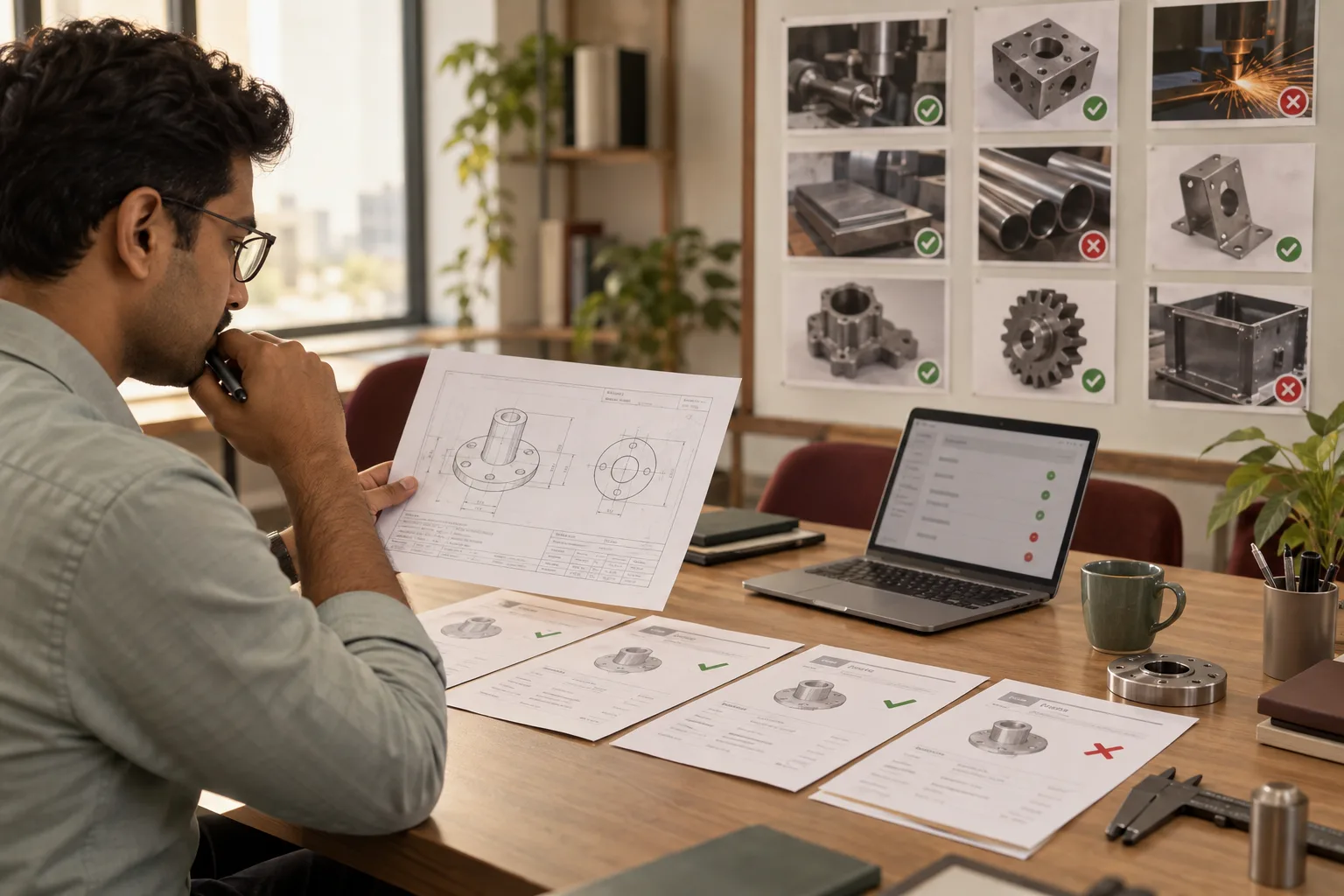 6 min read · 6 Oct 2026How industrial buyers decide which unit gets the RFQWhat industrial buyers check before sending an RFQ, across nine manufacturing trades, and where a unit drops off the shortlist.
 7 min read · 21 Sept 2026How to advertise to plant headsPlant heads can block a purchase but rarely sign one. Learn why breakdown searches, estate media and a trial offer reach them better than brand ads.
More for industrial equipment manufacturers
Related work to consider.
Closest to this: sales craft
- Sales management for industrial equipment manufacturers
- Sales metrics for industrial equipment manufacturers
- Sales strategy for industrial equipment manufacturers
- Sales training for industrial equipment manufacturers
- Consultative selling implementation for industrial equipment manufacturers
- Sales discovery process design for industrial equipment manufacturers
- Sales manager training for industrial equipment manufacturers
- Sales margin improvement for industrial equipment manufacturers
Also for industrial equipment manufacturers
- Answer engine optimisation for industrial equipment manufacturers
- Branding for industrial equipment manufacturers
- Content marketing for industrial equipment manufacturers
- Digital marketing for industrial equipment manufacturers
- Email marketing for industrial equipment manufacturers
- Google Business Profile management for industrial equipment manufacturers
Or start from the overview: sales and marketing for industrial equipment manufacturers.
Your next practical step
Tell us what you are trying to grow, and we will read it before we call.
Eight short steps, mostly taps. Skip anything you would rather answer on the call.