Jig and fixture manufacturers · Search engine optimisation
Let the engineer who searches for welding jigs land on a page about welding jigs.
SEO for a jig and fixture maker is the work of making your pages the answer when a tooling engineer searches for a specific fixture, machine or part type. GullySales works on page structure, wording and the technical basics, without promising a ranking.
Scope, fee, reporting and term are agreed in writing after we have read your brief and spoken to you.
What search engine optimisation means
Search engine optimisation (SEO) is the work of getting your website to appear when a buyer searches Google for what you sell. GullySales builds pages around real search terms, fixes technical issues that block ranking, and tracks which searches actually bring enquiries.
Also for jig and fixture manufacturers
- Local SEO for jig and fixture makers
- Websites for jig and fixture makers
- Lead generation for jig and fixture makers
- Social media marketing for jig and fixture makers
- Content marketing for jig and fixture makers
- Buyer personas for jig and fixture makers
- CRM for jig and fixture makers
- Follow-up systems for jig and fixture makers
Sales and marketing for jig and fixture manufacturers, the overview.
Last updated 14 Nov 2026.
For jig and fixture manufacturers
Where it usually goes wrong, and what we would do.
“Engineers search by fixture type and machine”
A tooling engineer types welding jig for chassis, VMC fixture for casting or checking fixture for bracket. A single page headed tooling solutions matches none of those searches.
“A stock photo tells the searcher nothing”
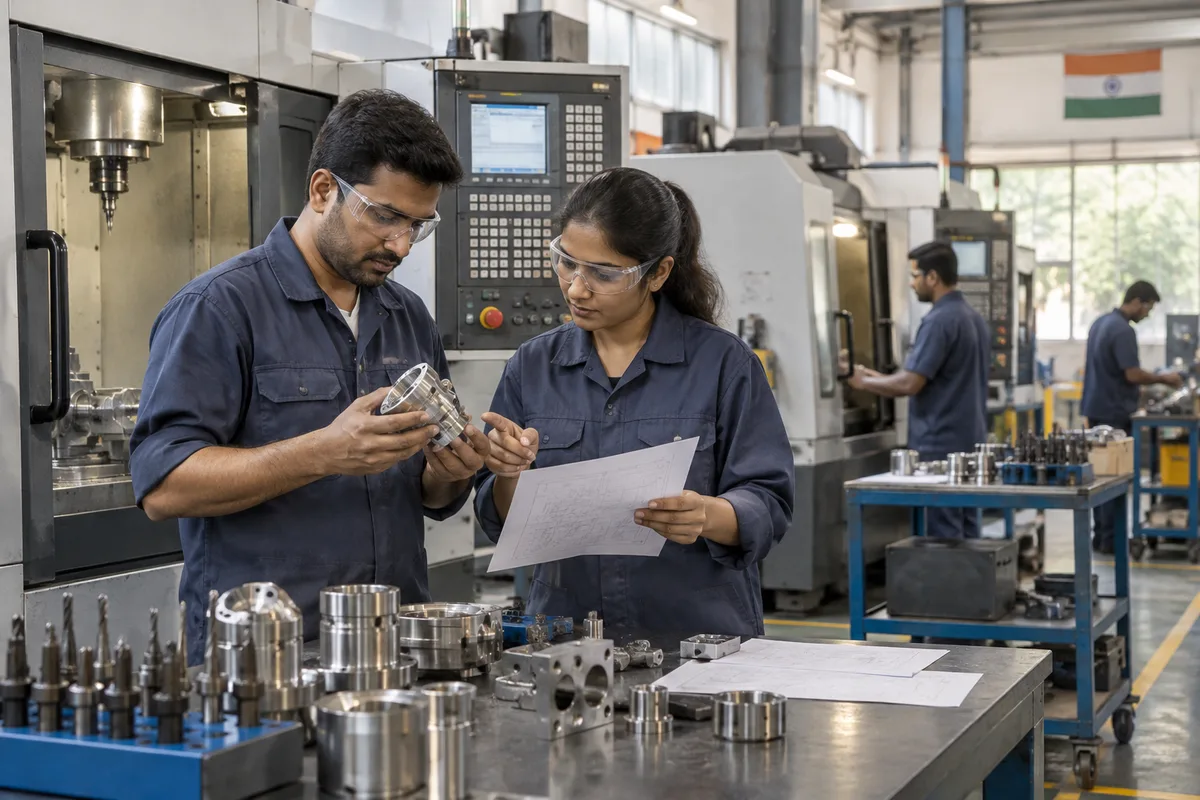
A page showing a generic lathe does not say whether you build hydraulic clamping, tombstones or gauges. Real photographs of your own fixtures, with the machine and part named, are what a technical reader scans for.
“Customer confidentiality limits what you can show”
Some fixtures are built for parts that belong to a customer who does not want the drawing seen. Pages have to describe the problem and the fixture type without naming the part or the plant.
“Marketplace listings can outrank your own site”
On IndiaMART and similar sites your listing may appear above your page for the same search. The site and the listings need to say the same things about what you build.
What we do
What we deliver for jig and fixture manufacturers.
The work available for this need. We agree the deliverables and responsibilities for your engagement in writing.
Fixture-type and machine page plan
A list of pages, one for each fixture type and each machine you build for, with the search wording an engineer would use.
Result: A page plan where each fixture type has one page and one purpose.
Page copy written from your engineers' notes
Plain-language text for each page, checked line by line by your design team before it goes live.
Result: Each page names the machines, parts and industries it covers.
Photograph and drawing guidance
What to photograph on the shop floor and how to show a fixture without exposing a customer's drawing.
Result: A shot list your team can follow during the next trial.
Technical SEO check
Titles, descriptions, page speed on a phone, indexing and broken links reviewed on your site.
Result: A written list of fixes with each one marked done or open.
Search Console review
A look at which searches already bring visitors and which pages get impressions without visits.
Result: A list of pages to rewrite, based on your own search data.
How the result is measured
- Ranking positions
- Organic traffic
- Enquiries from organic search
Recorded as a baseline before work starts, so every later report has an honest comparison.
Searches your buyers type
The fixture and machine searches a tooling engineer actually types.
- welding jig manufacturer
- A page on welding jigs and positioners, with a photograph of a finished jig on a bench and the weld processes you design for.
- hydraulic fixture for VMC
- A page on hydraulic clamping fixtures for machining centres, naming the pressure source and the machine models you have worked with.
- checking fixture for sheet metal parts
- A page on inspection and checking fixtures, saying how locating points are set and how the fixture is certified.
- assembly fixture for automotive parts
- A page for tier suppliers, describing how an assembly fixture is proved on the line, with a drawing outline in place of a customer part.
- fixture design service for a new part
- A page that explains what the customer sends, what you return as a design layout and how the sign-off works.
Who it is for
This is written for these jig and fixture manufacturers.
- Machining fixtures and vices for VMC, HMC and CNC lathe work
- Welding jigs and positioners for fabrication shops
- Assembly fixtures for automotive tier suppliers
- Inspection and checking fixtures with gauges
- Hydraulic and pneumatic clamping fixtures
- Press tool holding and trimming fixtures
- Fixture repair, modification and re-qualification work
- Special-purpose workholding for electrical and electronics manufacturers
Before you decide
When this may not be the right fit.
- You have no photographs or drawings you may show, and the pages would carry stock images of machinery that is not yours.
- Your engineers cannot review the copy, so the pages would state things about clamping that an expert reader spots at once.
- You expect search to replace the regular customers who supply your orders now, when it builds slowly.
Before you decide
Agree the work. Know how to judge it.
SEO for jig and fixture makers: use these checks to prepare, choose the scope, and review what changes.
Bring the right evidence
Bring the pages for the products or services you want to sell, the search queries available in your reports, and examples of enquiries from search. Separate branded searches from buyers discovering you for the first time.
Make the scope clear
Agree which pages and technical fixes come first, who can publish changes, and who supplies subject knowledge. Link search work to a relevant enquiry route on each priority page.
Check the work in use
Follow the trail from a relevant query to its landing page and then to an enquiry. Review whether those enquiries fit your offer, alongside indexing and search visibility.
Know when to change course
A ranking movement alone is not a buying signal. If traffic grows but relevant enquiries do not, revisit page intent and the offer before producing more pages.
These are discussion points, not a fixed package. GullySales confirms the deliverables, responsibilities, fee, and term in writing after reading your brief and speaking with you.
Before we start
What to have ready before the work starts.
The records, access and decisions this work needs from jig and fixture manufacturers. Anything missing is noted in the written scope, with who will supply it.
- Owner login to Search Console and analytics
- We need owner-level access to see which queries already bring visitors and which pages they land on. If the site was built by a vendor who holds the login, ask for it before we begin. Without it we work blind and the baseline for the final reading cannot be recorded.
- A fixture-type list in your own words
- Write down the fixture types you build as your toolroom names them, including shop slang that engineers also use in searches. A page or two of notes is enough. Without this list, pages are named by guesswork and may match words no engineer types.
- Half a day of the design engineer
- The page text comes from this person's explanation of datums, clamping and checking, so the time must be set aside, not squeezed between jobs. If it is not available, pages stay thin and read like every other toolroom site, which search engines and engineers both pass over.
- Clearance from customers for photographs
- A short list of which fixtures may be photographed, and which customers must not be named or shown. A message on WhatsApp from the customer is acceptable. Where clearance is missing, we use sketches and shop-floor photographs of empty clamps rather than risk a confidentiality complaint.
- Access to the current website files
- Hosting details, the content system login or the developer's contact let us check titles and speed and publish changes. Any of the three will do. Without access, the technical findings stay on a list and nothing improves until someone is found to carry them out.
How it works
How the search engine optimisation work runs
The work itself, in order. How an engagement starts, from your brief to a written scope, is set out on our method page.
- 1
List the fixtures people actually ask for
We start from your enquiry messages, quote file and the questions engineers ask on calls, and write down each fixture type, machine and part family they name. From this list, not from a keyword tool alone, we choose which pages deserve to exist. You tell us which fixture types you want more of and which you would rather not build.
- 2
Sit with the design engineer for notes
We spend time with your design engineer or toolroom head and record how a particular fixture is planned: datum choice, clamping, loading and checking. These spoken notes become the source for page copy, so the pages carry knowledge that belongs to your shop. You read each page and correct any technical line before it goes near the site.
- 3
Match pages to the fixture-type map
Each fixture type and machine combination gets one page with one purpose, such as welding jigs for fabrication shops or checking fixtures for turned parts. We draw the map on paper first, show how pages link to each other, and agree which existing pages are merged or renamed. No page is written until you have approved the map.
- 4
Photograph fixtures without showing the part
With your toolroom we plan photographs of finished fixtures, clamps and gauges taken so that the customer's part, markings and drawing numbers stay out of frame. We give a short shot list and a rule for blurring. You decide which jobs are cleared for photographs, and the pages use only those.
- 5
Check how the site loads for a search crawler
We open the site as a search engine would, and look at page titles, headings, image names, internal links and mobile loading on an ordinary phone. Broken pages and duplicate titles are listed with a fix beside each. Your web developer or ours makes the changes, and we confirm each one in the browser.
- 6
Read search queries against the first figures
Using the search data recorded when the work began, we look at which fixture-related queries now reach your pages and which enquiries arrived from them. You and we sit with the register to see whether those enquiries were quotable. Pages that bring nothing are reworked or merged; none is promised a position.
Where this fits
Three pieces of sales work, in this order.
This work sits inside sales process design, at stage 1, prospecting and lead generation. The audit comes before it, and sales management keeps it running.
Step 1
Sales audit
Find where deals are being lost and what to fix first.
Start here if you cannot say where orders are lost.
Step 2 · you are here
Sales process design
One written way to sell, from first enquiry to repeat order.
Start here if every salesperson sells differently.
Step 3
Sales management
A target, a review routine and someone who owns the number.
Start here if the team has targets and no routine.
FAQ
Questions owners ask before they call.
Not here? More answers, or ask on WhatsApp.
Can you promise page one for jig and fixture searches?
Do we need a blog for SEO?
How do we show fixtures when every part is confidential?
Should each machine type get its own page?
Do we have to rewrite the whole website for SEO?
What happens to the vendor who built our site?
How much does it cost?
How long is the contract?
How soon will we see results?
Who will actually do the work?
More for jig and fixture manufacturers
Related work to consider.
Closest to this: search and visibility
Also for jig and fixture manufacturers
Or start from the overview: sales and marketing for jig and fixture manufacturers.
Your next practical step
Tell us what you are trying to grow, and we will read it before we call.
Eight short steps, mostly taps. Skip anything you would rather answer on the call.