Metal casting foundries · Buyer persona
Three people sign off a casting, and each reads your foundry for a different reason.
A buyer persona for a metal casting foundry describes the people at a pump, valve, tractor or machine maker who decide whether a drawing goes to you. GullySales maps the purchase executive, the quality engineer and the owner or plant head so each hears what concerns them.
Scope, fee, reporting and term are agreed in writing after we have read your brief and spoken to you.
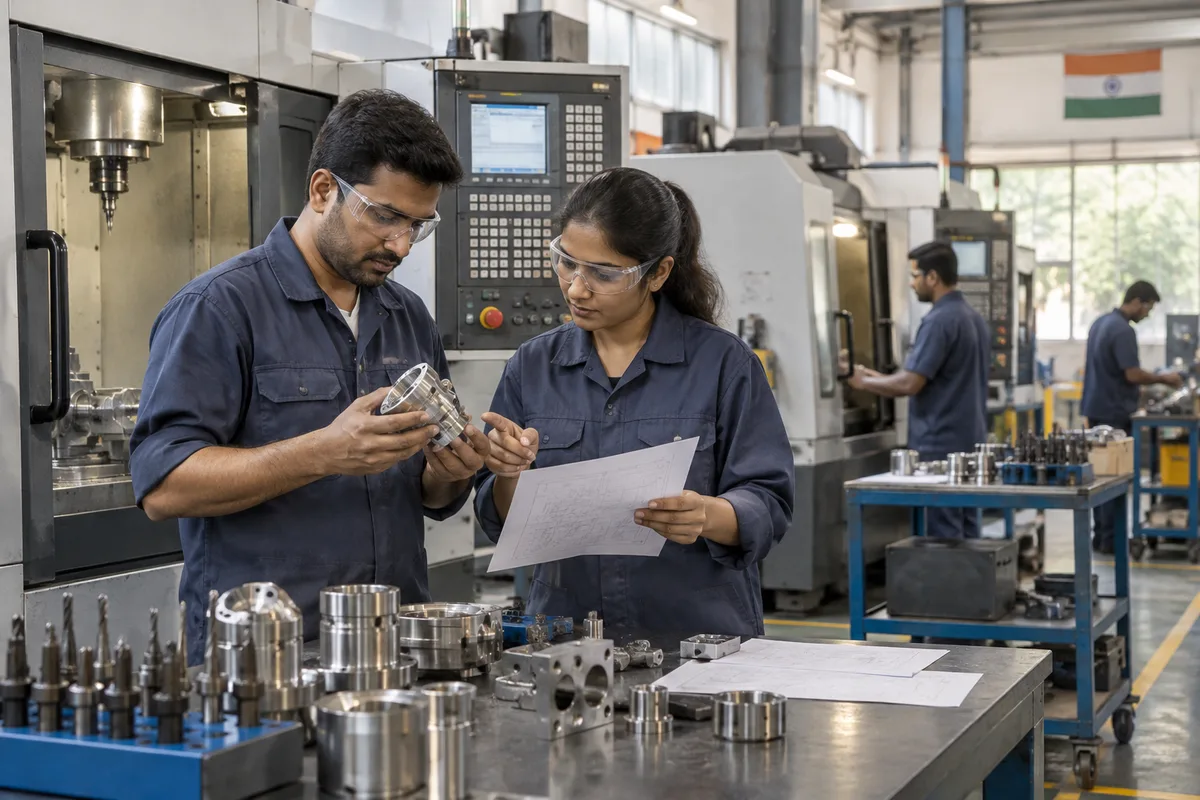
What buyer persona means
A buyer persona is a plain description of the kind of customer who actually buys from you. It includes what they search, what worries them and who else they ask before deciding. GullySales builds this from real enquiries and past sales rather than a generic template, then uses it to write every page and advert.
Last updated 14 Nov 2026.
For metal casting foundries
Where it usually goes wrong, and what we would do.
“The purchase executive watches the rate and the schedule”
This person holds the drawing, the rate list and the delivery plan. They compare price per kilogram, pattern cost and lead into the next batch, and they dislike surprises. A quote that explains the rate build earns attention over a quote that is only lower.
“The quality engineer reads the failure”
After a porosity or dimension rejection, this person checks chemistry, mechanical results and process records. They look for a foundry whose reports are complete and whose answer to a complaint states a cause. Their veto outweighs a good price.
“The design engineer sets the alloy”
When a drawing changes, the design side may specify grade, section and machining allowance. A foundry that discusses feeding, draft and tolerance early becomes part of the design conversation, and a pattern is then made for a casting that can be poured.
“The plant head or owner worries about dependence”
Where one foundry supplies a critical casting, the senior person fears a stoppage. A second-source trial lot, started before a crisis, is easier to approve than an emergency switch, and this person is the one who approves it.
What we do
What we deliver for metal casting foundries.
The work available for this need. We agree the deliverables and responsibilities for your engagement in writing.
Written personas for four roles
Short profiles of the purchase executive, quality engineer, design engineer and plant head, with what each asks and fears.
Result: Your sales team can say which role they are writing to.
A question list for each role
Questions each role asks at enquiry, trial and batch stage, with the answer and the document that supports it.
Result: Each call has the answers ready.
Message versions per role
Capability notes rewritten for each role, such as testing detail for quality and trial-lot terms for the plant head.
Result: A single plant receives different notes for different people.
Mapping of target plants to personas
Named plants with the roles identified from public information and your own contacts.
Result: Each plant on the list has a named person or a role to find.
Objection notes
A page of the doubts each role raises and how your team answers them in plain words.
Result: Replies are consistent across your sales people.
Persona review after first replies
The profiles are checked against actual replies and corrected.
Result: Profiles reflect conversations you have had.
How the result is measured
- Enquiry match to persona
- Conversion rate by persona
- Content aligned to persona
Recorded as a baseline before work starts, so every later report has an honest comparison.
Who is asking
The roles that sign off a casting and what each asks first.
- The purchase executive
- Holds the drawing and the rate list. Asks for price per kilogram, pattern cost and a delivery plan for the first batch.
- The quality engineer
- After a porosity or dimension rejection, asks for chemistry, mechanical results and the foundry's process records.
- The design engineer
- Asks whether a section can be cast as drawn, which grade suits and how much machining allowance to leave.
- The plant head
- Asks whether the foundry can supply steadily and whether one casting source is safe for the production line.
- The vendor development manager
- Visits the foundry before approval. Looks at the melt, the sand, the testing room and how patterns are kept.
Who it is for
This is written for these metal casting foundries.
- Grey iron foundries for machine tools, pump casings and brake parts
- SG iron and ductile iron foundries for valves, pipe fittings and auto parts
- Steel casting foundries for heavy engineering and railways
- Non-ferrous foundries for brass, bronze and aluminium gravity castings
- Stainless steel foundries for pumps and process equipment
- Shell moulding and resin sand foundries making precision castings
- Foundries with in-house pattern shop and machining
- Small jobbing foundries serving local engineering units
Before you decide
When this may not be the right fit.
- You have not recorded who raised and who approved your last orders, so each profile would be assumed.
- Your sales is one person who knows every buyer by memory, and that person will not share what they know.
Before you decide
Agree the work. Know how to judge it.
Buyer personas for foundries: use these checks to prepare, choose the scope, and review what changes.
Bring the right evidence
Write the decision the research must support, such as entering a market or choosing a buyer group. Separate what you know from sales records from what the team currently assumes.
Make the scope clear
Agree which buyers to speak to, which sources to review, and what access you can provide. Include lost enquiries and people who chose another supplier, where they are willing to take part.
Check the work in use
Look for source dates, sample limitations, and evidence that disagrees with the preferred answer. A recommendation should show how it follows from the findings.
Know when to change course
Do not treat a few positive conversations as proof of demand. Test the proposed offer with an actual buying decision before committing to a wider launch.
These are discussion points, not a fixed package. GullySales confirms the deliverables, responsibilities, fee, and term in writing after reading your brief and speaking with you.
Before we start
What to have ready before the work starts.
The records, access and decisions this work needs from metal casting foundries. Anything missing is noted in the written scope, with who will supply it.
- The account list with the contacts' roles
- A list of the plants the foundry supplies, the person who orders and the person who approves quality. A spreadsheet or phone list is enough. Without roles, the sheets describe a single buyer, and the foundry misses that the quality engineer holds the veto.
- Two plants willing to take a call
- Introductions to a purchase executive and a quality engineer at plants that know the foundry. A short call is sufficient. Without them, the personas rest on the foundry's own beliefs, which the interviews are meant to test.
- Records of complaints and the replies sent
- Copies of two or three past complaints, such as a porosity case, with the reply sent. They show what each role cared about. Names can be removed. Without them, the sheets leave out the moment when the buyer's view of the foundry is decided.
- The sales engineer's time for a sitting
- The person who visits plants must spend a sitting with us to share what is said on visits. Without them, the sheets come only from the owner's view, and miss the questions that arise at the plant gate.
- Plants the foundry should not chase
- Tell us which plants, parts or order sizes the foundry would decline. The sheets then leave out buyers the foundry cannot serve. Without it, a persona appears for a plant that wants a casting outside the weight range.
How it works
How the buyer persona work runs
The work itself, in order. How an engagement starts, from your brief to a written scope, is set out on our method page.
- 1
Sort past accounts by who actually decided
We take the foundry's list of accounts and note, for each, who placed the order, who approved the first trial casting and who raised the complaint. You supply the names and roles. The sorting shows whether the purchase executive, the quality engineer or the design engineer really holds the decision, which differs from plant to plant.
- 2
Talk to a purchase executive and a quality engineer
With your introduction, we speak to a purchase executive and a quality engineer at two plants the foundry supplies. We ask what they check before shortlisting, what a rejection costs them and what would make them look for a second vendor. You choose the plants. We take notes and name nobody.
- 3
Sit with your own sales engineer
We sit with the sales engineer who visits plants and ask what each role says on a visit, which objections arrive and which questions are about price per kilogram or the machining allowance. The engineer's notes are checked against the buyers we spoke to, and where they differ the buyers prevail.
- 4
Write four role sheets and test each claim
We write one sheet each for the purchase executive, the quality engineer, the design engineer and the plant head or owner, setting down what each watches, fears and asks for. You check each claim against the interviews, and any claim without a source is removed instead of kept because it sounds right.
- 5
Map the target plants to the sheets
For each target plant on the foundry's list, we mark which sheet applies to which person there and what the first message to each should say. You decide the order. The map goes to the sales engineer. A note on objections is added from what the roles raised.
- 6
Review the sheets after the first replies
We read the first replies and calls against the sheets, mark which assumptions held and which did not, and revise the sheets. You compare the questions buyers now ask with the record noted before. The sheets are working notes and not a claim about every buyer.
Where this fits
Three pieces of sales work, in this order.
This work sits inside sales process design, at stage 0, foundation. The audit comes before it, and sales management keeps it running.
Step 1
Sales audit
Find where deals are being lost and what to fix first.
Start here if you cannot say where orders are lost.
Step 2 · you are here
Sales process design
One written way to sell, from first enquiry to repeat order.
Start here if every salesperson sells differently.
Step 3
Sales management
A target, a review routine and someone who owns the number.
Start here if the team has targets and no routine.
FAQ
Questions owners ask before they call.
Not here? More answers, or ask on WhatsApp.
Why write personas when we know our customers well?
How do we find the quality engineer at a target plant?
Is a persona worth writing when one person already knows the buyers?
How do we find the quality engineer at a target plant?
Why write personas when the owner knows the customers well?
Do the sheets name the people at the plants?
How much does it cost?
How long is the contract?
How soon will we see results?
Who will actually do the work?
More for metal casting foundries
Related work to consider.
Closest to this: strategy and research
Also for metal casting foundries
Or start from the overview: sales and marketing for metal casting foundries.
Your next practical step
Tell us what you are trying to grow, and we will read it before we call.
Eight short steps, mostly taps. Skip anything you would rather answer on the call.