Printing businesses · Buyer persona
Know who orders a card, a carton or a banner, and write to each of them.
A buyer persona for a print shop describes the person who actually places a job, the pressure they are under and the proof they need before saying yes. GullySales works with you to write those descriptions from your own order history and enquiries, so pages, quotes and replies speak to the right person.
Scope, fee, reporting and term are agreed in writing after we have read your brief and spoken to you.
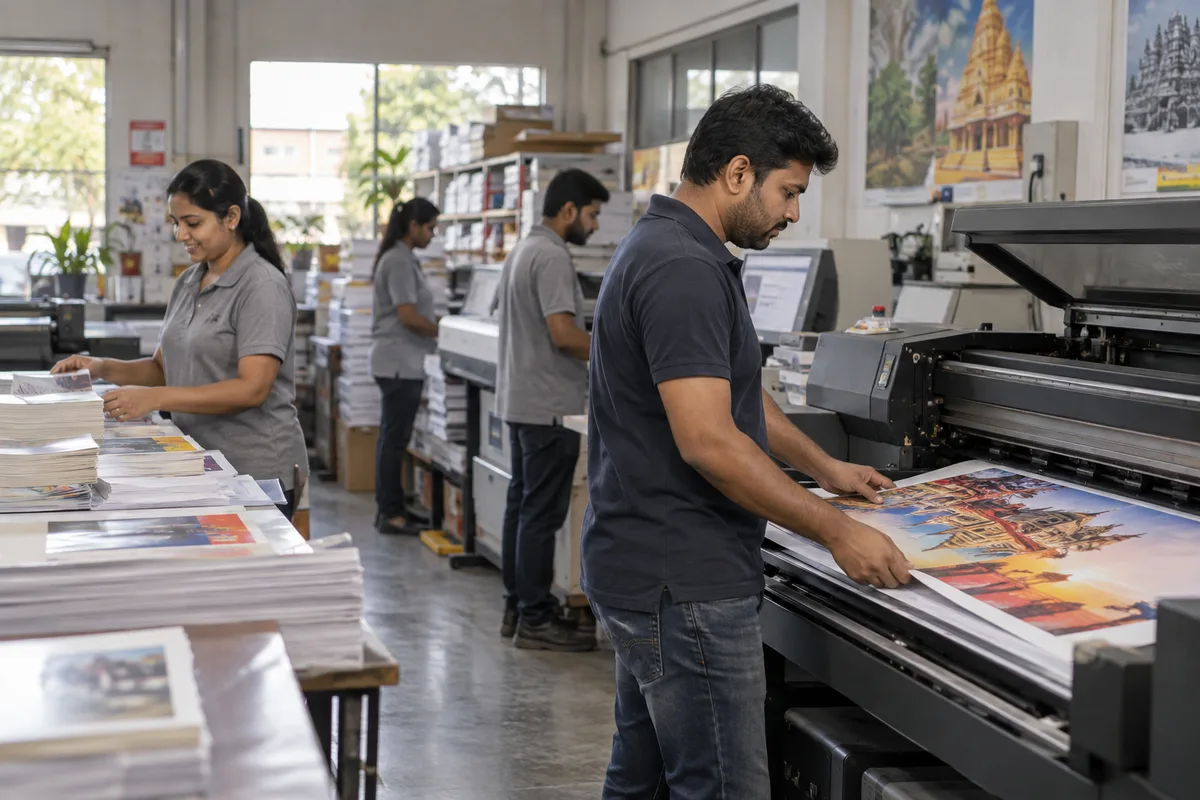
What buyer persona means
A buyer persona is a plain description of the kind of customer who actually buys from you. It includes what they search, what worries them and who else they ask before deciding. GullySales builds this from real enquiries and past sales rather than a generic template, then uses it to write every page and advert.
Also for printing businesses
- Digital marketing for printing businesses
- Buyer journey mapping for printing businesses
- SEO for printing businesses
- PPC ads for printing businesses
- Lead generation for printing businesses
- Reputation management for printing businesses
- Local SEO for printing businesses
- Branding and identity for printing businesses
Sales and marketing for printing businesses, the overview.
Last updated 5 Oct 2026.
For printing businesses
Where it usually goes wrong, and what we would do.
“The office manager and the brand owner want different things”
An office manager reordering stationery wants the same result as last time and no chasing. A founder launching a product wants advice on board, lamination and finish. A single pitch for both reads as generic to each, and neither calls back.
“A wedding family buys under a date, not under a budget alone”
The family choosing invitations is working backwards from a ceremony and a long guest list. They want to hold a sample, see the proof early and know the cards will arrive before the first function. Price comes up after that reassurance.
“The person who enquires is not always the person who approves”
A marketing executive asks for a banner quote, but a director signs off the spend. A persona that names both tells you what the executive needs to forward: a clear rate card, a sample photograph and a stated delivery date they can show upward.
“A reseller or event planner is a repeat buyer in disguise”
An event planner or an advertising agent orders for their own clients and wants a printer they can brief in a message. They value fast proofs and consistent colour more than a lower rate on one job, which makes them worth a persona of their own.
What we do
What we deliver for printing businesses.
Every deliverable, what it covers for you, and the result it is there to produce. Nothing here is an extra.
Persona sheets by buyer type
One short sheet each for the office stationery buyer, the packaging buyer, the wedding family, the event planner and the signage buyer, built from the jobs you have actually done.
Result: You can read a sheet and say who it describes among your regulars.
Order-history review
A look through past orders and quotes to see who asked, what they bought, what they asked before buying and which enquiries went quiet.
Result: Each persona rests on real jobs, not on assumption.
Question lists for each persona
The questions each buyer type asks before ordering, such as stock, finish, proof, minimum run and delivery date, written out with the answer your shop gives.
Result: Your team replies to the same question in the same way.
Persona-matched page and message copy
Service page sections and WhatsApp replies reworded for the buyer they are meant for, with the sample photographs that buyer would want to see.
Result: A packaging buyer and a card buyer land on different wording.
A short intake question set
Three or four questions the front desk asks on the first call or message to place the caller in the right persona and note it against the enquiry.
Result: Every enquiry in your register carries a buyer type.
How the result is measured
- Enquiry match to persona
- Conversion rate by persona
- Content aligned to persona
Recorded as a baseline before work starts, so every later report has an honest comparison.
Who is asking
The buyers behind a print enquiry and what each wants to see first.
- Office manager reordering stationery
- Wants the same letterhead and envelope as last time, a price on the same terms and a delivery date they can tell their boss.
- Brand owner launching a carton
- Asks about board, finish, die cost and minimum run, and wants a sample of a similar job before approving any money.
- Family printing wedding cards
- Asks for the date of delivery before the price, wants to see paper and foil on real cards and brings text in two languages.
- Event planner buying banners and standees
- Buys on the event date, wants a rate that holds for repeat orders and needs installation or delivery to the venue.
- Designer specifying print for a client
- Wants file requirements, paper swatches and a press that follows a proof, and will send the client's work if it is handled well.
- Purchase officer in a company
- Needs a written quotation, a delivery commitment and a contact who stays reachable until the invoice reaches accounts.
Who it is for
This is written for these printing businesses.
- Commercial offset printing businesses
- Digital and quick-print shops
- Packaging and label printing businesses
- Large format and signage printers
- Wedding and event stationery printers
- Corporate stationery and print suppliers
- Textile and garment printing businesses
- Print-on-demand and personalised merchandise printers
Not for
It is not the right fit if.
- Your order history is not recorded by customer type, so the personas would describe imagined buyers.
- The shop prints only for one regular client and has no other buyer type to describe.
How it works
How the buyer persona work runs
The work itself, in order. How an engagement starts, from your brief to a written scope, is set out on our method page.
- 1
Understand the current view
We start with how your team currently describes the customer, since the gap between belief and reality is the finding itself.
- 2
Audit past enquiries and sales
We look at recent enquiries and closed deals to see who actually bought, not who was assumed to buy.
- 3
Interview customers and staff
Structured conversations with recent buyers, held as talk about the last purchase and not a questionnaire. We ask what happened before they called, who else was involved and what they compared. Customers agree before we contact them, and their answers are reported without names.
- 4
Build the personas
Findings are written into short, usable persona documents rather than a long report.
- 5
Apply to your marketing
We show where each persona should change a page, an ad or a script you already have. The sales team reads the drafts and says which ring true. A persona they do not recognise is rewritten.
Where this fits
Three pieces of sales work, in this order.
This work sits inside sales process design, at stage 0, foundation. The audit comes before it, and sales management keeps it running.
Step 1
Sales audit
Find where deals are being lost and what to fix first.
Start here if you cannot say where orders are lost.
Step 2 · you are here
Sales process design
One written way to sell, from first enquiry to repeat order.
Start here if every salesperson sells differently.
Step 3
Sales management
A target, a review routine and someone who owns the number.
Start here if the team has targets and no routine.
FAQ
Questions owners ask before they call.
Not here? More answers, or ask on WhatsApp.
How many personas does a print shop need?
Where do the details of a persona come from?
Is a persona a customer profile of one named person?
Which persona should the shop write for first?
How much does it cost?
How long is the contract?
How soon will we see results?
Who will actually do the work?
What do you need from us?
What if we are not happy with the work?
From the blog
Further reading for printing businesses.
 6 min read · 18 Aug 2026Why your business is growing but profit is notRevenue rising while profit stays flat usually means discounts, the wrong customers or an uncalculated acquisition cost, all visible in your own records.
 7 min read · 18 Aug 2026How to get printing orders that repeat every monthPrinting orders come from local searches, corporate and institutional buyers who reorder, and fast quotes. Pick the jobs you print best, show prices, and chase the reorder before the customer runs out.
 6 min read · 8 Apr 2025How to create a sales process for a small businessA sales process is the stages a real order already passes through, each with what must be true before a deal can leave it, reviewed weekly.
More for printing businesses
Everything else we would do for you.
Closest to this: strategy and research
Also for printing businesses
Or start from the overview: sales and marketing for printing businesses.
Your next practical step
Tell us what you are trying to grow, and we will read it before we call.
Eight short steps, mostly taps. Skip anything you would rather answer on the call.