Printing businesses · Review generation
Ask when the carton is open and the colour has come out right.
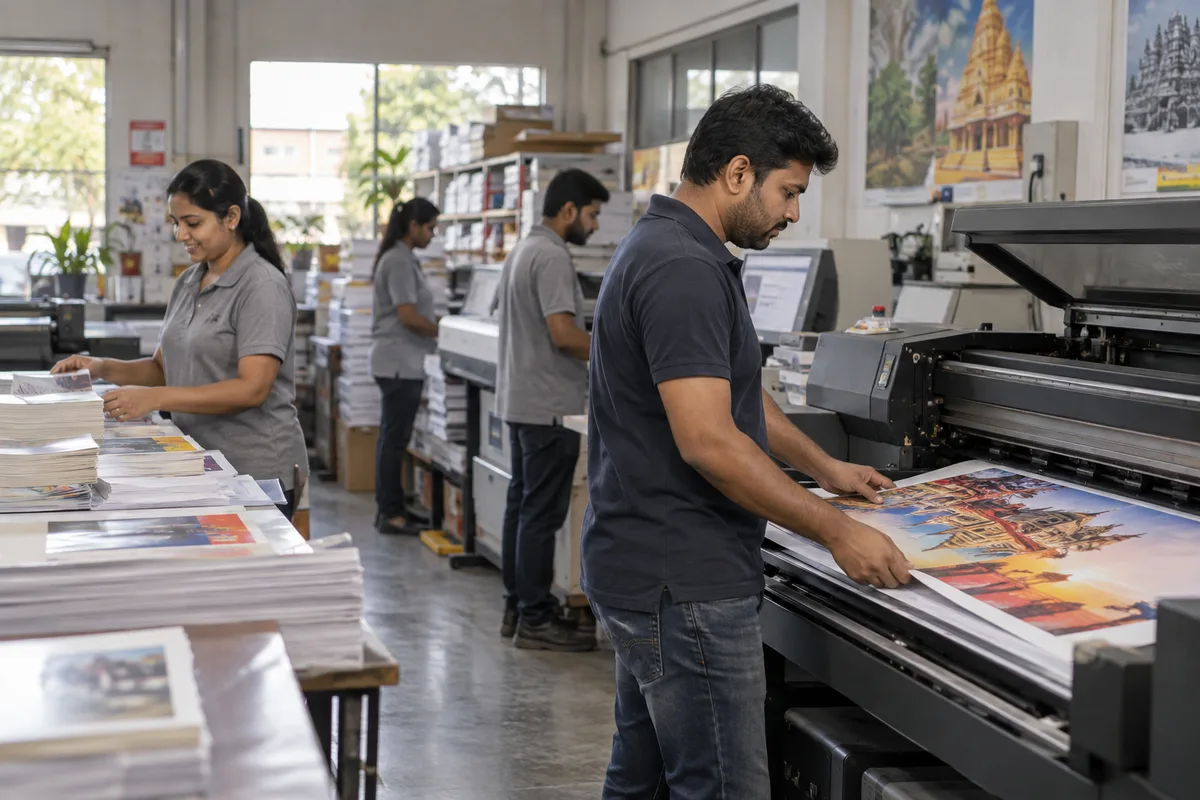
Getting reviews written is a separate job from replying to the ones you have. In printing the moment is delivery, when the customer opens the box and sees the job. GullySales sets the moment, decides who asks, and gets the customer to put a photograph of the printed work next to the words.
Scope, fee, reporting and term are agreed in writing after we have read your brief and spoken to you.
What review generation means
Review generation is the routine of asking satisfied customers to leave a Google or platform review at the moment they are happiest, rather than hoping they remember later. GullySales builds the request into your existing follow-up steps and tracks how many turn into a review.
Also for printing businesses
- Reputation management for printing businesses
- SEO for printing businesses
- PPC ads for printing businesses
- Lead generation for printing businesses
- Digital marketing for printing businesses
- Local SEO for printing businesses
- Branding and identity for printing businesses
- Social media marketing for printing businesses
Sales and marketing for printing businesses, the overview.
Last updated 5 Oct 2026.
For printing businesses
Where it usually goes wrong, and what we would do.
“Ask at delivery, with the carton open”
The customer is holding the cards, the label is on the bottle, the invitation looks the way the family hoped. Ask there. Two days later the job is in a cupboard and the feeling has gone.
“A corporate buyer will not post a review, but will take a call”
Purchase departments do not write on Maps. What they will do is speak to another company that asks about you, or let their marketing person say a line about the packaging. Collect those as references and stop waiting for stars that are never coming.
“Nobody can judge print from a star rating”
Ask for a photograph of the finished job, because a picture of a laminated box or a foiled wedding card does the selling that five stars cannot. It also shows the finishes you want more work in.
What we do
What we deliver for printing businesses.
Every deliverable, what it covers for you, and the result it is there to produce. Nothing here is an extra.
The ask written into the delivery routine
What the delivery boy or the counter says when the job is handed over, with the link on the delivery challan so nobody has to remember it.
Result: The request reaches the customer while the job is in their hands.
Prompts that get the job type named
Short lines suggesting the customer mention what was printed, the finish and the quantity, so the review reads label printing or wedding cards, not good service.
Result: Reviews carry the words your next customer searches for.
A photograph request the customer will actually act on
A polite ask for a picture of the printed job with the review, with permission taken so you can use the same picture in your own portfolio.
Result: Your reviews show the print quality instead of describing it.
A reference list built from corporate accounts
Buyers who agreed to speak to a prospective customer, recorded with what they would speak about, kept for the accounts that will never post publicly.
Result: You have proof for the buyers who ignore review sites.
Reply wording for a colour complaint
A ready reply for the commonest bad review in this trade, referring to the proof that was approved, written calmly and agreed before you need it.
Result: A colour argument reads as a shop that documents its work.
Review counts kept by job type
New reviews split between visiting cards, packaging, wedding stationery and large format, measured against the number recorded before the work began.
Result: You can see which jobs bring reviews and which never do.
How the result is measured
- Reviews received
- Average rating
- Response rate to requests
Recorded as a baseline before work starts, so every later report has an honest comparison.
Asking for reviews the right way
In a print shop the ask follows the proof: whoever approved the colour is whom you ask.
- The person who signed the proof
- Ask whoever approved the proof, since they chose the paper, the finish and the foil and can describe them. Keep the signed proof for any later colour dispute.
- Wedding card collection
- When the family collects invitations, ask the person who ordered them, and ask them to name the paper or the foil.
- The second order
- At a reorder of a carton or label, ask the packaging manager. A repeat order says more than a first delivery.
- The counter customer
- On a quick-print job, put a code on the bag or the receipt where the customer collects the work.
- Signboards and flex
- After a board is installed, send the link with a photograph of the board in place and ask the owner to add one of their own.
- Logo permission
- Ask before any customer's logo or job goes into your portfolio. Many corporate buyers say no.
Who it is for
This is written for these printing businesses.
- Commercial offset printing businesses
- Digital and quick-print shops
- Packaging and label printing businesses
- Large format and signage printers
- Wedding and event stationery printers
- Corporate stationery and print suppliers
- Textile and garment printing businesses
- Print-on-demand and personalised merchandise printers
Not for
It is not the right fit if.
- Colour and date complaints are still common, and asking for reviews would bring them in public.
- Your buyers are corporate accounts that do not post reviews, so a review ask would suit only the walk-in customer.
How it works
How the review generation work runs
The work itself, in order. How an engagement starts, from your brief to a written scope, is set out on our method page.
- 1
Find the moment to ask
We walk through one customer's visit with you and pick the point where the job is done and the customer is still in front of you or holding the phone.
- 2
Read your current reviews
We read every review you have, count how many were answered, and note what customers praise in their own words. We also check that your name, address and phone on Google match your signboard.
- 3
Set up the ask
Link, QR code, message wording and a short briefing for the team. We write down what staff must never do: offer a discount, choose who to ask, or post a review themselves.
- 4
Answer every review
Each incoming review is answered by the routine set down in writing. A complaint is answered by the person who can fix it, with your approval where you want it.
- 5
Count and adjust
We count how many customers were asked and how many reviewed. If few reply, we move the moment or the person asking before touching the wording.
Where this fits
Three pieces of sales work, in this order.
This work sits inside sales process design, at stage 7, after the sale. The audit comes before it, and sales management keeps it running.
Step 1
Sales audit
Find where deals are being lost and what to fix first.
Start here if you cannot say where orders are lost.
Step 2 · you are here
Sales process design
One written way to sell, from first enquiry to repeat order.
Start here if every salesperson sells differently.
Step 3
Sales management
A target, a review routine and someone who owns the number.
Start here if the team has targets and no routine.
FAQ
Questions owners ask before they call.
Not here? More answers, or ask on WhatsApp.
Should we ask for a review when payment is still pending?
A customer says the colour does not match what they saw on screen. What do we reply?
Should we ask the person who ordered or the designer who made the artwork?
What about customers in another city who ordered through a courier?
How much does it cost?
How long is the contract?
How soon will we see results?
Who will actually do the work?
What do you need from us?
What if we are not happy with the work?
From the blog
Further reading for printing businesses.
 6 min read · 18 Aug 2026Why your business is growing but profit is notRevenue rising while profit stays flat usually means discounts, the wrong customers or an uncalculated acquisition cost, all visible in your own records.
 7 min read · 18 Aug 2026How to get printing orders that repeat every monthPrinting orders come from local searches, corporate and institutional buyers who reorder, and fast quotes. Pick the jobs you print best, show prices, and chase the reorder before the customer runs out.
 6 min read · 8 Apr 2025How to create a sales process for a small businessA sales process is the stages a real order already passes through, each with what must be true before a deal can leave it, reviewed weekly.
More for printing businesses
Everything else we would do for you.
Closest to this: reputation
Also for printing businesses
Or start from the overview: sales and marketing for printing businesses.
Your next practical step
Tell us what you are trying to grow, and we will read it before we call.
Eight short steps, mostly taps. Skip anything you would rather answer on the call.