Steel rolling mills and TMT bar makers · Content marketing
Answer what a builder and a mason ask before they ask for your brand.
Content marketing for a TMT bar mill is writing and filming the answers buyers look for before choosing a brand: what to check on delivery, what a test certificate says, what a grade means. GullySales plans each piece with your quality team and ties it to a dealer or rate enquiry.
Scope, fee, reporting and term are agreed in writing after we have read your brief and spoken to you.
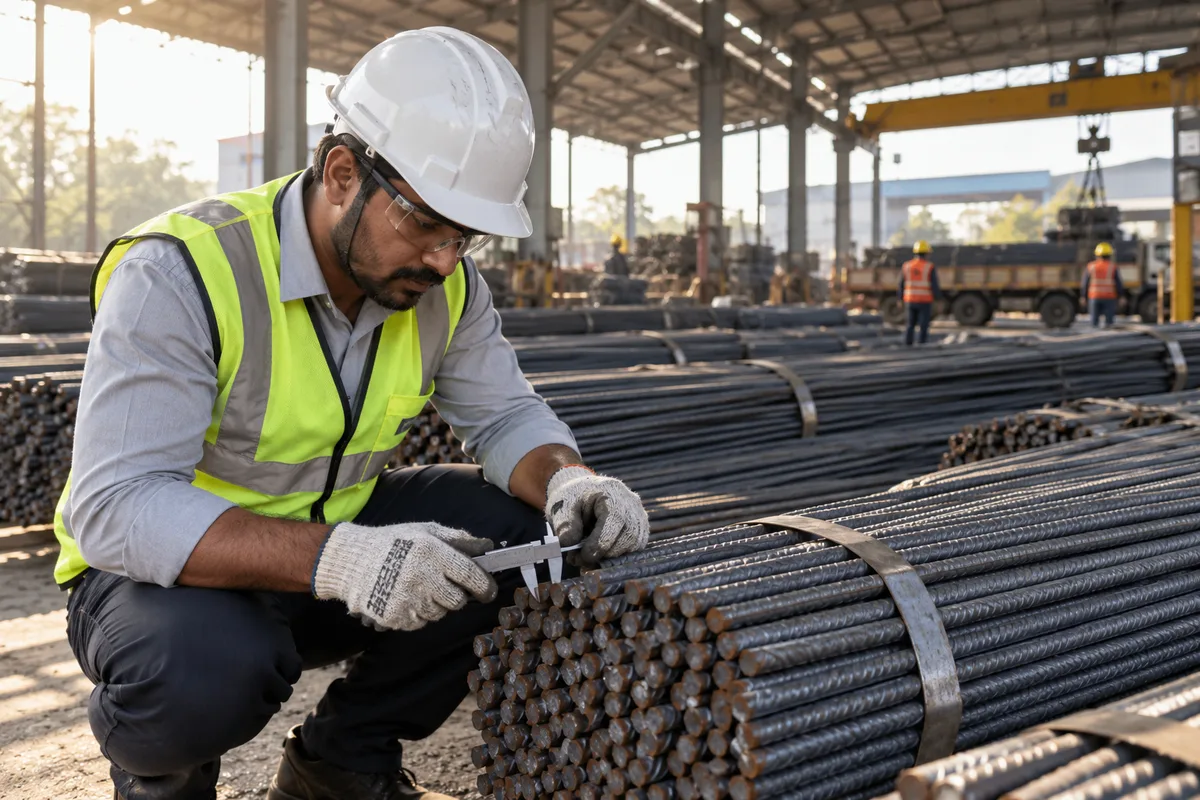
What content marketing means
Content marketing is writing articles, guides and pages that answer the questions buyers search before they are ready to enquire. This makes your business visible and trusted before the first call. GullySales plans this content from the first conversation onward, choosing topics that match real search demand rather than guesses.
Also for steel rolling mills and TMT bar makers
- Social media marketing for steel rolling mills and TMT bar makers
- SEO for steel rolling mills and TMT bar makers
- PPC ads for steel rolling mills and TMT bar makers
- Lead generation for steel rolling mills and TMT bar makers
- CRM for steel rolling mills and TMT bar makers
- Email marketing for steel rolling mills and TMT bar makers
- Sales process for steel rolling mills and TMT bar makers
- Buyer persona for steel rolling mills and TMT bar makers
Sales and marketing for steel rolling mills and TMT bar makers, the overview.
Last updated 13 Nov 2026.
For steel rolling mills and TMT bar makers
Where it usually goes wrong, and what we would do.
“The people who ask have no good answer to find”
A house builder searches how to check TMT bars and finds a rival's advert and a forum thread. A clear page from a mill that explains it stands out.
“Technical content needs your own quality head”
A page about grades or testing written without the quality head invites wrong claims. The quality head should read each piece, and say what can and cannot be written.
“Dealers need material too”
A dealer wants a one-page sheet to show a builder in the yard. Few mills write one, and the dealer who has it recommends that brand.
What we do
What we deliver for steel rolling mills and TMT bar makers.
The work available for this need. We agree the deliverables and responsibilities for your engagement in writing.
A set of articles on buying and checking TMT bars
Plain pieces on what to check at delivery, how to read a test certificate and what the grade names mean, reviewed by your quality head.
Result: A buyer finds a mill that explains instead of selling.
A dealer's pocket sheet
A one-page sheet for dealers to show builders, with the brand, grades, how to check a lot and a number to call.
Result: The dealer has something to hand a builder.
A short film of the mill and its testing
A phone or studio film of the rolling line, the sampling and the testing room, shot with permission and with safety rules respected.
Result: A purchase head sees the mill without travelling.
A page for each project you have supplied
Where the bars went, the grades and sizes and the dispatch route, shown only with the buyer's agreement.
Result: A new builder sees where your bars have been used.
Content tied to enquiries
Every piece ends with one action, such as a rate request or a dealership form, and each is tagged so you can count the enquiries.
Result: You can say which pieces bring orders.
How the result is measured
- Pages published
- Organic traffic
- Enquiries from content pages
Recorded as a baseline before work starts, so every later report has an honest comparison.
Questions buyers ask first
The questions a builder, a mason and a dealer ask before choosing a bar, and the piece that answers each.
- How do I check TMT bars when the lorry arrives?
- A page with photographs of the brand rolled on the bar, the bundle tag, the weight check and the documents. Show what the buyer can see, not what a lab sees.
- What does Fe 500D mean?
- Explain the grade name in plain words, say which structures a structural engineer chooses it for, and send readers to their engineer for the grade of their own building.
- What is a mill test certificate and what is on it?
- Show a sample with the heat number, the tests and the lot marked. Explain how a buyer matches the certificate to the lot that arrived.
- Why do TMT bar rates differ between brands?
- Write honestly about what changes a rate: the raw material, the process, the licence, the freight. Do not claim your rate is the lowest.
- How do I become a TMT bar dealer?
- A page for dealers on what a mill expects, what it supplies and how to apply. Add a short form asking district, godown and current business.
- Which brand do engineers trust for a house?
- Do not answer with a claim. Write about what an engineer looks for in a brand and show your documents. Let the engineer's own page of specifications do the rest.
Who it is for
This is written for these steel rolling mills and TMT bar makers.
- TMT bar mills on the integrated or induction furnace route
- Re-rolling mills working from billets
- Mills selling through a dealer and distributor network
- Mills selling directly to builders and infrastructure contractors
- Mills making angles, channels and flats
- Wire rod and binding wire makers
- Regional brands sold within one or two states
- Mills supplying precast yards and project sites
Not for
It is not the right fit if.
- Your quality head has no time to read a technical piece before it goes out, and a wrong line on bars would hurt you with engineers.
- You have no certificate, plant photograph or test report to show, so articles on quality would claim what the page cannot prove.
Before you decide
Agree the work. Know how to judge it.
Content marketing for steel rolling mills and TMT bar makers: use these checks to prepare, choose the scope, and review what changes.
Bring the right evidence
Bring questions from sales calls and examples of objections that delay a decision. Choose a subject expert who can check the substance, and identify evidence that can be published.
Make the scope clear
Agree the reader, buying question, format, and distribution route for each piece. Set the approval process and distinguish new research from rewriting material you already have.
Check the work in use
Ask a colleague to use the draft in a real buyer conversation. It should answer the question, support its claims, and make the next step clear without requiring a sales pitch to explain it.
Know when to change course
If the same unanswered question appears in several articles, improve the strongest page before commissioning another. More words are not a substitute for missing evidence.
These are discussion points, not a fixed package. GullySales confirms the deliverables, responsibilities, fee, and term in writing after reading your brief and speaking with you.
Before we start
What to have ready before the work starts.
The records, access and decisions this work needs from steel rolling mills and TMT bar makers. Anything missing is noted in the written scope, with who will supply it.
- The ten questions callers keep asking
- A list from the sales head, in the callers' own words. They set the topics. Without them we pick topics from search tools, and risk writing on subjects no buyer cares about.
- Access to the laboratory and testing bay
- We need a visit to see and photograph the tests. Permission and a guide are enough. When the lab is closed to visitors, the guide will lack the pictures that make the claims believable.
- A technical reader with time to review
- The quality head or an engineer must read drafts and return corrections. A late review delays publication. If nobody is available, we write only on topics that need no technical claims.
- Clear photographs of your plant and product
- Photos of the rolling line, bundles and tags in good light. A phone is fine if steady. Without them, we use stock images of steel, which buyers recognise and dismiss.
- A consenting builder for one case page
- A customer who agrees in writing to a site photograph and a line saying which bars you supplied. Without consent the page cannot be written, and we move to a plant and product page instead.
How it works
How the content marketing work runs
The work itself, in order. How an engagement starts, from your brief to a written scope, is set out on our method page.
- 1
Ask the mason and the dealer their questions
We start with the questions that reach your sales team on the phone: how to check a bar, why two bars of the same grade differ, how to read a certificate. Your sales head lists the ten that come up again and again. We add what a mason says at a site. You choose which questions the mill is willing to answer in public and which are left for the call.
- 2
Agree the technical reviewer
No technical line is written without a named person at the mill to read it. We agree who signs off, and what they will not allow, such as comparing your bars with a named rival or quoting a limit without the standard. You decide whether the reviewer is the quality head or an outside engineer.
- 3
Draft the first buying guide from the lab
We visit the laboratory or testing corner and watch a bend, rebend and tensile test being done. Photographs and the quality head's explanations become a plain guide on how to check a TMT bar. We write for a mason and a builder, not for a textbook, and the reviewer corrects the draft.
- 4
Build the dealer's pocket sheet with the sales team
Dealers need a sheet they can show a customer: grades, sizes, certificate and how to tell your bar at the yard. We draft it with your sales team and print it in the languages your dealers speak. Dealers' feedback from the first handful of copies changes the second version.
- 5
Photograph one supplied project with consent
With the builder's written permission, we photograph a site where your bars were used and write what was supplied and when, with nothing about structure or performance. The builder reads the page first. If consent is withheld, the project stays unnamed. You decide whether the contractor is credited.
- 6
Tie each piece to the enquiries it brought
Each article, sheet and film carries its own phone link or form tag, so calls can be matched to content. We read the figures against the calls, rate requests and dealer conversations noted at the beginning. You see which pieces led to a conversation, and we retire those that bring readers but no calls.
Where this fits
Three pieces of sales work, in this order.
This work sits inside sales process design, at stage 0, foundation. The audit comes before it, and sales management keeps it running.
Step 1
Sales audit
Find where deals are being lost and what to fix first.
Start here if you cannot say where orders are lost.
Step 2 · you are here
Sales process design
One written way to sell, from first enquiry to repeat order.
Start here if every salesperson sells differently.
Step 3
Sales management
A target, a review routine and someone who owns the number.
Start here if the team has targets and no routine.
FAQ
Questions owners ask before they call.
Not here? More answers, or ask on WhatsApp.
Who writes the technical pieces?
Our staff are good engineers but cannot write. Is that a problem?
Which languages should we write in?
Is video better than text for our buyers?
Should the articles mention rival mills by name?
How long should the technical articles be?
How much does it cost?
How long is the contract?
Who will actually do the work?
What do you need from us?
More for steel rolling mills and TMT bar makers
Related work to consider.
Closest to this: content and social
Also for steel rolling mills and TMT bar makers
- SEO for steel rolling mills and TMT bar makers
- PPC ads for steel rolling mills and TMT bar makers
- Lead generation for steel rolling mills and TMT bar makers
- CRM for steel rolling mills and TMT bar makers
- Email marketing for steel rolling mills and TMT bar makers
- Sales process for steel rolling mills and TMT bar makers
Or start from the overview: sales and marketing for steel rolling mills and TMT bar makers.
Your next practical step
Tell us what you are trying to grow, and we will read it before we call.
Eight short steps, mostly taps. Skip anything you would rather answer on the call.