Steel rolling mills and TMT bar makers · Website
Build a website where a purchase head can check your licence and ask for a rate in a minute.
A website for a TMT bar mill is a set of pages that show the grades you roll, the documents behind them and the way to ask for a rate or a dealership. GullySales builds it around product pages and proof, with the domain and content in your name.
Scope, fee, reporting and term are agreed in writing after we have read your brief and spoken to you.
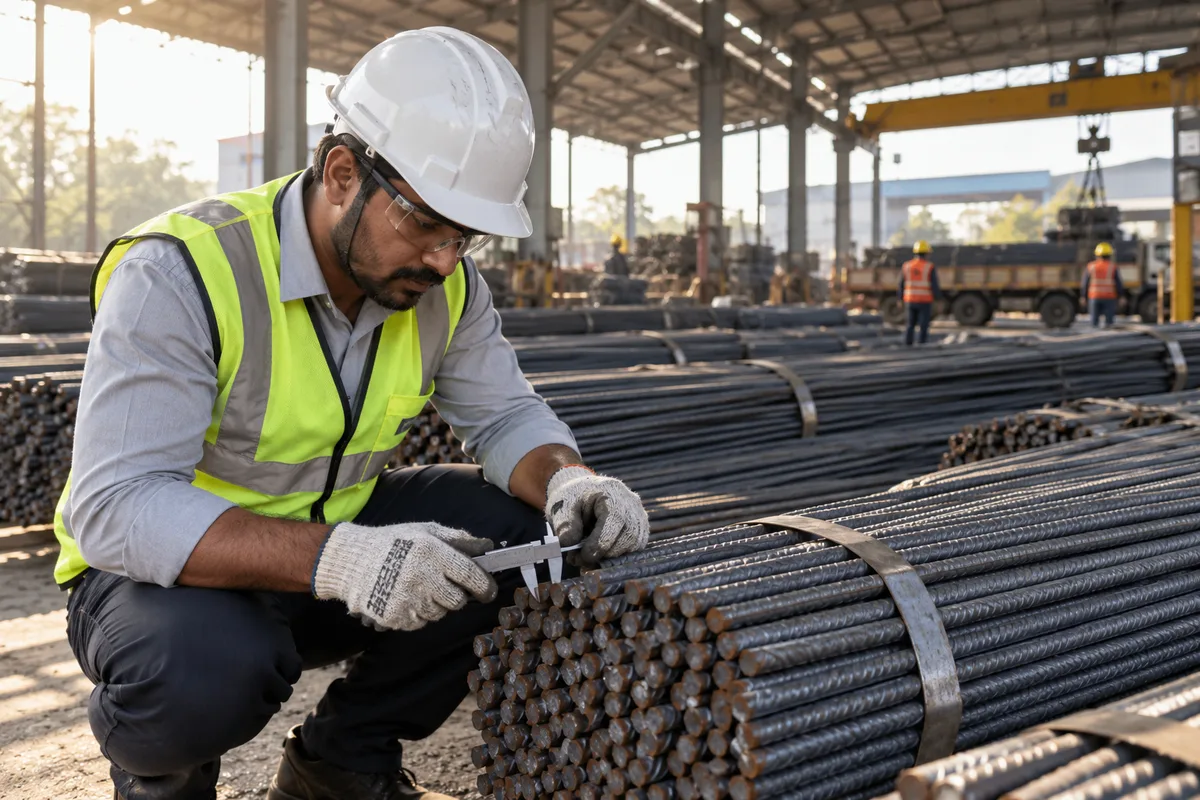
What website means
A website is the page a customer lands on after searching, clicking an advert or scanning a code, and it decides whether they call or leave. GullySales builds and maintains sites that load quickly, explain the offer plainly and make the enquiry form or phone number easy to find.
Also for steel rolling mills and TMT bar makers
- SEO for steel rolling mills and TMT bar makers
- PPC ads for steel rolling mills and TMT bar makers
- Lead generation for steel rolling mills and TMT bar makers
- CRM for steel rolling mills and TMT bar makers
- Content marketing for steel rolling mills and TMT bar makers
- Email marketing for steel rolling mills and TMT bar makers
- Sales process for steel rolling mills and TMT bar makers
- Buyer persona for steel rolling mills and TMT bar makers
Sales and marketing for steel rolling mills and TMT bar makers, the overview.
Last updated 13 Nov 2026.
For steel rolling mills and TMT bar makers
Where it usually goes wrong, and what we would do.
“Brochure language hides the facts”
Pages praising strength and trust tell an engineer nothing. The engineer wants the grade, the standard, the licence and the test certificate.
“The dealer cannot find the terms”
A stockist wants to know what the mill expects and gives. If the site has no page for the stockist, the stockist rings and gets whatever the person who answers says.
“The plant is never shown”
A purchase head considering a new mill wants to see the rolling line, the testing room and the yard. Most sites show a logo and a stock photograph.
What we do
What we deliver for steel rolling mills and TMT bar makers.
The work available for this need. We agree the deliverables and responsibilities for your engagement in writing.
A product catalogue by grade and size
A page for each grade with sizes, lengths, bundle details and the standard, laid out so an engineer can read it on a phone.
Result: A buyer finds the product needed in one click.
A certificates and licence page
The BIS licence, sample mill test certificates and plant approvals, with a note on how to match a certificate to a lot. Keep it current.
Result: An engineer can verify the brand without calling.
A plant page with photographs and a short film
The rolling line, the testing room and the yard, shot with permission and with safety rules respected.
Result: A purchase head sees the mill to buy from.
A dealership page and a dealer locator
Terms for new dealers, a form, and a map of your current dealers by district, so a builder finds the nearest one.
Result: Dealers apply and builders find a stockist.
A rate request button that opens WhatsApp
A button on every page that opens a message with the size, quantity and town to fill in, going to a number that is answered.
Result: A rate request is one tap away.
How the result is measured
- Page load time
- Bounce rate
- Enquiries from the website
Recorded as a baseline before work starts, so every later report has an honest comparison.
What the page must show
What a dealer, an engineer and a purchase head look for on a mill's website, and how to show it.
- The grades and sizes you roll
- A table with grade, diameter range, lengths and the standard each is made to. An engineer checks the table against the drawing before reading anything else.
- The BIS licence and test certificates
- Show the licence as issued and a sample certificate with the lot marked. Keep both current, and remove a document the day it expires.
- The mill itself
- Photographs of the rolling line, the testing room, the yard and the dispatch gate, with your location named. State your own capacity from your records, if you choose to.
- Where your dealers are
- A locator by district with each dealer's name and phone, and consent from each dealer. A builder wants the nearest yard, not a call to the head office.
- A way to ask for a rate
- A button that opens WhatsApp with size, quantity and town to fill in, plus a form for dealership. Check on a phone that both reach someone who answers.
- Projects you have supplied
- A list of projects with the grade and the buyer's permission to name them. A purchase head trusts a mill that has supplied a project the purchase head knows.
Who it is for
This is written for these steel rolling mills and TMT bar makers.
- TMT bar mills on the integrated or induction furnace route
- Re-rolling mills working from billets
- Mills selling through a dealer and distributor network
- Mills selling directly to builders and infrastructure contractors
- Mills making angles, channels and flats
- Wire rod and binding wire makers
- Regional brands sold within one or two states
- Mills supplying precast yards and project sites
Not for
It is not the right fit if.
- Your BIS licence and test certificates are not in hand, so a site meant to prove quality would have empty pages where proof belongs.
- The mill relies wholly on a trade portal listing and cannot answer a site enquiry, so a new site would add a second inbox nobody watches.
Before you decide
Agree the work. Know how to judge it.
Website development for steel rolling mills and TMT bar makers: use these checks to prepare, choose the scope, and review what changes.
Bring the right evidence
List the pages that support a buying decision and the actions visitors must complete. Keep examples of failed forms, unclear product information, and questions your team answers repeatedly.
Make the scope clear
Agree the page list, content ownership, integrations, and who controls the domain and hosting. Include redirects and existing search traffic in a redesign brief, before changing addresses.
Check the work in use
Complete a real enquiry journey on a phone and a laptop. Check that the confirmation appears, the enquiry reaches the right person, and tracking records the action once.
Know when to change course
If visitors can enquire but the team does not follow up, start with the sales handover. A larger website will not resolve that delay.
These are discussion points, not a fixed package. GullySales confirms the deliverables, responsibilities, fee, and term in writing after reading your brief and speaking with you.
Before we start
What to have ready before the work starts.
The records, access and decisions this work needs from steel rolling mills and TMT bar makers. Anything missing is noted in the written scope, with who will supply it.
- Domain name and hosting login
- Access to the domain registrar and any current host. They decide where the new site goes. Without them we cannot publish or redirect old addresses, and old links may break. If the domain was bought by a former employee or an earlier agency, we begin recovery at once, since the transfer can take longer than the build.
- BIS licence and recent test certificates
- Clear scans or originals that we can photograph. Pages that show them build trust. If missing, the licence page waits and a visitor may doubt the mill.
- Permission to photograph the plant
- Agreement on which areas outsiders can be shown, and a guide for the visit. Without permission we have only stock images, which buyers recognise as such.
- Dealer terms you are willing to publish
- A short statement of districts open, support offered and how a dealer applies. The owner decides how much to show. If left out, the dealer page is only a form with no reason to fill it.
- A person to receive the rate requests
- The one who answers the WhatsApp and phone on the site. Leave days need a back-up. If nobody is named, requests wait and the site looks inactive. A photograph of the cards on the desk is acceptable, so long as the number to answer is plain.
How it works
How the website work runs
The work itself, in order. How an engagement starts, from your brief to a written scope, is set out on our method page.
- 1
Photograph the plant and gather the certificates
We begin at the mill with a photo walk through the rolling line, the cooling bed, the bundling area, the laboratory and the dispatch yard. We collect the BIS licence and recent test certificates. You choose what outsiders may see. The pictures and papers become the page proof a purchase head looks for.
- 2
Sort the product range into a catalogue
With the quality head we list each grade, diameter and length and decide how to show it so a builder can find the right bar in a few moves. A table works better than a brochure. You tell us what is current and what is dropped, and we leave out anything you no longer roll.
- 3
Draft the dealer page with the sales head
The dealer needs to see terms in plain form: which districts are open, what support the mill gives, how orders and credit work, and how to apply. We write this with the sales head and mark what is negotiable. You approve any statement about margin or exclusivity before it appears. Dealers who have asked the sales head the same questions for years will see the answers on the page, and the sales head stops repeating them on every call.
- 4
Build the licence and certificates page
A single page holds the BIS licence, sample test certificates and the standards the mill works to, with the quality head confirming each caption. Images are compressed so the page opens on a site phone. You decide whether to show full certificates or extracts.
- 5
Connect the rate request to WhatsApp and phone
Every page carries a rate request button that opens a WhatsApp message with the product and page pre-filled, plus a click-to-call number. We test them on several phones and networks in your districts. You name the person who receives them, and we write the message that arrives.
- 6
Launch and compare with the old enquiry count
After the site goes live, we read the enquiries it produces against the figures noted before: calls, rate requests, dealership applications and lorries traced to the site. You see which pages were used and which ignored. We move or remove pages with no visits, and leave the working ones alone.
Where this fits
Three pieces of sales work, in this order.
This work sits inside sales process design, at stage 1, prospecting and lead generation. The audit comes before it, and sales management keeps it running.
Step 1
Sales audit
Find where deals are being lost and what to fix first.
Start here if you cannot say where orders are lost.
Step 2 · you are here
Sales process design
One written way to sell, from first enquiry to repeat order.
Start here if every salesperson sells differently.
Step 3
Sales management
A target, a review routine and someone who owns the number.
Start here if the team has targets and no routine.
FAQ
Questions owners ask before they call.
Not here? More answers, or ask on WhatsApp.
Is a profile on IndiaMART enough instead of a website?
Will dealers and masons want the site in a second language?
How heavy can our photographs and certificates be?
Who owns the domain?
Is a listing on a trade portal enough instead of our own website?
Who keeps the dealer page current when districts open or close?
How much does it cost?
How long is the contract?
How soon will we see results?
Who will actually do the work?
More for steel rolling mills and TMT bar makers
Related work to consider.
Closest to this: search and visibility
Also for steel rolling mills and TMT bar makers
- PPC ads for steel rolling mills and TMT bar makers
- Lead generation for steel rolling mills and TMT bar makers
- CRM for steel rolling mills and TMT bar makers
- Content marketing for steel rolling mills and TMT bar makers
- Email marketing for steel rolling mills and TMT bar makers
- Sales process for steel rolling mills and TMT bar makers
Or start from the overview: sales and marketing for steel rolling mills and TMT bar makers.
Your next practical step
Tell us what you are trying to grow, and we will read it before we call.
Eight short steps, mostly taps. Skip anything you would rather answer on the call.