Seafood exporters · Other
Get found by the importer who is choosing a new supplier this season.
An importer in Rotterdam, Dubai or Qingdao has lost a supplier to a rejected consignment, and a replacement is needed before the next container slot. The importer searches, checks two trade directories, asks a broker, and writes to five Indian plants.
Scope, fee, reporting and term are agreed in writing after we have read your brief and spoken to you.
In one paragraph
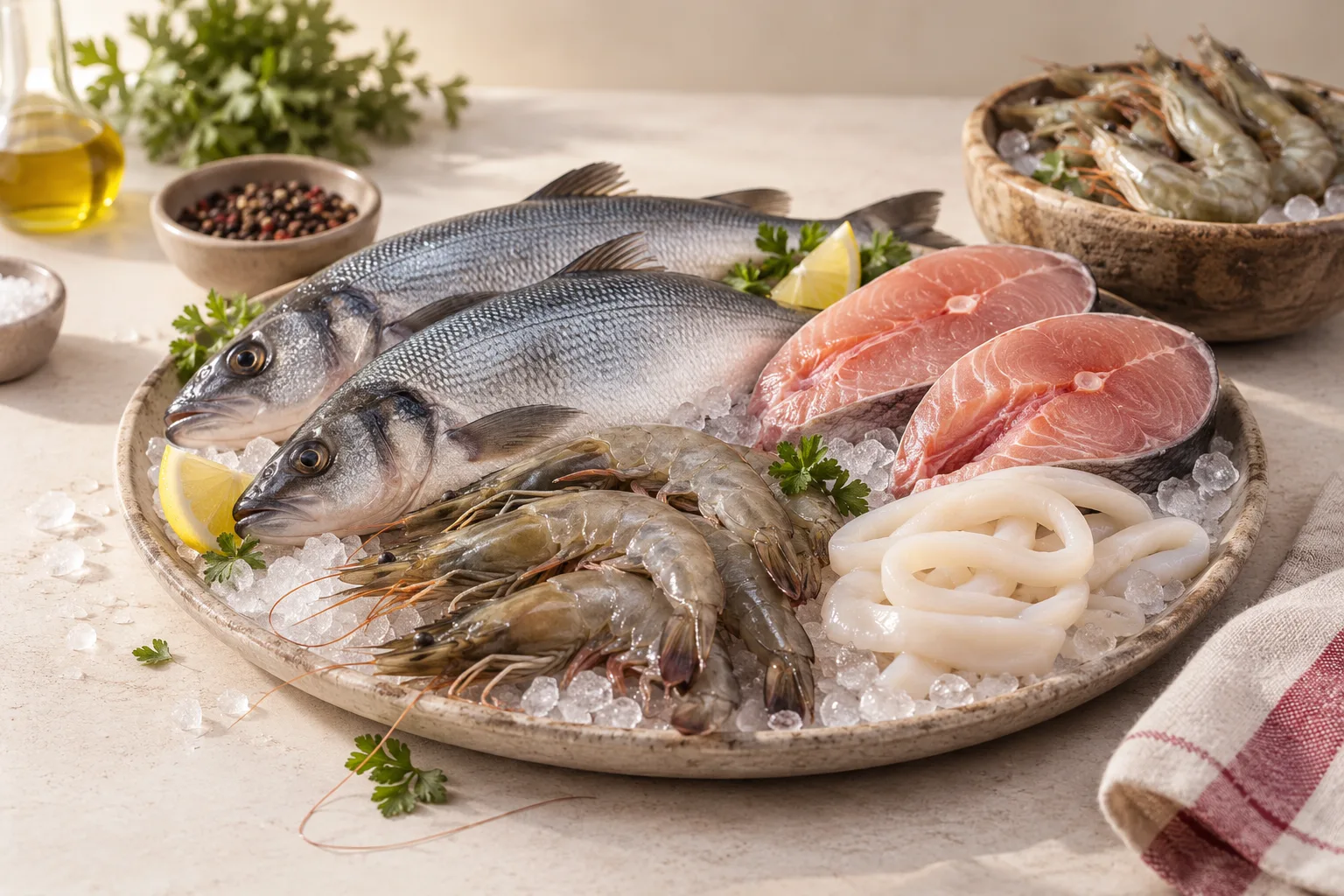
Seafood exporters ship frozen, chilled or dried fish and shellfish from Indian plants and landing centres to importers abroad. Marketing puts the plant in front of buyers who are shortlisting suppliers. Sales follows a sample request through audit and trial container towards a standing programme.
The exporter who replies with specification sheets, plant approvals and a sample plan in one email gets the second call. Some exporters are known only to the brokers and buyers they already trade with. The website is a company profile from years ago, the product list is a PDF with no species names an importer would search, and enquiries from trade fairs sit in a visiting-card bundle. New buyers do not arrive on their own, so someone has to find them and stay with each through samples and audits.
Last updated 18 Oct 2026.
How buyers decide
How seafood exporters are chosen.
An importer shortlists on three things before price comes up: whether the plant is approved for the destination market, whether the species and pack match what the importer's customers sell, and whether the exporter has shipped that product before without trouble. Approvals and audit reports are checked first, and they are checked per market, because the rules in the European Union, the United States, the Gulf and East Asia differ and change. Your compliance head knows which apply to you.
Buyers find exporters through trade fairs, directories, brokers, trade body member lists, LinkedIn and plain search for terms like frozen vannamei shrimp supplier India or cuttlefish exporter. A buyer who finds you asks for a price list and samples. That first reply decides whether the conversation continues.
The order itself follows a long cycle of sample, factory audit, trial container and then a standing programme. Each stage brings a different person on the importer side. The buyer, then the quality manager, then the owner. An exporter who knows who needs what at each stage can answer the right question at each stage, which a price list alone does not.
The problem
What usually goes wrong for seafood exporters.
What owners tell us on the first call, in their words.
“Our buyers all came through two brokers”
If either broker changes supplier, a large share of the year's containers goes with them, and we have no direct line to the importers.
“Our website lists products but no species, packs or market approvals”
An importer searching by species, size grade and pack type cannot tell from our page whether we can supply what the importer needs.
“Trade fair enquiries go cold within weeks”
We return from the show with a stack of cards, send one email to everyone, and the follow-up stops when the next shipment keeps us busy.
“Samples go out and nobody hears back”
We courier chilled or frozen samples at real cost, then wait. Nobody on our side asks the quality manager what the verdict was or what the next step is.
“Price enquiries arrive and we quote blind”
Catch costs move, the exchange rate moves, and the quote we send tells the buyer nothing about why we are a better choice than the next Indian plant.
“Audit reports and approvals are in a cabinet, not in front of buyers”
The documents that win a cautious importer exist, but they are not organised into something we can send in one email.
What we do
What we do for seafood exporters.
Everything included for seafood exporters.
Product and species pages for importers
One page per product line, written the way an importer searches: species, size grades, pack types, glazing and the destination markets you have shipped to. Each page ends with a plain route to ask for a specification sheet.
A plant and compliance pack
Your approvals, audit summaries, process description and quality system, sorted by destination market into one document your team can send without hunting through files. We lay out the pack; your compliance head checks every line.
Target importer lists by market
Lists of importers, wholesalers and brokers in the markets you want, with the person to write to at each. We build them from public directories, trade body lists and fair exhibitor lists.
Trade fair preparation and follow-up
Before the show, a list of buyers to meet and a one-page offer for each. After it, a record of every conversation and a follow-up note against each card.
A sample-to-order routine
A record that follows each importer from sample dispatch to quality feedback, trial container and standing programme, with a named person on your side for each step.
LinkedIn and email outreach to buyers
Short, specific messages to purchasing heads and quality managers at importers, based on what they sell, with a stated reason why your plant fits.
A market-by-market enquiry count
Enquiries by market and product, samples sent, trial containers and repeat orders, counted from your own records and sorted by destination.
How the result is measured
- Importer enquiries by market and product
- Specification sheets and samples requested
- Samples sent against trial containers booked
- Repeat orders from buyers found in the last year
- Share of volume that depends on a single broker
- Reply time to a new importer enquiry
Recorded as a baseline before work starts, so every later report has an honest comparison.
Every service, written for seafood exporters
Each has its own page: what it involves for seafood exporters, what you get, and what it is measured on.
- Lead generationFind importers who need a new supplier before the next container slot is booked.
- SEOWrite the species and pack pages an importer types into search before choosing a supplier.
- Social media marketingShow the plant to the sourcing head who has never visited it.
- Content marketingPublish what an importer's quality manager wants to read before the audit visit.
- Buyer personaKnow who at the importer asks what, from first sample to standing programme.
- CRMKeep every importer, sample and trial container in one record the whole team can read.
- Follow-up systemsMake sure no sample, quote or fair contact is left waiting for a reply.
- WhatsApp marketingUse WhatsApp for quick buyer and broker answers without losing the paper trail.
- Digital marketingPut the plant where importers look: search, directories, LinkedIn and a clear site.
- WebsiteBuild a site that answers the importer's first five questions before the call.
Worth a page and a campaign of their own
Frozen vannamei and black tiger shrimp · Whole and fillet finfish programmes · Squid and cuttlefish · Crab and lobster · Value-added and ready-to-cook lines · Private-label packing for importers · Dried and salted fish for Gulf and Asian markets · New destination markets for existing products
Priority campaigns
Campaigns for what seafood exporters most want to sell.
Each one planned around when your buyers decide, and measured against the baseline.
New-market introduction
A focused push into one destination market, with a landing page for that market's buyers, a list of named importers and a three-message email and LinkedIn sequence.
Post-trade-fair follow-up
Every contact from the fair gets a message that names what they asked about, plus a call to the ones that matter most.
Replacement-supplier campaign
Search and LinkedIn messages aimed at importers who are looking for a second or replacement source, positioned around your plant's audit record.
Private-label programme outreach
Outreach to supermarket chains and food-service importers who want packs under their own brand, with a clear description of your packing capability.
Broker and agent network
A short pack for overseas agents and brokers who place orders for several importers, with your range and approvals by market.
Beyond search
Where we reach buyers of seafood exporters, beyond Google.
Search matters, but it is rarely the only way this industry's buyers find a supplier.
Importers and wholesalers abroad
Lists built by destination market and product, with messages that mention the species and pack each buyer sells.
Overseas brokers and sourcing agents
The agent who places orders for several importers needs your current range and approvals in one forwardable pack.
Supermarket and food-service buyers
Retail chains and large caterers that source seafood under their own label, reached through the sourcing head and the quality team.
Trade fair visitors
A pre-show meeting list and a post-show follow-up for the overseas seafood fairs your team attends.
Trade bodies and member directories
Your listing in the export bodies and directories you belong to, checked for the product names and contact a buyer would look for.
Who it is for
This is written for these seafood exporters.
- Frozen shrimp exporters with their own processing plant
- Exporters of frozen and chilled finfish such as pomfret, seer fish and tuna
- Cephalopod exporters for squid, cuttlefish and octopus
- Dried and salted fish exporters
- Crab and lobster exporters, including live and chilled shipments
- Canned and value-added seafood exporters
- Merchant exporters who source from plants and sell under their own brand
- Exporters to the Gulf and South-East Asia who sell by the container to wholesalers
Not for
It is not the right fit if.
- You want a guaranteed Google ranking or a guaranteed number of leads. Nobody honest can promise either.
- You need enquiries by next week and have nobody to answer them.
- You want posts and reach reported, not enquiries and orders.
How it works
How the work runs for seafood exporters
The work itself, in order. How an engagement starts, from your brief to a written scope, is set out on our method page.
- 1
Read the order book
We look at where your containers came from over the past seasons, which markets repeat and which buyers depend on a single broker.
- 2
Organise the proof
Approvals, audit summaries and product specifications are sorted into a pack by market, for your compliance head to check.
- 3
Build the importer-facing pages
Product and species pages, a market page for each destination and a clear route to ask for a specification sheet.
- 4
Open the chosen markets
Buyer lists, outreach sequences and fair plans for the markets you pick, with the follow-up record set up before the first message goes.
- 5
Track samples to orders
Every sample and trial container is recorded against the importer and the person who owes the next reply.
Where this fits
Three pieces of sales work, in this order.
GullySales builds every engagement from three pieces of sales work. This page is not one of them, but the same three steps apply to the business behind it.
Step 1
Sales audit
Find where deals are being lost and what to fix first.
Start here if you cannot say where orders are lost.
Step 2
Sales process design
One written way to sell, from first enquiry to repeat order.
Start here if every salesperson sells differently.
Step 3
Sales management
A target, a review routine and someone who owns the number.
Start here if the team has targets and no routine.
FAQ
Questions seafood exporters ask before they call.
Not here? More answers, or ask on WhatsApp.
Can you help us find importers in a market we have not shipped to yet?
Do you handle export documentation or approvals?
Should a first sample go to an importer free of charge?
Is a trade fair stand worth the cost for a mid-size exporter?
Can you write product pages that mention species and specifications accurately?
How long is the contract?
How soon will we see results?
Who will actually do the work?
What do you need from us?
What if we are not happy with the work?
Part of Other. See the other industries in the sector.
Your next practical step
Tell us what you are trying to grow, and we will read it before we call.
Eight short steps, mostly taps. Skip anything you would rather answer on the call.