Farm equipment and tractor dealers · Social media
Show the farmers of your district the machines already working in their fields.
Social media marketing for a tractor dealership means posting on the platforms farmers already watch, mainly YouTube, Facebook and WhatsApp status, so the dealership is a familiar name before the sowing season. GullySales works on what the dealership films, in which language it speaks, and how a comment or message from a farmer reaches the sales desk.
Scope, fee, reporting and term are agreed in writing after we have read your brief and spoken to you.
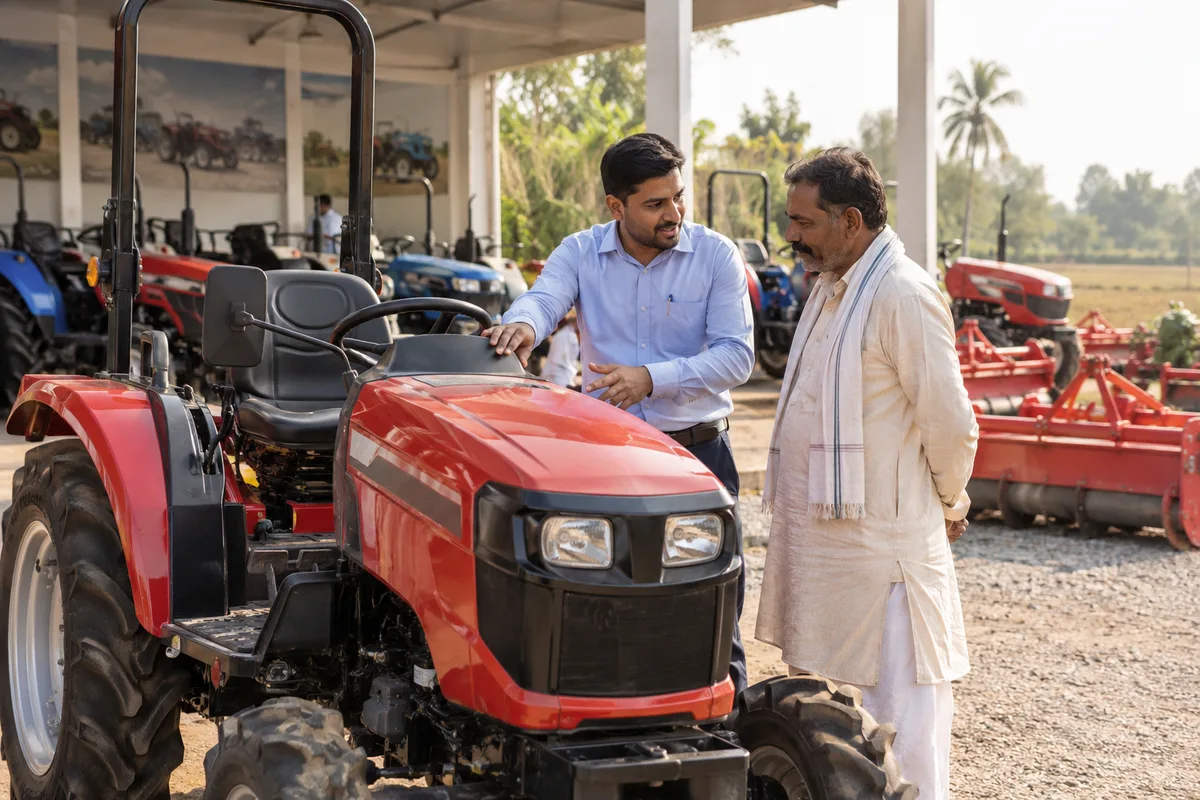
What social media means
Social media is the ongoing posting your business does on platforms such as Instagram, Facebook and LinkedIn to stay visible to customers and prospects between purchases. GullySales plans a posting calendar, writes captions and designs the images so the page looks active and answers what a visitor would ask.
Also for farm equipment and tractor dealers
- Content marketing for farm equipment dealers
- SEO for farm equipment and tractor dealers
- Local SEO for farm equipment and tractor dealers
- Lead generation for farm equipment and tractor dealers
- WhatsApp marketing for farm equipment and tractor dealers
- CRM for farm equipment and tractor dealers
- Sales process for farm equipment and tractor dealers
- Referral marketing for farm equipment and tractor dealers
Sales and marketing for farm equipment and tractor dealers, the overview.
Last updated 11 Oct 2026.
For farm equipment and tractor dealers
Where it usually goes wrong, and what we would do.
“Farmers watch the machine at work, not the showroom”
A farmer deciding on a rotavator wants to see it turning the soil of a field like theirs. A polished photograph of a machine on a showroom floor tells the viewer little. A short clip from a customer's field, filmed with the customer's permission, answers the question the farmer is actually asking.
“The language of the post decides who watches”
A district where farmers speak Kannada, Telugu or Marathi at home will scroll past a caption in formal English. Posts written in the farmers' own spoken language, with the crop and the soil named the way villagers name them, are the ones a farmer stops to watch.
“A comment is an enquiry that nobody answered”
Farmers ask the horsepower, the price and the delivery date under a video, and the dealership replies days later or not at all. By then the farmer has asked the next dealer. A comment needs an owner on the sales desk, the same as a ringing phone.
“Brand pages belong to the manufacturer”
An authorised dealer posts under a franchise agreement. Logos, price claims and offer wording sit with the tractor company, so the dealership's own posts should be about its yard, its workshop, its deliveries and its district.
What we do
What we deliver for farm equipment and tractor dealers.
Every deliverable, what it covers for you, and the result it is there to produce. Nothing here is an extra.
A page set up in the dealership's own name
A Facebook page and a YouTube channel carrying the showroom address, the workshop timings and a phone number that is answered.
Result: The farmer who finds a video can find the showroom from it.
A filming list for delivery day
A short checklist for the salesman: the family beside the new tractor, the garlanding, the name of the village, and consent asked before the camera starts.
Result: Every delivery leaves one usable clip, filmed with permission.
Posts in the district's spoken language
Captions and voice-overs written for the farmers of your taluk, naming the crop, the implement and the field work it does.
Result: The post reads like a neighbour talking, not a brochure.
A comment and message routine
One person on the sales desk named for replies, with the enquiry copied into the register along with the village and crop.
Result: No comment sits unanswered without someone being responsible.
A used tractor showcase
A walk-around video of each second-hand tractor with the hour meter, the tyres and the engine shown honestly.
Result: A farmer outside the town sees the stock without driving to the yard.
How the result is measured
- Posts published
- Engagement rate
- Enquiries from social profiles
Recorded as a baseline before work starts, so every later report has an honest comparison.
Posts and pieces to plan
Posts a tractor dealer can plan from deliveries and working machines.
- Delivery day of a tractor
- A short clip of the machine leaving the yard with the owner's family, shot only with the owner's consent. It shows the model and the handover.
- An implement at work in a nearby field
- A rotavator or a seed drill filmed in a farm close to the dealership, with the farmer's permission. Name the implement and what it fits.
- Used tractor of the week
- Photos of one pre-owned tractor with its hours, its papers and its price band, posted on the day it is on the yard. Remove the post once sold.
- Service camp notice
- A poster-style post giving the place, the villages and the checks done at the camp. It reaches owners who have gone to the roadside mechanic.
- What to check before buying a second-hand tractor
- A short clip from the workshop foreman showing what to look at on the engine and the hydraulics. It builds trust with a first-time buyer.
Who it is for
This is written for these farm equipment and tractor dealers.
- Authorised dealers of a tractor brand
- Implement and attachment dealers
- Combine harvester and paddy transplanter dealers
- Used and pre-owned tractor dealers
- Power tiller and mini tractor dealers
- Drip and sprinkler irrigation equipment sellers
- Spare parts and workshop-led dealers
- Custom hiring centre operators
Not for
It is not the right fit if.
- Nobody can answer a comment or a message, and an unanswered question under a post is an enquiry lost in public.
- You plan to post a farmer's yield or income with the machine, which a dealer should not claim; ask owners before showing any family.
- The page is the manufacturer's and you do not control it, so build a page in the dealership's own name first.
How it works
How the social media work runs
The work itself, in order. How an engagement starts, from your brief to a written scope, is set out on our method page.
- 1
Confirm audience, platforms and access
We note which platforms your buyers use and check that the pages sit under your own business accounts, with you as owner and us as added roles.
- 2
Review the current presence
We read the existing pages, the posts that drew replies and the gaps in posting.
- 3
Build the calendar
Themes, formats and dates are set out for your approval, with space for offers and news.
- 4
Create, approve and publish
Posts are made, approved by you and scheduled. Replies to the public are handled in your voice.
- 5
Record enquiries and adjust
Enquiries are logged against the post or platform where they began, and the mix changes to follow what brings them.
Where this fits
Three pieces of sales work, in this order.
This work sits inside sales process design, at stage 0, foundation. The audit comes before it, and sales management keeps it running.
Step 1
Sales audit
Find where deals are being lost and what to fix first.
Start here if you cannot say where orders are lost.
Step 2 · you are here
Sales process design
One written way to sell, from first enquiry to repeat order.
Start here if every salesperson sells differently.
Step 3
Sales management
A target, a review routine and someone who owns the number.
Start here if the team has targets and no routine.
FAQ
Questions owners ask before they call.
Not here? More answers, or ask on WhatsApp.
Which platform should a tractor dealer start with?
Can we show customers and their families in our posts?
Should a dealer post prices on social media?
How do we handle a farmer's complaint posted as a comment?
How long is the contract?
How soon will we see results?
Who will actually do the work?
What do you need from us?
What if we are not happy with the work?
From the blog
Further reading for farm equipment and tractor dealers.
 6 min read · 20 Jul 2026Seasonal and event-linked demand: planning for peaks and quiet monthsHow a specialist trade with busy and slow months can read its own year from past bookings, then time outreach and capacity ahead of each peak instead of after it.
 6 min read · 16 Jun 2026Annual maintenance contracts: how a specialist trade turns a job into recurring workAn annual maintenance contract works when it offers scheduled visits with a clear scope after the job and a recorded due date. This post covers what to offer, when to offer it and how to track renewals.
 6 min read · 17 Mar 2026Handling price haggling in a trade where every job differsWhen no two jobs are alike, a price cut without a scope change teaches buyers to haggle. How to anchor on scope, what to offer instead of a discount, and exact words for the call.
More for farm equipment and tractor dealers
Everything else we would do for you.
Closest to this: content and social
Also for farm equipment and tractor dealers
Or start from the overview: sales and marketing for farm equipment and tractor dealers.
Your next practical step
Tell us what you are trying to grow, and we will read it before we call.
Eight short steps, mostly taps. Skip anything you would rather answer on the call.