Mineral processing companies · Lead generation
Bring in buyers whose specification your plant already runs.
Lead generation for a mineral processing company means reaching the ceramic, glass, paint, paper and foundry units that use the grades your plant grinds, washes or grades. GullySales works on the grade pages, the buyer lists and the enquiry log that put those units in front of your sales desk.
Scope, fee, reporting and term are agreed in writing after we have read your brief and spoken to you.
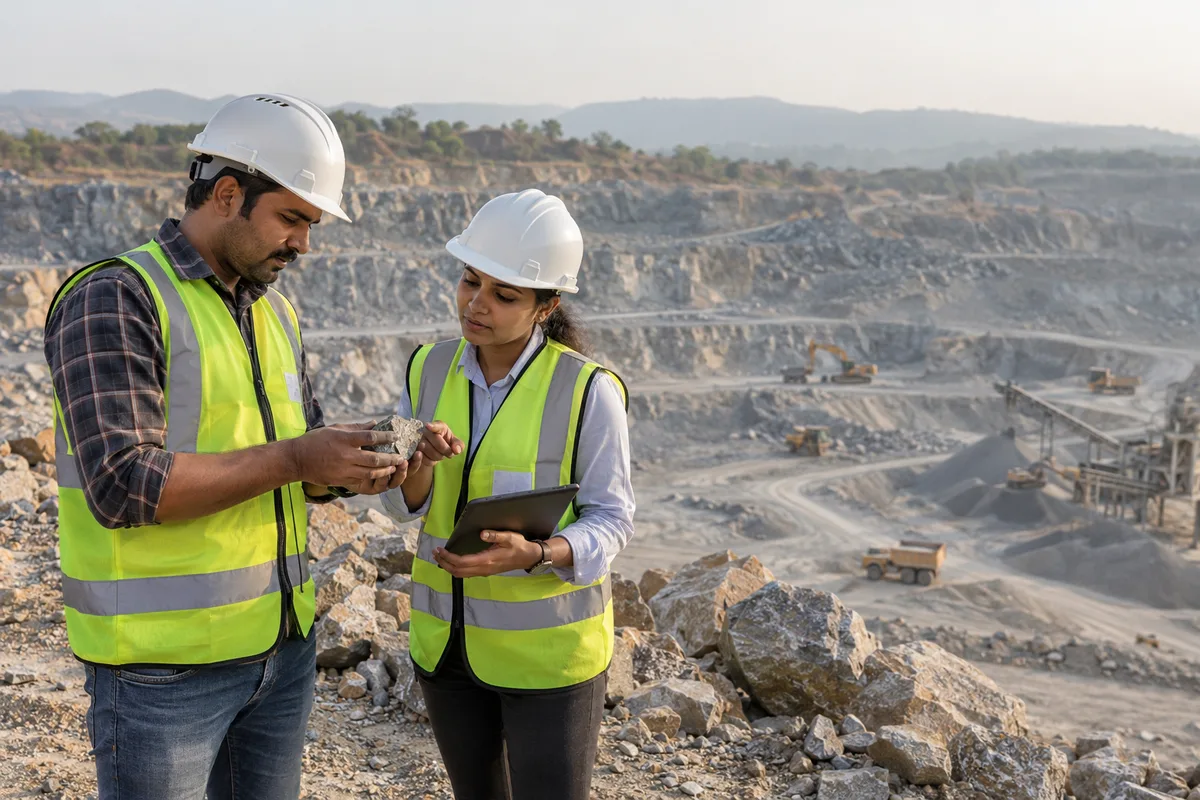
What lead generation means
Lead generation is the combined work of every channel that brings in a new enquiry, whether from search, adverts, referrals or a stall at an exhibition. GullySales runs these channels together and reports the number of enquiries each one produced, not the activity behind it.
Also for mineral processing companies
- CRM for mineral processing companies
- Follow-up systems for mineral processing companies
- SEO for mineral processing companies
- Social media marketing for mineral processing companies
- Content marketing for mineral processing companies
- Buyer personas for mineral processing companies
- WhatsApp marketing for mineral processing companies
- Digital marketing for mineral processing companies
Sales and marketing for mineral processing companies, the overview.
Last updated 18 Oct 2026.
For mineral processing companies
Where it usually goes wrong, and what we would do.
“A grade name draws a different buyer from a mineral name”
A purchase head searching for a feldspar powder of a stated fineness is further along than one typing the word minerals. Pages and listings built on grade, mesh and use attract the first buyer, and the plant gets enquiries it can actually quote.
“Each industry asks the first question in its own terms”
A paint buyer starts with oil absorption and brightness. A glass buyer starts with iron content. A foundry starts with grain size. A single general pitch answers none of these, so the enquiry never reaches the stage of a sample request.
“An enquiry for a grade you do not run is still a lead”
A buyer sends a specification the plant has never produced. Written down with the buyer, the figures and the end use, it shows which new grade has repeat demand and which request was a one-off.
“The unit nearest the plant is the cheapest to serve”
Freight on a powder is a large part of the landed rate. A buyer within the delivery range of the plant is a stronger lead than a distant name, and the list should be built with distance in view.
What we do
What we deliver for mineral processing companies.
Every deliverable, what it covers for you, and the result it is there to produce. Nothing here is an extra.
Grade-led landing pages
One page for each mineral and use, carrying the sizes, limits and the industries that buy it, taken from the lab's report.
Result: Each page states figures the lab has signed off, and no figure comes from anywhere else.
A buyer list by industry and distance
Ceramic, glass, paint, paper, foundry and rubber units within reach, each marked with the mineral it is known to use.
Result: The sales desk opens a list and sees which grade to offer to which unit.
An enquiry register
Every enquiry from calls, listings and the website entered with the grade asked for, the use and the person who replied.
Result: Stalled enquiries and unrun grades show up in one place.
A reply rule for specifications
A short rule that says who reads an incoming specification, who checks it with the lab and who answers.
Result: The enquiry has a named owner from the first message.
A cross-grade prompt
A line in every reply that names related grades the plant also makes.
Result: A buyer of one grade hears about the others at the first contact.
How the result is measured
- Enquiries generated
- Cost per enquiry
- Enquiries by source
Recorded as a baseline before work starts, so every later report has an honest comparison.
What to capture or send
What to record from a powder enquiry before a sample is ground and sent.
- Grade name and mesh or micron size
- Write the buyer's exact words, such as 200 mesh quartz. It shows at once whether a grade you run answers the request.
- The industry using the powder
- Ceramic, glass, paint, paper or foundry buyers ask in different terms. Record which, so the reply speaks to the right test.
- Impurity limits the buyer names
- Iron, moisture or whiteness figures the plant needs. If you cannot meet them, record it and say so early instead of sending a sample that fails.
- Monthly use against trial quantity
- Ask the buyer for both. A small trial with no stated use is a different lead from a plant that runs on the powder every day.
- Packing and delivery point
- Bag size, jumbo bag or bulk, and the unit's location. It shows whether freight makes the lead worth following.
Who it is for
This is written for these mineral processing companies.
- Quartz and silica processors
- Feldspar and ceramic mineral grinders
- Talc and soapstone processors
- Barytes and calcite processors
- Clay and kaolin processors
- Bauxite, mica and other mineral units
- Pulverisers and micronising units
- Washing and beneficiation plants
Not for
It is not the right fit if.
- The grade asked for is one your plant does not run and cannot add soon, so more enquiries for it would only be turned away
- Your lab cannot issue a certificate with a sample, and a buyer who tests without one will not trust the result
- No one on the desk reads a specification, so every enquiry waits for the plant head to look at it
How it works
How the lead generation work runs
The work itself, in order. How an engagement starts, from your brief to a written scope, is set out on our method page.
- 1
Understand your capacity
We ask how many enquiries your team can answer well, who answers after hours, and what a good enquiry looks like. Without this, the system fills a funnel nobody is watching.
- 2
Audit current sources
We read your call log, WhatsApp chats, enquiry sheet and platform dashboards. The baseline is recorded: enquiries by source, reply time, conversion and cost per order.
- 3
Strategise the channel mix
Search and maps are chosen for people ready to buy, ads for people who are not yet looking, and content and referrals for trust.
- 4
Implement capture and follow-up
Pages, forms, tags, the lead record and the first-reply message are built and tested end to end. We submit test enquiries ourselves before any media money is spent.
- 5
Measure and optimise
Enquiries are traced to source and judged by what became orders, not by volume alone. Channels that fill the sheet with poor enquiries are cut back. How often you are reported to is agreed in writing.
Where this fits
Three pieces of sales work, in this order.
This work sits inside sales process design, at stage 1, prospecting and lead generation. The audit comes before it, and sales management keeps it running.
Step 1
Sales audit
Find where deals are being lost and what to fix first.
Start here if you cannot say where orders are lost.
Step 2 · you are here
Sales process design
One written way to sell, from first enquiry to repeat order.
Start here if every salesperson sells differently.
Step 3
Sales management
A target, a review routine and someone who owns the number.
Start here if the team has targets and no routine.
FAQ
Questions owners ask before they call.
Not here? More answers, or ask on WhatsApp.
Should we chase every enquiry that arrives?
How do we know which grades to push?
Does lead generation guarantee orders?
How does the plant's own capacity limit lead generation?
How much does it cost?
How long is the contract?
How soon will we see results?
Who will actually do the work?
What do you need from us?
What if we are not happy with the work?
More for mineral processing companies
Everything else we would do for you.
Closest to this: leads and follow-up
Also for mineral processing companies
Or start from the overview: sales and marketing for mineral processing companies.
Your next practical step
Tell us what you are trying to grow, and we will read it before we call.
Eight short steps, mostly taps. Skip anything you would rather answer on the call.