Mineral processing companies · Buyer persona
Know who tests the sample and who signs the order before you pitch either.
A buyer persona for a mineral processing company describes the purchase head, production head and lab chief who decide on a grade, with the questions each asks. GullySales builds these from your own enquiries and sample feedback, so the sales desk speaks to each role in its own terms.
Scope, fee, reporting and term are agreed in writing after we have read your brief and spoken to you.
What buyer persona means
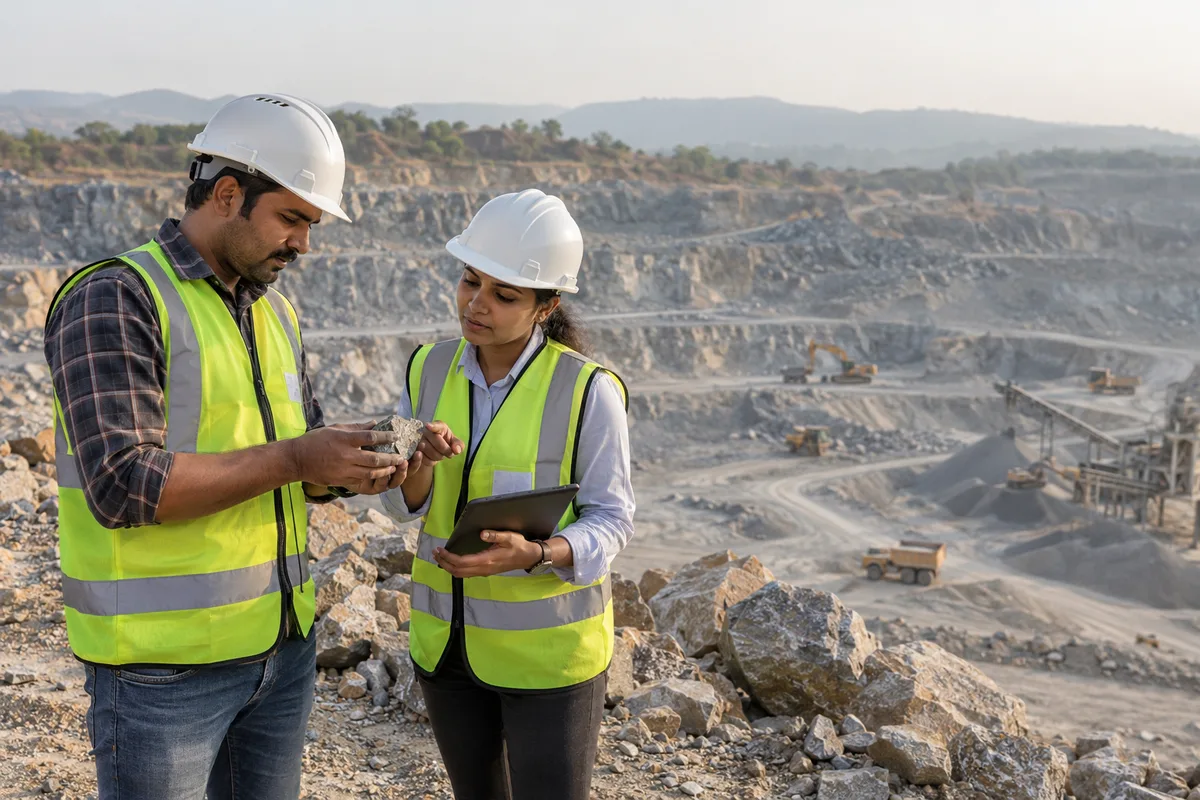
A buyer persona is a plain description of the kind of customer who actually buys from you. It includes what they search, what worries them and who else they ask before deciding. GullySales builds this from real enquiries and past sales rather than a generic template, then uses it to write every page and advert.
Also for mineral processing companies
- Digital marketing for mineral processing companies
- Lead generation for mineral processing companies
- SEO for mineral processing companies
- Social media marketing for mineral processing companies
- Content marketing for mineral processing companies
- CRM for mineral processing companies
- Follow-up systems for mineral processing companies
- WhatsApp marketing for mineral processing companies
Sales and marketing for mineral processing companies, the overview.
Last updated 18 Oct 2026.
For mineral processing companies
Where it usually goes wrong, and what we would do.
“The person who tests is not the person who pays”
A lab chief at a paint unit decides whether the sample meets the limits. The purchase head decides the rate and the packing. The owner signs the standing order. A pitch aimed at only one of them stalls with the other two.
“A small unit has one buyer wearing three hats”
In a family-run tile or foundry unit, the owner may set the specification, test the sample and negotiate the rate. The reply to that buyer should answer technical and commercial questions in one message.
“Traders are buyers with a different question”
A trader or exporter wants a stable grade, clear bag marking and a certificate to show onward. The trader does not test in a process line, and cares about repeat consistency and paperwork.
“The reason a buyer left is part of the persona”
A buyer who split orders with a rival or stopped altogether holds the most useful information. Record why, by role, and build the next persona from those reasons.
What we do
What we deliver for mineral processing companies.
Every deliverable, what it covers for you, and the result it is there to produce. Nothing here is an extra.
Persona sheets by industry
One sheet each for ceramic, glass, paint, paper, foundry, rubber and trader buyers, listing roles and the questions each asks.
Result: The sales desk knows which questions to expect from which role.
A role map for each account
A simple record of who tests, who negotiates and who approves at each major buyer.
Result: A quote goes to every person who has a say.
Question and answer scripts
Short replies to the first questions from each role, using figures from the lab.
Result: A salesperson answers a technical question without a delay for the lab.
A reasons-for-leaving log
A structured note on why buyers split or stopped, collected at the next call.
Result: Patterns in lost orders are visible by industry and grade.
Persona review
A look at the sheets against new enquiries and sample results, with changes agreed with the plant head.
Result: The sheets reflect the buyers who actually write to you.
How the result is measured
- Enquiry match to persona
- Conversion rate by persona
- Content aligned to persona
Recorded as a baseline before work starts, so every later report has an honest comparison.
Who is asking
The buyers of mineral powder, and what each wants answered before a call.
- Lab chemist at a tile or glass maker
- Wants the oxide figures, the test method and the sample before anything else. Compares your certificate with the plant's own readings.
- Purchase head signing the order
- Wants price per tonne at the delivery point, packing and credit terms. Rarely reads the technical sheet but asks the chemist.
- Paint or paper plant formulator
- Wants whiteness, particle size and moisture to stay the same lot after lot. Asks how you control that.
- Trader buying for several small units
- Wants a grade they can sell on with a certificate and a delivery date. Needs a clear sheet to forward.
- Owner of a small foundry
- Buys one grade in small lots, owns the purchase, the test and the payment. Wants a plain answer and a fair lot size.
Who it is for
This is written for these mineral processing companies.
- Quartz and silica processors
- Feldspar and ceramic mineral grinders
- Talc and soapstone processors
- Barytes and calcite processors
- Clay and kaolin processors
- Bauxite, mica and other mineral units
- Pulverisers and micronising units
- Washing and beneficiation plants
Not for
It is not the right fit if.
- You have only two or three buyers and know each of them well, so a written persona would add nothing the desk lacks
- The desk will not ask the buyer who tests and who pays, so the persona would be a guess
- You are about to change the grades you run, and a persona for the old range would mislead
How it works
How the buyer persona work runs
The work itself, in order. How an engagement starts, from your brief to a written scope, is set out on our method page.
- 1
Understand the current view
We start with how your team currently describes the customer, since the gap between belief and reality is the finding itself.
- 2
Audit past enquiries and sales
We look at recent enquiries and closed deals to see who actually bought, not who was assumed to buy.
- 3
Interview customers and staff
Structured conversations with recent buyers, held as talk about the last purchase and not a questionnaire. We ask what happened before they called, who else was involved and what they compared. Customers agree before we contact them, and their answers are reported without names.
- 4
Build the personas
Findings are written into short, usable persona documents rather than a long report.
- 5
Apply to your marketing
We show where each persona should change a page, an ad or a script you already have. The sales team reads the drafts and says which ring true. A persona they do not recognise is rewritten.
Where this fits
Three pieces of sales work, in this order.
This work sits inside sales process design, at stage 0, foundation. The audit comes before it, and sales management keeps it running.
Step 1
Sales audit
Find where deals are being lost and what to fix first.
Start here if you cannot say where orders are lost.
Step 2 · you are here
Sales process design
One written way to sell, from first enquiry to repeat order.
Start here if every salesperson sells differently.
Step 3
Sales management
A target, a review routine and someone who owns the number.
Start here if the team has targets and no routine.
FAQ
Questions owners ask before they call.
Not here? More answers, or ask on WhatsApp.
How do we build a persona with no research budget?
Do we need a persona for every grade?
Can personas replace a call to the buyer?
What does the unit's size change about the buyer?
How long is the contract?
How soon will we see results?
Who will actually do the work?
What do you need from us?
What if we are not happy with the work?
More for mineral processing companies
Everything else we would do for you.
Closest to this: strategy and research
Also for mineral processing companies
Or start from the overview: sales and marketing for mineral processing companies.
Your next practical step
Tell us what you are trying to grow, and we will read it before we call.
Eight short steps, mostly taps. Skip anything you would rather answer on the call.