Photography and videography studios · Digital marketing
Instagram brings the weddings and Google brings the brands.
Digital marketing for a studio is splitting effort between the couple who finds you by scrolling and the company that finds you by searching. GullySales sets what runs during the booking season and what runs while you are buried in editing, then reports enquiries and advances by shoot type.
Scope, fee, reporting and term are agreed in writing after we have read your brief and spoken to you.
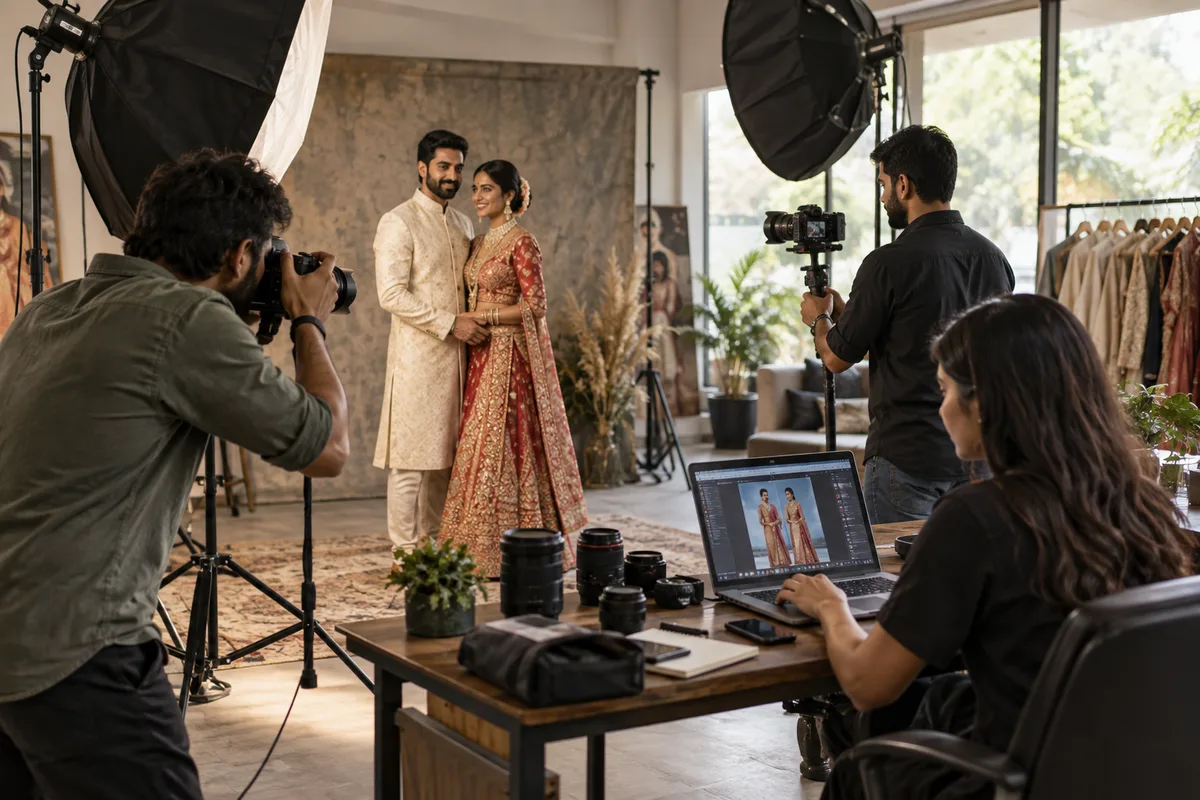
What digital marketing means
Digital marketing is the combined work of search, social media, advertising and website channels running together rather than as separate projects with separate people. GullySales runs these as one connected system so a change in one channel, such as a new offer, is reflected everywhere at once.
Also for photography and videography studios
- Buyer personas for photography studios
- SEO for photography and videography studios
- PPC ads for photography and videography studios
- Lead generation for photography and videography studios
- Reputation management for photography and videography studios
- Local SEO for photography and videography studios
- Branding and identity for photography and videography studios
- Social media marketing for photography and videography studios
Sales and marketing for photography and videography studios, the overview.
Last updated 5 Oct 2026.
For photography and videography studios
Where it usually goes wrong, and what we would do.
“The studio goes quiet exactly when it should be selling”
December and January are shoot months and edit months, and nobody has an hour to post or reply. That is also when next season's couples are shortlisting.
“Marketing cannot outrun a delivery backlog”
Doubling the enquiries while albums are already four months late buys you worse reviews. Fix what you promise on delivery first, then spend on reach.
“Two feeds, two funnels”
Wedding work sells by being seen and commercial work sells by being searched for and quoted. Different pages, different proof, different follow-up.
What we do
What we deliver for photography and videography studios.
Every deliverable, what it covers for you, and the result it is there to produce. Nothing here is an extra.
A plan built around the shoot calendar
Work scheduled ahead of the booking months and kept light through the weeks the whole team is on location or editing.
Result: Nothing depends on you having a free evening in December.
Pages and proof for each buyer
A wedding side built on reels, reviews and venue pages, and a commercial side built on process, turnaround and client work in the same category.
Result: Both buyers see work that speaks to them.
One place every enquiry lands
Instagram messages, WhatsApp, calls and the website form collected into a single sheet with the date, the shoot type and the source.
Result: Nothing sits unanswered in a second inbox.
A delivery promise you can keep, said in public
Realistic turnaround times for photographs, films and albums, written into the quote, the website and the booking terms.
Result: Expectations stop becoming reviews.
Referral routines with venues and planners
A shareable portfolio link, agreed referral terms and a standing contact at the halls and planners who send couples your way.
Result: Bookings arrive without an advert behind them.
A report by shoot type
Enquiries, quotes, advances and delivered jobs for each kind of work, compared with the season before we started.
Result: You can see which work is worth chasing next year.
How the result is measured
- Enquiries across channels
- Cost per enquiry overall
- Channel mix by contribution
Recorded as a baseline before work starts, so every later report has an honest comparison.
Where to start for a studio
Start with the portfolio a couple or a brand opens when it is choosing between three studios.
- Portfolio by shoot type
- Make a separate portfolio for weddings, product, real estate and events, each with a few complete jobs, not scattered pictures. Record which shoot type enquiries ask for first.
- Business Profile and Instagram
- Put your best weddings and your studio address on the profile and keep Instagram for the same work. Ask each enquiry which they saw and write it on the enquiry sheet.
- Enquiry and date sheet
- Keep one line per enquiry: date wanted, venue, shoot type, budget band you quoted, advance received. Mark dates as held or free so you never promise a date twice.
- Venues and planners
- List the wedding venues, planners and decorators you have worked with. Send each a sample of recent work and record which of them sent a client in the last season.
- Consent and credit
- Ask couples and clients for permission before using their pictures online, and credit venues and planners. Record the permission with the job.
- What to leave until later
- Hold back on paid ads, a large blog and every new platform. Start with a portfolio sorted by type, the profile and the date sheet, then add what the enquiry sheet shows is working.
Who it is for
This is written for these photography and videography studios.
- Wedding photography and cinematography studios
- Event and corporate videographers
- Product and e-commerce photography studios
- Maternity and family portrait photographers
- Real estate and architecture photographers
- Drone and aerial videography services
- Multi-photographer studio chains
Not for
It is not the right fit if.
- A delivery backlog of albums and edits is still open, and fresh enquiries would add to the wait.
- You shoot only weddings and have no wish to approach brands, so a plan for two buyers would be one too many.
How it works
How the digital marketing work runs
The work itself, in order. How an engagement starts, from your brief to a written scope, is set out on our method page.
- 1
Agree the one aim
We settle what the campaign must achieve, such as enquiries for a launch or footfall for an event, and the date it must be live.
- 2
Check what is ready
We list the channels you already run, who runs them, and what each can produce in the time available. Anything that cannot be done properly is left out.
- 3
Write the idea and the message sheet
We draft the one-sentence idea, test it against each planned format, and fix the wording that all channels will copy.
- 4
Brief every channel from the same sheet
Your agency, freelancer or in-house person receives the message sheet and calendar. Their work is checked against the sheet before it goes out.
- 5
Run on the shared calendar
Channels go live together. If the offer changes, every channel is changed on the same day from the same sheet.
- 6
Measure as one campaign
Enquiries and orders are read against the baseline. The reporting schedule is agreed in writing with the scope.
Where this fits
Three pieces of sales work, in this order.
This work sits inside sales process design, at stage 0, foundation. The audit comes before it, and sales management keeps it running.
Step 1
Sales audit
Find where deals are being lost and what to fix first.
Start here if you cannot say where orders are lost.
Step 2 · you are here
Sales process design
One written way to sell, from first enquiry to repeat order.
Start here if every salesperson sells differently.
Step 3
Sales management
A target, a review routine and someone who owns the number.
Start here if the team has targets and no routine.
FAQ
Questions owners ask before they call.
Not here? More answers, or ask on WhatsApp.
We are three people and everybody shoots. Who runs this?
What should a studio spend, and on what?
We all shoot. Do we need a separate person for marketing or an agency?
Couples find us on Instagram but brands find us on Google. How do we compare them?
How much does it cost?
How long is the contract?
How soon will we see results?
Who will actually do the work?
What do you need from us?
What if we are not happy with the work?
From the blog
Further reading for photography and videography studios.
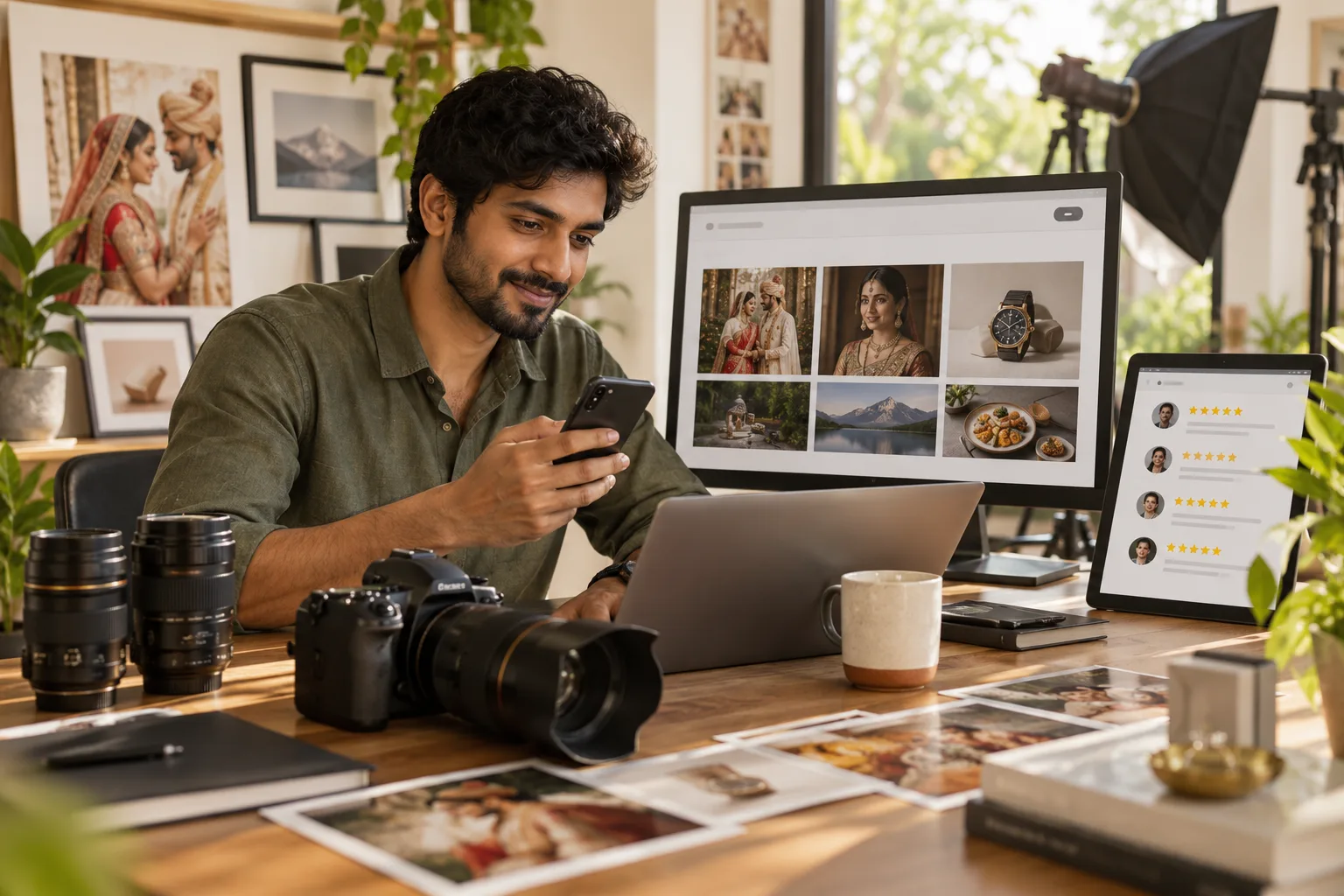
More for photography and videography studios
Everything else we would do for you.
Closest to this: strategy and research
Also for photography and videography studios
- SEO for photography and videography studios
- PPC ads for photography and videography studios
- Lead generation for photography and videography studios
- Reputation management for photography and videography studios
- Local SEO for photography and videography studios
- Branding and identity for photography and videography studios
Or start from the overview: sales and marketing for photography and videography studios.
Your next practical step
Tell us what you are trying to grow, and we will read it before we call.
Eight short steps, mostly taps. Skip anything you would rather answer on the call.