Photography and videography studios · Wedding season advertising
Advertise your free wedding dates while couples are still choosing a studio.
Wedding season advertising for a photography studio places paid media in the weeks when couples and families are shortlisting photographers, using your booking diary to decide the dates and the money. GullySales works from your own enquiry and advance records, checks the open dates before an advertisement runs, and records which enquiries became held dates.
Scope, fee, reporting and term are agreed in writing after we have read your brief and spoken to you.
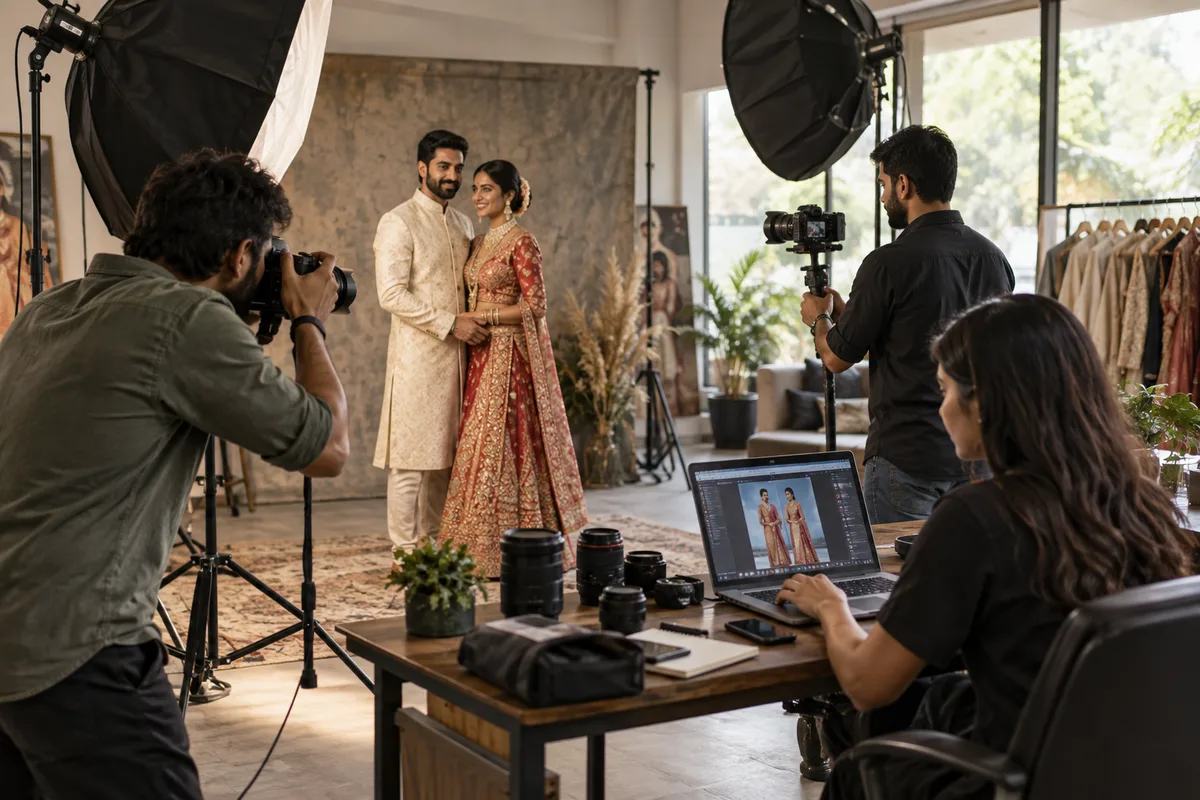
What wedding season advertising means
Wedding season advertising plans paid media around when families choose wedding suppliers, rather than only around the wedding dates themselves. GullySales uses your booking records and available capacity to set the campaign window, compare media options, coordinate bookings, and record which enquiries become confirmed business.
Also for photography and videography studios
- PPC ads for photography and videography studios
- SEO for photography and videography studios
- Lead generation for photography and videography studios
- Digital marketing for photography and videography studios
- Reputation management for photography and videography studios
- Local SEO for photography and videography studios
- Branding and identity for photography and videography studios
- Social media marketing for photography and videography studios
Sales and marketing for photography and videography studios, the overview.
Last updated 14 Nov 2026.
For photography and videography studios
Where it usually goes wrong, and what we would do.
“The studio is booked once, and one date is one booking”
A caterer can add tables; a studio cannot shoot two weddings at the same hour with the same team. Each good date is sold once, so advertising for a date already held fills the phone with enquiries you must refuse. The plan starts from the diary: which dates are open, which are held on an advance and which are still only a conversation.
“Couples shortlist before the season starts”
A couple checks portfolios, directories and reels well ahead of the date, and the family decides on the album and the film as well. By the time the wedding season is loud, a good share of families already hold a photographer. Your own past enquiry dates show the real shortlisting window, and the advertisement belongs there, before the dates fill.
“Pictures sell, but the wrong pictures mislead”
A bright sample from a lavish venue draws enquiries for a package you do not offer. Advertisements should show work of the kind you want to shoot at the price you quote. Showing a client's celebration needs that client's agreement, and no award, reach or follower figure appears unless a document you hold supports it.
“The enquiry arrives at the wrong moment”
A message comes at midnight from a family comparing three studios. The reply that asks for the date, the venue and the functions and offers a call gets the held date. A reply that sends a brochure on the third day gets silence. The advertisement is only as good as the first answer behind it.
What we do
What we deliver for photography and videography studios.
The work available for this need. We agree the deliverables and responsibilities for your engagement in writing.
Date and capacity sheet
A sheet from your diary and previous enquiries listing which wedding dates are open, how many teams you can field on a busy date and which functions you will take: engagement, pre-wedding, ceremony, reception. Your studio lead checks it before any advertisement is released.
Result: No advertisement invites enquiries for a date or a function the diary already marks as sold.
Shortlisting window from your records
A plain account, built from the dates previous couples first wrote and the dates they paid an advance, showing how far ahead of the wedding your clients decide. It also shows which enquiries came after the date was taken. The window is set from these records, not from the festival calendar alone.
Result: The campaign start date can be explained from your own enquiry and advance dates.
Media options for couples and families
A recommendation comparing wedding supplements and directories, hoardings near halls and jewellers, apartment panels, radio, search and social placements. It names which families each reaches, what each costs the studio in preparation and which to leave out. You see the quoted terms before approving.
Result: Each placement bought has a stated reason and the vendor's quote on file.
Portfolio selection and consent record
A short selection of work chosen for the shoots you want more of, with a note on which pictures show identifiable people. Written consent from the couple or family is recorded before any image is used in paid media. Pictures without consent are replaced.
Result: Every photograph in an advertisement has a consent note on file.
Quote reply script and held-date steps
The questions to ask first, the order of the reply and what a held date requires: the advance, the written date confirmation and the named photographer. Your booking lead approves the wording, so the reply sounds like the studio and nobody improvises a price.
Result: Every enquiry from the campaign gets the same first reply and a recorded next step.
Enquiry-to-booking record
A register carrying the source of each enquiry, the wedding date, the function, the quote sent and whether a date was held. It separates a call that went nowhere from a booking. The comparison with your earlier season is drawn from this register.
Result: You can read which placements produced held dates and which produced only calls.
How the result is measured
- Enquiries by recorded source against the pre-campaign baseline
- Enquiries matching available dates and service capacity
- Reply time and enquiry-to-booking conversion
Recorded as a baseline before work starts, so every later report has an honest comparison.
Who it is for
This is written for these photography and videography studios.
- Wedding photography and cinematography studios
- Event and corporate videographers
- Product and e-commerce photography studios
- Maternity and family portrait photographers
- Real estate and architecture photographers
- Drone and aerial videography services
- Multi-photographer studio chains
Before you decide
Agree the work. Know how to judge it.
Wedding season advertising for photography and videography studios: use these checks to prepare, choose the scope, and review what changes.
Bring the right evidence
State the buyer group, catchment, and dates that matter to the offer. Ask for the proposed inventory and available evidence about its audience, with the source and date shown.
Make the scope clear
Agree the exact placements, formats, booking period, and proof of delivery. Separate media charges from design, production, permissions, and installation where these apply.
Check the work in use
Compare delivery evidence with the agreed booking and record enquiries through a distinct response route where practical. Treat audience estimates separately from measured responses.
Know when to change course
Do not buy a placement only because it is discounted. If the location or audience does not fit the buyer, revisit the plan before committing production costs.
These are discussion points, not a fixed package. GullySales confirms the deliverables, responsibilities, fee, and term in writing after reading your brief and speaking with you.
Before we start
What to have ready before the work starts.
The records, access and decisions this work needs from photography and videography studios. Anything missing is noted in the written scope, with who will supply it.
- The booking diary with dates held
- The diary shows what is sold and what is open, and the plan depends on it. A simple list with a mark for held dates is enough. Where the diary is incomplete, the campaign may promote a date that is gone, and the studio then refuses the families it just attracted.
- Dates of past enquiries and advances
- The date a couple first wrote and the date they paid show how early families decide. Two seasons of rough notes are enough. Without them, the start of the campaign is borrowed from general guesses and money may be spent after the shortlist has closed.
- A statement of capacity by team
- State how many weddings you can cover on one date, how many photographers and videographers each team has and which functions you will not take. The plan is shaped around that ceiling. If it is vague, the campaign fills dates the studio cannot staff.
- Consent for pictures you want to use
- A couple or family must agree in writing before their pictures appear in paid media. Send originals with a note on who is shown. Pictures with no consent, or showing guests who did not agree, are set aside and replaced from other work.
- One person to answer the first message
- Enquiries reach the studio at odd hours, and the quick, specific reply books the date. Name one person who answers, asks the date first and logs the source. Without that person the register stays thin and nobody can tell which placement worked.
How it works
How the wedding season advertising work runs
The work itself, in order. How an engagement starts, from your brief to a written scope, is set out on our method page.
- 1
Diary and enquiry dates in
You share the booking diary, the dates past enquiries arrived and the dates advances were paid. We set the starting position: how many enquiries came, how many were held and how many were declined because the date was gone. This record is what the campaign is read against.
- 2
Open dates and capacity signed off
Your studio lead confirms which dates, functions and team numbers the campaign may promote. Anything not confirmed is not advertised. A date that sells during the run is removed from the brief at once, so the advertisement does not outlive the diary.
- 3
Media choice against your catchment
We compare placements for the families you want, using your own enquiry areas and the venues you shoot in. Publication dates, closing dates for artwork and cancellation terms go on one sheet. You choose what to book after seeing the quotes.
- 4
Artwork and consent sign-off
The pictures and wording are proofed against the placement's specification. Consent notes are checked for each image. You approve the offer, the contact route and any claim before release, since a printed supplement cannot be corrected.
- 5
Live enquiries answered the same way
The person taking bookings receives the date sheet and the reply script. Each enquiry is logged with its source before a quote goes out. Changes to the plan need your approval and depend on the placement's remaining space and its artwork deadlines.
- 6
Held dates read against the starting record
We reconcile what ran, supported by dated proof, with the register of enquiries and held dates. You see which placements brought bookings, which brought calls and which dates stayed open, and decide what the next season starts with.
Where this fits
Three pieces of sales work, in this order.
This work sits inside sales process design, at stage 1, prospecting and lead generation. The audit comes before it, and sales management keeps it running.
Step 1
Sales audit
Find where deals are being lost and what to fix first.
Start here if you cannot say where orders are lost.
Step 2 · you are here
Sales process design
One written way to sell, from first enquiry to repeat order.
Start here if every salesperson sells differently.
Step 3
Sales management
A target, a review routine and someone who owns the number.
Start here if the team has targets and no routine.
FAQ
Questions owners ask before they call.
Not here? More answers, or ask on WhatsApp.
When should a studio advertise for the wedding season?
Is it worth advertising if my best dates are already held?
Which media suit a photography studio?
Can we show our best weddings in the advertisement?
Will this fill my calendar?
How do we know which placement produced a booking?
How much does it cost?
How long is the contract?
How soon will we see results?
Who will actually do the work?
From the blog
Further reading for photography and videography studios.
More for photography and videography studios
Related work to consider.
Closest to this: paid and media
Also for photography and videography studios
- SEO for photography and videography studios
- Lead generation for photography and videography studios
- Digital marketing for photography and videography studios
- Reputation management for photography and videography studios
- Local SEO for photography and videography studios
- Branding and identity for photography and videography studios
Or start from the overview: sales and marketing for photography and videography studios.
Your next practical step
Tell us what you are trying to grow, and we will read it before we call.
Eight short steps, mostly taps. Skip anything you would rather answer on the call.