Modular kitchen companies · Digital marketing
Your marketing year is a handover calendar, not twelve equal months.
Digital marketing for a kitchen company is deciding which towers, which designers and which season get the money this quarter. GullySales builds the plan around the handover calendar near your showroom, splits the budget between search, social and designer outreach, and reports showroom visits.
Scope, fee, reporting and term are agreed in writing after we have read your brief and spoken to you.
What digital marketing means
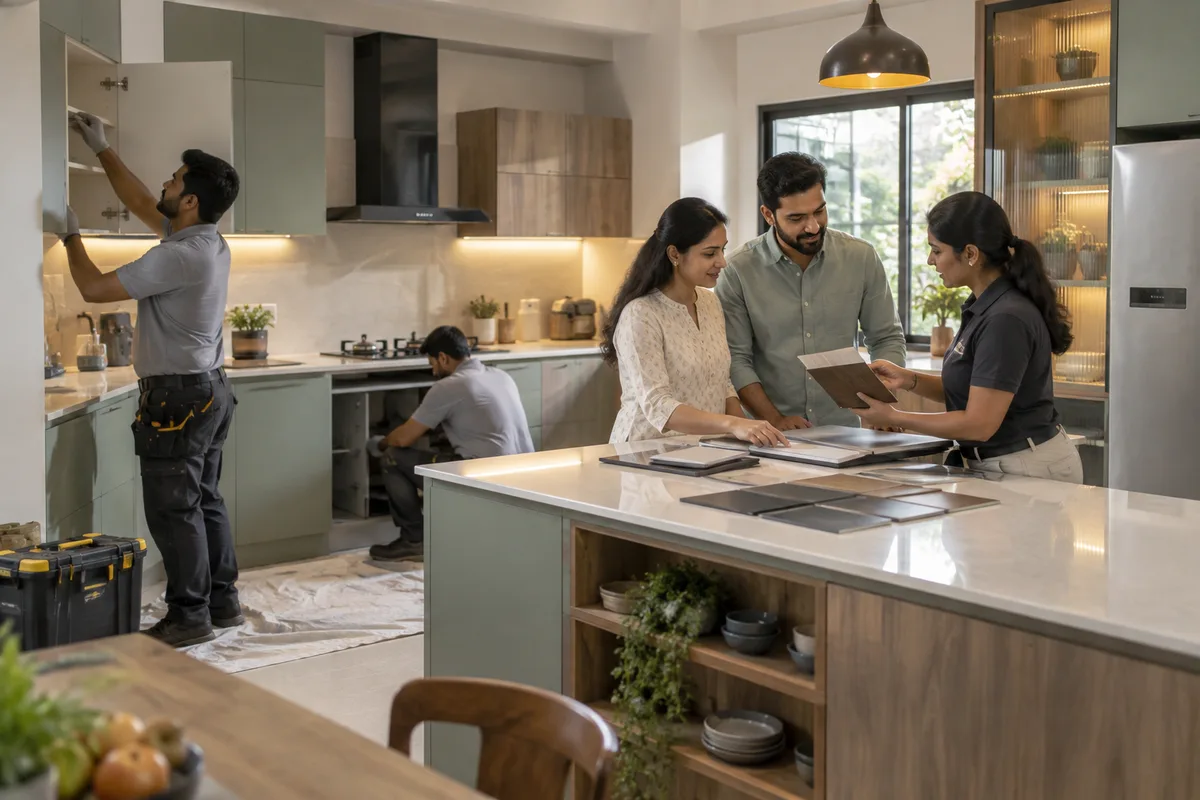
Digital marketing is the combined work of search, social media, advertising and website channels running together rather than as separate projects with separate people. GullySales runs these as one connected system so a change in one channel, such as a new offer, is reflected everywhere at once.
Also for modular kitchen companies
- Buyer persona for modular kitchen companies
- SEO for modular kitchen companies
- PPC ads for modular kitchen companies
- Lead generation for modular kitchen companies
- Reputation management for modular kitchen companies
- Local SEO for modular kitchen companies
- Branding and identity for modular kitchen companies
- Social media marketing for modular kitchen companies
Sales and marketing for modular kitchen companies, the overview.
Last updated 5 Oct 2026.
For modular kitchen companies
Where it usually goes wrong, and what we would do.
“Two buyers, two plans”
A family with keys needs advertising and a showroom visit. A designer with three live projects needs samples, a partner kit and a delivery record, and that side should not be paid for out of whatever is left.
“The festival date is a deadline, not a discount”
Families want the kitchen in before a griha pravesha or a family function, which puts the real deadline weeks before the date. Work the campaign backwards from the fitting slots.
“Every channel is measured on showroom visits”
Nobody signs a kitchen order from a screen, whatever the reel did for your view count. The visit is where the layout, the material and the advance are settled.
“Advertising cannot outrun a site running late”
One project delivered two weeks late costs you a designer's next three. What the factory and the fitting team can carry sets the size of the campaign.
What we do
What we deliver for modular kitchen companies.
Every deliverable, what it covers for you, and the result it is there to produce. Nothing here is an extra.
A quarter plan tied to the handover calendar
Which projects hand over in the next three months, what runs for each of them, and the money set aside for the designer side.
Result: Spending follows the buildings where kitchens are being chosen.
The budget split between family and designer
A share for advertising to families and a separate share for samples, partner kits and visits to practices, agreed before the quarter starts.
Result: The designer relationship stops being an afterthought.
A production cap on every offer
How many kitchens the factory and the installers can deliver in the festival weeks, checked before an offer goes out.
Result: You do not sell the weeks you cannot install.
One photography shoot feeding every channel
The finished kitchen shoot, the captions naming locality and layout, and the same images used on the site, Maps, quotes and social.
Result: One morning of photography covers the quarter.
A follow-up rule behind every channel
Who answers a call, a message and a form, within what time, and what happens the day after a design is shared.
Result: The enquiries a campaign creates get worked.
A report ending at showroom visits
Enquiries by source, visits booked, visits kept, designs shared and orders signed, read against the baseline taken before the work started.
Result: Every channel is judged on families who walked in.
How the result is measured
- Enquiries across channels
- Cost per enquiry overall
- Channel mix by contribution
Recorded as a baseline before work starts, so every later report has an honest comparison.
Where to start for a showroom
Start with the families about to get their keys, and the designers who advise them.
- Business Profile for the showroom
- Add the showroom address, opening hours, and photographs of finished kitchens by layout: L-shape, parallel, island. Record each direction request and call and ask visitors what they searched.
- Handover list
- List apartment projects within your service area with their expected handover and the builder's sales office. Introduce the showroom to the office and note which families are referred.
- Designer relationship list
- List the interior designers who send clients, with what each prefers in finish, hardware and payment. Record the clients each one sent and the orders that closed.
- Showroom visit booking on WhatsApp
- Send each enquiry a slot to visit and a note on what to bring: floor plan and measurements. Label each chat as booked, visited, design shared or advance paid.
- Photographs of installed kitchens
- Photograph each finished kitchen with the owner's consent, naming the layout and the finish. Use the same set on the profile, WhatsApp and Instagram, and note which one a visitor mentions.
- What to leave until later
- Do not begin with offers on every festival, video walkthroughs or paid ads across the whole city. Wait until you know which handover projects and designers bring visits that end in an advance.
Who it is for
This is written for these modular kitchen companies.
- Modular kitchen showrooms and studios
- Kitchen and wardrobe manufacturers with their own factory
- Franchise showrooms of national kitchen brands
- Imported and premium German or Italian kitchen dealers
- Kitchen companies working mainly through interior designers
- Builder-tied kitchen vendors for apartment projects
- Stainless steel and commercial kitchen fabricators
- Kitchen renovation specialists for older homes
Not for
It is not the right fit if.
- You have no photographs of finished kitchens, so a broad plan would run on stock images nobody believes.
- Production already runs late on current orders, and more demand would deepen the delay.
How it works
How the digital marketing work runs
The work itself, in order. How an engagement starts, from your brief to a written scope, is set out on our method page.
- 1
Agree the one aim
We settle what the campaign must achieve, such as enquiries for a launch or footfall for an event, and the date it must be live.
- 2
Check what is ready
We list the channels you already run, who runs them, and what each can produce in the time available. Anything that cannot be done properly is left out.
- 3
Write the idea and the message sheet
We draft the one-sentence idea, test it against each planned format, and fix the wording that all channels will copy.
- 4
Brief every channel from the same sheet
Your agency, freelancer or in-house person receives the message sheet and calendar. Their work is checked against the sheet before it goes out.
- 5
Run on the shared calendar
Channels go live together. If the offer changes, every channel is changed on the same day from the same sheet.
- 6
Measure as one campaign
Enquiries and orders are read against the baseline. The reporting schedule is agreed in writing with the scope.
Where this fits
Three pieces of sales work, in this order.
This work sits inside sales process design, at stage 0, foundation. The audit comes before it, and sales management keeps it running.
Step 1
Sales audit
Find where deals are being lost and what to fix first.
Start here if you cannot say where orders are lost.
Step 2 · you are here
Sales process design
One written way to sell, from first enquiry to repeat order.
Start here if every salesperson sells differently.
Step 3
Sales management
A target, a review routine and someone who owns the number.
Start here if the team has targets and no routine.
FAQ
Questions owners ask before they call.
Not here? More answers, or ask on WhatsApp.
If we can afford only one thing, what should it be?
Should something run every month, or only in the handover quarters?
Can the showroom manager run the marketing, or do we hire someone?
How do we separate sales that came from ads from those that came from designers?
How much does it cost?
How long is the contract?
How soon will we see results?
Who will actually do the work?
What do you need from us?
What if we are not happy with the work?
From the blog
Further reading for modular kitchen companies.
 5 min read · 6 Oct 2026Why homeowners pick one quote out of threeInterior, kitchen, window, tile and AC buyers collect three quotes and choose the firm they understood and heard back from. Here is what they compare and where the quote loses.
 7 min read · 21 Sept 2026How to advertise to interior designersA designer does not buy your product. They specify it, and somebody else pays for it. That one fact changes what you advertise, when, and what you are actually asking for.
 6 min read · 21 Sept 2026Google Ads vs outdoor advertising: capture demand or create it?Google Ads collects the demand that already exists. A hoarding creates the demand Google later collects, and then search takes the credit for it.
More for modular kitchen companies
Everything else we would do for you.
Closest to this: strategy and research
Also for modular kitchen companies
Or start from the overview: sales and marketing for modular kitchen companies.
Your next practical step
Tell us what you are trying to grow, and we will read it before we call.
Eight short steps, mostly taps. Skip anything you would rather answer on the call.