Modular kitchen companies · Social media
The reel travels and the buyer lives four kilometres away.
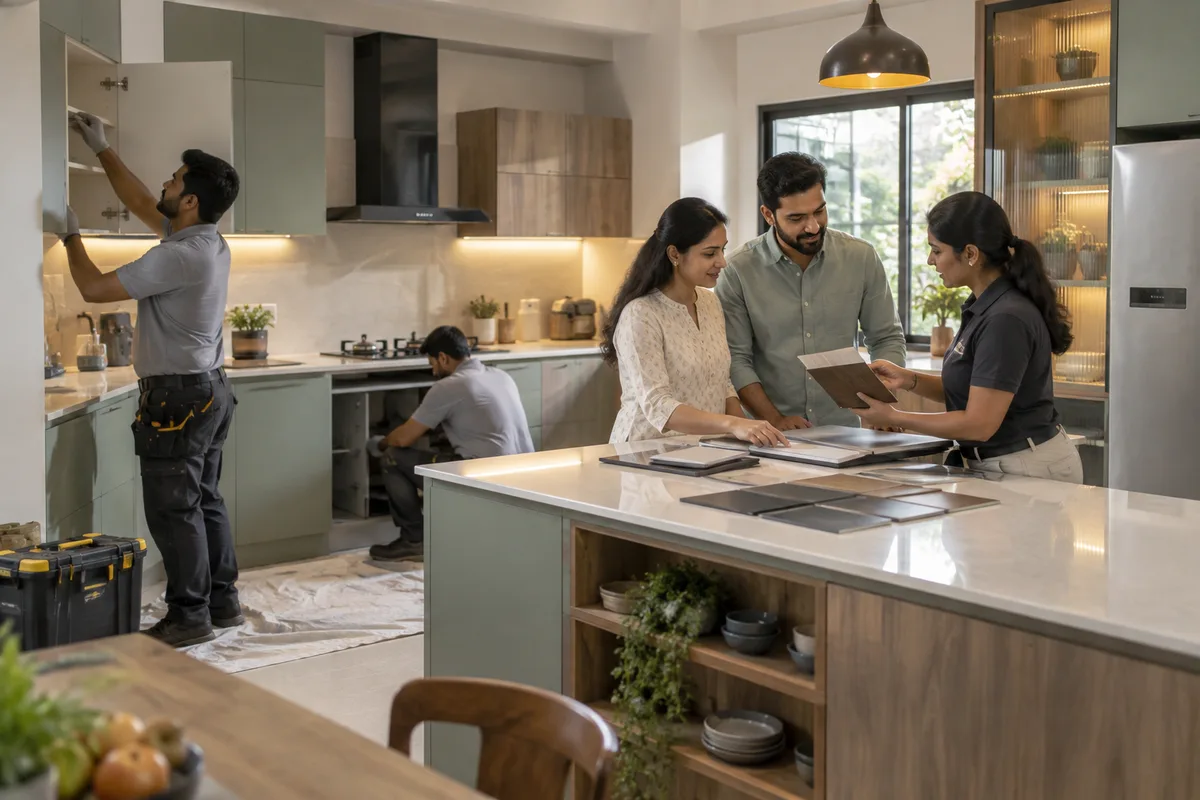
Social media for a kitchen company sells a finished kitchen in a building people recognise, not a shutter in close-up. GullySales plans the shoot after every installation, writes captions naming the locality and the layout, and moves the comment asking for a rate into a showroom appointment.
Scope, fee, reporting and term are agreed in writing after we have read your brief and spoken to you.
What social media means
Social media is the ongoing posting your business does on platforms such as Instagram, Facebook and LinkedIn to stay visible to customers and prospects between purchases. GullySales plans a posting calendar, writes captions and designs the images so the page looks active and answers what a visitor would ask.
Also for modular kitchen companies
- Content marketing for modular kitchen companies
- SEO for modular kitchen companies
- PPC ads for modular kitchen companies
- Lead generation for modular kitchen companies
- Digital marketing for modular kitchen companies
- Reputation management for modular kitchen companies
- Local SEO for modular kitchen companies
- Branding and identity for modular kitchen companies
Sales and marketing for modular kitchen companies, the overview.
Last updated 5 Oct 2026.
For modular kitchen companies
Where it usually goes wrong, and what we would do.
“A reel with no locality is a reel for another city”
Kitchen videos travel well and the messages arrive from places you cannot install in. The project name or the area in the caption turns views into visits.
“Photograph the kitchen before the family moves in”
Once the vessels and the mixer are out, the kitchen photographs badly and the family is less willing. The shoot belongs in the two days between handover and shifting.
“Answering the rate in public is a trap”
A figure under a reel is read without the carpet area or the material behind it, and quoted back at you later. Reply in the message with a range and a showroom slot.
“Designers watch quietly and never comment”
A practice forms its view of your finishing from the same posts and leaves no trace. Show what they check: edge banding, shadow gaps, corner mechanisms.
What we do
What we deliver for modular kitchen companies.
Every deliverable, what it covers for you, and the result it is there to produce. Nothing here is an extra.
A shoot slot inside the installation schedule
Two hours booked between snag closing and the family shifting in, with the angles, the lighting and the clips to capture written down.
Result: Every finished kitchen produces something to post.
Captions carrying locality, layout and size
The project or area, the layout, the carpet area and the finish in every caption, with the booking link in the profile.
Result: Viewers nearby see a kitchen made for a flat like theirs.
Paid reach limited to the belt you install in
Boosts set to the localities with handovers now, behind the two or three posts that already earned attention.
Result: The budget follows families who can reach your showroom.
A reply routine for rate comments
A saved answer giving the starting range and offering a showroom slot, used in messages rather than under the post.
Result: The comment becomes an appointment.
Detail posts aimed at design practices
Close work on edge banding, shadow gaps, corner mechanisms and carcass joints, posted for the people watching without commenting.
Result: Designers see a standard they can risk a client on.
Written consent for every home filmed
Permission taken at handover before a flat is photographed, with the flat number kept out of the caption.
Result: Nobody objects once the post is up.
How the result is measured
- Posts published
- Engagement rate
- Enquiries from social profiles
Recorded as a baseline before work starts, so every later report has an honest comparison.
Platform for this buyer
Where kitchen buyers look, and what to post for each.
- Instagram reels of an installed kitchen
- Show one kitchen with its layout, such as L-shaped, parallel or U, the carcass and shutter material and the hardware brand. Name the building or locality in the caption.
- Facebook groups for new apartment projects
- Join resident groups of the project where you are installing. Be useful: answer a measurement or material question. Read the rules on business posts first.
- Pinterest boards by layout and finish
- Pin finished kitchens by layout and shutter finish, linked to a project page. Buyers arrive with a pin and a question.
- YouTube walkthrough of a finished kitchen
- Open drawers, corner units and the chimney position on camera. Interior designers send the link to clients who need to see the fittings.
- WhatsApp status for showroom visitors
- Post installation-day photographs for families who visited and did not sign. They see work in progress, which is more convincing than a render.
- What not to post
- Do not post a 3D render as a built kitchen, or another maker's design. Label designs as designs, and keep nameplates and family photographs out of frame.
Who it is for
This is written for these modular kitchen companies.
- Modular kitchen showrooms and studios
- Kitchen and wardrobe manufacturers with their own factory
- Franchise showrooms of national kitchen brands
- Imported and premium German or Italian kitchen dealers
- Kitchen companies working mainly through interior designers
- Builder-tied kitchen vendors for apartment projects
- Stainless steel and commercial kitchen fabricators
- Kitchen renovation specialists for older homes
Not for
It is not the right fit if.
- Families will not let their homes be filmed, and you hold no written consent to publish any kitchen.
- No one can reply to the messages a reel brings, so views would end in unread inboxes.
How it works
How the social media work runs
The work itself, in order. How an engagement starts, from your brief to a written scope, is set out on our method page.
- 1
Confirm audience, platforms and access
We note which platforms your buyers use and check that the pages sit under your own business accounts, with you as owner and us as added roles.
- 2
Review the current presence
We read the existing pages, the posts that drew replies and the gaps in posting.
- 3
Build the calendar
Themes, formats and dates are set out for your approval, with space for offers and news.
- 4
Create, approve and publish
Posts are made, approved by you and scheduled. Replies to the public are handled in your voice.
- 5
Record enquiries and adjust
Enquiries are logged against the post or platform where they began, and the mix changes to follow what brings them.
Where this fits
Three pieces of sales work, in this order.
This work sits inside sales process design, at stage 0, foundation. The audit comes before it, and sales management keeps it running.
Step 1
Sales audit
Find where deals are being lost and what to fix first.
Start here if you cannot say where orders are lost.
Step 2 · you are here
Sales process design
One written way to sell, from first enquiry to repeat order.
Start here if every salesperson sells differently.
Step 3
Sales management
A target, a review routine and someone who owns the number.
Start here if the team has targets and no routine.
FAQ
Questions owners ask before they call.
Not here? More answers, or ask on WhatsApp.
Should we answer the how much comment in public?
Is a professional shoot worth it for every kitchen?
Who should be on camera, the designer or the owner?
A homeowner asks us to take down the kitchen reel after posting. What do we do?
How long is the contract?
How soon will we see results?
Who will actually do the work?
What do you need from us?
What if we are not happy with the work?
From the blog
Further reading for modular kitchen companies.
 5 min read · 6 Oct 2026Why homeowners pick one quote out of threeInterior, kitchen, window, tile and AC buyers collect three quotes and choose the firm they understood and heard back from. Here is what they compare and where the quote loses.
 7 min read · 21 Sept 2026How to advertise to interior designersA designer does not buy your product. They specify it, and somebody else pays for it. That one fact changes what you advertise, when, and what you are actually asking for.
 6 min read · 21 Sept 2026Google Ads vs outdoor advertising: capture demand or create it?Google Ads collects the demand that already exists. A hoarding creates the demand Google later collects, and then search takes the credit for it.
More for modular kitchen companies
Everything else we would do for you.
Closest to this: content and social
Also for modular kitchen companies
Or start from the overview: sales and marketing for modular kitchen companies.
Your next practical step
Tell us what you are trying to grow, and we will read it before we call.
Eight short steps, mostly taps. Skip anything you would rather answer on the call.