Modular kitchen companies · Pay per click advertising
The measure is showroom visits booked, not forms filled.
Paid advertising for a kitchen company competes with national brands spending on the same keywords, so the work is qualifying before the click is paid for. GullySales targets the localities taking possession, writes the advertisement that states a range, and counts showroom visits rather than form fills.
Scope, fee, reporting and term are agreed in writing after we have read your brief and spoken to you.
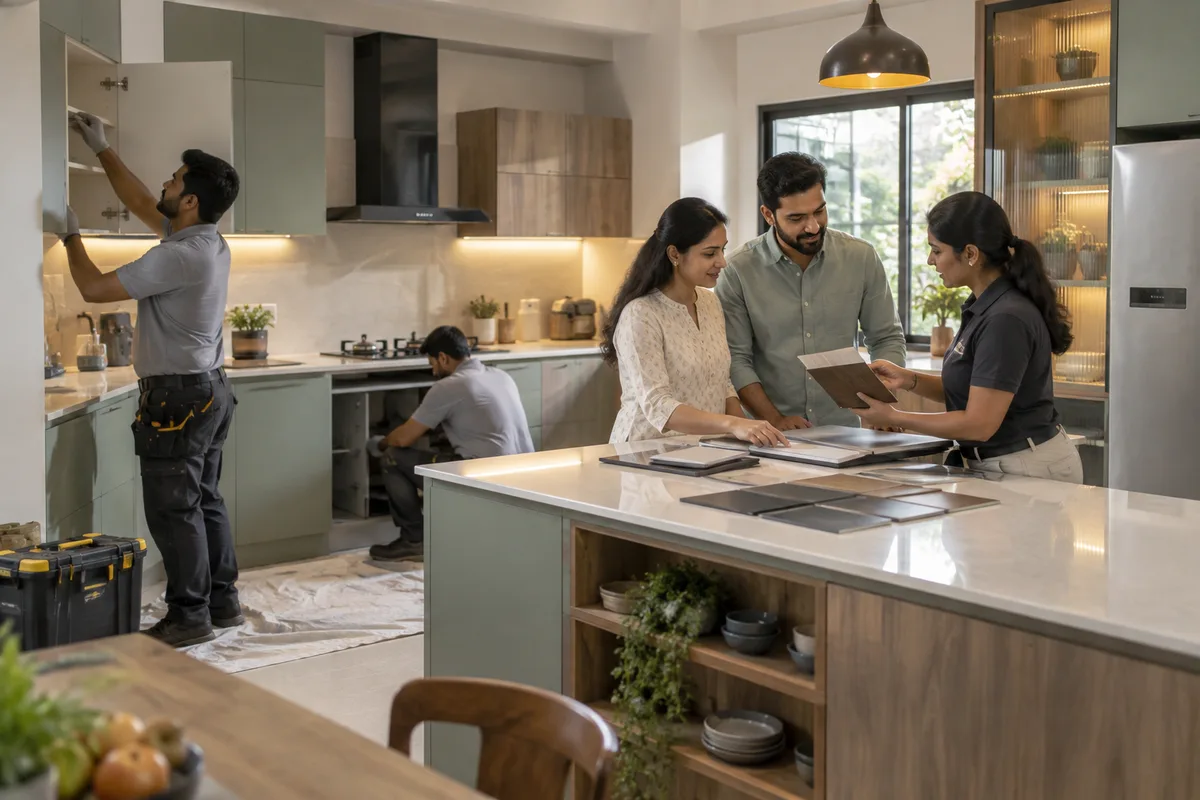
What pay per click advertising means
Pay per click advertising (PPC) is paying a fee each time someone clicks your advert on Google or another platform. It puts you at the top of a search page immediately, instead of waiting for ranking to build. GullySales sets the targeting, writes the ad text and checks spend against enquiries received.
Also for modular kitchen companies
- SEO for modular kitchen companies
- Lead generation for modular kitchen companies
- Digital marketing for modular kitchen companies
- Reputation management for modular kitchen companies
- Local SEO for modular kitchen companies
- Branding and identity for modular kitchen companies
- Social media marketing for modular kitchen companies
- Content marketing for modular kitchen companies
Sales and marketing for modular kitchen companies, the overview.
Last updated 5 Oct 2026.
For modular kitchen companies
Where it usually goes wrong, and what we would do.
“A range in the advertisement filters the click”
Leaving the rate out brings every browser, and your designer loses an evening to a family with a third of the budget. Saying where you start costs a few clicks and saves more evenings.
“Bid where the keys are being handed over”
Campaigns set to the pin codes of towers in possession this quarter reach families in their deciding weeks. A city-wide campaign mostly reaches people who moved in two years ago.
“Cheap lead forms fill with numbers that never answer”
A form on a feed asks nothing of the person filling it, and the call back goes unanswered. A booking for a showroom slot costs more and is worth more.
“You cannot outbid a national interior brand”
They buy every kitchen keyword in every city, month after month. Where they are thin is the project name, the locality and the family who wants to meet somebody who works nearby.
What we do
What we deliver for modular kitchen companies.
Every deliverable, what it covers for you, and the result it is there to produce. Nothing here is an extra.
Targeting drawn around possession, not the city
Pin codes and radius set to the towers handing over this quarter and the belt your installers already serve.
Result: Clicks come from families in their deciding weeks.
A starting range stated in the advertisement
The rate you start at and what it covers, written into the advertisement text and repeated on the page behind it.
Result: Fewer evenings are spent designing for the wrong budget.
A landing page that asks four questions
Carpet area, possession or renovation date, layout and budget band, asked before a call is booked rather than after a design is made.
Result: The enquiry reaches your designer already qualified.
Keywords split by what the searcher wants
Separate campaigns for rate searches, layout searches, locality searches and the wardrobe and full interiors searches.
Result: You can drop the group that never books a visit.
A negative list for work you do not want
Terms covering carpenters, second-hand units, repair jobs, employment enquiries, franchise offers and cities you do not install in.
Result: The budget stops leaking to enquiries you would refuse.
Showroom visits counted against spend
Every advertisement enquiry traced through the call, the visit booked, the visit kept and the design shared, beside the baseline taken at the start.
Result: You judge the account on families who walked in.
How the result is measured
- Cost per click
- Cost per enquiry
- Enquiries from paid search
Recorded as a baseline before work starts, so every later report has an honest comparison.
Searches to bid on and block
The searches from a family choosing a kitchen, and the ones from people with no budget or no flat yet.
- Modular kitchen design, plus city or area
- Bid. A family typing this is at the planning stage. Put your starting range and the city in the advert, and ask the kitchen size and when possession is, so the call back starts with facts.
- Kitchen price for a size, such as L-shaped or parallel kitchen
- Bid selectively. The buyer has a layout in mind. Land the click on a page that explains what each layout includes, not a rate, and ask for the plan or a site photo.
- Kitchen and wardrobe together, plus 2 BHK or 3 BHK interiors
- Bid if you do the full flat, in a campaign of its own. The buyer is an apartment owner. Name the BHK in the advert and ask for the builder's name and handover date.
- Carpenter, jobs, course and franchise
- Block. Add carpenter, job, vacancy, course, franchise, dealership and machine as negatives. They type kitchen words but want work, not a kitchen.
- Where the click lands
- Send it to a page with three finished kitchens, the finish options and a form asking size, layout and possession date. Do not send it to a long portfolio.
- Counting a real enquiry
- Count a showroom booking, or a call or form that gives a flat size and a date. A name and number alone are not enough. Log the source and mark which ones reached a design visit.
Who it is for
This is written for these modular kitchen companies.
- Modular kitchen showrooms and studios
- Kitchen and wardrobe manufacturers with their own factory
- Franchise showrooms of national kitchen brands
- Imported and premium German or Italian kitchen dealers
- Kitchen companies working mainly through interior designers
- Builder-tied kitchen vendors for apartment projects
- Stainless steel and commercial kitchen fabricators
- Kitchen renovation specialists for older homes
Not for
It is not the right fit if.
- Your designers have no free evening for showroom bookings, so the visits an advertisement books would be missed.
- No handover list exists for towers near you, so the targeting would fall back to the whole city.
How it works
How the pay per click advertising work runs
The work itself, in order. How an engagement starts, from your brief to a written scope, is set out on our method page.
- 1
Agree the whole budget
We fix the total paid budget across platforms, who owns each ad account, and how much is open to moving.
- 2
Audit tracking and accounts
We check that conversions fire once, that calls and WhatsApp chats are counted, and that your enquiry sheet matches what the platforms say.
- 3
Set one definition of success
You and we agree what a qualified enquiry is and what an order is, so every platform is judged the same way.
- 4
Build and launch the plan
Campaigns are structured across platforms with shared naming and tags from day one.
- 5
Read search terms and lead quality
We review the queries that triggered ads and the enquiries that arrived, and remove waste before moving money.
- 6
Reallocate and report
Budget moves toward what is earning, within agreed limits. Results are reported against the baseline, at the frequency agreed in writing.
Where this fits
Three pieces of sales work, in this order.
This work sits inside sales process design, at stage 1, prospecting and lead generation. The audit comes before it, and sales management keeps it running.
Step 1
Sales audit
Find where deals are being lost and what to fix first.
Start here if you cannot say where orders are lost.
Step 2 · you are here
Sales process design
One written way to sell, from first enquiry to repeat order.
Start here if every salesperson sells differently.
Step 3
Sales management
A target, a review routine and someone who owns the number.
Start here if the team has targets and no routine.
FAQ
Questions owners ask before they call.
Not here? More answers, or ask on WhatsApp.
Our lead cost on social is low but nothing converts. Why?
Is advertising worth it when we have one showroom?
Should we bid on national kitchen brand names?
Are lead forms on Meta worth it for a showroom?
How long is the contract?
How soon will we see results?
Who will actually do the work?
What do you need from us?
What if we are not happy with the work?
From the blog
Further reading for modular kitchen companies.
 6 min read · 21 Sept 2026Google Ads vs outdoor advertising: capture demand or create it?Google Ads collects the demand that already exists. A hoarding creates the demand Google later collects, and then search takes the credit for it.
 5 min read · 6 Oct 2026Why homeowners pick one quote out of threeInterior, kitchen, window, tile and AC buyers collect three quotes and choose the firm they understood and heard back from. Here is what they compare and where the quote loses.
 7 min read · 21 Sept 2026How to advertise to interior designersA designer does not buy your product. They specify it, and somebody else pays for it. That one fact changes what you advertise, when, and what you are actually asking for.
More for modular kitchen companies
Everything else we would do for you.
Or start from the overview: sales and marketing for modular kitchen companies.
Your next practical step
Tell us what you are trying to grow, and we will read it before we call.
Eight short steps, mostly taps. Skip anything you would rather answer on the call.