Industries · Retail & Consumer
Buyers judge the seller first, by what they can check and by how the first reply reads.
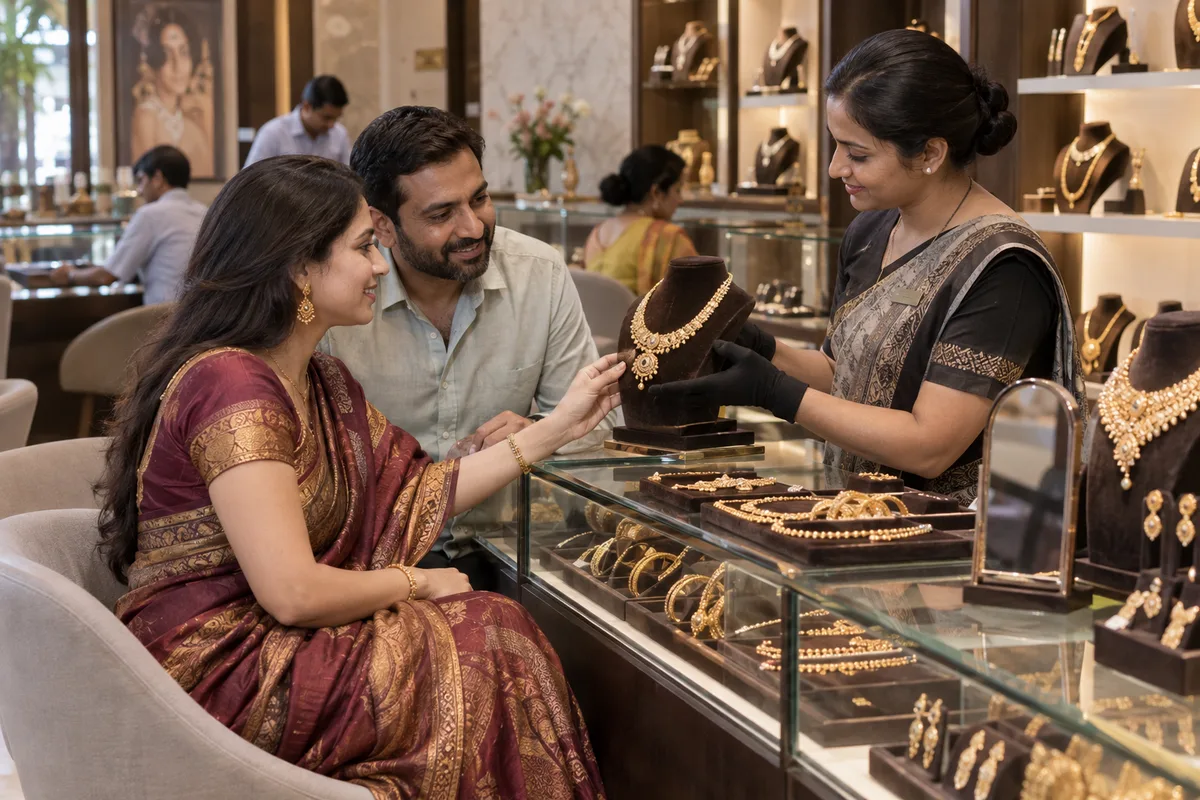
A buyer looks at the seller before looking at the piece. The buyer saves photographs, asks a family member, reads the reviews and compares the price against two or three other sellers. The bigger the purchase, the longer that takes, and a wedding date, a festival or a gift sets the deadline. A business left off the list misses the season.
Scope, fee, reporting and term are agreed in writing after we have read your brief and spoken to you.
In one paragraph
Jewellery and luxury retail is the sale of gold, diamond, silver, artificial, fashion, bridal and gemstone jewellery, watches and premium accessories to buyers, including trade buyers, who compare sellers and prices and want something to check before they pay. GullySales looks at how those buyers find your business, what they can check about you, and how plainly a message gets answered.
The ten kinds of business on this page do not sell the same thing. A gold jeweller is trusted on purity, weight and a family name that has been in the lane for decades. An artificial or fashion jewellery store sells on design and price to a quicker buyer, a gemstone dealer sells on a certificate, and a custom designer sells on a conversation. What they share is a buyer who checks before paying and an enquiry that arrives as a message with a picture attached.
Last updated 18 Oct 2026. Rules on what you may advertise differ by trade and change. This page describes them in general terms only, so check the current position with your own adviser or regulator.
10 kinds of business
Each kind of business in jewellery & luxury retail sells a little differently.
Open the page closest to yours for how its buyers choose and what we would fix first.
Gold jewellery stores
Buyers compare making charges and hallmarking across showrooms, so one plain account of the price, the same from every member of staff, counts for more than a discount.
Read the page for jewellery retailersDiamond jewellery stores
Weeks of research across several showrooms come before a solitaire is bought. The shop that is found early and answers a price question plainly gets onto the shortlist.
Read the page for jewellery retailersSilver jewellery stores
Designs and making charges are compared here too. A festive plan, a quick WhatsApp reply on a design and a clear answer on the price do the work.
Read the page for jewellery retailersArtificial jewellery stores
Festival days fill the shop and other days are empty, and a buyer who asks for a photograph on WhatsApp can go quiet, so a WhatsApp catalogue and a separate route for resellers matter.
Read the page for artificial jewellery storesFashion jewellery stores
Younger buyers find designs on Instagram and reels, so product pages, a follow-up for abandoned carts and a measured plan for creators matter more than a marketplace listing.
Read the page for fashion jewellery storesBridal jewellery stores
The bridal set is researched for weeks before the date, with several showrooms on the shortlist. Being found early, and answering a design enquiry plainly, come first.
Read the page for jewellery retailersGemstone dealers
Retail buyers, jewellers and astrologers need to trust the stone before paying, so its certificate, a video and the seller's name in front of a buyer in another city do the selling.
Read the page for gemstone dealersWatch stores
Buyers choose a gift, a first-salary watch or a luxury piece, so a listing that names the brands carried and a record that links service customers to sales matter more than walk-ins alone.
Read the page for watch storesLuxury accessory stores
Buyers already know the brand and the piece, so the store has to be found ahead of the brand's own site, and holds and client details belong on the store's record, not on a salesperson's phone.
Read the page for luxury and premium brand retailersCustom jewellery designers
The sale is a conversation and a sketch, so a portfolio, a consultation that understands the brief before naming a price, and a written terms sheet covering weight, purity and wastage build the trust.
Read the page for custom jewellery designersWhat they share
What usually goes wrong across jewellery & luxury retail.
Whichever of these you run, you will probably recognise most of them.
“An enquiry arrives by message and the answer is late or differs”
A buyer sends a picture or asks about a piece. If the answer is late, or comes as different versions from different people, the buyer may already be talking to another seller.
“Nothing public says what the buyer is paying for”
Buyers look for what the piece is made of, what stands behind that claim, and what happens after the sale, such as exchange, return or service. A seller that says none of this publicly is assumed to be hiding it.
“We have traded for years and a newer business shows first”
Years in the trade do not appear on a phone. Wherever buyers look, the business with current photographs, correct details and recent reviews is the one they see first, whoever opened first.
“Demand arrives around dates and we are not ready”
A wedding, a festival, a gift or an auspicious date sets the deadline. When demand lands within a few weeks and offers, stock and staff are decided in the same week, the enquiries that came a month earlier wait.
“Customers bought once and nobody remembers them”
The family that bought a set, the gift buyer, the client who asked for a hold. They are among the first people to call this season, and the business has no record of them.
“Our reviews are old and a buyer has nothing recent to read”
A buyer who cannot test the piece first reads what earlier buyers said about honesty and about what happened when something went wrong. A few lines of recent praise matter more than a high star count from years ago.
“We cannot tell which enquiries became sales”
Messages, calls, visits and online orders are recorded nowhere together. So the business cannot say whether the posts, the listing or the ads brought the buyer who spent the most.
Where to start
What to fix first in jewellery & luxury retail.
In the order we would look at them. Your own enquiry records may change the order, and we would say so.
- Answer the first message about a piece with a named person and a clear reply: a price range where the piece has one, or how the price will be worked out where it is made to order. Make sure everyone who replies gives the same answer.
- Fix the listing every buyer checks, whether the Google Business Profile or the online page: correct details, current photographs of the business and of pieces, and a way to book a visit, a viewing, a video call or a consultation, whichever the business offers.
- Publish what is in the price in words a buyer can read in a minute: the material or stone, whatever proof stands behind it, what makes up the price, and the exchange, return or service terms.
- Keep one record of every enquiry and every customer, with the occasion they mentioned, so that an anniversary, a wedding or an exchange date can prompt a call.
- Plan the busy periods of your own trade early, with offers decided and staff scheduled before the enquiries rise, not after.
- Ask recent buyers for a review soon after the purchase, when they are happy, and reply to the awkward ones in public.
Related services
The work that usually comes up.
Which of these you need is decided after we have read your brief.
- Local SEOShow up on the map when someone searches near your shop.
- Google Business Profile managementBe the pin on the map that shows correct hours and actually answers reviews.
- Lead response and follow-upMore enquiries turned into orders, for teams that reply late and follow up once.
- Festive and seasonal advertisingBook the Diwali slot in August, because by October there is nothing left.
- Online review generation and managementYour customers are happy, and your Google page still shows only a few reviews.
- Customer reactivationWin back the customers who stopped ordering and were never asked why.
FAQ
Questions about jewellery & luxury retail.
Not here? More answers, or ask on WhatsApp.
Does a jeweller need ads, or is Instagram enough?
What do we say to a buyer who is comparing our price with two other shops?
Can a small jewellery business compete with a big chain online?
What should we do with buyers who ask about pieces and leave without buying?
What can we say about purity and certification in our marketing?
How long is the contract?
How soon will we see results?
What do you need from us?
What if we are not happy with the work?
More in Retail & Consumer
Looking for a single trade? See every industry.
Your brief
Tell us what you need, and we will read it before we call.
Eight short steps about your business, what you want and who decides. Most questions are a tap, and you can skip any you would rather answer on the call.
Your next practical step
Tell us what you are trying to grow, and we will read it before we call.
Eight short steps, mostly taps. Skip anything you would rather answer on the call.