Industries · Retail & Consumer
Buyers compare sellers before they commit, so every reply needs a clear answer and a name to follow it up.
A buyer decides on a mobile phone, a washing machine or a camera set long before reaching the shop. The model is chosen from a review video, the price is checked on two online sites, and then the buyer asks the nearest shops what they will charge. A reply that carries a figure and says what it includes gives the buyer something to compare. "Come and see" gives nothing to set against the other shops on the screen.
Scope, fee, reporting and term are agreed in writing after we have read your brief and spoken to you.
In one paragraph
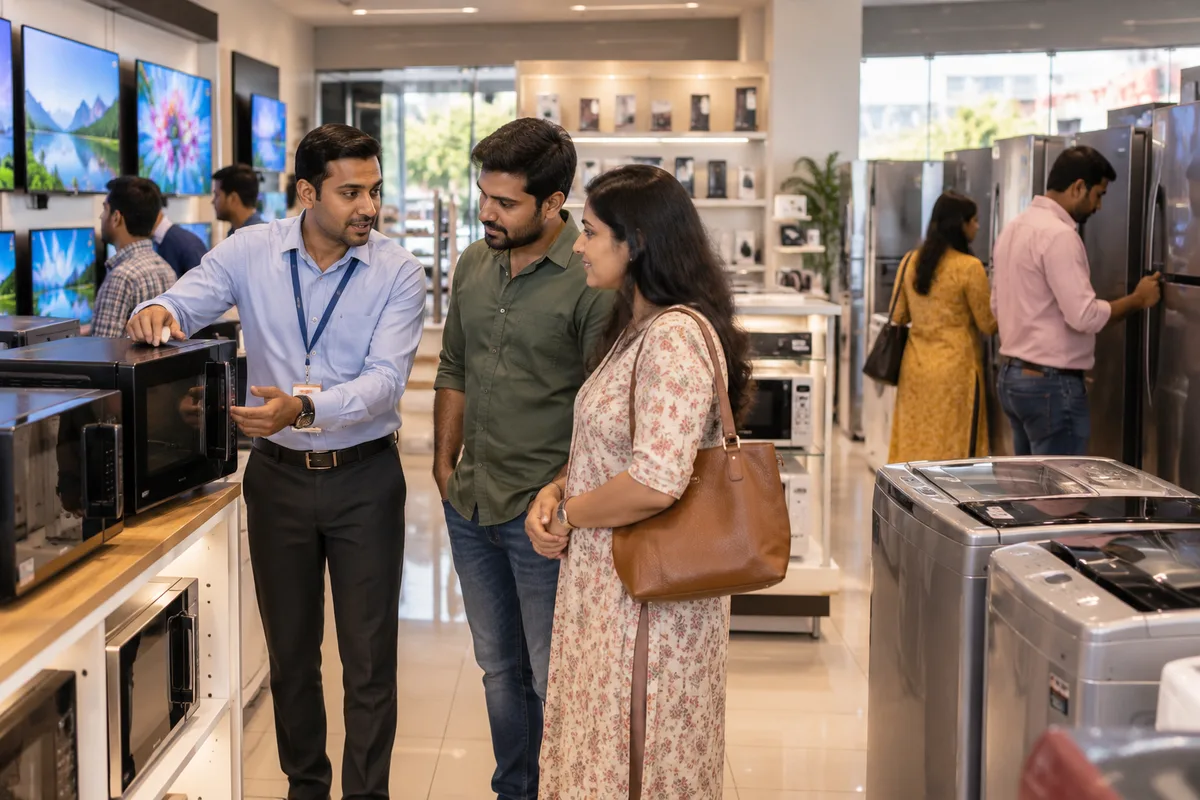
Electronics and appliances retail is the sale of phones, computers, printers, cameras, televisions, kitchen and home appliances, electrical goods and gaming gear to households, offices and trade buyers who compare sellers before they commit. GullySales looks at how those buyers find your shop, how a price question gets a straight answer, and whether service and repeat buying bring them back.
The thirteen trades on this page differ in how often and how much people buy. A phone or accessory shop lives on frequent visits and quick decisions, while an appliance or television shop sells a few large items to households that buy once in several years. A CCTV, electrical or computer shop also sells to installers and contractors who return for volume. What they share is a buyer who sets one seller against another, and a sale that is only half done when the bill is paid, because warranty, set-up, replacement and service decide whether anyone returns.
Last updated 18 Oct 2026. Rules on what you may advertise differ by trade and change. This page describes them in general terms only, so check the current position with your own adviser or regulator.
13 kinds of business
Each kind of business in electronics & appliances retail sells a little differently.
Open the page closest to yours for how its buyers choose and what we would fix first.
Mobile phone stores
Budget, model and a rival's price arrive together, which puts the WhatsApp price reply, the exchange offer and the finance arrangement at the centre of the sale.
Read the page for mobile phone storesMobile accessory stores
Cases, chargers and screen guards are small bills that add up through repeat visits. People search by phone model, and resellers order by call, so the catalogue is built by model.
Read the page for mobile accessory storesLaptop stores
Someone who has read ten reviews still walks out to think. A plain guide by use and budget, and a follow-up for that buyer, are prepared.
Read the page for laptop storesComputer stores
Offices, schools and homes ask for a system built to a job, so a written quote for each specified system and a record of office customers come first.
Read the page for computer storesPrinter stores
The printer is the first sale in a supply and service account. A supplies register, a contract tracker and per-page quotes for offices follow from that.
Read the page for printer storesCCTV stores
A first-time buyer does not know what to ask for, and installers buy on rates, not on explanation. Kit pages and an installer rate card answer each.
Read the page for cctv storesTV and audio stores
The demo room does the selling, so an invitation to it ahead of a big match or festival is prepared, along with clear installation details.
Read the page for tv and audio storesHome appliance stores
A fridge or washing machine is bought rarely, with delivery, installation and finance attached. The Google listing and the enquiry follow-up are what the family meets when the old one fails.
Read the page for home appliance storesKitchen appliance stores
The designer who specifies the chimney and hob decides as much as the household, so a designer introduction sits beside the Google listing and the showroom follow-up.
Read the page for kitchen appliance storesElectrical shops
Electricians steer the brand at the wire counter, and families choose decorative lights in the showroom. A routine for the electricians and a follow-up on project quotes come first.
Read the page for electrical and lighting dealersSmart home equipment stores
Visitors like the idea and go back to ordinary switches, so a working demonstration leads, with builder and designer outreach and an after-install support record behind it.
Read the page for smart home equipment storesGaming equipment stores
Players check marketplace prices while parents worry about fake units. A pre-order list, a launch-night plan and plain warranty details answer both.
Read the page for gaming equipment storesRefurbished electronics stores
The first doubt is whether the device is genuine, clean and covered, so a trust page sets out the testing and warranty before the price.
Read the page for refurbished electronics storesWhat they share
What usually goes wrong across electronics & appliances retail.
Whichever of these you run, you will probably recognise most of them.
“Our price is set beside a rival's before the buyer decides”
Buyers hold a marketplace listing, a distributor's rate or another shop's quote next to ours. A shop that cannot explain what it adds, such as local service, a person to call and help after the sale, is left competing on a number it cannot win.
“People ask the price and then we hear nothing”
An enquiry arrives by message or call during a busy hour and the answer goes out later, or never. By then the buyer has an answer from another shop, and nobody knows how many such enquiries are lost.
“We sold the item and have no record of who bought it”
The invoice sits in a book or a billing screen. When a warranty ends, a supply runs out or a new model launches, there is no list to call, so the buyer goes to whoever advertises first.
“Our listing does not show what we are now”
A search for a product near me leads to a map listing with old timings and thin detail. A buyer choosing between two sellers looks for current photographs, the brands carried and a phone number that gets answered.
“A fault after the sale becomes the seller's problem”
The warranty card may point to the brand's service centre, or to the shop's own cover, yet the review is written about the shop. How the shop behaved when something went wrong is what the next buyer reads.
“Names are taken and never followed up”
Whenever interest outruns the people available, names go on scrap paper or into a chat, and the person who took them is not the one who answers the next message. A buyer who gave a name and heard nothing buys elsewhere.
“The offer depends on who answers”
The price, the terms and what is included change with the person serving. A buyer who asks twice gets two answers and trusts neither.
Where to start
What to fix first in electronics & appliances retail.
In the order we would look at them. Your own enquiry records may change the order, and we would say so.
- Reply to every price enquiry with a figure, what it includes and how the item reaches the buyer, sent by a named person.
- Build a list of every buyer with the item, the date and the brand, so that warranty ends, supply needs and upgrade moments can prompt a call.
- Fix the Google Business Profile with correct timings, current photographs, the brands you carry and a number that someone answers.
- Decide what you offer that an online seller cannot, such as demonstration, set-up, replacement or a service desk, and say it in the first line of every listing and reply.
- Write down one rule for price, offers and terms that everyone who serves buyers uses, and put the warranty terms on the bill.
- Capture a name and number from every enquiry, and give each one an owner who is expected to answer.
Related services
The work that usually comes up.
Which of these you need is decided after we have read your brief.
- Local SEOShow up on the map when someone searches near your shop.
- Google Business Profile managementBe the pin on the map that shows correct hours and actually answers reviews.
- WhatsApp sales processThe deal lives in a salesperson's personal WhatsApp and leaves when he does.
- Lead response and follow-upMore enquiries turned into orders, for teams that reply late and follow up once.
- Festive and seasonal advertisingBook the Diwali slot in August, because by October there is nothing left.
- Online review generation and managementYour customers are happy, and your Google page still shows only a few reviews.
- Customer reactivationWin back the customers who stopped ordering and were never asked why.
- Hyperlocal advertisingHow far a customer will travel to you decides this plan, not the channel.
FAQ
Questions about electronics & appliances retail.
Not here? More answers, or ask on WhatsApp.
How do we compete when the online price is lower?
Is it worth listing our products on marketplaces as well?
What should we do when a buyer sends a rival's quote?
What should we ask for in reviews?
Who deals with a fault in the warranty period, the shop or the brand?
How long is the contract?
How soon will we see results?
Who will actually do the work?
What do you need from us?
What if we are not happy with the work?
More in Retail & Consumer
Looking for a single trade? See every industry.
Your brief
Tell us what you need, and we will read it before we call.
Eight short steps about your business, what you want and who decides. Most questions are a tap, and you can skip any you would rather answer on the call.
Your next practical step
Tell us what you are trying to grow, and we will read it before we call.
Eight short steps, mostly taps. Skip anything you would rather answer on the call.