Clothing stores and boutiques · CRM
Remember the measurements, the occasion and the sister's wedding date.
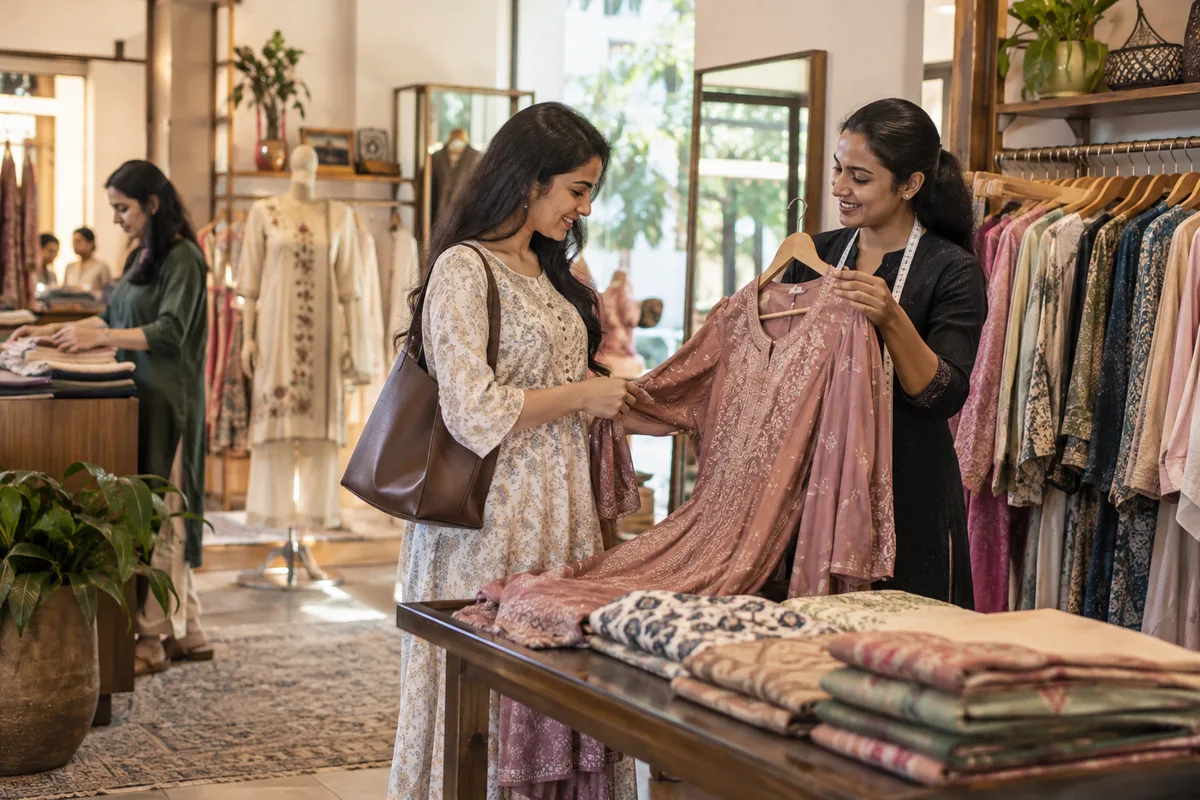
A CRM for a boutique is the one place that holds each customer's sizes, past purchases, open stitching orders and family occasions. GullySales sets it up from your bills and slips so the knowledge stops living in a notebook and the owner's memory.
Scope, fee, reporting and term are agreed in writing after we have read your brief and spoken to you.
What CRM means
A CRM is the record where every enquiry, call and quote is kept against a customer, replacing separate notebooks, spreadsheets and memory. GullySales sets up or cleans an existing CRM and reports from it by enquiry outcome rather than by activity logged.
Also for clothing stores and boutiques
- Lead generation for clothing stores and boutiques
- Follow-up systems for clothing boutiques
- SEO for clothing stores and boutiques
- PPC ads for clothing stores and boutiques
- Digital marketing for clothing stores and boutiques
- Reputation management for clothing stores and boutiques
- Local SEO for clothing stores and boutiques
- Branding and identity for clothing stores and boutiques
Sales and marketing for clothing stores and boutiques, the overview.
Last updated 5 Oct 2026.
For clothing stores and boutiques
Where it usually goes wrong, and what we would do.
“The notebook leaves when the busy season arrives”
In wedding season the owner is on the shop floor from opening to closing. Measurements on slips, fitting dates on a calendar and preferences in memory all slip at the moment the shop most needs them.
“A purchase tells you the next occasion”
A customer who bought for a cousin's engagement has a wedding coming from the same family. A record that stores the relationship and the likely date turns one sale into an invitation months ahead.
“Custom orders need a status, not a pile”
Cut, stitched, first fitting, alteration and ready are five different states. Slips in a drawer cannot answer a customer who calls to ask where the blouse is, so every order carries a status the whole team can read.
“Spreadsheets break when two people edit”
Two salespeople updating one file overwrite each other, and a duplicated customer appears under three spellings. The tool should be simple enough for the counter staff and tidy enough to filter by occasion.
What we do
What we deliver for clothing stores and boutiques.
Every deliverable, what it covers for you, and the result it is there to produce. Nothing here is an extra.
A customer record built from your bills
Name, phone number, sizes, styles bought and occasions noted, loaded from past bills and stitching slips so the record starts full, not empty.
Result: Opening a customer shows the history without asking again.
A stitching and alteration order tracker
Every custom order with its measurements, fitting date, delivery date and current status, visible to the shop and the tailoring team.
Result: Anyone at the counter can answer where an order stands.
Occasion and relationship fields
Fields for the event, its date and who it is for, so a sister's wedding is a searchable entry and not a remembered fact.
Result: You can list everyone with an occasion coming up.
Groups for invitations
Saved groups such as bridal customers, men's ethnic wear and kids' occasion wear, ready for a collection preview message.
Result: A new collection reaches the right customers first.
A simple entry routine for the counter
One short form filled at billing, with a rule on who enters what, so the record stays current without extra work after closing.
Result: The record matches what was sold that day.
A school and institution list
Separate entries for uniform buyers with contact person, supplier review date and last order details.
Result: Renewal dates are in front of you well before the decision.
How the result is measured
- Enquiries logged in the CRM
- Data completeness
- Reports generated from CRM data
Recorded as a baseline before work starts, so every later report has an honest comparison.
Fields worth keeping
What a boutique should record about a customer, and who writes it down.
Keep each field short enough that the person at the counter will actually fill it in.
- Occasion and event date
- The counter staff enter it when the order is booked. It tells you when to remind the family and which collection to show them next.
- Measurements and date taken
- The tailor or fitting staff enter them. A date beside them shows when a customer last changed size and whether a stitch order needs a new fitting.
- Order stage
- The tailor updates it as cutting, stitching, first fitting and ready are done. It lets anyone answer a call about a blouse without walking to the back.
- Promised delivery date
- Set when the order is booked, and shown in red as the date nears. It ends the lost slip and the missed wedding.
- Relationship to another customer
- The counter staff note a sister, mother or cousin. A bride's family shops together, so one record leads you to the others.
- Fabric and colour likes
- The salesperson notes what the customer tried and rejected. It saves a repeat customer an hour of the same racks and helps you choose what to show first.
Who it is for
This is written for these clothing stores and boutiques.
- Women's ethnic wear and saree boutiques
- Designer and occasion wear studios
- Multi-brand clothing and accessories stores
- Men's wear and ethnic wear stores
- Custom tailoring and blouse stitching studios
- Kids' wear stores
- School uniform retailers and suppliers
- Corporate, hospital and hospitality uniform suppliers
- Fashion accessories and jewellery boutiques
Not for
It is not the right fit if.
- Only one person takes and writes every order, so a notebook already holds everything and software would add work.
- The shop has no habit of writing the order down at the counter, and a system cannot fix that on its own.
- You are unwilling to ask customers for a phone number, so the records would stay empty.
How it works
How the CRM work runs
The work itself, in order. How an engagement starts, from your brief to a written scope, is set out on our method page.
- 1
Map the sales process
We sit with the people who sell and write down how a deal moves from enquiry to payment, including where it stalls.
- 2
Agree stages, fields and owners
Each stage gets a name your team already uses and a proof that the deal has left it. We agree which fields are required at which stage, and who may change what.
- 3
Build on a copy
Pipeline, fields and views are built on a trial copy where the CRM offers one, or in a separate pipeline where the plan allows. Live work stays untouched.
- 4
Connect channels, then switch on automations
Channels are connected first. Each automation is then switched on separately, so a misfiring rule is easy to find.
- 5
Test with real deals
The people who will use the CRM run open deals through it. Gaps are fixed before the whole team switches over.
- 6
Switch over and trim
Once real use shows which fields stay empty and which stages nobody uses, those are cut and the handover record is updated.
Where this fits
Three pieces of sales work, in this order.
This work sits inside sales management. A target, a review routine and someone who owns the number.
Step 1
Sales audit
Find where deals are being lost and what to fix first.
Start here if you cannot say where orders are lost.
Step 2
Sales process design
One written way to sell, from first enquiry to repeat order.
Start here if every salesperson sells differently.
Step 3 · you are here
Sales management
A target, a review routine and someone who owns the number.
Start here if the team has targets and no routine.
FAQ
Questions owners ask before they call.
Not here? More answers, or ask on WhatsApp.
Do we need paid software to start?
Our tailor keeps measurements in a book. Does that go into the CRM?
What about customer privacy?
Should measurements sit in the CRM or stay with the tailor?
How much does it cost?
How long is the contract?
How soon will we see results?
Who will actually do the work?
What do you need from us?
What if we are not happy with the work?
From the blog
Further reading for clothing stores and boutiques.
 5 min read · 29 Sept 2026Festival and wedding-season stock and promotion timing for retailersHow a retailer lines up the promotion window with the stock cycle in festival and wedding season: what to announce before, during and after, and when to stop advertising a line.
 6 min read · 21 Sept 2026Influencer marketing vs social media advertising: which one should you pay for?An ad is a message you control, shown to people you choose. A creator post is a recommendation you do not control, shown to people who chose the creator.
 8 min read · 21 Sept 2026How to write an influencer briefA brief fixes the claim, the offer and the disclosure, and then leaves the creator alone. Hand them a script and you have paid a premium for a bad advertisement.
More for clothing stores and boutiques
Everything else we would do for you.
Closest to this: leads and follow-up
Also for clothing stores and boutiques
Or start from the overview: sales and marketing for clothing stores and boutiques.
Your next practical step
Tell us what you are trying to grow, and we will read it before we call.
Eight short steps, mostly taps. Skip anything you would rather answer on the call.