Clothing stores and boutiques · Product catalogue design
Send a catalogue that a family can browse together before they visit.
Product catalogue design for a clothing boutique is the layout, page system and print and phone files for a document that shows your outfits by occasion, size and price. GullySales designs the pages from the photographs and product details you approve, builds one repeatable page for each garment type, and hands over editable files with a print version and a version for messaging apps.
Scope, fee, reporting and term are agreed in writing after we have read your brief and spoken to you.
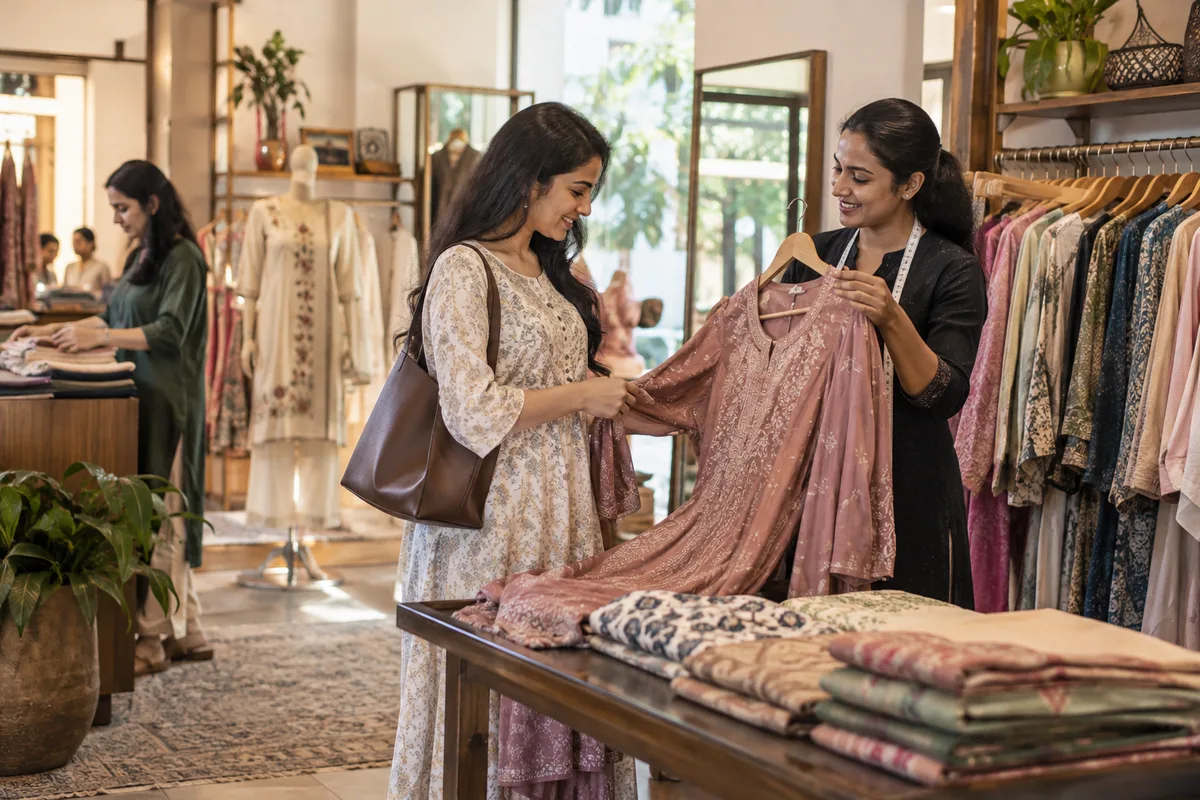
What product catalogue design means
Product catalogue design is the layout, page system, image treatment and print and screen files for a document that lists your range. GullySales designs the pages from the product information and photographs you approve, builds a repeatable page for every product family, and hands over editable files with print and phone versions.
Also for clothing stores and boutiques
- Social media marketing for clothing stores and boutiques
- Content marketing for clothing stores and boutiques
- Instagram marketing for clothing boutiques
- Facebook marketing for clothing boutiques
- Instagram influencer marketing for clothing stores and boutiques
- Regional influencer marketing for clothing stores and boutiques
- Short-form video and reels production for clothing stores and boutiques
- Social media caption and post writing for clothing boutiques
Sales and marketing for clothing stores and boutiques, the overview.
Last updated 14 Nov 2026.
For clothing stores and boutiques
Where it usually goes wrong, and what we would do.
“The catalogue is read by a group, not one person”
A bride's mother, an aunt and the bride look at the same screen or the same printed pages, sometimes in different homes on the same evening. The catalogue is forwarded, screenshotted and discussed. Pages need one outfit each, large pictures and a clear name, so that a family can point at a page and say that one, without asking which outfit the sender meant.
“Occasion is how the shopper thinks, not the garment type”
A boutique's stock is filed by saree, lehenga, kurta and blouse, but the shopper arrives with an engagement, a reception or a festival. A catalogue ordered only by garment type forces the shopper to search. Good page order follows the occasion first, then the garment, with a contents page that uses the words a customer uses in the shop.
“Uniform and custom ranges need a different page”
A school uniform supplier or a hospital uniform maker sells a specification, not a mood. The buyer needs the item, the fabric, the size chart, the colour options and the place where a logo is embroidered. A page designed like a lookbook hides those facts. A page designed like a data sheet drains the boutique pages of feeling. Both can sit in one system.
“Prices and availability go out of date first”
An outfit sold last week still sits in a catalogue the shopper received this week. Placing the price in the body of the design makes every change a redesign. A catalogue for a shop that sells one-of-a-kind and made-to-measure pieces needs a clear way to show what is a made-to-order design and what is a piece that is in stock now.
What we do
What we deliver for clothing stores and boutiques.
The work available for this need. We agree the deliverables and responsibilities for your engagement in writing.
Page system for outfits
A repeatable outfit page is designed with fixed zones for the picture, the name, the fabric, the sizes offered and the enquiry line. Once approved, a new outfit means filling the zones, not redrawing the page. The system covers a full-page outfit, a two-outfit page and a close-up detail page for embroidery or weave.
Result: Your team can add a new outfit by filling the zones without a designer.
Occasion-led contents and section pages
A contents spread and section dividers organise the catalogue by occasion, such as bridal, festive, party, everyday and children's, then by garment inside each. The words are the ones your shoppers use at the counter. A reader can find the reception section from the contents without turning every page.
Result: A shopper can reach any occasion section from the contents page.
Size chart and fabric care pages
A clear size page shows measurement points and the way your shop measures, with room for the alteration and custom stitching options. A fabric page explains silk, cotton, georgette and blends in plain words you approve. These pages cut down the questions that arrive by message after the catalogue is sent.
Result: A reader can find the size method and the fabric notes on named pages.
Uniform and corporate range pages
Uniform items are laid out as a specification page: the garment, the fabric, the colour options, the sizes and the logo position. A school page and a hospital page can share the structure and differ in colour and detail. The buyer's admin team can compare two garments side by side without a phone call.
Result: A purchase manager can compare two uniform items on the page.
Phone and messaging versions
Beside the print file, a version is built for a phone and a messaging app, with large pages, a size that opens without delay and a link back to your shop contact. A screenshot of one page still shows the outfit name and your shop name, so a forwarded picture does not lose its source.
Result: A single forwarded page still shows the outfit name and the shop name.
Editable files and an update sheet
You receive the editable sources, the print-ready and screen files, and a sheet explaining how to change a price, mark an outfit as sold or add a new season. The sheet names the fonts, the colour values and the image rules, so a later update looks like the first edition.
Result: Your team can follow the sheet to mark an outfit as sold or add a season.
How the result is measured
- Calls asking which page holds a product
- Enquiries that arrive quoting a model code from the catalogue
- Quotation requests that need a follow-up to clarify a specification
Recorded as a baseline before work starts, so every later report has an honest comparison.
Who it is for
This is written for these clothing stores and boutiques.
- Women's ethnic wear and saree boutiques
- Designer and occasion wear studios
- Multi-brand clothing and accessories stores
- Men's wear and ethnic wear stores
- Custom tailoring and blouse stitching studios
- Kids' wear stores
- School uniform retailers and suppliers
- Corporate, hospital and hospitality uniform suppliers
- Fashion accessories and jewellery boutiques
Before you decide
Agree the work. Know how to judge it.
Product catalogue design for clothing stores and boutiques: use these checks to prepare, choose the scope, and review what changes.
Bring the right evidence
Bring questions from sales calls and examples of objections that delay a decision. Choose a subject expert who can check the substance, and identify evidence that can be published.
Make the scope clear
Agree the reader, buying question, format, and distribution route for each piece. Set the approval process and distinguish new research from rewriting material you already have.
Check the work in use
Ask a colleague to use the draft in a real buyer conversation. It should answer the question, support its claims, and make the next step clear without requiring a sales pitch to explain it.
Know when to change course
If the same unanswered question appears in several articles, improve the strongest page before commissioning another. More words are not a substitute for missing evidence.
These are discussion points, not a fixed package. GullySales confirms the deliverables, responsibilities, fee, and term in writing after reading your brief and speaking with you.
Before we start
What to have ready before the work starts.
The records, access and decisions this work needs from clothing stores and boutiques. Anything missing is noted in the written scope, with who will supply it.
- Photographs of every outfit
- The catalogue is only as clear as its pictures. Send the best photograph of each outfit, plus a close-up of any embroidery or weave. Where photographs differ in light and background, the pages will look uneven, and a weak picture beside a strong one makes the strong one look accidental.
- Outfit names and product details
- Give each outfit a name or code, its fabric and the sizes offered. A clear name is how a family says that one on a call. Without names and details the catalogue falls back on descriptions like the blue one, and the shop is asked the same question again and again.
- The size and measurement method
- Tell us how the shop measures and what alterations it offers. A size page that does not match the fitting room causes disputes at the counter. If the shop has no written method, we can note the questions to settle before the page is drawn.
- Uniform specifications and logos
- For school or corporate ranges send the item list, the fabric, the colour references and the logo files with the position of the embroidery. A supplier whose specification page is vague loses a renewal to one whose page answers the admin office's questions on the first read.
- A decision on price display
- Decide whether prices appear in the catalogue, on a separate list or only on request. Printed prices go out of date; a made-to-measure price depends on the order. Each choice changes the page design, and the decision made now spares a reprint when the rates move.
How it works
How the product catalogue design work runs
The work itself, in order. How an engagement starts, from your brief to a written scope, is set out on our method page.
- 1
Reading your range and your counter
We begin with the range, the way customers ask for outfits at the counter and the way you send pictures today. We list the garment types, the occasions, the made-to-order pieces and the uniform items, and decide which parts belong in the catalogue and which belong in a separate document such as a price list.
- 2
Recording the figures before the layout
Before design begins we note how catalogues and picture sets reach customers now, the enquiries they bring and the questions staff answer repeatedly. Your message history and order record are the source. We read the new catalogue against these notes afterwards instead of against our impression.
- 3
Choosing the order of the pages
We draft the page order from the occasion, the garment and the price band, and test it against how three typical shoppers would look for an outfit: a bride's family, a festival buyer and a school office. You approve the order before any page is composed, since a wrong order is expensive to fix later.
- 4
Designing the cover and the outfit page
We design the cover, the contents and one outfit page in full, then show them together. The picture crop, the type size and the room for the name are settled on real photographs. A change at this stage affects every later page, so this is where we ask you to look hardest.
- 5
Building the sections and the support pages
With the system approved we build the occasion sections, the size and fabric pages, the uniform pages and the back cover with your contact details. Photographs are matched in tone, and where one is too weak we mark it and ask for a replacement. Product facts come from you and are read back for confirmation.
- 6
Handover and reading the result
We deliver the print and screen files, the editable sources and the update sheet, and later read the enquiries and visits that follow the catalogue against the figures recorded at the start. If shoppers still ask where an outfit is, the page order is what we reconsider first.
Where this fits
Three pieces of sales work, in this order.
This work sits inside sales process design, at stage 1, prospecting and lead generation. The audit comes before it, and sales management keeps it running.
Step 1
Sales audit
Find where deals are being lost and what to fix first.
Start here if you cannot say where orders are lost.
Step 2 · you are here
Sales process design
One written way to sell, from first enquiry to repeat order.
Start here if every salesperson sells differently.
Step 3
Sales management
A target, a review routine and someone who owns the number.
Start here if the team has targets and no routine.
FAQ
Questions owners ask before they call.
Not here? More answers, or ask on WhatsApp.
Should a boutique catalogue show prices?
Can the catalogue be sent on a messaging app?
Do you write the descriptions of each outfit?
Can one catalogue include our uniform range?
How do we update it when stock changes?
Do you print the catalogue?
How long is the contract?
How soon will we see results?
Who will actually do the work?
What do you need from us?
From the blog
Further reading for clothing stores and boutiques.
 5 min read · 29 Sept 2026Festival and wedding-season stock and promotion timing for retailersHow a retailer lines up promotion with the stock cycle in festival and wedding season: what to announce before, during and after, and when to stop.
 6 min read · 21 Sept 2026Influencer marketing vs social media advertising: which one should you pay for?An ad is a message you control, shown to people you choose. A creator post is a recommendation you do not control, shown to people who chose the creator.
 8 min read · 21 Sept 2026How to write an influencer briefA brief fixes the claim, the offer and the disclosure, then leaves the creator alone. Hand over a script and you pay for a bad advertisement.
More for clothing stores and boutiques
Related work to consider.
Closest to this: content and social
- Social media marketing for clothing stores and boutiques
- Content marketing for clothing stores and boutiques
- Instagram marketing for clothing boutiques
- Facebook marketing for clothing boutiques
- Instagram influencer marketing for clothing stores and boutiques
- Regional influencer marketing for clothing stores and boutiques
- Short-form video and reels production for clothing stores and boutiques
- Social media caption and post writing for clothing boutiques
Also for clothing stores and boutiques
Or start from the overview: sales and marketing for clothing stores and boutiques.
Your next practical step
Tell us what you are trying to grow, and we will read it before we call.
Eight short steps, mostly taps. Skip anything you would rather answer on the call.