Clothing stores and boutiques · Short-form video and reels production
Show the drape, the fit and the finish in a reel, then give the shopper a way to ask.
Short-form video for a boutique turns the things a shopper asks at the counter, such as how a saree falls or how a blouse is fitted, into brief vertical clips for phone feeds. GullySales plans and films batches around your collection, checks captions and sizes, and traces enquiries rather than treating views as sales.
Scope, fee, reporting and term are agreed in writing after we have read your brief and spoken to you.
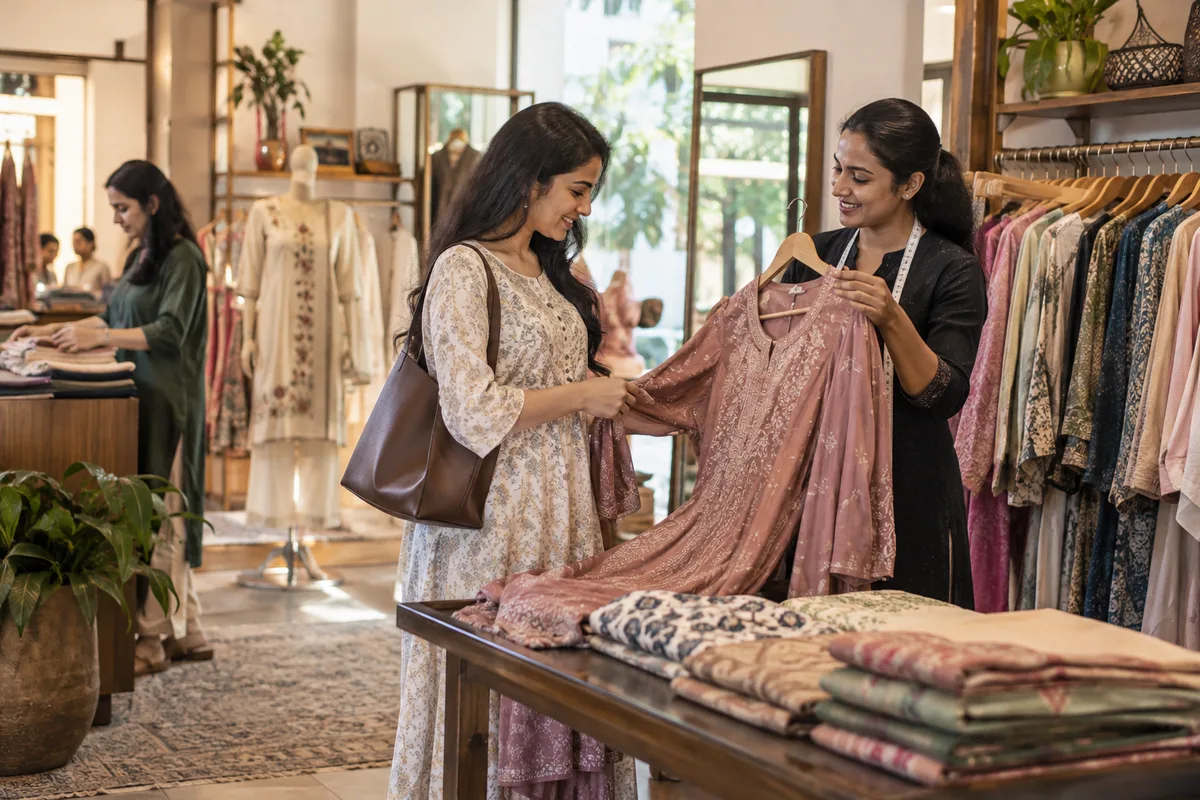
What short-form video and reels production means
Short-form video and reels production turns product demonstrations and buyer questions into brief vertical videos for phone feeds. GullySales plans and films batches, edits them with readable captions, prepares versions for the agreed channels, and tracks which clips lead to enquiries rather than treating views as proof of sales.
Also for clothing stores and boutiques
- Social media marketing for clothing stores and boutiques
- Content marketing for clothing stores and boutiques
- Instagram marketing for clothing boutiques
- Facebook marketing for clothing boutiques
- Instagram influencer marketing for clothing stores and boutiques
- Regional influencer marketing for clothing stores and boutiques
- Social media caption and post writing for clothing boutiques
- E-commerce product description writing for clothing boutiques
Sales and marketing for clothing stores and boutiques, the overview.
Last updated 14 Nov 2026.
For clothing stores and boutiques
Where it usually goes wrong, and what we would do.
“Fabric has to move on screen”
A photograph cannot show how a silk saree falls or how a lehenga flares when the wearer turns. A reel can, but only if the clip is planned around that motion. A model walking past a rack with music over it shows nothing a shopper can use. The shot list should name the garment, the movement that proves the point and the detail the shopper will want to see up close, before the camera is switched on.
“The collection changes faster than the schedule”
A festival drop or a bridal edit sells in a short window, and a clip about a style that has sold out frustrates the very people who saved it. Filming has to follow stock, so the batch plan is checked against the shelf the day before shooting. A reel posted for a garment with no sizes left sends enquiries your counter cannot serve.
“People in the video need to agree”
Customers trying on outfits, models, staff and children in uniforms all appear in boutique footage. Each needs to agree to be filmed, and a parent has to agree for a child. Fitting rooms are private and stay off camera. A boutique that films first and asks later risks removing a popular clip when someone objects, so consent is arranged before the shoot day.
“A view is not a visit”
A reel can be watched thousands of times without a single fitting booked. The shopper who messages to ask the price of the outfit in the video is the one who counts. If the caption has no route to ask, and the person answering does not know which clip prompted the message, the boutique cannot tell which reels earned their place in the next batch.
What we do
What we deliver for clothing stores and boutiques.
The work available for this need. We agree the deliverables and responsibilities for your engagement in writing.
Batch plan built on shopper questions
A list of clips, each with the question it answers, such as how the border looks in daylight or how a blouse back is finished. Each entry names the garment, the speaker and the opening line. You approve the list against what is on the shelf.
Result: Every clip on the list names a garment that is in stock on shoot day.
Shoot schedule and styling sheet
Grouped setups by garment type and light, with a list of garments, accessories and people needed. Your team confirms stock, steaming and who is available, so the camera is not waiting while someone looks for a dupatta.
Result: Each setup lists its garments, its people and its place in the shop.
Edited vertical clips
Finished reels with the garment or detail in view from the first moments, and the motion or finish the shopper wants to see. You check each one against the approved subject and confirm the cuts have not changed the garment's appearance.
Result: Each reel matches the approved subject and shows the garment as it is.
Checked captions and on-screen text
Readable captions in the language your customers use, with garment names, fabric terms and sizes spelled correctly and placed clear of feed buttons. Your reviewer checks anything said about fabric or fit.
Result: Captions use your garment names and fabric terms, and sit clear of the feed controls.
Consent record for people on camera
A simple sheet listing who appears in each clip and whether they agreed, including a parent for any child. Customers filmed without agreement are cut out before release.
Result: Every person in an approved clip has a recorded agreement or is removed.
Enquiry route and clip-to-message record
A WhatsApp or profile link in each clip and a note for the person answering, naming the clip and garment. A record connects reels to enquiries and fittings so the next batch is chosen on messages and visits, not on views.
Result: Each enquiry in the record names the clip it came from or says the source is unknown.
How the result is measured
- Approved clips published against the agreed plan
- Early viewer retention and completed views, separate from sales results
- Replies and contact-link clicks by clip where records allow
Recorded as a baseline before work starts, so every later report has an honest comparison.
Who it is for
This is written for these clothing stores and boutiques.
- Women's ethnic wear and saree boutiques
- Designer and occasion wear studios
- Multi-brand clothing and accessories stores
- Men's wear and ethnic wear stores
- Custom tailoring and blouse stitching studios
- Kids' wear stores
- School uniform retailers and suppliers
- Corporate, hospital and hospitality uniform suppliers
- Fashion accessories and jewellery boutiques
Before you decide
Agree the work. Know how to judge it.
Short-form video and reels production for clothing stores and boutiques: use these checks to prepare, choose the scope, and review what changes.
Bring the right evidence
Identify the product, process, or buyer question the images or film must explain. Gather reference material and confirm permission for people, premises, and client work that may appear.
Make the scope clear
Agree the shot list, formats, usage rights, and approval stages before production. Separate filming or photography from editing, animation, and later adaptations.
Check the work in use
Check the finished asset in the place it will be used: a mobile page, presentation, advert, or product listing. Look at crop, captions, sound, and whether the important detail remains clear.
Know when to change course
Do not present an illustration or generated scene as evidence of client work. If a claim needs a real product demonstration, obtain that evidence before using the asset to support it.
These are discussion points, not a fixed package. GullySales confirms the deliverables, responsibilities, fee, and term in writing after reading your brief and speaking with you.
Before we start
What to have ready before the work starts.
The records, access and decisions this work needs from clothing stores and boutiques. Anything missing is noted in the written scope, with who will supply it.
- Garments and accessories for the shoot
- The list of garments, with sizes, and the accessories you want shown. Clips about styles that are not on the shelf cannot be filmed, and a shoot that begins without a confirmed list stops while someone searches the stockroom.
- People who will appear on camera
- Names of staff, models or customers who agreed to appear, and a parent's agreement for any child. Fitting areas stay private. Without this, a clip can be held back at the editing stage when someone objects after filming.
- Existing photographs and past posts
- Your current catalogue pictures, past posts and any clips you have already made. They show the style of the shop and what has already been said, so the new batch does not repeat a post or contradict a price shown elsewhere.
- The person who answers messages
- One named person who replies to enquiries from the reels and knows the garments in them. A shopper who asks for the price of a saree in a clip and waits for a reply has already chosen another shop by the time one arrives.
- Fabric and fit facts from your tailor
- Fabric names, lining, handwork and fit notes confirmed by the person who handles the garments. Reel captions repeat what is on screen, so a wrong fabric name in a caption becomes a complaint when the parcel arrives.
How it works
How the short-form video and reels production work runs
The work itself, in order. How an engagement starts, from your brief to a written scope, is set out on our method page.
- 1
Choosing garments and questions
We start from the questions your counter hears again and again, and the garments you want to move first in the coming selling window. You pick the garments and agree which questions each clip will answer. If the stock is thin, the batch changes now, not on the shoot day.
- 2
Writing the batch and approving it
We draft the opening lines, the shot list and the caption for each clip. You approve the batch in writing, and the owner or manager checks any statement about fabric, handwork or fit. Anything you cannot stand behind is taken out.
- 3
Preparing the shop for the camera
Your team steams garments, clears the shelf behind the subject and confirms who will appear. Consent is arranged for staff, models and any customer or child. The fitting room stays off camera. We confirm the lighting and the quiet hours of the shop.
- 4
Filming in grouped setups
Garments are filmed by type and light, not clip by clip, so each setup gets used for several reels. A person who knows the stock stays on set to answer questions about the garment. Any change to the plan is noted against the approved list.
- 5
Editing, captions and your review
Each clip is edited and captioned, then sent for your review. The approver checks garment names, fabric terms, sizes and people shown. Corrections are made before any file leaves for publishing, and music is checked against the platform's current rules.
- 6
Reading enquiries against the batch
Enquiries and fitting appointments are compared with the starting record, clip by clip. You see which reels brought messages, which brought visits and which were only watched, and you decide what to film again, change or drop for the next batch.
Where this fits
Three pieces of sales work, in this order.
This work sits inside sales process design, at stage 1, prospecting and lead generation. The audit comes before it, and sales management keeps it running.
Step 1
Sales audit
Find where deals are being lost and what to fix first.
Start here if you cannot say where orders are lost.
Step 2 · you are here
Sales process design
One written way to sell, from first enquiry to repeat order.
Start here if every salesperson sells differently.
Step 3
Sales management
A target, a review routine and someone who owns the number.
Start here if the team has targets and no routine.
FAQ
Questions owners ask before they call.
Not here? More answers, or ask on WhatsApp.
Do we need professional models for the reels?
Can you film inside the shop while customers are present?
Will the reels be posted for us?
How do you measure whether the reels worked?
Can reels show uniform samples for schools or hospitals?
What if a garment in a reel sells out after posting?
How much does it cost?
How long is the contract?
How soon will we see results?
Who will actually do the work?
From the blog
Further reading for clothing stores and boutiques.
 5 min read · 2 May 2026What to put on a shop's Instagram and Facebook page that brings people inA month of posts for a retail shop, built from what is on the shelves and at the counter: new arrivals, floor reels and customers' questions.
 5 min read · 29 Sept 2026Festival and wedding-season stock and promotion timing for retailersHow a retailer lines up promotion with the stock cycle in festival and wedding season: what to announce before, during and after, and when to stop.
 6 min read · 21 Sept 2026Influencer marketing vs social media advertising: which one should you pay for?An ad is a message you control, shown to people you choose. A creator post is a recommendation you do not control, shown to people who chose the creator.
More for clothing stores and boutiques
Related work to consider.
Closest to this: content and social
- Social media marketing for clothing stores and boutiques
- Content marketing for clothing stores and boutiques
- Instagram marketing for clothing boutiques
- Facebook marketing for clothing boutiques
- Instagram influencer marketing for clothing stores and boutiques
- Regional influencer marketing for clothing stores and boutiques
- Social media caption and post writing for clothing boutiques
- E-commerce product description writing for clothing boutiques
Also for clothing stores and boutiques
Or start from the overview: sales and marketing for clothing stores and boutiques.
Your next practical step
Tell us what you are trying to grow, and we will read it before we call.
Eight short steps, mostly taps. Skip anything you would rather answer on the call.